Author: Philo

human

The Cynic Speaks

cynicism

Cynicism is an easy response to so many issues and situations that we face, and we face too many issues and situations to not be cynical. However appropriate a response to sometimes farcical claims and comments cynicism may be, we cannot rely solely upon cynicism. It is, after all, and easy way out.

Climate change is a dangerous situation that we have caused by our actions but yet cynicism seems to be the popular response to the problem of climate change whether that response is ridiculing the obviously clear science that supports climate change or towards those who make unwarranted assumptions with regard to climate change. Ridicule and unwarranted assumptions are part and parcel of cynicism; they are the tools of the trade.

Woody Allen was quoted as saying “Cynicism is reality with an alternate spelling.” That may be the case but what does it get us? To ridicule a position is sometimes warranted, but rarely helpful. Unwarranted cynicism is what we often are referring to when characters like Jerry McGuire state, “We live in a cynical world.”*

I find myself being cynical when I am afraid, frustrated, and realize that I cannot change the reality of a situation that I do not like. It seems an appropriate response, but if I take a minute to think about it, it is not. It makes for good comedy, and sometimes makes us feel better (at least for a short while), but in the end we are left feeling empty and helpless.

Cynicism is also good at helping us cope, but only if we act upon our cynical viewpoints. I have a beehive that is not as strong as I’d like it to be at this time of year. I am fairly certain it will not make it through the winter. My response: “$&#*% varroa mites and idiot anti-environmentalists…Don’t they understand…” I am, however, not going to give up on the hive.

I think that Woody Allen is incorrect about his view concerning cynicism: reality does not care a whit about the cynic or cynicism. The cynic, in fact, does not face reality, but chooses to dismiss it. Now while I am a cynic, I am also a realist. There’s another quote by Oscar Wilde that I think sums cynicism up: ““A cynic is a man who knows the price of everything, and the value of nothing.”

I value the wit of cynicism, but not enough to give up.

*To which Patton Oswalt’s brother replied, “Fuck You!”

Worry, Worry, Worry

worry

That is, the end of summer and the beginning of cooler nights and the faintest of hints of fall and eventually winter. This is the time to check the hives for health and food. This is the time that the bees begin to make the last push, sometimes swarm (and die), or begin to ready the population for the winter period.

There’s not much one can do as a beekeeper except to watch for swarms, feed if necessary, and ready the hives for winter. I usually wrap mine in black roofing paper and add a layer of insulation under the roof of the hive. I will poke a few small holes in the insulation for venting, and try not to open the hives too much from now on.

This is, I hope, my first winter with bees but I certainly hope it will not be my last. Beekeeping is an adventure and as with all adventures there is a degree of failure. As I have learned, beekeeping is no longer a simple process which (depending upon your attitude) makes the adventure loathsome or more challenging.

These are, after all, my girls and I cannot help but care for the hives that I have. As I am reminded: I have done all that I can. However, it never seems enough. Perhaps it is the human condition that makes us continue to want “more”, to do “more”. We cannot fail; so we tell ourselves. But failure is part of evolution, both the evolution of us as individuals and the evolution of beekeeping as it has become.

In fact, often adventure begins with failure. I know that my short stint in beekeeping began with failure. But the important thing, as the platitude goes, is that we must learn from our mistakes. More importantly, we must continue to learn.

Bees are a good teacher because they never seem to worry. They act. And so, perhaps adventure starts with action, with acting within the moment and not thinking about it too much. Thinking too much is a euphemistic way of saying “worrying” too much, which is what I seem to do with my bees. I’ll do what I can, and have done what I could. That must be enough, although it never is and seems to be the one thing I cannot learn. There is always ignorance, and that is enough to keep one worrying all winter long.

Revolution

revolution i

Reading Paul Roberts’ book, The Impulsive Society, I am reminded how all things are interconnected. It is impossible for us to rectify social problems without first rectifying the economic problems. However, economic problems will be beyond us as long as the political problems ensue. These connections are simple enough to recognize. However, the connectivity does not stop there. In fact, it only begins.

Roberts’ book has to do with social, economic and political interconnectivity, but working in the garden and hiking in the mountains reminds one that the important connections are not social, economic or political at all: they are environmental; environmental on a global scale.

In reading classic philosophical texts (Adam Smith, John Locke, Thomas Jefferson f.ex) it seems that the writers and thinkers of the time realized this, but we have, in our modern and technologically advanced societies, seemed to have lost the capacity for recognizing the “bigger” picture. Roberts’ book compares the individual to the society, but perhaps a more apt comparison is that between human beings and the environments we live in, the greatest environment being the planet as a whole.

I cannot help but think that the social, economic and political problems will continue to be inevitable as long as we view the planet upon which we live as our own personal trashcan. Such thoughts are not consoling, but they seem to be true nevertheless. Such thoughts, however, are often the seed of actions. As we all know, or ought to know, we are on an environmental precipice; we all have heard the global issues that we face not only as nations, but as a species.

Problems faced as a species cannot be rectified by an individual, which goes against the grain of modern consumeristic thought that has pervaded most western societies. But, the fact remains that without society there are no freedoms. Just as in more natural environments: there is no free lunch. So, our social, our economic, and our political problems must (oddly enough) be addressed not from a social, an economic, or a political point of view, but from an environmental, a bio-diverse and even bio-centric point of view.

Think about that the next time you plant a non-GMO tomato or pepper, or the next time you take out some of your lawn to plant perennial, bee-friendly blooms. Consider being part of the solution when you ride a bike to work, or buy only local beef, pork, and chicken. Consider that planting a garden, being a locavore, or riding a bike is a socio-economic-political movement, a revolution, towards a better life for all individuals, human or not.

A Late Post…

Better late than never, I always say…

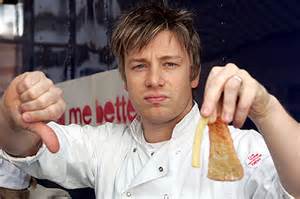
Jamie Oliver is a man with a mission that promotes healthy eating, use of local ingredients, and the continued support of the art of cooking.  He visited the U.S a while back, trying to change the “food” served in public schools, and was met with the full impact of the American Food Lobbyists.  Click on the pic below to visit his site.

jamie oliver

Lessons From My Dog

IMG_3498

About five years ago I got a dog, Maggie. Now understand: a dog was not part of the plan. However, in the five years that Maggie has been with me she has become part of the plan. When I hike, she goes with me. When I camp, she sleeps in the tent often under my sleeping bag. She is not so much needy as demanding. I understand that people with dogs often get a bit “crazy” (“doggy” as I’ve heard it put), but there is a difference between crazy and caring. Crazy comes from the need to fill a void; care comes from a conscious decision to change. I have found that I truly care for Maggie because I am more than willing to change for her.

The first change I have had to make because of my dog is to understand that anger is not the answer no matter what the occasion. Maggie’s face give me solace and I am reminded that she does not understand anger and because of her naivety my anger must be “redirected”. At first, this angered me… But now the energy wasted and my talent for profanity in two languages must find respite and so I tried silence. However, as any good dog owner will tell you: they know. I continue to be a student, if not a very good one, but Maggie is a good teacher.

The second change I have had to make because of my dog is to understand that Listening is essential for any good relationship. The ability to communicate with another human is difficult enough, but I have since found that communication with your dog (and with most other animals) is not only possible, but indispensable. Maggie reminds me that communication is in fact a two-way street. To communication we must listen. I will repeat Maggie’s lesson: we…must…listen.

The third change that I have made because of my dog is to understand that while sincerity may not be comforting, it is never out of place. Like the anger, Maggie can sense sincerity. It is not enough to feign the truth as it is not enough to feign peace. However, being truthful is always worth it, but only if it is sincere.

The fourth change that I have made because of my dog is to understand that lying doesn’t count. Maggie does not put up with lies, even small ones. She is truly, well, hurt. If I say we are going to “go”, then we must “go”! It is often easy to lie to each other as human beings and sometimes we do it for good reason, but Maggie reminds me that lying does not hurt any less no matter the reasons that we have.

I am aware that these lessons are nothing new, but I was never aware that I could actually become a student of my dog. When we first picked her up at the pound, we took her to dog training classes. However, a few lessons in and we dropped the class because the teacher was teaching the wrong student. Maggie has taught me something that I think we all need to be reminded of, at least once a day: don’t lie and don’t get angry when others do it. Always communicate as clearly and sincerely as possible. Oh, and if you’re going to kiss someone, do it like you mean it!

It Sure is Hot Out There

climate change

The summer has finally come, after a wet and strange spring. I’m afraid that my foraging plans will be cut short by the late frost this year. The apple, plum and cherry blossoms got hit hard. For some reason the beets that I planted as well as a great deal of the kale seeds did not even make it out of the ground. Bad seeds? I’m not sure. However, the tomatoes look good, the cucumbers and the hops are doing well. Cauliflower, cabbage and the asparagus are going gangbusters. The peppers are slow, but have fruited.

The herbs are going well, especially the established ones. A lot of rain this spring did a lot of good. There are still varroa problems with the bees, but I have hope that I can get them through September, and then through the winter. I’m hoping that they will do well on their own. It’s been pretty “hands off” this year. I planted new peach and cherry trees as well as a few berry bushes. We started mushrooms this year and they have taken to the logs that we inoculated.

The front door is sticking and I am hoping that the wood settles after I fixed the irrigation head that was allowing it to get soaked at night. I built a food dehydrator and installed new poles and wires for the hops. The weeding continues uninterrupted. Again, the cilantro was weak as was the salad. Who knows why as I planted both earlier this year. Maybe too early?

These are issues that most of us do not have to worry about, at least not directly. For most of us in the west we leave these worries to others; to the “industry” and to science. However, these are honest and necessary worries. That broad descriptive, “weather”, contains much of the above but the devil is in the details; most of the details that go unaware.

It seems that these days the details of the farmer, the gardener, the agrarian are making themselves known more and more by making the details of weather more and more known. The crumbs of climate changes are leaving a trail, but what we do with those crumbs is up to us. I’m not sure what I will do…

I will go out and see if there are apples, plums and cherries to be had off the trails. Perhaps the mushrooms in the mountains will be plentiful because of the rains. I’ll can the tomatoes with the great crop of basil, but will need to buy beets from the Farmer’s Market down the street. I hope to get a crop of fall kale and pickle a few cucumbers. I suppose all that we can do is to follow the trail of crumbs and wish for the best. It is only weather, after all.

Limits

limits

I recently completed a one thousand mile motorcycle ride (in one sitting) to visit my family. Nineteen hours later (fuel stops included) I was standing (not sitting) at their kitchen counter drinking a beer. I was thinking about limits. The ride had reminded me how important it is to know your own limits, and while riding through the Missouri hills I thought about how important limits are to all of us.

Right now most of us are not aware of limits, but a motorcycle (in my case) is a very bad place to first learn of them. I think I was at mine when I was singing loudly into my helmet a version of “Spiderman” that I called “Bobblehead”. Any athlete will know their limits, how to stretch them and when it is a good idea not to. Not to know your limits will sometimes cost you your life and other times just make things a bit uncomfortable; in the former you met your limits and in the latter you stretched your limits.

There are limits that we must all abide by, both our own and the ultimate limit that we all share: reality. Right now we do not seem to understand that the ultimate limit applies to all of us; no matter what, and no matter who we are. I once read that if a jet engine had a purpose, that purpose was to blow up. That struck me in an odd way. Evolution is a blind machine that, perhaps, has the same purpose. Watching a beehive, for example, is a brutal reminder of that “purpose”.

So, what do airplanes and Evolution have in common with this kinda-sorta preachy little bit about limits? Well, for one thing neither evolution nor airplanes have limits: extinction and explosion are not limits. Such things simply act as their nature (and nature itself) dictate. We humans are a bit different: we have the capacity for thought and the belief that we can act upon those thoughts. We have limits that we can stretch for these reasons. Or do we?

Is it the nature of human beings to destroy themselves, to not stretch but break the natural confines in which we live? Such a thought is disturbing to many and for many reasons. First, we are doomed if this is so. Secondly, we are not free if this is so. Third, the capacity for thought is an illusion. Perhaps we are just another blind alley that Evolution follows. I don’t like to think so, but I am wary of not doing so.

Destruction is part of nature, it is inevitable, but our own destruction at our own hands (I would like to think) is not; it cannot be. However, in order for us to learn how to stretch our limits, we must first know that we have limits. Perhaps it is time for us to find a way to define our limits before those inextricable and inescapable limits cost us the very thing that we are so fond of: living at any cost.

Beer Ramblings

beer ramblings

  • IPA’s

What delectably bitter libations!  liquid grass for some, but the freshness…ahhh!  Some like the hops on top, nosey, and some like the peppery undertones with citrusy implications.  One of the best moves of microbreweries these days is to make a delectable session IPA.  Keep the bigness, but have two (or three).  I love the anticipation of beer-thirty when I know I have a home-brewed IPA in the fridge.  It is a type of peace that is rarely found anywhere else.  Big grain bottom with the heaven of nature: all in one glass.  Try some of Great Divide’s offerings, but if you can find it, Hall’s Farmhouse IPA  is the way to go!

  • Pale Ales

These often looked to ales are the base for so many others.  The lowly Pale often plays second partner to the more speciality brews, but if one takes time, better yet: brew your own, the Pale is a patient partner.  Be picky here as these brews range from “meh…” to “Why!  WHY!?”  When that sweet taste of liquid gold is needed the Pale will come through.  Malty with numerous levels of moderate hops are the basis’ of many a fine glass.  Again, Hall’s makes a great Red Ale (a Pale of a different color).  Experiment with these, they are patient and often very satisfying basic beers.

  • ESB’s

While the Pale Ale is a basic beer, its grandfather is probably the ESB.  Ah, what malty goodness awaits anyone with an Extra Special Bitter in mind.  Beside the IPA, I would probably cozy up to one of our home-brewed ESB’s.  Not too cold!  Let the malty goodness speak volumes and it will, especially when shared with friends!

  • Porters and Stouts

Oh these black beauties… often mistaken for being heavy handed and alcoholic.  Not so!  Smoky characters they are, and perhaps they take time to get to know.  But once a true friend is made, you will have a friend for life.  I don’t cotton to the coffee varieties, pure malty black magic for me.  Also, keep the vanilla in the ice-cream.  Although these beautiful and mystical beers can hold up to the adjuncts that we often add, it is a shame to miss out on their simple goodness.  Equally good on a hot summer’s day or cold winter’s night.

  • Lagers

Cold-hearted as they may be, lagers are the fresh morning dew on the grass; early in the morning just as the birds are beginning to wake.  You might not want to drink one at that time, but the freshness of a good lager is bound to quench the thirst of anyone after a hard day of simple living.  Clear, with nothing to hide, sometimes wheat-natured and often abused by the industrial-aged beer magnates.  Don’t bother, there are much, much better beers to be found if you look around.  Oskar Blues’ Mama’s Little Yella Pilsner is a good one.  Better yet, brew your own, but make sure to have a cool place to let it get going. It’ll put a smile on your face and ideas in your head if you’re not careful!

  • Drinking beer?

In my humble opinion, beer is a nectar that is too often diluted by adjuncts: water, grain, yeast and hops are all that is needed.  Savor the taste of the beer you drink; like life, the bottom of the glass comes sooner than you think.  Don’t complicate things, keep your thoughts pure and your wants simple.  Take pleasure in picking the beer you will drink and drink the beer you pick with a conscious and deliberate state of mind.  Smile and nod, but don’t always listen.  This is your time, and your beer will draw those precious seconds out just a little longer!

Rant #1

extinction

“Our global society has started to destroy species of other organisms at an accelerating rate, initiating a mass extinction episode unparalleled for 65 million years.”     -http://sciencemag.org

When will we remember that we are not the only species on this planet, nor are we the only one that matters?  The time for most creatures on this planet is nearing an end, because of us.

We are arrogant.  We are selfish, and we are violent.  We do not deserve, nor will we inherit this planet.  The weak will not inherit anything except pain and misery before they die.  They will welcome death long before it comes.  The strong will win nothing.  They will live to see their children die and the things they’ve cherished so much go to ruin and realize in the end that it was not worth the price they paid.

Human beings are capable of so much, including choice, but we tend to choose the easiest, the shiniest, the quickest, and the most at the cost of the best, the right, the quality, the moral, the many,  and the few.  We create amazing ideas and horrible monsters.  We are capable of love and torture, of empathy and psychopathy.  We are our own saviors and our own destroyers.  We are capable of intellect and kindness and act stupidly and mean.  We understand how to understand the universe we live in and dismiss the the only method that will give us Truth for superstitious mysteries that will lead to our demise.

We dishonest with ourselves, even when it comes to saving our selves.  This is on us, our parents, and our grandparents and it will be our children that will bear the brunt.  We know this and yet we soldier on.  We talk about problems rather than solve them because we do not face them and hence cannot find solutions; solutions that are often right in front of us.

Mother nature is the ultimate assassin; she takes no prisoners and we will not be an exception.  We can pretend and we can lie, but we cannot change that truth.  We can argue, we can choose not to confront, but like us truth will also soldier on…blindly.  Mother nature will win; there is no contest no matter how much we believe that there is.

There is only one thing left to do, and that is the right thing.  We know what it is, and we know how to do it.  It is only left to us to humble ourselves, to realize that we share this planet, and must work together and within the parameters that it holds us to.  We must earn the respect that we believe we are entitled.  We must make the most of our capacities and act like the intelligent human beings that we are capable of being in order to save the animals that we are.

The Agrarian

 Agrarian

  • It takes 1-3 Years to plant with the long term consequences in mind. Plant with space and needs in mind. The plants will start slow and eventually take hold. All the while we must nurture them to give them the best of all possible beginnings.
  • After 1-3 years and the continual planting and possible replanting, the introduction of poultry and other animals for pest control. This introduction has its issues and will never go as smoothly as we think. The animals introduced must be, as the plants must be, if not indigenous, then only what the plants and the land itself will allow.
  • From 5-7 years we must “chop and drop” roughage from the pruning that we will do. The introduction of trees for timber must be introduced but these must not affect the fruit trees bushes, and other perennials that we have worked so hard to keep alive.
  • This is what it takes to eat honestly.

These steps and these processes are necessary because we have not taken the time to follow in the footsteps of mother nature; we have taken shortcuts and continue to do so. But, we must remember that mother nature neither nurtures nor does she care; she simply does. She expects nothing but gives so much to those that will understand her.

We do not seem to understand mother nature any longer. We cannot “google” it, or find it on the ubiquitous internet. We must get our hands dirty, and fail. We must see the dirt under our fingernails and feel the cuts on our hands, the sweat on our brow. We must feel the bites of insects and the heat of the sun. Our cellphones must be put aside and the supermarkets must be forgotten. Technology is not a boon but a bane.

The comfort of our homes and the illusion of civilization must always be put into perspective of the natural reality in which we live. If we do not come to understand this, then we fail as individuals and as a race. Our mother will remind us of this either with our blessings or our pleas.

A good home brew helps!