Author: Philo

human

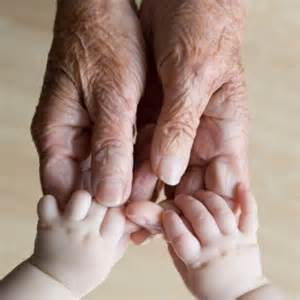
Age

age

  • Reminds us that we are mortal: we will die.
  • Reminds us what reality is: we live now; we die now.
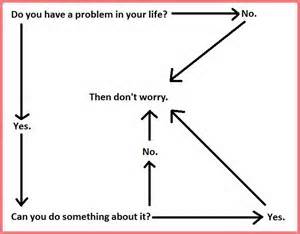
  • Reminds us to prioritize our lives: don’t worry, be happy.
  • Reminds us to think: we don’t know the answer if we don’t know the question.
  • Reminds us to live: most of the time the alternative is not better.
  • Reminds us to make a choice: if we do not, others will.
  • Reminds us to take time: time is the eternal thing that we have least of.
  • Reminds us to that nothing really matters: “Nothing we do now will matter in a million years”, and “nothing that will be the case in a million years matters now.” –T. Nagel
  • Reminds us that honesty is the best policy: we cannot lie to ourselves forever.
  • Is that inevitable reminder that change is the only consistent, that we have only one life to live, and that we often forget that fact.

From the Collection: Stories From the Road

chaos

#1

Join me on my travels on that Monday, that day in the van in October, driving like freaks on speed. This can’t fucking be right! No human driving mad crazy. What am I doing with all of this? The proof is in the pudding, the pride, and the persistence to show. The price is driving with this crazy motherfucker; barreling down the Pennsylvania hills, pissing in my pants, puppy-dog shit. This son of a bitch is the devil himself and we shall all die in Satan’s arms. It is inevitable.

The van is already dying, etching out the last of its pitiful life, the picture of American pride. Fuck it! Some fuel additive and gas and we’re on our way to the pace of porn, pot and poetry. We shall succeed at any price. Hell shall have its way! Quite a popery of prophetic prose to be put upon the priceless piece of pummeled paper. The proposal was put forth that in Pennsylvania and properties around those words like “prick” and “pussy” must have precedence in the propensity of profound poetry put forth.

Of course, this is only a prelude to the pretense that we shall actually play; watching the palpitatious patterns of people plunder the peace of palatable portions of epiphany.

#2

In the last moments, those final bleak hours, in the dark, in this fucking car. So goddamned tired and greasy. So close and the road just won’t end. My eyes are on fire and this constant moving doesn’t give a hairy apes ass! All I want is my home, that dream world I use to know before I took off on this fucked up ride. It’s like that park in Massachusetts where the operator fell asleep. The ride never ended and we were screaming at the end, sick as dogs, wanting to die. He must have been on dope or perhaps, just didn’t give a damn.

My mind knows there’s a place where I belong but shit, where is it? This is insane. All these cars, all this night. This whole, unending night, the numbers on the clock move, we move…so what’s the fucking problem? Give a man some peace; I’ve got a wife, I’ve got pets for god’s sake. They’re probably dead and I wouldn’t know it. I can’t do this. This is nuts; the same name on every sign, on every exit. It’s all the same.

We don’t turn, we never turn. No wonder this car is dying, it’s tired too! The same stretch of snot to roll down. I feel like a fly. Fly? Fuck that! Who’s got time with all this road? I don’t ask for miracles, just to sit in a chair that happens to be mine for a while. This moving has got to stop. Enough is enough. It will drive anyone insane. I know, I am fucking mad!

It’s all a spinning nightmare at this point. Who cares? We’re all going to die. No end in sight and we’re all acting like its normal, an enigma, a traveling savant, a fucking idiot. This is life in the fast lane, burning the oil, all of it. Fuck it! Let’s go…

Finding Your Way

path

“Finding myself” is one of those phrases that deserves the despite that it often gets. Like many other words and phrases it has become a watered-down excuse in many cases. However, I think that there is something to it. We do find ourselves wondering about who we are, and especially why we are. These are those thoughts that come to us when we wake up suddenly in the middle of the night, the world outside of us silent, creating room in our heads to think. Perhaps it is this silence and space that reminds us that we have lost our way, have never found it, or simply changed without realizing it.

Of course, to lose your way, you must first know which way you are going. This, I think, is where the despite for this otherwise beautiful thought comes from. Many of us who are out to “find ourselves” have never found anything much less our “self”. We have no way to get back to if we have no way to find. This is not as obtuse as it may first seem. Consider where our societies have come to today. We are far-removed from the agrarian lifestyles that we depend upon, the nature that we are a part of, and the relationships we depend upon for our well-being. It is an unfortunate truth that many of us have never experienced any of these lost albeit necessary components to life.

If we have lost our way, then we do not need to necessarily find it again if it was not the path that we wanted in the first place. Good trips are like this: being lost is part of the fun; not having a plan makes the trip interesting and often leads us to the very thing we were not looking for, but needed, in the first place. When I became more interested and involved in agrarianism, it was surprising to me just how revolutionary (in the political sense) that food is. To “opt out” of the system in any way seems to create ripples that are not welcome. I think this is because many people are on a path that they have not chosen. Perhaps losing their way is precisely what they need?

If there is anything that we all need it is to realize that change is the only consistent in life. We all change; whether or not we realize this is up to us. I had a friend that told me that after twenty-six years of marriage he realized that he did not know who his wife was: he had changed without realizing it. They were soon divorced. If there is a purpose to getting older, perhaps that purpose ought to be that we make sure we realize how we change; that we change is not in question.

So, in the end finding your way through life is like so many of the important things in life that get lost in the shuffle: love, family, time, philosophy, fun, and happiness. It is these things that we will have left in our lives if we grow old. It is my hope that we can all find our way long before we realize we can do nothing about the path we are on. Realize change while we can still do something about it, and we will find that life is truly worth living. Finding your way, we must remember, does not necessarily imply that there is path that we ought to be on. It simply means that there is a possible path for us all.

The Real World

the world

What is the real world, but the result of our actions? How we act defines not only who we are, but the purpose that we define for ourselves. In order to live in the world as it is, we must act according to the reality of the world not what we would like the world to be. While this may sound complicated, it isn’t. What is complicated is why we nevertheless continue to act as if we define the world and not the other way around. Examples abound:

“House Speaker John Boehner (R-OH) says he’s “not qualified” to debate the science of climate change, but insists that President Obama should “absolutely consider” a ban on U.S. travel to West African countries experiencing Ebola outbreaks. Senate Minority Leader Mitch McConnell (R-KY) says he’s “not a scientist” when it comes to climate change, but also says it would be “a good idea to discontinue flights” from Ebola-affected countries. Louisiana Governor Bobby Jindal — who studied science in college — says he’ll “leave it to the scientists” to talk about climate change, but says it’s “common sense” to institute a flight ban.”

                -Kate Sheppard, Huffington Post


The fact that there are individuals and corporations that would like to insist on the “illusion” of climate change does not change the consequences of climate change. The fact that individuals react in fear does not change the nature of what is feared. Again, Ms. Sheppard:


“Meanwhile, actual doctors and medical professionals have made it clear that Ebola does not spread through the air, it is not “incredibly contagious” and there is little likelihood of a large-scale outbreak in the United States.”

-Kate Sheppard, Huffington Post


Irrationality is part and parcel of the world in which we live. However, we can change not only who we are, but the purpose that we define for ourselves. To say that we must live “in the real world” is not to say that the world is defined by those who live in it. Rather, it is to say that we must adhere to the real consequences of our actions and our beliefs.  Reason can happen.

Make no mistake: the real world in which we live is defined in a relatively exact, measurable and wholly reasonable way. However, the world by which I mean the one in which we make decisions and create beliefs is dependent upon us as individuals and as societies. We can only hope that there is some way that the quality of the relationship between the idea of the world and the real world itself can rise to the occasion. Otherwise, the often very unreasonable world in our minds will eventually determine the very real world in which we live.


The List

list

Perhaps one of the most significant aspects of getting older is realizing that you are, actually, getting older and realizing the implications of age. This, I understand, is difficult to understand the younger one is. However, I think the lesson learned from this realization is important no matter what age we are. Consider…

One day you receive a letter in the mailbox addressed to you personally. The letter has no return address and is handwritten. You open the letter up anticipating the contents while at the same time nervous, excited, somehow knowing what the letter is. The envelope drops to the ground and you unfold the contents. It is a list. The list, you realize, is a list of your hopes and dreams, your goals and the expectations that you have developed over the course of your life. In short, it is your bucket list. You read the list a bit nervous, a bit excited, as you come across long forgotten dreams and current expectations that you realize you’ve never shared with anyone. You put the list in a drawer, bringing it out to entertain your friends on occasion: telling the story and reliving the moment at the mailbox. Years go by and the paper yellows but does not become brittle. One day you take the list out and realize to your horror that somehow the list is shorter. The thought, “I must be mistaken!” shoots through your mind. This cannot be; lists such as this do not become shorter. But, they do, and your realize this at the same time that you realize your hand is shaking. Instead of pulling out the list to entertain friends, you now hide the list in a box on a shelf in the closet. You cannot face looking at it anymore because you realize that throughout time you have not accomplished the goals, the dreams on the list. You realize that you are getting older, and the list is getting shorter. “How can this be?!” you think. “As I get older, I need to cross out the items on my list!” But you’ve crossed out only a few. The riddle weighs heavy and you reluctantly pull the box out with the list in it. You hesitantly open the box and carefully lay the list out on the table; you unfold the list slowly. You realize when you finally look down that items on the list are slowly fading, right before your eyes. You realize what the list is: it is a list of possible dreams, of possible goals, of possible expectations. It is a list of possibilities and as you grow older that list of possibilities fades.

Although it is difficult to understand and perhaps even more difficult to accept, the list of possibilities in life grows shorter as we grow older. I can only hope that we can realize what is possible and act upon those realizations. I have been told, and have come to believe, that the most difficult step is the first step. Take the first step towards your goals before the list is nothing but a blank and brittle memory.

That Which We Cannot Do

hope

Nature teaches us a lot if we choose to listen. However, sometimes the lessons we learn from nature remind us that life is difficult, that nature truly does not, it cannot, care. The difficulty in learning this lesson is that as people we do care: we care about nature, we care about the things and people that we take responsibility for.

Two months ago, my bees were plentiful, filling three boxes. I noticed a problem (varroa mites) and treated them dutifully. I saw the results and the results looked good. I was hopeful and planned on having my bees overwinter to welcome them into the Spring. Nature had other plans, however. A few weeks ago I started noticing wasps coming and going, and noticed a drastic decrease in the number of bees that were swarming around the hive. Upon opening the hive I was horrified to find that most of the hive was empty. Rather than 30-40,000 bees I was met with 2-3000 bees!

I was and still am devastated. Questions run through my mind as I search for answers. The few remaining bees, including the queen, continue to hang on but there is not much hope for the winter. The twist in my gut continues even now, when I’m writing about this. I run through the possibilities and what I could have done differently, but the answers are the same.

I have read the books, the blogs, the forums and watched the videos. I have studied and went to classes; I have taken responsibility for my actions; I have dutifully fulfilled my obligations and still failure. I have been taught the lesson that nature teaches all things: 1) that life is difficult and that nature does not, and cannot care, 2) that there are often not answers to the questions that we ask; that there are not possible solutions to all possible scenarios. Perfection does not exist in nature not matter how much we as people care about nature and the things and people that we take responsibility for. Sometimes, there is no other way.

I am also reminded that no matter the twist that we feel in our gut, we must persevere; there is no quitting. It does not matter whether it was the wasps, varroa mites, colony collapse disorder, or my own doings, there must be a new hive next spring. Although we cannot know for sure why this must be, it must be. This is what makes us human: we must educate ourselves about the world around us, but we must also morally educate ourselves: we must educate ourselves about the world within us.

Life is a battle and even if there is no purpose for the dead and the dying, we must act as if there was. To accept the void as lifeless is to accept that there is no hope, but we are human; to accept that there is no hope is to give up the very thing that makes us human, and that, we cannot do.

Worry

worry

This time of year is worrisome for beekeepers. The cold is coming on, and we worry about food stores, hive health, and of course the cold. I have had a wasp problem these past few weeks that came after I got the mite problem under control. I was told when I began to consider beekeeping that mites and honey is the top two reasons people quit keeping bees. I can see why those issues are at the forefront.

The cold is hard on many of us, not just the bees. And it is not that cold where I live; at least not yet. I look out the window and the sun is shining. I step outside and it is below freezing. I think the bees simply react, but people, people think too much. I know that I do. I lost a lot of sleep worrying about the wasps, and then I think about the cold, the food. The worry continues. However, worry does not work; worry does not help. Worry hinders, is a vicious cycle, and is unfortunately inevitable.

On Wed the weather will warm up and I will check the hive for the last time before I close it up for winter (so I can worry about the food stores). I’ll make sure the wasps don’t have a nest in the hive (so I can wonder if I got all the wasps out if there is a nest). I put a mouse-proofer on the opening of the hive and add some insulation to the top (so I can worry about moisture this winter). I’ll wrap the hive in some black roofing paper (so I can worry less about heat).

I’ll do what I can for the bees that I’ve taken responsibility for, and this is where the worry comes from: I have taken responsibility for something. Any person who has taken, truly accepted, responsibility for something understands the worry that goes along with the responsibility. In the past few years, self-sufficiency has played an integral role in life and along with self-sufficiency comes self-responsibility.

I wonder about those people who did not have the choice of self-responsibility; they had responsibility thrust upon them by the nature of their lives. Such responsibility is a heavy burden, but perhaps (like the bees) such responsibility is not noticed because it is simply the reality of life: it is living.

In today’s society our worries have changed perhaps because our responsibilities have changed. We worry about our job, if the grocery store has what we need, if we have paid our bills and if we can continue to pay our bills, our children, our marriage. These worries are no less important, but they are different. Such responsibility is a heavy burden but after a while we do not seem to notice because it is simply the reality of our life: it is living.

I have learned, even in such a short time, from my bees that I must understand what I need to worry about. But in order to do so, I must understand what I am responsible for. Maybe that lone bee coming back to the hive on a cold day with a load of pollen is not worried because it is doing what it does, doing what it needs to do, doing what a bee does naturally. I think that perhaps what we worry about is not as important as why we worry about the things we do. Perhaps worry is not a waste of time, but a reminder that time is short, the cold is coming and we have (in fact) no time to worry.

Liberal, Commie, Bastard

politics2

It is state election time here and again I am reminded that the language we use often mirrors how we feel rather than what we think. One piece of mail that I received regarding a state candidate was simply emblazoned “LIBERAL”. I have to wonder about the purpose of such claims. When I do, I remember John Stuart Mill’s writings on “Classical Liberalism”. There are ten principles. Here they are in short:

  1. The life of each individual is an absolute and universal moral value.
  2. Every individual owns his body, his mind, and the labor thereof.
  3. Every individual has the right to pursue activities for the betterment of his life.
  4. The rights of an individual to life, liberty…are not granted by other human beings.
  5. The initiation of physical force, the threat of such force, or fraud against any individual is never permissible.
  6. The sole fundamental purpose of government is to protect the rights of individuals…government is not the same as society.
  7. Every individual has the absolute right to think and express any idea.
  8. Commerce, technology and science are desirable.
  9. Accidents of birth, geography, or ancestory do not define an individual and should not result in manmade restrictions of that individual’s rights or opportunities.
  10. It is a moral imperative for humans to expand their mastery of the universe indefinitely.

The above ideas were expressed by Mill in 1869. What I find interesting about these principles of classical liberalism is that most of these principles have been absconded by the present-day “conservatives” which brings me to my point about language: it changes. I would suggest that to use language is to express ideas not create ideals. It also reminds me that in order to own a word, I must have clear understanding of that word.

It is important to remember in these days of political posturing that it is not only the language that we use that is important, but the ideals that we abide by: we must own the word we speak. To call someone a “liberal” is neither good nor bad. However, the reasons that we have for calling a person or group anything are good or bad.

It is much easier to rely upon rhetoric rather than principle to express ourselves, especially when we are not certain of the ideals that we actually hold, nor why we hold them. It is much more difficult to understand what we say before saying it than it is to say something that we really don’t understand.

Politics may be rhetorical by nature, but they are meaningless without the ability of society to understand the underlying ideals that are expressed by politics. As Mill is also quoted as saying, if we don’t educate ourselves, we deserve what we get.

The Lowest Common Denominator

 lowest common

Often and unfortunately our conversations concerning what we do land upon the lowest perch of human achievement: that of measuring all accomplishments by their economic consequences. This is what I refer to as the lowest common denominator. I cannot accept that the ultimate consideration of our acts is monetarily important at all. When discussing new movements in farming for example, as we are seeing in this country (the US) today, I cannot imagine that the people involved in the agricultural movement are involved only for economic gains and monetary profits.

I do not consider the profit received from my garden, and from buying locally produced meats to be measured monetarily. Rather, the rewards that I get from knowing where my food comes from and how it was treated overrides any economic cost. I would argue that those of us who take pride in learning new skillsets and in understanding concepts that society tends to take for granted are not motivated by possible profits, but by personal gains in knowledge, in peace of mind, in the understanding that what we do can have a virtuous aspect that cannot be bought and sold.

I would suggest that the food-movement not consider itself by the judgment of others that can only understand or are only interested in monetary motivations. It is difficult not to do so, especially when being considered from a public point of view. The phrases “there is no money in it” with regard to small-farming enterprises is easily dismissed with closer inspections of the facts. The argument that small-farms are in fact more profitable than large, agri-businesses if the subsidies to such businesses are taken out of the equation are beside the point. More important to the point is that most small-farm enterprises are not motivated by money alone. The point is that in not relying upon agricultural subsidies, small farms are more autonomous, offer a more honest product, and are not held accountable by faceless stockholders but by local consumers that many know by name.

While it is true that to live in this society, money is a necessary component; it is not true that money is the most important component. This viewpoint has led us to the deplorable situations that we find ourselves in today both in and outside of agriculture. The small-farming movement that seems ubiquitous in the country today reminds both those who are brave enough to venture out and those who are thoughtful enough to support such operations that money is the least important of all aspects of our lives. It is by the standards of bravery, of thoughtful action, of honesty and honest work that we ought to judge ourselves and expect others to judge us by.

While we cannot often fight the filth of large agribusiness we can battle the ignorance that allows such business to flourish. However, I would argue that we cannot do so by judging ourselves and what we do by the lowest common denominator. There is so much more that we are motivated by other than money. It is important for us involved in this movement to remember this fact and remind others that money is not always worth the trouble.

The Limitation of Money

money

When faced with decisions that have ultimate implications for your happiness, it is necessary to consider that happiness from as many different perspectives as possible, not just the economic perspective. Otherwise we become defined by the narrow and limiting perspective of money, not the actual limitations that we have. Perhaps, we must consider, it is more useful to make less money. As un-American as this may seem, our happiness as individuals and as a nation seems to be at stake, but not for the reasons that we might believe.

The more dependent upon money we become, the more impoverished we become. I am realizing that the ability to fend for myself, to provide for myself, and to be motivated not by the usefulness of my ability to make money but by the usefulness of my abilities is providing the richness of life that I need, the perspective that I need to be happy. It is indeed true that money cannot buy happiness. In fact, often times it purchases discontent.

For example, my wife said something to me that has stuck. She grew up on an eight-generation farm in Europe. She remembers having no money, but always having enough to do and enough to eat. The fear of poverty is still with her, but through our discussions she has come to realize that the poverty that her family endured was not because of the farm, but because of the motivation to make money. To farm, to homestead is to give up on our dependency upon money. However, in giving up on our dependency upon money, we do not become impoverished, but enriched.

As backward as this may seem to many, it is true. I am learning to live without money is unrealistic but only because I am realizing the limitations of my abilities. Money does not provide independence, but only dependence upon those with the abilities that I lack. It is not living without money that is unrealistic; it is living without knowing your own limitations.

A homestead provides ample opportunity for experiencing limitations, limitations that money cannot conquer. In cities across this nation I do not believe that it is the lack of money that is problematic, but only the lacking realization that we are limited. We cannot “do” what we want to “do” if we do not know how to “do” it. We can “think” what we want to “think” if we do not know how to “think”. In fact, I believe that money as a sole motivator lessens the ability to realize our own limitations and in doing so gives us a false sense of security; I have certainly experienced that in my own life.

I have also experienced the frustration of my own ignorance and short-comings with regard to my own limitations. In rebuilding a 1939 Farmall F-20 I learned that it will not start simply because it is supposed to start. It is the same with money actually. Simply because money is supposed to be able to buy you happiness does not mean that it actually will.