Author: Philo

human

Ever Changing        

Image


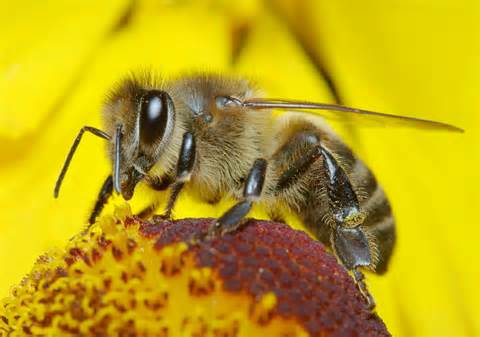
As the seasons change they remind me that time does undeniably pass us by.  In the past few weeks I’ve seen the tiny seedlings that I started indoors grow leaps and bounds.  I’ve seen the parsnip poke its miniature shoots out of the soil covered in dead leaves and compost that itself has stood the test of time.  I see the kale and the carrots beginning to show out of the earth itself.  The weather is getting warmer and as it does our new bees begin to become more and more active.  We did our first hive check this weekend, and “my girls” are doing fine.


“My girls” indeed!  As I watch them busily about their business it dawns on me that these “girls” will not be the girls that my family meets when they come to visit later this summer; these “girls” will not be the ones that I take honey from (if at all) later this summer.  This hive will not be the same hive at all.  They will all have passed their jobs on to their sisters that they so diligently raise as I watch them fly in and out of their new home.  It saddens me…at first.  I realize, once again, that this is the nature of the seasons, is the nature of the years that have passed me by and continue to do so.  Change is the nature of life itself.


I watch as my parents get older and my nephews and nieces begin anew, with wonder in their eye: young and not thinking about time at all.  Like the hive I call my own we are not the same people we were a mere seven or eight years ago, literally or figuratively.  The cities we live in change; the landscape, the people, our friends, our jobs, our plans, our goals, our desires.


In fact, change is the only consistent.  As I complicate my life (to eventually simplify it) I realize more and more that this aphorism rings true.  As I see the very ground in my garden go from unfertilized lawn, to newly dug soil, to composted mulch full of worms and life I realize that I did not start this cycle of evolution in my garden; that this cycle never had a beginning nor will it have an end.  I watch the plants come up excited in anticipation just as I was last spring and will be in the springs to come.


Perhaps adding to my newfound goal of complicating my life, I must realize that I have a choice: to act with or react to the nature of life and the living.  As a gardener and now a keeper of bees, I try to be a steward but I am really an audience member to the grand change this is life.  But life, our lives, is short with no intermission, no stage, no actors, and no scenery.  I started out a suburban gardener, but I slowly realize that the garden has always been there and that I am only reacting to it.

The Box of Bugs

Image

I awoke excited about the day. The bees were in this morning and I was to pick them up soon: my first package of bees! I bought them from a local supplier and they had spent the night traveling the four hours from their previous home to the pick-up location. Already they were “my girls”. The pick-up was uneventful, the way they should be, but I had to introduce my girls to their new home, a hive that I had built by hand and placed in the large backyard of my home. The fifteen minute ride home, bees in the backseat, was filled with even more excitement both from the backseat and the front.

Readying my tools for the introduction, I brought out the food that I had mixed up the night before (sugar water in short). Setting the bees down next to the hive, I removed four or five frames from the hive and set them aside. I then pulled the small feeding can from the package and grabbed the queen cage putting it in my pocket to keep the queen inside warm and replacing the can with a small cover to keep most of the bees in the package. A few bees flew out and the package was hurriedly coming to life. I thumped the package lightly down to shake the bees to the bottom of the package and then turned the package over the hive dumping thousands of bees into (hopefully) their new home. I hung the queen cage on a frame a bit off to the side, set the few frames taken out back in, set the feeder and the top on and then pulled up a chair and poured some coffee. My work was done for the time being.

The entire event was filled with child-like excitement, hope, and worry, not lasting for more than ten minutes or so. I felt the responsibility of thousands of lives begin to weigh down on me. I watched as bees flurried about coming in and out of the hive. I heard the excitement around and in the hive itself. I watched as something that I had built from a living thing came to life in a whole different way. I could not help wondering if the new hive was busily making the place its new home much in the same way a family might make a new house theirs. I couldn’t help wondering if they would be safe, be warm, secure in their new surroundings. I had readied the hive and our ½ acre of yard for the bees to the best of my ability. I had looked forward to this day for the months that I had waited for the package to come. I was nervously ecstatic, I was unbearably happy; I was fifty years old!

I was fifty years old with the glee of a small child. I have owned a small business, have a career and held a job my whole life and yet these bees were one of the most exciting events that I could remember. I must admit that the reason for getting bees in the first place was that I had found an old honey extractor from the 1920’s for a reasonable price and simply thought it to be an interesting piece of equipment. But what is a honey extractor without bees to make honey? The following months of avid reading about bees and beekeeping hurriedly changed my attitude: I was taking on the responsibility of a society of animals.

The first day of being a beekeeper and I already owed the bugs a nod of gratitude! The day that I dumped the package into the hive I realized that the bees were much more than honey or even pollination of the garden, but they were the realization of a greater thing, a greater idea, a symbol of an ideal life. The bees reminded me that I was responsible for myself and in being responsible for myself, I was responsible for them. There are not many better lessons to learn, and what better way to learn such lessons than from a box of bugs!

Soliloquy on Shortcuts

Image

I’m not sure about this, but it would be my guess that human beings have been looking for easier ways to do things since the dawning of human intelligence. I can almost imagine the ideas trickling into the head of Homo habilis’ as they foraged and hunted.However, I’m not sure that our early ancestors looked for shortcuts per say to their daily required chores and tasks. There is a difference between making life easier and taking shortcuts, that is. Again, I’m not sure about this, this is an informal blog after all, but it seems that making life easier transformed into taking shortcuts some time in the recent past.

The differences between making life easier and taking shortcuts at first glance seems little. But consider it for a while. First, taking a shortcut to make your life easier implies the loss of something integral to who you are, what you can be, your integrity, perhaps your honesty. Secondly, a shortcut is negative and does not help and actually hinders in the long run. Lastly, taking shortcuts by no means makes your life easier. Making your life easier, on the other hand, by taking a shortcut does not necessarily imply the loss of anything, but actually can add to knowledge, add to who you are, what you can be, is not negative, and finally does not hinder you in the long run.

Often we take shortcuts because we think they will lead us more quickly to ease and comfort. Consider what acting on the belief that ease and comfort are innately good has gotten us today: industrial food, global economies, degrees for jobs, divorce, employment rather than careers, luxury but empty moralities, and the latest and greatest (fill in the blank). On the other hand growing your own food, buying locally, going to school to really learn something, sticking out hard times with someone you love, starting up a business based upon something you love to do, not supporting businesses that you know to be immoral, and bucking fads are all very difficult to do but they are well worth the effort; these are not shortcuts but complications. Sometimes comfort is your enemy and easy is not best; it is important to know the difference.

Shortcuts are either realizations or illusions. Taking a shortcut in order to make your life easier is creating something imaginary, something that really does not exist; making your life easier by taking a short cut is noticing reality and using it to your advantage. The first asks nothing of you and gives you nothing in return. The latter asks that you notice your surroundings and understand them. The first is motivated by ease and comfort for their own sakes, the latter is motivated by intelligence, curiosity and efficiency. The first tries to cheat reality while the latter tries to understand it.

There is an old moral adage that states that once we have knowledge of our wrong-doing then we also have the duty to change how we act. Taking a shortcut to make your life easier is somewhat different than this old adage. It, in essence, states: once we have knowledge, disregard what we know and act in any way we see fit. But I do not believe that is possible without lying to ourselves.

Unfortunately, lying to ourselves is precisely what most of us are doing as a society. We all do it and we all take shortcuts to make our lives easier. This is short-term gain at the cost of long-term happiness. I believe we know this too, and yet we continue hoping that somehow this short-cut that we have created will lead us back to the original path, the path that we ought to have never left. It will not I am afraid lead us anywhere until we being to realize that making our lives easier is really not what we want at all but rather we want to make our lives more meaningful; and there is no shortcut to that.

Buddhist Bees

Image

I worry about bees these days. I know that I don’t need to, but I do. I enjoy watching them move about the Nanking Cherry bush; I enjoy listening to them and trying to pick the Italians from the Carniolans. The day that I am doing this is sunny and the clouds are lingering. The bees are busy doing bee things and I am busy brewing beer and…worrying about tomorrow. That’s how we humans are: we worry about things that we have no control over. The bees cannot worry about tomorrow and I wonder if they would even if they could.


You see I am told that the next day will bring snow, a cold snap that is normal for this time of year in Colorado. I also know that temperatures below app. Fifty degrees become problematic for bees. They cannot move, forage, and must huddle together in their hive keeping their brood and each other warm. The difference, I realize, is that I am busy worrying about the future and the bees are busy doing what needs to be done at this very moment. There is a religious irony here somewhere. The Buddhist religion’s basic claim is that there is no other reality than the present. The bees act like Buddhists while we think about Buddhism.


While I’m watching the bees I hear my wort (unfermented beer) begin to boil over: a watched pot will never boil, but one that is forgotten, well that’s another story. I am not minding my own business while the bees mind theirs. I am worried about the bee’s future while the bees are busy with their present business. Somehow none of it makes sense, but that is Buddhism, and the bees being the Buddhists that they are, are not aware. I am aware and run back to the pot.


There are other ironies involves but the whole business gets complicated. I complicate my life by worrying about the future; the bees simplify theirs by doing what needs to be done in the present. I’ve seen a whole hive dead from starvation which is not a pretty sight, “butts in the air” as beekeepers say, the abdomens of the bees sticking out from the honeycombs as the bees searched for food in the bottoms of the combs. My heart drops and I get a twist in my gut. However, I’m pretty sure that even at death’s door, the dead bees lived in the present.


That’s how all of nature is and I begin to wonder if it is the idea, the concept of the future that separates we humans from nature more than anything else? Nature has no future, in fact the future doesn’t exist, but we create the future and then (what else?) worry about it. There is a philosophical argument here: we are free but the bees are not: driven by genetics the bees act accordingly. But I’m not sure that the payoff is worth it. We are not as free as we believe ourselves to be. Do we choose to worry about the future, or are we preprogrammed to do so? What would you do if you could?


The bees have no such thoughts and they are beautiful because of it. I get my wort under control and wander back to the cherry bush. I look at my empty garden, and the fruit bushes getting ready to bloom, the birdhouse I built still empty, and notice the robins in the juniper bush in the back corner; I see the bucket of water left out for the fox and my eyes glance at the new garlic plants, and I remember that I need to water the seedlings in the workshop. All the while, the bees move methodically from flower to flower, gathering pollen, being a bee.

Garden Variety Philosophy       

Image


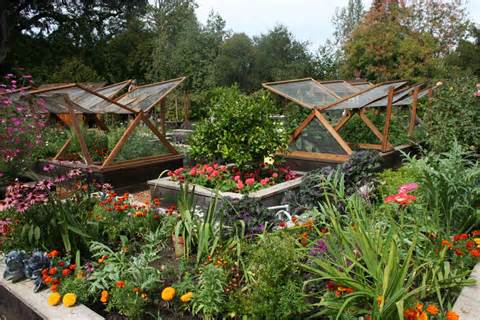
I’m relatively new to gardening, and like most people the idea of gardening conjures up numerous images. First of course is the image of an overflowing abundance of plants popping with vegetables, fruits and flowers. Secondly, tools come to mind: the shovel, the rake, the hoe, the tiller. And perhaps the shape and color of the garden: should it be square, circular, and what about the soil? What is humus? Gardeners such as myself probably spend hours contemplating odd things such as these and the seeds…the seeds. The spacing of the seeds seems to be all-important according to some books, and in others it is the soil that the seeds are planted in; raised beds, rows, grouping: the list goes on. Both the questions and the answers seem endless, but all I want to do is to plant a garden.

One of the activities of gardening that I simply do not like is the pulling up of seedlings that are un-needed, or deemed lesser. Somehow it seems that I am killing an innocent, but gardening is like that. Gardening seems like an innocent endeavor, but the details prove it to be otherwise. To be a gardener, one must be ruthless in a sense. But this ruthlessness seems out of place in an activity that seems so peaceful. To be a gardener one must be both a mother and a warlord.

I look at the garden in the winter, covered in leaves, mulch and manure with its light brown, dusky color and imagine its future. Then I remember the aphids and the beetles that I fought valiantly with the year before, losing battles while hoping to win the war. I like to think of the garden as a way of giving, of helping the world, and the earth itself; planting and eating my own food. But, I also demand of the soil to produce and tear at the earth with the tools of the trade leaving it brown and uncovered, only to cover it again with remnants of what I previously took from it.

Then Spring comes and a renewed belief that what I do is good. Watching the seeds germinate under the plant light, the warming mat keeping the tomatoes and peppers warm on cool nights. The plans are laid and the seeds bought, I feel the heavy load of work to come which is the love and loathing of gardening. Such a simple task gardening and one that is directly related to being human. The garden represents change and consistency, husbandry and freedom.

And so the garden is a dichotomy of terms and ideas. But there is an underlying foundation to all gardens and this has much to do with why we garden. People garden for different reasons, but somehow those different reasons are more similar than not: curiosity, the desire for independence, love of nature. One is not a gardener for long if one is not curious about the plants, the earth that they are planted in, and the correlations between all life including the garden itself. Most of us speak of our independence, but until you can feed yourself, your independence is an illusion. Also, while gardening seems to be a process that brings order to an otherwise un-orderly natural environment, gardening puts us in touch with that very nature: we get our hands dirty and learn what our precious plants need in order to give us what we desire.

There is so much in a garden, philosophically, physically, and psychologically. A garden can be conceptual, representing a form of beauty or utility; maybe both. Gardening is most definitely a physical thing that demands physical work. And a garden demands of the garden a certain presence of mind and a drive to perhaps complicate your life. A garden can also be poetic with running rhymes strewn throughout with symbols of pleasure.

I think that in the end what truly defines a gardener is the reason that we each do it. A garden symbolizes what we want from life and our willingness to work to get it. But in the end, to garden is to realize that we are part of the nature that unfortunately we have spent much time and energy alienated ourselves from. The reason, I believe, that we garden is that it gives us a sense of belonging to a world that is far greater than ourselves. Just like our civilizations and societies, a garden gives us the illusion of control. But, just like the plants in the garden, we grow, live and we die. The garden reminds us that that is life, and that we are simply part of that thing that we so often take for granted, all started from a seed and some soil.

The Revolution of Food

Image

The word revolution conjures up scenes of violence and mayhem, but as history has shown us violent and political revolution often leads societies backwards towards the historical reasons for the revolution rather than forwards towards a better, more progressive approach to the original problem.  The French revolted, and the original problems of the time still exist today.  In America much is the same after the American Revolution.  While the ruling class is not longer the British, oligarchy still reigns over this country.  This oligarchical control is not governmental, however, but corporate.


Perhaps it is the nature of revolutionary acts to be cyclical?  Perhaps it is the nature of human beings that we must make the necessary mistakes, take the necessary shortcuts in order to learn that mistakes only count if we actually do learn from them, or that shortcuts are illusionary?  But we must learn from them, and understand that shortcuts are only as good as our reasons for taking them.  If revolution in all its forms is cyclical, then the ethical perspective relies upon the intention that instigates the revolution in the first place rather than the consequences of the acts themselves.


It is typically the intention of military revolutions to overthrow a government and the implication of that act is for the revolutionaries to become the governing body.  The intention, it can be said, is to govern and thus the cycle is complete.  The corporate food industry claims that its’ intention is to feed the world, because (it claims) more traditional methods fail to do so.  It has “overthrown” traditional methods and thus the cycle is complete.  However, like the military revolutionaries that become dictators, the industrial food complex has become the very problem that is proposed to solve because it has not acted honestly and with the right intentions.   Revolution fails if the intentions are not honest, and are not honestly come by.


Consider the reasons behind the corporate food revolution of the 40’s and 50’s: surplus chemicals from the Second World War; the surplus of corn because of technological advances, and the need for the government to create jobs, summed up in the Nixon administration by Earl Butz and his constituents.  Food ceased to be a human necessity and became an economic opportunity.


There is Truth in food and it must be the intention of those that revolt to turn from the shortcuts and mistakes made in the name of the almighty dollar and define themselves and their actions by the natural limitations that exist.  The comfort of Supermarket shopping and packaged goods and the ease of “just add water; makes it own sauce” mentalities must change and will change.  The question is how?  Will these changes come at our intentional beckoning or will they come in the form of catastrophic damages as a result of fuzzy thinking, lazy attitudes, greed and avarice?


The present food revolution leads us towards a place that we have visited before: the agrarian lifestyle, but we can only hope that unlike the military and political revolutions, we are the prodigal sons realizing our mistakes and hopefully learning from the corporate shortcuts that we have chosen to follow.  The food revolution is ironically progressive, ironic because it forces us to realize that the sustainable lifestyles lead to greater happiness because they are natural, not in lieu of being natural.  We must revolt, but we must do so quietly, concertedly and with the right intention.  But, most of all we must do so honestly.

Local Globalism

Image

Globalism is a word that I’ve never been comfortable with.  Like the new age term “holism” it seems to be an umbrella term for unproven methods and wishful thinking.  In the end, globalism becomes meaningless as well as dangerous because it can be defined and used as justification for anything and everything.  We cannot be individuals in such a context, but must give ourselves over to the whole, and we do so at our own peril.


For most of us, life comes in bits and pieces, but we are told that we live in global communities and are a part of a global economy.  Paradoxically, we have come to rely upon a global network to define us as individuals through paradigms such as Facebook, Twitter and a host of other virtual, global “communities”.  We act globally while believing that we are part of individual communities. We have come to understand the whole in the contexts in which we live, but the context in which we live is defined by the whole.  We cannot continue thinking locally while acting globally.  We must do the opposite: think globally and act locally.


Communities that are defined by global economies seem separate from one another, but are in fact a part of a holistic phenomenon; they have a global effect. The consequent of realizing that our actions as a community have direct consequences on the communities that surround us and eventually on those that only seem disconnected from our own will eventually force us to act locally.  Oddly enough, I do not believe that there is disconnect between the idea of a global community and individual support of our own communities. We must act on a local level for the sake of global health of the planet.


The irony of this of course is that the continued globalization of our individual communities is the very thing that keeps us from supporting those individual communities. There is an understanding between two people that barter, buy or support each other’s community, that eat food grown or raised locally, that is not only missing but is utterly destroyed when bartering and buying and eating on a global scale. Globalization of these traditionally local and often intimate acts has the detrimental consequence of disassociating us from the tools we use, the homes we live in, the economies we support, the food we eat and the communities that we are all a part of. The relationship between these things, the people who make them, and those who we buy them from is a necessary and important one that define who we are as individuals; it gives us purpose and meaning outside of simply pure consumption.


The cost of globalization has been studied and analyzed from many different angles, but I believe that one angle is oddly missing: does the globalization of our lives and the communities that we live in make us happier?  I would argue that globalization most certainly makes our lives easier, but happier? Perhaps the highest cost of thinking and acting globally has not been the quantity of our happiness (the ease of living life), but the quality of our happiness (living life).  The globalization of our communities continues to take a toll on our planet, our food and our communities but perhaps the greatest toll for humanity is the universal loss of understanding that there is a difference between the quantity of happiness that we have and the quality of happiness that we all desire as individuals.


The Garden

Image

This time of year is difficult for the gardener.  It is that time when the first seeds are put into trays and put under lights to “extend the season” as we say around here.  I am no different.  I have my onion sets, my kale, hyssop and lemon mint (for the bees) already going.  I just put up trays of peppers and tomatoes in my workshop where they are protected from the cold-swings outside.  This time of year reminds me of something that I typically don’t like to be reminded of: that I have no patience.

But patience is what it takes to succeed.  Patience to remember because “All good human work remembers its history” as Wendell Berry writes, and patience to realize that all that we desire will not be fulfilled.  Gardening, and all that it stands for is a pleasant but often stern reminder that we lack the very thing that we need the most; that is, the patience to truly understand that it is not necessary to always get what we want.  Philosophy is an endeavor that is very closely related to gardening.

Philosophy is directly translated as “ philo-sophia: the love of wisdom”, and wisdom takes patience just as growing food takes patience.  There are those that understand this such as John Seymour, Michael Pollan and Wendell Berry and others. But in doing philosophy, one soon comes to understand that the first step in being a philosopher is to recognize one’s own limitations, called ignorance.  The gardener soon comes to realize their ignorance by recognizing microclimates, soil and the plants themselves among many other things.  This process of recognizing and further more accepting one’s own ignorance takes patience whether that is with regard to gardening or to understanding philosophical concepts.  The trick is to recognize our limitations, overcome our ignorance and have the curiosity to realize that doing so is important.  That takes patience.

To become patient takes discipline. Berry writes, “Correct discipline cannot be hurried, for it is both the knowledge of what ought [italics mine] to be done, and the willingness to do it.” (People, Land, and Community)  There is an “ought” to the correct discipline, and it is in this aspect that we have lost our way.  We “ought” not take advantage of each other and we “ought” not treat the environment as a source of raw material and a place to cast our trash.  We can and we do, but we ought not to.

We have lost our way but in doing so, we become aware that we have lost our way.  From this point it will take time, and with that cost comes the necessity of correct discipline and patience to adjust ourselves to the ignorance that has engrossed us.  Our curiosity has led us down paths unimaginable.  We have created environments and introduced changes that were far beyond most people’s wildest dreams a mere fifty years ago.  Our curiosity alone, however, has proven to be problematic because we have not had the patience to learn how to use it.  A garden can put your curiosity back on track; it can teach us what we ought to do with the time that we have.

Rather than a philosopher that happens to garden, my garden has become a simple reminder of what it takes to be a philosopher: correct discipline, correct curiosity and the patience to tell the difference.  It reminds me that I have limitations that I must live within or pay the price for not doing so.  It reminds me that I am dependent upon people that I do not know and processes that I am not aware of nor have control over, and that I have a choice to change these problematic realities.  My garden reminds me that I have yet to gain the patience that I need in order to gain the knowledge that I must have. My garden reminds me that I have time that I must take, that I must be patient to do so, and that I must take the time to realize that.

Grow Like a Tree, Not a Fire

Image

There seems to be much anger in our society today.  It is prevalent on the streets and highways and in the stores where we shop.  Sometimes it is outright and sometimes a bit more subtle, but ubiquitous in the end.  This anger, I believe, is a result of the slow realization that we are not who we want to be, but who we have been told to be.  We have found that there are no shortcuts to being who we want to be, but in realizing this we also realize that we have taken one.

Barreling towards more ease, more consumption, more and more, and more… and calling it progress is the justification that our societies continue to use to steal, destroy and decimate other countries, other people, but most of all the land itself, the places that we live.  We call economic progress freedom, and we call luxuries the necessity of that progress.  Many of us pride ourselves on being independent, but in the back of our minds we know there really is no such thing.  Religions preach to us that we are special, but we are not.  Our governments tell us that there are political answers, but these are lies.  We tell ourselves that “it’s not as bad as all that…” but it is.  We have been sold down the river, and continue to sell ourselves as so much product. As the present, living societies we have a choice: to buy back that which our forefathers and ourselves have sold for cold hard cash, or perish.

Wendell Berry writes: It is foolish to assume that we will save ourselves from any fate that we have made possible simply because we have the conceit to call ourselves homo sapiens.” (Common Places)  It is that conceit that has taken what actually does make us special: the ability to think.  We have become proud of our ignorance.  Rather than think we react, we demand, we press and desire.  We cannot continue in this fashion!  Our conceit leads us to believe that we can continue to take without giving back.  Our conceit leads us to believe that we have a right, a duty, to reap benefits economically at the cost of environmental degradation.

What did our forefathers sell in order to reap economic benefits?  What was the priceless thing they sold for the pittance they received?  It was an idea.  They sold the idea that abundance was not endless; and that we belonged to a place, rather than being the owner of a place.  The ideas that they sold, however, are facts and they sold them for wishful thinking and on faith.  For a handful of dollar bills we continue to sell our future to a few that still remain in the trance of greed and the belief in endless abundance and rights as defined by economy rather than responsibility.  With the lie that abundance is endless, we have been taught that to work with nature is to be a slave and to use nature is to master it.  They were wrong, and we are wrong for continually accepting their errors.

The callouses on your hands and the sweat under your hat that are gifts from working with nature are signs that you are free, not the ability to buy and sell nature as nothing more than a commodity.  The knowledge that you are responsibly effective even at the cost of industrial efficiency is a sign that you are free: the craftsman rather than the conveyor belt.  The realization that the “smell of money” is the same as rotting flesh, but the smell of fresh grass and pasture is the smell of life.  These things and that desire is not need are the starts of actualizing freedom.  The freedom to fail, and doing so honestly is the freedom to learn and that is the start of progress, and eventual freedom.

I believe that we are angry because we have been sold a bill of goods that are worthless, that make life worthless, that make us worthless.  We have been sold the rotten idea that the land and the animals around us are there to be used and diminished at our will.  We are angry because as we do, we have realized that we continue to wilfully diminish ourselves.  We have been sold the shiny penny of an idea that ease is freedom, but it is not: it is entrapment.  We have been sold that our sole motive in life is to make our lives easier, but ease is usury that must be paid back with the difficulty that is reality.  We must realize that in laying down the cash for things that we have no right to buy or to sell is to redefine who we are, who we become, but not who we want to be.  We will die by credit, but live by work.  We will die in ignorance or learn to respect the very thing that gives us life  In order to quell the anger that will eventually subsume us, “We must learn to grow like a tree, not like a fire.” (Common Places)

The Path Least Taken

Image

In his essay, A Native Hill, Wendell Berry writes of his forefathers in Kentucky who find a worn path used by the American Indians in the area for eons before the Europeans landed in the Americas.  He writes, “A path is little more than a habit that comes with knowledge of a place.  It is a sort of ritual of familiarity.  As a form, it is a form of contact with a known landscape.  It is not destructive.” (pg. 12, Common Places).  His story continues with his forefathers cutting down whole trees for fire while constructing a road over the ageless path through the woods.  Why, he asks.

“Roads”, Wendell writes, “on the other hand, even the most primitive road, embodies a resistance against the landscape.  Its reason is not simply the necessity for movement, but haste” (pg. 12, Common Places).  When our paths become roads we have often paved over that which is most important to our selves, and often to others: time.  We do not live our lives on the roads that we follow, but rather we rush through them not taking time to smell not the roses, but the life that we live.  In fact, such a life is not a life lived; it is a life of avoidance through haste.


Why pave over a well-worn path with cement and oil?  Why pass the landscape with the windows rolled up or cut down whole trees for a fire that could easily be made with some dead limbs?  At some point in time we must address what it is that motivates us; we must address our reason for living, for following the path that we are on or constructing a road over a well-worn habit.  If we say “my children”, then we are cheating those very children that we love by giving them nothing to look up to, no path to follow.  If we say “my wife” or “my husband” we are cheating them of shared experiences and conversation about the paths that we are on.  We will spend our life avoiding the very thing we are searching for.  I believe that we owe those we travel with something to talk about, and we owe the path that we are on our respect.


And so, by paving over the very thing that we search all of our lives for we lose the very thing that gives us what we are searching for: that path through the woods that has been pounded with the past, and meanders through unknown woods and forests becomes a black streak through a wilderness that it is alien to.  I would suggest that we pull up the concrete and wire, the asphalt and rock that we have so hurriedly laid.  I would suggest that we look for that path through the woods that we have often forgotten about.  I suggest that we take the time to take the path least taken.  Because, what we do today will be the gift or the errors that become the features of our lives.*

*My people’s errors have become the features of my country. (Berry, pg. 15)