agriculture

The Community of the Self Sufficient

self_sufficient

To be self sufficient is a personal thing, not unlike so many who just want to “get away” and have everyone leave them alone.  I am, and was one of those.  However, things often must change, and do.  NOFA puts on event up here in New England, and I went to a hog butchering class today.  There I realized that to be self sufficient, there must be a community.

It does sound strange, but it is, and always has been, true.  In the cities we often forget this fact of independence.  Often we can live around millions of people and be completely alone.  This is sad, true, but it is only because there are communities of self sufficient communities of people that support such lifestyles.

Aloneness is important.  Being alone we can often find our “true self”, and what we find is often a bit disconcerting.  But the self sufficient ought to be able look that self in the eye every morning and meet it head to head on those nights when we wake up feeling so alone and vulnerable.  One way to do this, is to realize our dependence on healthy communities.

Unfortunately, self sufficiency is often correlated with those who have opted out and see survival as a pile of rations and guns.  This is a misconstrued view of self sufficiency.  Self sufficiency is an education and there are many great teachers out there that are willing and often able to teach those willing to learn.  To realize that the community of the self sufficient are not these radical outliers one only has to reach out to learn, well, to be self sufficient.

At the class, there were seven of us, we each took turns learning to cut the 1/2 hog in such a way that would do justice to the animal, and to those who had, and will continue to create a community of the self sufficient.
An Update on the Experiment

experiment

This particular post is two things: an apology and and explanation.

First, an apology.  I realize that blogs are particularly important to those who write them, and less so to those who read them.  That being the case, I must still apologize for not being consistent, if only to myself.

Secondly, an explanation.  I have embarked upon an experiment in self-sustainability that involves moving from one side of this country to the other.  Such a move takes time and effort which explains my apology above.  This experiment involves buying a small (22 acre) plot of land with a house, a barn foundation, and a full woodworking shop.  This is the result of several years of contemplation and contrary thinking that has cost comfort and security, I hope, to a good end: to see just how self-sustaining an individual can be.

To this end I would like to invite anyone interested to visit two new sites that will be up and running this fall.  First, I will have a podcast called “The Philosophy of Gardening” and at some point and time a youtube channel called Trollcastle Works.  These endeavors will simply be a video/audio blog of ongoings around the property that will include forestry work, woodworking and of course gardening.

I hope to have several projects going that include: a small fruit orchard, vegetable garden, furniture making and carpentry, hops and grain fields, and brewing beer.  The podcast and videos, I hope, will be of interest to anyone that might consider self-sustainability as a way of life.

I call this an experiment, because I see 100% self-sustainability as being the speed of light, and the experiment’s goal itself being to see how close to this ideal that I can get.  There will be failures and there will be accomplishments, and I hope to share both.

The reason for this experiment is, of course, personal, but it stems from a belief that self-sustainability for individuals and families is the only moral option.  What better way to test this belief than putting it in practice!

I hope that some of you consider following me on this adventure!

The Foundation of Life

soil

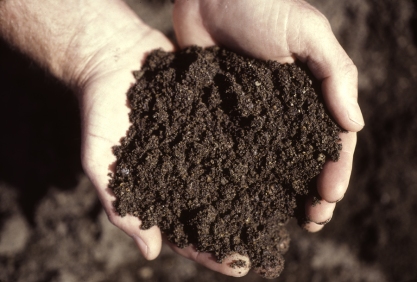
Soil is the foundation of life, and so in my quest for self-sustainability I have chosen to start at that foundational point this year. On my quest to be self-sustaining, this year started with building my own seed starting soil. With $8 worth of vermiculite I have about three wheelbarrows full of starter soil, and the vermiculite was optional. I think a little sand would have done the trick. Nevertheless, the path is clear.

Self-sustainability is becoming more and more important as the industrial agriculture machine slowly chews up its gears and we are left with fewer and fewer moral options. But why stop at not buying industrial food products? This is just a beginning, and a beginning that ironically ends at the very soil that all of our food eventually comes from.

I started with well composted manure, grass and food scraps collected all last year and turned regularly until winter set in. Before putting the soil in my homemade boxes, I ran it through the chipper/shredder. This fluffed up the soil and chewed up some of the bigger chunks. I then filtered it through my homemade soil colander (four 4×4’s with ¼ wire stapled to the bottom) into a wheelbarrow and added vermiculite.

I have started my leek, onion, cabbage, and peppers in this mix and have watered (so far) about four times with no sign of compaction. I have yet to see if my little seedlings, after sprouting, like their new home. Tomatoes go in this weekend.

It is difficult to explain the satisfaction of not buying products in order to be self-sustaining. Although I have a long way to go, this new starter soil is a further new beginning on the road to independence.

A Split-Second Decision


John Cage was a composer who “wrote” and performed a piece of silence called 4” 33’ (four minutes and thirty-three seconds). It was simply himself, on stage, and sitting at a piano for four minutes and thirty-three seconds. However simplistic and absurd it might have seemed and still perhaps is, I believe that the art, while not found in the actual performance is in fact found in the thought. This is culture.


I believe that many of us are realizing that what we consider culture is really nothing at all but consumerism. Culture is virtuous; consumerism is not. A man sitting at a piano and not playing the instrument, I thought, can be analogous to individuals who find themselves in a consumerist society without being consumers. I know this is a stretch, perhaps, but I believe there is something true in it.


To play a piano is a choice and one must learn, and learning takes time and effort; much time and much effort. That is why so many begin by taking lessons but few come to play the piano. Not being a consumer takes time and much effort.


The burgeoning agrarian movement that seems to be blossoming in this country can be seen as a reaction to a society that has lost its priorities to profit and consumerism, but I like to think of it as a choice, an idea that often times is ridiculed (as John Cage was when he performed his piece).


Perhaps John Cage was reacting to the ever-more complexities of modern classical music at the time? And if so, the analogy becomes even more similar. Rather than complaining as a composer, Cage did something to point this out. In the same way, we can make choices that go against the relentless pressure to consume.


Some may argue that actions such as Cage’s piece or the agrarian movement are simply fads, but I’m not sure that the argument stands. Cage’s piece is famous (or infamous) even today and he as a composer changed the landscape of modern classical music. In the same way I think that as more and more people realize the cost of a consumer lifestyle is not sustainable, they too will choose to take a stand. In Cage’s situation it was not too play for 4 minutes and thirty three seconds.


Our stand against consumerism can start with a split second decision.


a Dead Leaf

a dead leaf

Fall is often looked upon as the end of summer. In fact, as I ride around the area where I live, I see everyone sweeping up the remains of the summer: the leaves on the ground, now brown, yellow, and red. They bag these remnants up and leave them on the curb to be picked up. The trees stand lifeless and the mess which is nature is uncovered for all to see. It is as if we hide behind the fullness of life until our secrets are revealed with the death of a leaf. However, a dead leaf is much more than the end; it is in fact, the future.

I cannot stand the sight of leaves being crushed in the middle of streets under the tires of cars. This unconscious act seems to denigrate the value of death because it is often seen as the end. The leaves have done their job and are discarded, unimportant and we busy ourselves “cleaning up” the mess left behind without thinking of the cost. The trees sometimes seem disgraced in their gnarly nakedness; nothing left to the imagination. However, it is the fallen leaves that hold the future and our lack of imagination the dooms us to repeat the mistakes that we seem to believe justified.

Gardens in the fall do not help. Our gardens have produced and are now left flat and unappealing; the dirt mocking the very labor that we have spent the summer on. The end is all around us and we sweep it into bags and under the eaves of the house. We prune the leftovers almost wishing that no one will notice the seeming ugliness that we uncover.

The fall is not the end, but the beginning. A dead leaf is much more than the end, or even a representation of the end, it is the beginning. In fact, the deadness of the leaf is only an illusion because it is the life that it holds that counts. The dead leaf holds the key to the future. It is such a simple concept; an endless cycle of birth and rebirth, Buddhist in its nature. I picked up a leaf before throwing it into the shredder and looked upon its brown acquiescence. I thought as I threw it into the machine that it was at my mercy. But I was wrong: it is the other way around.

We are at the mercy of the fall and what it promises us. The fall is in fact the beginning of what will be. The labor of the summer is a direct consequence of our understanding that it is we that are at the mercy of the leaves in the fall. It is they that hold the answers and them that hold our future. Within the thin, crackly membrane of a dead leaf is the necessities of life. If we do not understand this, we are in fact, doomed.

So, grab those black bags that hold so much; rip them open and spill their precious contents over your garden, over your lawn, over your land. Remember, the land will only give back as much as we let it. The dead leaf that you crumple in your hand is a deciding factor not only for your garden, but for our lives. A society that does not value the importance of a dead leaf, is a society that is unable to value the importance of a sustainable life.

Perma-mess

perma mess

This year I tried a permaculture approach to the garden. I have hops, viola, and tomatillos vying for space in a single bed while across the boardwalk, there’s squash and red cabbage throwing around with tomatoes and potatoes. Walk a way down and I find asparagus poking through the long tendrils of the leek bedded down for winter. I look over the garden from the asparagus and notice the peppers peering around the eggplants and what’s left of the cauliflower. One bed has a few kale plants readying themselves for winter; the rest of the bed being laid fallow, compost and manure being soaked in by the soil and the worms wiggling around in it.

The garden is unorganized, unplanned and well, messy looking. But a walk through it and I find that the plants are thriving, healthy, and somewhat natural looking in their environment. However, this is not the English garden that so many have in mind. Recently, I’ve been reading about permaculture and the idea that we should learn from nature. I’ve found much of permaculture is permeated with types of new age thinking, but this is not the permaculture that I recognize.

There is nothing new about permaculture. In fact, it is as old as the earth itself. Permanent agriculture, the full name, refers to a train of thought that is Zen like in its simplicity, but takes the patience of a saint and the wherewithal to understand that such agriculture is not measured by profit or product, but by quality and produce. It may be that this way of thinking is not profitable. But, it is sustainable, which in this day and age we are finding to be more and more necessary.

One thing that I must come to be accustomed to is the aesthetic of permanent agriculture. First, I learn that I must relinquish control. Secondly, I must learn that such agriculture is time-intensive and in a time when attention spams are measured in minutes, permaculture can seem very unappealing. Lastly, I am learning to take chances and to trust what I have put into motion. Put in and step back is my new motto.

The consequences are messy and disorganized. However, at this late date in the season I’ve found a certain beauty and even pride in the necessity of stepping over vines and cabbage leaves to get to the tomatoes buried among the basil and asparagus. Time, I think, is something that we have available to us, but to take the time often messes up our lives. We have come to like efficiency and modern cleanliness. Permaculture is not that efficient and is certainly not appealing to the hard line English gardener. However, the permanence of permaculture is an acquired taste; a taste that given our environmental problems and looming changes is necessary.

So, give up the ghost to a natural and often fun way of gardening: permaculture. I think you’ll find that permanence is a lot more fleeting than you may think!

It Sure is Hot Out There

climate change

The summer has finally come, after a wet and strange spring. I’m afraid that my foraging plans will be cut short by the late frost this year. The apple, plum and cherry blossoms got hit hard. For some reason the beets that I planted as well as a great deal of the kale seeds did not even make it out of the ground. Bad seeds? I’m not sure. However, the tomatoes look good, the cucumbers and the hops are doing well. Cauliflower, cabbage and the asparagus are going gangbusters. The peppers are slow, but have fruited.

The herbs are going well, especially the established ones. A lot of rain this spring did a lot of good. There are still varroa problems with the bees, but I have hope that I can get them through September, and then through the winter. I’m hoping that they will do well on their own. It’s been pretty “hands off” this year. I planted new peach and cherry trees as well as a few berry bushes. We started mushrooms this year and they have taken to the logs that we inoculated.

The front door is sticking and I am hoping that the wood settles after I fixed the irrigation head that was allowing it to get soaked at night. I built a food dehydrator and installed new poles and wires for the hops. The weeding continues uninterrupted. Again, the cilantro was weak as was the salad. Who knows why as I planted both earlier this year. Maybe too early?

These are issues that most of us do not have to worry about, at least not directly. For most of us in the west we leave these worries to others; to the “industry” and to science. However, these are honest and necessary worries. That broad descriptive, “weather”, contains much of the above but the devil is in the details; most of the details that go unaware.

It seems that these days the details of the farmer, the gardener, the agrarian are making themselves known more and more by making the details of weather more and more known. The crumbs of climate changes are leaving a trail, but what we do with those crumbs is up to us. I’m not sure what I will do…

I will go out and see if there are apples, plums and cherries to be had off the trails. Perhaps the mushrooms in the mountains will be plentiful because of the rains. I’ll can the tomatoes with the great crop of basil, but will need to buy beets from the Farmer’s Market down the street. I hope to get a crop of fall kale and pickle a few cucumbers. I suppose all that we can do is to follow the trail of crumbs and wish for the best. It is only weather, after all.

Perfect Imperfection

perfection

I decided that putting the leek starts in the ground, most of them looked dead or dying, was a chance that I was willing to make. The onion starts look good. Last year, our onion crop wasn’t that good and I remember wondering why home gardeners don’t often get those vegetables that we all see in the supermarket: those red, oval tomatoes, all sized and shapely, taking their place on the well prepared produce stands or that green, full-leafed lettuce plants in February. Gardeners, at least of my ilk, live in a different world; they live in a world where food often looks like well, food and not products.

With the ongoing and growing movement with regard to food culture, many people are more and more aware of the processes that are necessary to get food to the market. The process is in fact amazing! The process, however, gives us a false sense of what food is. It is not a commodity, the consequence of a closed and well-oiled system. Rather, food is a product of the rather imperfect world in which we live. Food is a product of the soil, of water, and of time and effort and more often than not, chance.

I try to remember this as a put down the small starter potatoes, just poking out their first shoots. I remember my last crop of potatoes. They seemed small and pathetic, at least until I took a bit of them. A little salt water, heat and time and such a potato is truly a work of art. Like art, producing food relies upon a bit of imagination and a lot of elbow grease. The result, whether on canvas or in the ground, is often not what we started out thinking it would be. However, the results, somehow, are always satisfying.

My leeks are doing well as are the onion starts. My tomato seedlings have little blossoms on them as they stare up out of the hothouse. I don’t know what will come of these as the season progresses, but I know the results will not be perfect.

Nature’s process is not perfect, but nature is perfect in its imperfection. While nature is not an artist, nor does it “produce” food, it is a process that we must and always will, rely upon. Nature is a verb, perhaps, but a verb that changes meaning over time; it never sits still awaiting definition. Nature offers a bit of insight into something that we must accept: the idea of perfect imperfection. But if my memory serves me right, imperfection can taste perfectly good!

The “P” Word

progess

Progress is a peculiar word. And to make matters worse, it is a political word as well. Perhaps the problem is that we humans are a particular bunch, often specious and many times self-promoting. Progress is not often synonymous with tradition but perhaps that is only because we define it as profit. We have, no doubt, progressed but with profit as progress comes a price.

The price for the particular progress that is being promoted by the current preliminary agricultural programs being put forth under numerous and often publicized public interest in agrarian lifestyles and sustainable food-growing is that often progress is not seen as progress at all. However, I am here to tell you that sustainability in any form is most definitely growth, advancement, improvement, development: it is progressive!

While it is true that profitable progress will pay the price in the beginning, proper progressive movement relies upon the propensity of those involved to understand, to recognize, to perceive (if I may) the parallel between the proper way to grow, choose and eat food and the priorities that we choose to make. In short, progress is defined by why and what we prioritize. If we prioritize profit over progress than we get what we deserve which is exactly what we are getting now.

To prioritize profit and production over sustainable progress and points of virtue is to presuppose that profit is a necessary participant in proven progress. The point is that progress is not always profit-driven. Progress can be profitable but only if it is sustainable. So, while sustainable lifestyles seem in vogue and are popular with a growing number of the populace, it is not a popularity contest. Furthermore, although the progressive movements with food production often rely upon pre-industrial ideas, the proposed changes are necessary if we are to remain progressive.

The phenomenon is primarily a progressive one that is properly founded upon proven production means that are both profitable and practicable if not predictable.

Thanks for reading!  Philo

The Patient Gardener

snow garden

Gardeners tend to regard snow with disdain. The coldness keeps us from going out and feeling the dirt between our fingers. The snow blankets all of our past work and the plants are leafless and lifeless. At least that’s what it looks like. However, there’s a dry spot in my garden out back where I will plant hops this coming spring and I found myself shoveling wheelbarrows of snow onto the spot to bring the soil to life. It is arid during the season and I have always had problems getting things to grow there.

At the end of the day, gardeners are in the business of building up soil and while I was trudging around in my garden the other day in 8” of snow, shoveling the stuff onto my “dry spot”, I was reminded that nothing in nature is without ground; both figuratively and literally. The snow acts as insulation against the raw windy cold. Snow melts slowly into the ground breaking up clods and working manure into the soil. Snow provides moisture over time and gives the soil time to recover from the gardener’s incessant need to interfere with what nature does best.

This last point is the cornerstone of a subject that I have become more and more interested in: permaculture. It seems to go against the concept of gardening itself: just leave it alone. I have found that it helps to remember that we are not really managers as much as stewards. That answering the question “How?” does not answer the question “Why?” As a gardener, I want to produce food and resources for food. I want hops not because hops are somehow inherently good, but because I love beer and want to make beer that tastes good. Hops makes beer taste good!

However, permaculture does not dismiss our utilitarian desires. Rather, it reminds us that our utilitarian desires need to be limited by the resources that we actually have and the resources that we actually have can be more than enough…as long as we don’t get greedy. It takes patience not to be greedy.

Snow forces us to be permaculturists rather than gardeners in the true sense of the word: work intentionally and don’t do too much and don’t take too much. It’s funny that we have to be taught these things as they seem to be self-evident. Maybe the lesson to be learned is: gardening is easy if you have patience, but being patient makes gardening difficult. I, for one, find that to be true anyway.