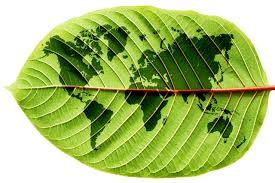
environment

Truth is Like Poetry…

Problem: Global Warming

Since the 1970’s or even before, scientists have known about the human-induced warming of this planet due to industrialization and the continued production of certain gases.  And yet, in the United States in particular, global warming is “questioned”.  This feigned skepticism is primarily the product of one man and his pathological greed, Charles Koch.  However, he is not alone.  The evidence is clear and unquestionable: we are the primary cause of inducing greenhouse gases that will inevitably change or desecrate life on this planet slowly but surely.

Solution:

Buying a Tesla is perhaps a start, not the solution; controlling overpopulation is.  So, curbing the human population is necessary.  However, that is not the first nor is it the only step.  Secondly, corporations worldwide, especially in the United States, must be regulated stringently regarding their output of goods, services and the numerous pollutants.  Corporations (and all businesses) must pay the real cost of doing business.

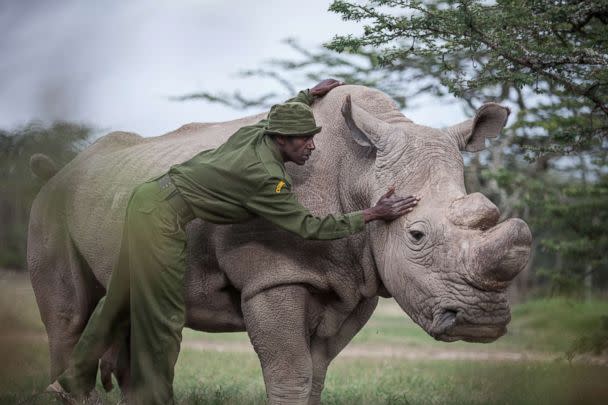
Third, societies must be changed from being consumer-based to being sustainably-centered.  This takes education (true education [the next problem]), but it also takes a heavy-handed look laisse faire capitalistic-attitudes of all of us.  Last but not least, we must guard what is left of our natural spaces, forests in particular, in the same way we are trying to guard the last two white rhinos, and must replenish large natural areas by heavily limiting civilization’s sprawl.  Trees are truly part of the answer.
1. Overpopulation

Problem:

There are too many people in the world.  Not in 3rd world countries or “certain” countries, but simply too many of us.  We have succumbed to the evolutionary drive to procreate for too long.  We understand this, at least we understand the idea of this, but we do not act upon the fact that overpopulation is the number one ecological and social problem that we face today.  Over and beyond global warming.  If it is not possible to legislate morality nor is it possible to curb the evolutionary drive to procreate, then what do we do? 

We have the means to act upon this problem ethically, and know that to not act upon it is unethical.  There have been and still are those that argue for fallacious solutions that are nothing more than racial and meritocratic excuses, but those are not to be taken seriously (we all know what those are). With a modicum of common sense those so-called ‘arguments’ are easily seen through.  But the fact does remain that continuing to have children is the prime source of this problem, a problem that we will have to do something about or face the horrible consequences of having something done about it by mother nature.

Solution:

The first thing we must do is to educate ourselves as nations about overpopulation and accept that it is the leading problem.  The problem can no longer be held taboo by societies or their governments.  Secondly, we must change the tax systems so as to not reward people for having children, the incentive to procreate must be taken away at the very least, and reversed if possible.  Third, the previous suggestions must be globally implemented, but the rich nations (those using most resources per person) must lead the way.  Lastly, abortions and birth-control must be made easily available to whomever desires them.  There is no room nor is there time for ideological and ethical squabbles.

Last Man Standing

PHOTO: Mohammed Doyo, head caretaker, caresses Sudan, the last male northern white rhino left on the planet. (Nichole Sobecki for The Washington Post via Getty Images)

For so many people an animal, far from their reality, that dies is a news item and nothing else.  Their families, their jobs, their lives take precedence over the importance of a single rhino that dies thousands of miles away.  But this death is important to us as a species: it represents our disregard for those around us and the world in which we live.

With the passing of the last white rhino, our world becomes a little less interesting, and much less diverse.  The world that we live in becomes smaller as our understanding becomes more narrowly focused.  Selfishness is not a virtue that we can count upon to survive; human beings are not the center, focal point of all things.  And so as another animal dies due to human action, this lesson becomes more important.

But how can we take into consideration an animal that dies thousands of miles outside of our perspective when we cannot take into consideration those around us, those outside of our own families?  This is, of course, a rhetorical question.  To say that our families must always take precedence over all things is not enough.  The kind of life we want our families to have is directly correlated to the kind of life we want everyone and everything to have and so as the world becomes a poorer place the quality of life is diminished; it goes quietly.

Our decisions cannot in any moral sense be limited to our own narrow perspective; easy is not an option.  Somehow we must realize that it is not the quantity but the quality of life that matters.  Until this sense of virtue is understood there will always be a last man standing as the world putters by.

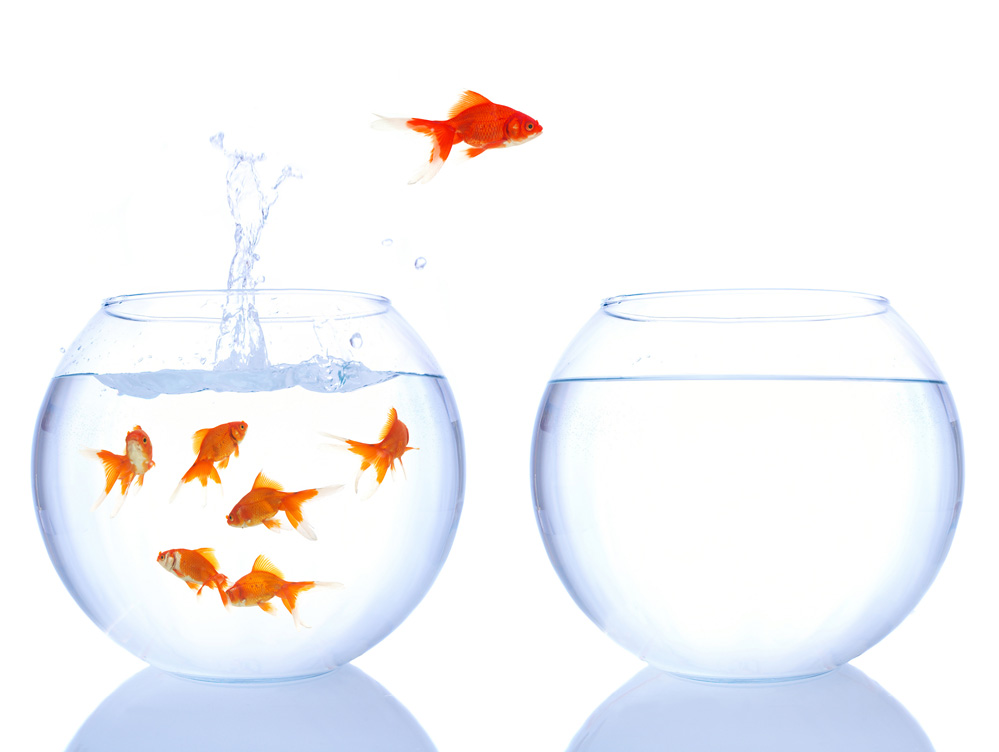
A Two-For!

change-fishWords
In this day and age of endless internet banter it seems that language has been lost. Discussion, too, has taken a blow. We no longer communicate but rather yell our opinions at each other, and of course those opinions are beyond respute. We have answers to questions we do not understand; we have solutions to problems we do not know exist; we speak without understanding the power of words.

Terms either go to the wayside or are used as swords of offensiveness or defensiveness; either way we “are right” when we often do not understand the concepts of words like “right” and “wrong”. Being “politically correct” or simply being empathetic and kind; being “offensive” or simply being “truthful”. Gone are the days, it seems, of being expected to live up to the standards that we create: only need to speak because that is often the only thing we can do.

We use words as weapons and forget the firepower that make language important in the first place: concepts, propositions. We shortcut language without a thought to what that shortcut does to the actual meaning behind words. Without a thought we attack each other. Afterall, they’re only words.

When Things Take a Turn

I recently sold the property that we intended to start our farm on. Oddly enough it was not a difficult decision. The difficulty, as perhaps it always does, lay in the logistics (the work) of actually moving. Even in the short time we were at the place, material and tools pile up. It takes a lot to be self-sufficient.
So, into storage went my workshop and onto my neighbor’s (Neighbor Bob) property went the hens, my tractor and a few other large implements. While our decision to move on from our newly acquired place seems irrational to many I would argue that it would be insane to stretch your hand out to catch a dream and settle.
To expect something you know will not work to get better is to guarantee failure. And so, things take a turn. The work was unrelenting and the limbo that it puts a want-to-be farmer like myself in is almost as stressful as the move itself. But, when things take a turn there is not other option than to enjoy the scenery.
I will not explain that such decisions are easy or that they are the best for everyone, but often times the truth is obvious and that makes the answer even more obvious.
My advice to anyone finding themselves in a situation that is not conducive to their happiness is to remember that change brings new options, many of which were either not noticed or not available. When things take a turn sometimes the best bet is to ride the storm and other times it is to abandon ship. But, the most important aspect of change to remember is that life is short and change, no matter what turn it takes, is inevitable.

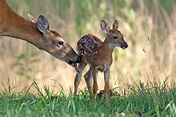
Mothers

mothers

I am reminded, on Mother’s Day, of those mothers that do not have a voice, but love nevertheless.  I am reminded that all of life has a mother; one who loves in their own way, even if it is not ours.  I am, of course, referring to the mothers that we all often forget.  I am reminded of them when I walk out my door.

I hear them in my yard and see them scamper up trees and into the wood pile out back.  In the mornings I see them walking slowly through the forest on our property.  And sometimes I hear them in the back and have seen their black flash run through the woods.  I read about them and see pictures of them lovingly licking their young children or sleeping.

I must admit that I have disturbed a few when I lifted some wood or mixed the compost pile.  They look up at me and I feel a shutter run through me.  I quickly replace the wood, or cover them back up; them and their young.  I hear them chatter angrily when I let the cat out, and I hurriedly pack poor old Fimp back inside.  I know there are mothers that are afraid, that are hunted by the heartless among us and they too have mothers.  I cannot seem to get myself to read or watch about these things.

I would ask all of you to give a thought to all the mothers of the world and consider that they all, in their own way, love their children.  I think, especially in this age of inconsideration, that it is time that we consider those that deserve much more than just a passing thought.  I love my mother, and she loves me.  I also know that there are others do the same.

Learning How to Read

snow-forst

Many of us love to read books, great articles in good magazines, and perhaps less and less the news.  But after years of reading I am learning how to read…yet again.  There are certain topics that are difficult such as philosophy (a love of mine), and scientific books, even layman science is difficult to me.  However, having recently purchased a property that I intended to make a farm, I am learning how to read again.

In the crisp, New England mornings I walk my dog through the months old snow and the half-century old forest that I own.  I’ve done the walk twice a day for some time now and every day the land teaches something new.  A crevice here, a creek that is burrowing a new furrow; hills and dales, and the trees: oak, birch, red and white pine, hickory, poplar.

Farmers, I think, know what they want, but few know what the land needs; only the good ones, and to know this they need to know how to read.  Walking the land envisioning a field but the land won’t have it.  Perhaps a fruit tree grove there, but the land has started one here.  We own land, but we don’t control land.

Land seems pliable and passive, but don’t let it fool you.  It is the master of its own fate.  We are ego-filled and short-sighted.  The land is wise and counts eons, not seconds.  It is in no hurry as its age is endless.  It knows that we are of it, and by it.  we see land as potential, but it is full of the past.

I am learning how to read the land, and it is a difficult lesson.  I am impatient and the alphabet is foreign.  But the land is patience, and its alphabet it created.  The words ooze out of the fog of my ignorance…slowly.  But as I learn to read I realize that even the choice to learn is an illusion.

Sustain Sufficiency

sustainability

The fall has come here at our new forest/farm.  The renovation on the bathrooms is almost finished and the months past have flown by.  The question still remains: is self sufficiency a pipe dream, is it possible?  This discussion, I’m sure, is common in households that have decided to turn their backs on the supermarkets, the food-consumer concentration of non-sustainability, and suburbs that offer comfort and the all-consuming security.

First, self-sufficiency.  The problem, it seems, is energy.  How to sufficiently produce and continue to produce the energy that it takes.  There are two possibilities: add to the energy production or take away from the energy consumption.  Alone, there is no option: we must take away our need for energy to be self sufficient.  So, self-sufficiency becomes a community approach to living at some point, which (in order to be moral, to be healthy and to be virtuous) must be sustainable.

Second, sustainability.  The problem is energy.  How to continue to sufficiently produce the energy that it takes to be self sufficient.  There are two possibilities…

So while self-sufficiency and sustainability are not the same they are reliant upon one another: to sustain self-sufficiency we must have sustainable energy sources.  This is the catch and the secret.  This is the unending education that I am reminded of as a look out over my new acreage  and feel the damp coolness seep in, watching the golden leaves fall.

I throw another log on the fire and sip my hot coffee.

An Update on the Experiment

experiment

This particular post is two things: an apology and and explanation.

First, an apology.  I realize that blogs are particularly important to those who write them, and less so to those who read them.  That being the case, I must still apologize for not being consistent, if only to myself.

Secondly, an explanation.  I have embarked upon an experiment in self-sustainability that involves moving from one side of this country to the other.  Such a move takes time and effort which explains my apology above.  This experiment involves buying a small (22 acre) plot of land with a house, a barn foundation, and a full woodworking shop.  This is the result of several years of contemplation and contrary thinking that has cost comfort and security, I hope, to a good end: to see just how self-sustaining an individual can be.

To this end I would like to invite anyone interested to visit two new sites that will be up and running this fall.  First, I will have a podcast called “The Philosophy of Gardening” and at some point and time a youtube channel called Trollcastle Works.  These endeavors will simply be a video/audio blog of ongoings around the property that will include forestry work, woodworking and of course gardening.

I hope to have several projects going that include: a small fruit orchard, vegetable garden, furniture making and carpentry, hops and grain fields, and brewing beer.  The podcast and videos, I hope, will be of interest to anyone that might consider self-sustainability as a way of life.

I call this an experiment, because I see 100% self-sustainability as being the speed of light, and the experiment’s goal itself being to see how close to this ideal that I can get.  There will be failures and there will be accomplishments, and I hope to share both.

The reason for this experiment is, of course, personal, but it stems from a belief that self-sustainability for individuals and families is the only moral option.  What better way to test this belief than putting it in practice!

I hope that some of you consider following me on this adventure!

Industry

industry

When did the word “industrial” become synonymous with heinous attributes of our society?  To be industrial has not always meant “continued or increased military spending by the national government.” a term first used by U.S. President Dwight D. Eisenhower in his Farewell Address on January 17, 1961.  Nor has it always been “characterized by a low fallow ratio and higher use of inputs such as capital and labor per unit land area”, in contrast to traditional agriculture in which the inputs per unit land are lower.  Nor has industry been a “transition to new manufacturing processes…”  To be industrial traditionally refers to the efficient effort put forth by individuals, and not to the methodological destruction of other countries through warfare, or the planned and procedural devastation of the environment.  Nor has industry always denigrated human beings to just another “cog in the machine”.

Industrial military complexes, industrial agriculture systems, or industrial revolutions really do not refer to industry at all, but to consumption, profit motivation, and product movement.  I would like to take back the word “industrial” to mean something effective but positive; a compliment if possible.  I would like to see the industrialization of our communities by seeing lawns disappear, being replaced by gardens, and useless fences replaced by useful fencing in of a few small livestock.  I would like us to be an industrial culture once again, but in the true sense of the word.

If we are to become industrial, we must come to understand the system in which we work.  We must understand that industrialization does not mean continued or increased inputs measured in units and efficient processes that lead to positive profits.  I would like to be industrial because that is what human beings’ purpose is: to work.  But we are also moral beings, and so I would like us to be morally industrial.  If we are to work, then we ought to work towards something good, something positive, something sustainable, something worth being.

The good, the positive, is seldom complex and even more seldom reliant upon units, inputs, measured efficiencies or manipulated markets, goods and services.  It is almost as if we have let our language fall prey to the lowest common denominators of those in our society that would have us believe that progress is measured in goods and services created by our industries rather than our industry.  I would like us to be industrious without relying upon industry.  We can, if we only realize that we must.  We must, and so I can only hope we will.

The Foundation of Life

soil

Soil is the foundation of life, and so in my quest for self-sustainability I have chosen to start at that foundational point this year. On my quest to be self-sustaining, this year started with building my own seed starting soil. With $8 worth of vermiculite I have about three wheelbarrows full of starter soil, and the vermiculite was optional. I think a little sand would have done the trick. Nevertheless, the path is clear.

Self-sustainability is becoming more and more important as the industrial agriculture machine slowly chews up its gears and we are left with fewer and fewer moral options. But why stop at not buying industrial food products? This is just a beginning, and a beginning that ironically ends at the very soil that all of our food eventually comes from.

I started with well composted manure, grass and food scraps collected all last year and turned regularly until winter set in. Before putting the soil in my homemade boxes, I ran it through the chipper/shredder. This fluffed up the soil and chewed up some of the bigger chunks. I then filtered it through my homemade soil colander (four 4×4’s with ¼ wire stapled to the bottom) into a wheelbarrow and added vermiculite.

I have started my leek, onion, cabbage, and peppers in this mix and have watered (so far) about four times with no sign of compaction. I have yet to see if my little seedlings, after sprouting, like their new home. Tomatoes go in this weekend.

It is difficult to explain the satisfaction of not buying products in order to be self-sustaining. Although I have a long way to go, this new starter soil is a further new beginning on the road to independence.