life

A Split-Second Decision


John Cage was a composer who “wrote” and performed a piece of silence called 4” 33’ (four minutes and thirty-three seconds). It was simply himself, on stage, and sitting at a piano for four minutes and thirty-three seconds. However simplistic and absurd it might have seemed and still perhaps is, I believe that the art, while not found in the actual performance is in fact found in the thought. This is culture.


I believe that many of us are realizing that what we consider culture is really nothing at all but consumerism. Culture is virtuous; consumerism is not. A man sitting at a piano and not playing the instrument, I thought, can be analogous to individuals who find themselves in a consumerist society without being consumers. I know this is a stretch, perhaps, but I believe there is something true in it.


To play a piano is a choice and one must learn, and learning takes time and effort; much time and much effort. That is why so many begin by taking lessons but few come to play the piano. Not being a consumer takes time and much effort.


The burgeoning agrarian movement that seems to be blossoming in this country can be seen as a reaction to a society that has lost its priorities to profit and consumerism, but I like to think of it as a choice, an idea that often times is ridiculed (as John Cage was when he performed his piece).


Perhaps John Cage was reacting to the ever-more complexities of modern classical music at the time? And if so, the analogy becomes even more similar. Rather than complaining as a composer, Cage did something to point this out. In the same way, we can make choices that go against the relentless pressure to consume.


Some may argue that actions such as Cage’s piece or the agrarian movement are simply fads, but I’m not sure that the argument stands. Cage’s piece is famous (or infamous) even today and he as a composer changed the landscape of modern classical music. In the same way I think that as more and more people realize the cost of a consumer lifestyle is not sustainable, they too will choose to take a stand. In Cage’s situation it was not too play for 4 minutes and thirty three seconds.


Our stand against consumerism can start with a split second decision.


Dreams

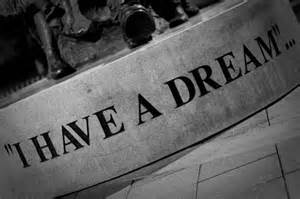
I have a dream

Dreams

To dream of making a dream a reality takes foresight, hope, imagination and a vision. To make a dream a reality takes those things, but it also takes a hefty dose of courage, hard work, money, and willingness to give up comfort in most of its forms. This is why it is easy to dream, but difficult to live your dream.

Be ready to smile when your friends, your family, and most others remind you of how many ways there are to fail, how good you have it and how you should “give it a second thought…” or how it is simply impossible. These will be bumps in the road in comparison to the endless work and hours, to the face of poverty staring in your window, the relentless pummeling that you will take physically and mentally. Make no mistake, to make a dream a reality you must give up the dream…but only almost.

I say “almost” because dreams are not made to be broken. Live your dream!

If you have a dream first make your mind up to do it. Secondly…do it. It really is that simple. Afterwards, don’t look back.

Regrets

To have regrets is easy: take the path most travelled, bury your hope and your imagination; your vision. To make your regret a reality takes those things, but it also takes a hefty dose of fear, making decisions based upon what others advise, and willingness to give up your dreams. This is why it is easy to forget your dreams, but difficult to live with that decision.

Be ready to smile when your friends, your family, and most others remind you that you could of, or should have if only had. These will be bumps in the road in comparison to the endless days, months and years of remembering the dream, the face of comfort staring in your window, and the relentless pummeling that you will take as you wake up at night and realize that they were right. Make no mistake, to make your regrets a reality you must give up the dream…completely.

I say “completely” because regret lasts a lifetime.

If you have regrets, first recognize them as regrets. Secondly…change them. It really is that simple. Afterwards, don’t look back.

Vacation


vacation pic

I’ve never really enjoyed taking a vacation. The time, to me, seems ill-spent and empty. I wonder about this: is there something wrong with me, or do I simply need to “relax”? I don’t think so. I think that there is something more going on. Vacation implies the lack of work, but the lack of work is not necessarily a good thing unless, of course, you don’t like your work.


Now I’m not a great fan of polls and statistics, but to make a point here, more than 70% of Americans do not like their jobs! If that is the case, then I can certainly see why so many people put a price upon free time. But I don’t think that makes vacation a positive thing. Vacation is only seen in a positive light if you don’t like your job. Perhaps a better approach than dreaming of beach vacations and beer drinking debauchery is to simply do something that you like to do.


I love my job, and I am in the process of transitioning into another job that I believe I will love even more. This is what some in my family would call a “luxury dilemma”. I would have to concur. The dilemma, however, cannot be solved by taking a vacation but must be solved by doing some work. Research and development attitudes must be taken; assessing risk and defining responsibility must be clarified. Economic outcomes and expenses must be taken into consideration. This all sounds like work, and that is because it is.


I often hear people dreamily wave around the idea of “never working again”, but I firmly believe that they would be miserable after about two weeks. Work defines us, and not having work is in a sense losing one’s self. I am aware that in our modern and progressive societies we have been conditioned to define as work tedious tasks and mundane bureaucratic business. Often we have become nothing more than monkeys in a box looking longingly out sealed windows. We have defined work by profit rather than work by principle, and I think this is where the problem is. We must work for reasons other than making a profit.


I am not saying that we need to give the responsibility of our lives over to someone or something else. However, I am saying that our relentless hunt for more money is making us (and many others) miserable. Vacation entails time to be free from work, but this is only a problem if we do not have a job that we would do for free. Being honest with yourself is often difficult, but is always free. Maybe we need to remember that time is easy but is never free. In fact, it may be the most expensive thing we have.

Simple Pleasures

pleasure

There’s something beautiful about seeing bees come out on a winter’s day. Walking out to the bee yard I noticed a few girls flying around. Although the sky was grey, it was just warm enough for a few brave hearts to venture outside. It is a simple pleasure, I know, but a pleasure nevertheless.

It is pleasures like this that make life worth living. It does not take money; in fact money alone is void of the kind of pleasure that is available if we just take time to notice. The garden, newly manured, sitting in the snow reminds me that there are worms deep under the soil. My ear up against the beehive and the scratching and buzzing that I hear, reminds me that we all want the same thing: a safe, warm place.

Perhaps it is this realization that warms my heart on cold winter days. When I realize the beauty that is nature I just have to stop and stare in wonderment. I think that it would be a much better world if we all took time to stand and stare in wonderment at the simple and often forgotten corners of our world.

In the back I hear chickens clucking away. I know that they are fussing about the snow, and perhaps feel a bit of cabin fever already. But they too venture out picking around in the snow, hoping to find a morsel, or maybe just doing it out of curiosity.

I like the smell of a kitchen that people cook in. I like the warmth of a home, and the cold against my face on an early morning walk. I like knowing that we all have a place, all animals; all living creatures. I like to think that there are places that are safe, that people want the best and are willing to work for it. I like to think that there is love in the world, and that there are those that are loved.

I know that these are simple pleasures, but as simple as they are, they are also simply priceless. And so I walk out back and stick my hand down in the dirt, I work on winter carpentry projects with the hope of the coming Spring and Summer. I put my ear up against the hive. I do these things and a smile comes to my face; just another simple pleasure to be thankful for.


This Old Hat

old hats

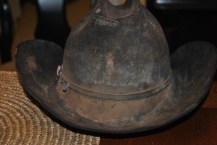
I have an old hat that a friend of mine used to wear.  Now it’s faded and the threads are starting to wear thin.  I’ve washed it a few times, always by hand, but every time I wash it, it seems to get weaker.  My friend, Turid, was from Norway.  She died a few years back of a brain tumor.  When her hair fell out she wore this hat to keep her head warm.  Now I wear it to keep my head warm.

I can’t say that it’s the best looking of hats.  It was bought in the airport in Oslo; kind of a last minute thought.  It’s come a long way from the rack in an airport kiosk.  It is probably my favorite hat, but when I wear it there are many that make fun of me.

“You look like a fisherman in that hat!” they’ll say.

Or, “That’s kinda funky…”

Or, “Have you thought about buying another hat?!”

I smile; they mean no harm.  But, I think of what they’d say if I told them the story of Turid and the hat.  I never do, because I learned from Turi to never say anything that might make people feel bad, if you don’t have to.

I suppose that I could quit wearing the hat and put it up in a special place, a box or frame, to remember her by.  But I’m fairly certain that she would frown upon such a scheme.  “A hat is to be worn…” she might say, “So, wear the hat!”  And I do.

Of course, I’m attached to the hat; it means a lot for obvious reasons, but it has come to stand for more than it means.  I am committed to the hat, one may say.  There are new, and better hats, but none quite so good as this one.  There are warmer hats, and hats that cover my ears on cold days, but none quite so comforting as this hat.

Turid died some years ago, but I had the pleasure of meeting her parents in Bergen Norway, as well as her children.  Her parents made a mark on me; a mark that people rarely make.  They were honest and sincere, and we hit it off right off the bat.  They had dignity and integrity; they had character and were committed.  They were set in ways, not because of tradition, but because the ways were trustworthy, practical, and utilitarian: they are simply right.

Although I only met them for a few hours one night, Turid’s mother hugged me (very un-Norwegian), and told me to take care of Gunnar (Turid’s husband, also a good friend of mine).  Her father showed me his old woodworking bench, worn by years of use.  He, like I have become, was committed.

So, the hat and I have a history and it has become a part of my history.  I love this old, ugly hat but in a way that only those who understand the importance of committing one’s self to something inherently good can do.  I think it’s funny how some cheap, stitched up airport hat can become a treasure and I wonder about those who make a treasure out of things they are not committed to.  This old hat has at least taught me that, and it keeps my head warm enough for all that.

Head or Heart

head or heart

This is part of an old saying: follow your heart. But when I think to follow my heart, my assumption is that in doing so things will somehow “magically” work out. I do realize, perhaps because I listen to my head, that following my heart means a lot of work, a lot of compromise, and as I am beginning to understand: a lot of courage.

Let’s be realistic! Dreams are often best left as such. But following your heart often demands that we forget that fact. In fact, it is often best to do so. I’m sure that many people have realized that much too late. When the dream becomes a nightmare of endless nights, lack of money, and no way out it becomes difficult to remember that it was the heart that got us into the pickle in the first place.

But like love, the heart is a fickle thing, and to truly follow the heart, to make that dream a reality (nightmares and all), often means to follow many paths least followed; often for good reason. When I think of following my heart I always remember that we wake from our dreams and that nightmares end. I remember that money is often found at the end of rainbows.

Perhaps the head or heart question, when I ask it, is already answered and I simply don’t realize it? It’s good to remember that unlike the head, the heart does not ask for permission, directions, or if a dream makes sense or not. The heart is the two year old that we all have inside of us that follows the floating paper in a brisk wind, stumbling down the road with only one goal in mind.

So, the question: do I follow my heart or do I follow my head is in fact a meaningless question because as soon as it has been asked, it has been answered. To not realize this little fact is to live with regret, but only the heart realizes this.

Fear, Power, Clarity, and Old Age

fear_clarity_power_oldage_blog

Many, many moons ago I read a series of books by Carlos Castaneda. The books were not that good, although this is something that realized only long after I had read them. But, like many things I’ve learned since then, we can learn things from the most surprising of places. Castaneda’s books presented an idea of life that I have not since forgotten.

In a discussion with a wise, old Indian, Castaneda finds that we have four enemies in life: fear, power, clarity, and old age. I have since thought much about these enemies. Now that life has presented me with yet another challenge, they come to mind again. The story is similar to many of the stories we learn to not disregard so quickly.

The first enemy, fear, is the easiest enemy to understand, and when we understand fear, we have in fact defeated it. The problem with these enemies is that they never tire in their attacks. When we have defeated fear, then comes power. Power is often thought of as enlightenment but it is trickster. Power is not enlightenment, but blind capability. We must defeat power by understanding that it is an illusion. But power, like fear, never tires in its attack.

Clarity, or enlightenment, is the prize in overcoming the illusion of power. But enlightenment, like the other enemies, is a precarious path that we must take care when we follow it. Arrogance (power) is often the result of careless enlightenment. Dogma is the result when we cease to ask questions. When we cease to ask questions fear begins its work. When we come to realize that we have completed the circle, only to begin again, we are often too old to correct mistakes; we can never defeat old age.

And so it is with a particular endeavor that I now spend time fearing, overcoming, understanding, and again fearing. It seems that the only thing left is to grow old, but I need to grow old at least trying, even if failure is the only option. I have a dream that I fear because I know that I have the power to achieve it because I am aware of the work required. I am only left with the time to do it, and that is running shorter every minute of the day.

Carpe Diem

The Logic of Food

the logic of food

To eat is to have a garden.

To have a garden is to cook food.

So, to eat is to cook food.

To eat is to cook food

To cook food, is to have a garden.

So, to eat is to have a garden.

To eat is to have a garden.

To have garden is to understand how food is grown.

So, to eat is to understand how food is grown.

To eat is to understand how food is grown.

To understand how food is grown is to understand nature.

So, to eat is to understand nature.

To eat is to cook food.

To cook food is to have a garden.

To have garden is to understand how food is grown.

To understand how food is grown is to understand nature.

To understand nature is to have the world at your fingertips.

The Cynic Speaks

cynicism

Cynicism is an easy response to so many issues and situations that we face, and we face too many issues and situations to not be cynical. However appropriate a response to sometimes farcical claims and comments cynicism may be, we cannot rely solely upon cynicism. It is, after all, and easy way out.

Climate change is a dangerous situation that we have caused by our actions but yet cynicism seems to be the popular response to the problem of climate change whether that response is ridiculing the obviously clear science that supports climate change or towards those who make unwarranted assumptions with regard to climate change. Ridicule and unwarranted assumptions are part and parcel of cynicism; they are the tools of the trade.

Woody Allen was quoted as saying “Cynicism is reality with an alternate spelling.” That may be the case but what does it get us? To ridicule a position is sometimes warranted, but rarely helpful. Unwarranted cynicism is what we often are referring to when characters like Jerry McGuire state, “We live in a cynical world.”*

I find myself being cynical when I am afraid, frustrated, and realize that I cannot change the reality of a situation that I do not like. It seems an appropriate response, but if I take a minute to think about it, it is not. It makes for good comedy, and sometimes makes us feel better (at least for a short while), but in the end we are left feeling empty and helpless.

Cynicism is also good at helping us cope, but only if we act upon our cynical viewpoints. I have a beehive that is not as strong as I’d like it to be at this time of year. I am fairly certain it will not make it through the winter. My response: “$&#*% varroa mites and idiot anti-environmentalists…Don’t they understand…” I am, however, not going to give up on the hive.

I think that Woody Allen is incorrect about his view concerning cynicism: reality does not care a whit about the cynic or cynicism. The cynic, in fact, does not face reality, but chooses to dismiss it. Now while I am a cynic, I am also a realist. There’s another quote by Oscar Wilde that I think sums cynicism up: ““A cynic is a man who knows the price of everything, and the value of nothing.”

I value the wit of cynicism, but not enough to give up.

*To which Patton Oswalt’s brother replied, “Fuck You!”

Lessons From My Dog

IMG_3498

About five years ago I got a dog, Maggie. Now understand: a dog was not part of the plan. However, in the five years that Maggie has been with me she has become part of the plan. When I hike, she goes with me. When I camp, she sleeps in the tent often under my sleeping bag. She is not so much needy as demanding. I understand that people with dogs often get a bit “crazy” (“doggy” as I’ve heard it put), but there is a difference between crazy and caring. Crazy comes from the need to fill a void; care comes from a conscious decision to change. I have found that I truly care for Maggie because I am more than willing to change for her.

The first change I have had to make because of my dog is to understand that anger is not the answer no matter what the occasion. Maggie’s face give me solace and I am reminded that she does not understand anger and because of her naivety my anger must be “redirected”. At first, this angered me… But now the energy wasted and my talent for profanity in two languages must find respite and so I tried silence. However, as any good dog owner will tell you: they know. I continue to be a student, if not a very good one, but Maggie is a good teacher.

The second change I have had to make because of my dog is to understand that Listening is essential for any good relationship. The ability to communicate with another human is difficult enough, but I have since found that communication with your dog (and with most other animals) is not only possible, but indispensable. Maggie reminds me that communication is in fact a two-way street. To communication we must listen. I will repeat Maggie’s lesson: we…must…listen.

The third change that I have made because of my dog is to understand that while sincerity may not be comforting, it is never out of place. Like the anger, Maggie can sense sincerity. It is not enough to feign the truth as it is not enough to feign peace. However, being truthful is always worth it, but only if it is sincere.

The fourth change that I have made because of my dog is to understand that lying doesn’t count. Maggie does not put up with lies, even small ones. She is truly, well, hurt. If I say we are going to “go”, then we must “go”! It is often easy to lie to each other as human beings and sometimes we do it for good reason, but Maggie reminds me that lying does not hurt any less no matter the reasons that we have.

I am aware that these lessons are nothing new, but I was never aware that I could actually become a student of my dog. When we first picked her up at the pound, we took her to dog training classes. However, a few lessons in and we dropped the class because the teacher was teaching the wrong student. Maggie has taught me something that I think we all need to be reminded of, at least once a day: don’t lie and don’t get angry when others do it. Always communicate as clearly and sincerely as possible. Oh, and if you’re going to kiss someone, do it like you mean it!