permaculture

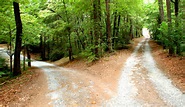
The Choices We Make


choices

When I chose to get a dog from the pound about five years ago, little did I know of the ritual that would soon become my life. Every morning up at 5:30 and after the coffee cup hits the coffee table for the final time, a nudge (toy in mouth) and off we go for our morning walk. In the afternoon after work another walk, work in the woodshop or in the garden, and some playing in the yard until it is time to eat. Then, off to the favorite bed she goes watching the house from her favorite perch.

The choice to get a dog from the pound has obvious implications. My life has changed, but so has hers. I made a choice, and that choice has brought me as well as my dog a great deal of happiness. These are the choices we make, and we continually make. Other choices that we make do not always have obvious implications.

When I choose to go to the grocery store (the walk of shame as I call it), or to buy something at the local hardware store the choices we make there also have implications. However, those implications are not always as clear as bringing a dog into your life. There are animals that pay a high price for the choices we make. We make choices for many reasons, but those reasons should always be clear to us as well as the consequences of the choices we make.

An easy choice is not always the right choice, and those choices that we deem as difficult should not always be difficult. We can choose to do the right thing, but to simply do the right thing takes time, it is a habit that we must acquire. I believe that most of us know what the right choice is but are often tempted by the easy and swayed by the convenient. Our choices become others and not our own.

Perhaps it’s time to take our choices back, but this too is a choice; at least for now.

Profit and Progress

progress

For people who grow their own food, this time of year is a mix of stress and excitement. Seedlings are coming up, but in many parts of the country, it’s too early to put them out. The bees are beginning to get busy, but sometimes they swarm. The worries of a warm summer are coveted because of the unrelenting rain and cool spells that inevitably come. Animals birth, and some die. Farmers start ramping up the season, but have to wait for the always elusive “goldilocks” weather. This mix and match dichotomy is not limited to seasons.

Most of us live in societies where money is the method behind the madness, but want to trust our food while not paying unreal prices for it. For those brave souls who decide to give us what we want, they must try to do the right thing while figuring out the right thing to do in order to keep doing what they love. There must be a pay-off but the cost of that pay-off needs to be taken into consideration as well. Do you sell your soul out of necessity, or is it necessary to keep your principles in order to progress?

From farming come these philosophical conundrums. Gardening is not different. Running a business is, well… no different. Many of us begin the long road of life considering profit as progress. Some of us realize that profit in fact stands in the way of progress. But, these are not solutions; they are challenges that each of us seem to face no matter what we do. I have a dream, yes, but that dream and the reality that it creates are often not one in the same. Profit and progress come in many forms.

A few principles might help. First, be honest; not only with everyone around you, but perhaps most importantly with yourself. Second, know the hill that you will “die on”. There comes a time when profit is no longer a measure of progress, but a detriment to development. The change from one to the other is often slight and barely perceptible. Third, know why you do what you do. We often ask strangers “What do you do?” Perhaps we should start asking: “Why do you do what you do?” A more pertinent question if we are to profit from our progress.

The “P” Word

progess

Progress is a peculiar word. And to make matters worse, it is a political word as well. Perhaps the problem is that we humans are a particular bunch, often specious and many times self-promoting. Progress is not often synonymous with tradition but perhaps that is only because we define it as profit. We have, no doubt, progressed but with profit as progress comes a price.

The price for the particular progress that is being promoted by the current preliminary agricultural programs being put forth under numerous and often publicized public interest in agrarian lifestyles and sustainable food-growing is that often progress is not seen as progress at all. However, I am here to tell you that sustainability in any form is most definitely growth, advancement, improvement, development: it is progressive!

While it is true that profitable progress will pay the price in the beginning, proper progressive movement relies upon the propensity of those involved to understand, to recognize, to perceive (if I may) the parallel between the proper way to grow, choose and eat food and the priorities that we choose to make. In short, progress is defined by why and what we prioritize. If we prioritize profit over progress than we get what we deserve which is exactly what we are getting now.

To prioritize profit and production over sustainable progress and points of virtue is to presuppose that profit is a necessary participant in proven progress. The point is that progress is not always profit-driven. Progress can be profitable but only if it is sustainable. So, while sustainable lifestyles seem in vogue and are popular with a growing number of the populace, it is not a popularity contest. Furthermore, although the progressive movements with food production often rely upon pre-industrial ideas, the proposed changes are necessary if we are to remain progressive.

The phenomenon is primarily a progressive one that is properly founded upon proven production means that are both profitable and practicable if not predictable.

Thanks for reading!  Philo

Permanent Culture

permaculture

We want something permanent and permaculture seems to offer the certainty that we search for. The answer, like so many answers that we find, is difficult to accept and at first glance we often sway away from it. However it has grown patient, being accustomed to our ignorance of it. It waits patiently, knowing we do not have a choice. We ignore it and it sits back down silently awaiting our return; we will return. We must return.

Permaculture does not begin with digging a hole, planting ground cover, planting bushes, fruit trees, and finally large, slow-growing giants. Rather, permaculture starts with an understanding that we can be a part of something greater than ourselves. It is almost religious, but without the reliance upon religious doctrine or dogma. Permaculture relies upon time and our acceptance that it is beyond us and at the same time makes up the core of what we, as agrarians, really are: stewards, renters of the land that we love.

We strive in so many ways to be remembered, to leave a legacy but these ways are bound to fail. Children forget and businesses crumble; blood is thin and love is short lived; people are irresponsible and the greatest of natural places fall to ruin. Permanence comes at a cost and permaculture does not let us forget this fact easily. Plant a tree that you know you will never see come to full fruition; be a part of an ecosystem that is not anthropocentric. Be a part of an infinite system that you somehow love and that cannot love you back. Pay the price to protect the one thing that can protect you.

The permaculture that we work toward now will become the permanent culture that lives after us. Permaculture is progress, but it is progress that stretches beyond the borders of desire, of economy, and even of human imagination. Stretch the limits of abilities and see what happens. Make permaculture permanent in our culture.