Philosophical

Essays concerning concepts and thoughts regarding metaphysics, epistemology, ethics, and politics

A Split-Second Decision


John Cage was a composer who “wrote” and performed a piece of silence called 4” 33’ (four minutes and thirty-three seconds). It was simply himself, on stage, and sitting at a piano for four minutes and thirty-three seconds. However simplistic and absurd it might have seemed and still perhaps is, I believe that the art, while not found in the actual performance is in fact found in the thought. This is culture.


I believe that many of us are realizing that what we consider culture is really nothing at all but consumerism. Culture is virtuous; consumerism is not. A man sitting at a piano and not playing the instrument, I thought, can be analogous to individuals who find themselves in a consumerist society without being consumers. I know this is a stretch, perhaps, but I believe there is something true in it.


To play a piano is a choice and one must learn, and learning takes time and effort; much time and much effort. That is why so many begin by taking lessons but few come to play the piano. Not being a consumer takes time and much effort.


The burgeoning agrarian movement that seems to be blossoming in this country can be seen as a reaction to a society that has lost its priorities to profit and consumerism, but I like to think of it as a choice, an idea that often times is ridiculed (as John Cage was when he performed his piece).


Perhaps John Cage was reacting to the ever-more complexities of modern classical music at the time? And if so, the analogy becomes even more similar. Rather than complaining as a composer, Cage did something to point this out. In the same way, we can make choices that go against the relentless pressure to consume.


Some may argue that actions such as Cage’s piece or the agrarian movement are simply fads, but I’m not sure that the argument stands. Cage’s piece is famous (or infamous) even today and he as a composer changed the landscape of modern classical music. In the same way I think that as more and more people realize the cost of a consumer lifestyle is not sustainable, they too will choose to take a stand. In Cage’s situation it was not too play for 4 minutes and thirty three seconds.


Our stand against consumerism can start with a split second decision.


Dreams

I have a dream

Dreams

To dream of making a dream a reality takes foresight, hope, imagination and a vision. To make a dream a reality takes those things, but it also takes a hefty dose of courage, hard work, money, and willingness to give up comfort in most of its forms. This is why it is easy to dream, but difficult to live your dream.

Be ready to smile when your friends, your family, and most others remind you of how many ways there are to fail, how good you have it and how you should “give it a second thought…” or how it is simply impossible. These will be bumps in the road in comparison to the endless work and hours, to the face of poverty staring in your window, the relentless pummeling that you will take physically and mentally. Make no mistake, to make a dream a reality you must give up the dream…but only almost.

I say “almost” because dreams are not made to be broken. Live your dream!

If you have a dream first make your mind up to do it. Secondly…do it. It really is that simple. Afterwards, don’t look back.

Regrets

To have regrets is easy: take the path most travelled, bury your hope and your imagination; your vision. To make your regret a reality takes those things, but it also takes a hefty dose of fear, making decisions based upon what others advise, and willingness to give up your dreams. This is why it is easy to forget your dreams, but difficult to live with that decision.

Be ready to smile when your friends, your family, and most others remind you that you could of, or should have if only had. These will be bumps in the road in comparison to the endless days, months and years of remembering the dream, the face of comfort staring in your window, and the relentless pummeling that you will take as you wake up at night and realize that they were right. Make no mistake, to make your regrets a reality you must give up the dream…completely.

I say “completely” because regret lasts a lifetime.

If you have regrets, first recognize them as regrets. Secondly…change them. It really is that simple. Afterwards, don’t look back.
Vacation


vacation pic

I’ve never really enjoyed taking a vacation. The time, to me, seems ill-spent and empty. I wonder about this: is there something wrong with me, or do I simply need to “relax”? I don’t think so. I think that there is something more going on. Vacation implies the lack of work, but the lack of work is not necessarily a good thing unless, of course, you don’t like your work.


Now I’m not a great fan of polls and statistics, but to make a point here, more than 70% of Americans do not like their jobs! If that is the case, then I can certainly see why so many people put a price upon free time. But I don’t think that makes vacation a positive thing. Vacation is only seen in a positive light if you don’t like your job. Perhaps a better approach than dreaming of beach vacations and beer drinking debauchery is to simply do something that you like to do.


I love my job, and I am in the process of transitioning into another job that I believe I will love even more. This is what some in my family would call a “luxury dilemma”. I would have to concur. The dilemma, however, cannot be solved by taking a vacation but must be solved by doing some work. Research and development attitudes must be taken; assessing risk and defining responsibility must be clarified. Economic outcomes and expenses must be taken into consideration. This all sounds like work, and that is because it is.


I often hear people dreamily wave around the idea of “never working again”, but I firmly believe that they would be miserable after about two weeks. Work defines us, and not having work is in a sense losing one’s self. I am aware that in our modern and progressive societies we have been conditioned to define as work tedious tasks and mundane bureaucratic business. Often we have become nothing more than monkeys in a box looking longingly out sealed windows. We have defined work by profit rather than work by principle, and I think this is where the problem is. We must work for reasons other than making a profit.


I am not saying that we need to give the responsibility of our lives over to someone or something else. However, I am saying that our relentless hunt for more money is making us (and many others) miserable. Vacation entails time to be free from work, but this is only a problem if we do not have a job that we would do for free. Being honest with yourself is often difficult, but is always free. Maybe we need to remember that time is easy but is never free. In fact, it may be the most expensive thing we have.

Two Sides of a Coin

two sides of a coin

Money is typically defined as anything of value. Money is often used as a means of barter, trade, and for transactions. And so money is not often valued for itself, but for what it can get us. Money, then is useful, but not necessarily valuable. In thinking of this, I realize that there are two sides to every coin.

It seems that much time and effort is spent in trying to become rich in order to buy things that are not necessarily valuable or useful using something that is not necessarily valuable. This seems strangely  a waste (rather than a valuable)  of our time. However, most of us live our lives by this axiom; most of us.

The recent upswing in locavore, organic, self-sustainability and other descriptive ways of living seem to be motivated not by money, but by something far more valuable: happiness. The motivation to turn away from money to “do what’s right”, or to “be more healthy” seems to have its basis in virtue.

Virtue is a philosophical ethical theory founded upon a moral education, which is considered by Aristotle as a good in itself because such a life leads to a higher quality of happiness. Without getting into the philosophy too much, the value of living such a life is found in actually living that life. Money is not valuable in itself. However, living a life of virtue is.

So, one side of the coin seems to be the motivation to be happy, and the other side of the coin seems to be the kind of happiness that matters: the quality of our happiness. Money seems to abide by one side of the coin, but not to the other. Don’t get me wrong; I think that money is a viable tool, a useful means to live comfortably and securely. But I’m not sure that it is the best means.

The current movement towards more viable and sustainable agricultural methods and cultural beliefs is certain to lead to jobs and opportunities that are yet to be seen. But these movements do seem to be good in themselves as well.  We have to be careful. On the one hand, money is a motivator for our dreams, but on the other hand money often undermines the dream itself. Perhaps what we must always remember is that what is useful is often not what is valuable, and what is valuable is not always useful: there are always two sides to a coin.

Head or Heart

head or heart

This is part of an old saying: follow your heart. But when I think to follow my heart, my assumption is that in doing so things will somehow “magically” work out. I do realize, perhaps because I listen to my head, that following my heart means a lot of work, a lot of compromise, and as I am beginning to understand: a lot of courage.

Let’s be realistic! Dreams are often best left as such. But following your heart often demands that we forget that fact. In fact, it is often best to do so. I’m sure that many people have realized that much too late. When the dream becomes a nightmare of endless nights, lack of money, and no way out it becomes difficult to remember that it was the heart that got us into the pickle in the first place.

But like love, the heart is a fickle thing, and to truly follow the heart, to make that dream a reality (nightmares and all), often means to follow many paths least followed; often for good reason. When I think of following my heart I always remember that we wake from our dreams and that nightmares end. I remember that money is often found at the end of rainbows.

Perhaps the head or heart question, when I ask it, is already answered and I simply don’t realize it? It’s good to remember that unlike the head, the heart does not ask for permission, directions, or if a dream makes sense or not. The heart is the two year old that we all have inside of us that follows the floating paper in a brisk wind, stumbling down the road with only one goal in mind.

So, the question: do I follow my heart or do I follow my head is in fact a meaningless question because as soon as it has been asked, it has been answered. To not realize this little fact is to live with regret, but only the heart realizes this.

Profit and Progress

progress

For people who grow their own food, this time of year is a mix of stress and excitement. Seedlings are coming up, but in many parts of the country, it’s too early to put them out. The bees are beginning to get busy, but sometimes they swarm. The worries of a warm summer are coveted because of the unrelenting rain and cool spells that inevitably come. Animals birth, and some die. Farmers start ramping up the season, but have to wait for the always elusive “goldilocks” weather. This mix and match dichotomy is not limited to seasons.

Most of us live in societies where money is the method behind the madness, but want to trust our food while not paying unreal prices for it. For those brave souls who decide to give us what we want, they must try to do the right thing while figuring out the right thing to do in order to keep doing what they love. There must be a pay-off but the cost of that pay-off needs to be taken into consideration as well. Do you sell your soul out of necessity, or is it necessary to keep your principles in order to progress?

From farming come these philosophical conundrums. Gardening is not different. Running a business is, well… no different. Many of us begin the long road of life considering profit as progress. Some of us realize that profit in fact stands in the way of progress. But, these are not solutions; they are challenges that each of us seem to face no matter what we do. I have a dream, yes, but that dream and the reality that it creates are often not one in the same. Profit and progress come in many forms.

A few principles might help. First, be honest; not only with everyone around you, but perhaps most importantly with yourself. Second, know the hill that you will “die on”. There comes a time when profit is no longer a measure of progress, but a detriment to development. The change from one to the other is often slight and barely perceptible. Third, know why you do what you do. We often ask strangers “What do you do?” Perhaps we should start asking: “Why do you do what you do?” A more pertinent question if we are to profit from our progress.

The “P” Word

progess

Progress is a peculiar word. And to make matters worse, it is a political word as well. Perhaps the problem is that we humans are a particular bunch, often specious and many times self-promoting. Progress is not often synonymous with tradition but perhaps that is only because we define it as profit. We have, no doubt, progressed but with profit as progress comes a price.

The price for the particular progress that is being promoted by the current preliminary agricultural programs being put forth under numerous and often publicized public interest in agrarian lifestyles and sustainable food-growing is that often progress is not seen as progress at all. However, I am here to tell you that sustainability in any form is most definitely growth, advancement, improvement, development: it is progressive!

While it is true that profitable progress will pay the price in the beginning, proper progressive movement relies upon the propensity of those involved to understand, to recognize, to perceive (if I may) the parallel between the proper way to grow, choose and eat food and the priorities that we choose to make. In short, progress is defined by why and what we prioritize. If we prioritize profit over progress than we get what we deserve which is exactly what we are getting now.

To prioritize profit and production over sustainable progress and points of virtue is to presuppose that profit is a necessary participant in proven progress. The point is that progress is not always profit-driven. Progress can be profitable but only if it is sustainable. So, while sustainable lifestyles seem in vogue and are popular with a growing number of the populace, it is not a popularity contest. Furthermore, although the progressive movements with food production often rely upon pre-industrial ideas, the proposed changes are necessary if we are to remain progressive.

The phenomenon is primarily a progressive one that is properly founded upon proven production means that are both profitable and practicable if not predictable.

Thanks for reading!  Philo

For the Love of Fear

fear

We talk of loving nature, its harshness and its beauty. But, at the same time we find ourselves fearful of nature. We fear its harshness and it unforgiving ways. But it is important to remember that fear is not in the heart of love. We cannot love something that we fear, and we often fear what we do not understand. And so, we are left with the conclusion that we do not understand nature because we do not understand ourselves. The issue is not nature.

Fear seems to be the great motivator of many people in our societies. I want to farm, to move to a farm, to begin a journey of learning about the thing that I love; of having it teach me, but I am afraid: not of nature, but of failing nature; of failing. Perhaps I talk of farming, its unforgiving nature and simplicity. But at the same time I understand that like nature, farming is as harsh as it is beautiful: it will not help me not to fail. Perhaps it is only a fool that goes to war without fear (as the ancient saying goes in Art of War). That is probably correct, but more often than not the fearful never go to war at all.

Fear is like money, and like money it has a tendency to override all else. This is a shame because we miss so much because we fear failure, or others, or nature. Fear is not all bad though. Fear protects us, and if we are smart it leads us to “think things through” before acting. However, if fear is keeping us safely comfortable, warmly numb, we should be afraid

Perhaps we ought to befriend fear, to make it our partner in crime, our travel companion. After all, it is not going anywhere soon. But like any partner or companion we soon tire of each other and look for blame, we shuck responsibility or even our dreams. Because at the core of us all is the capacity to understand it is not fair to fear; for although it is not in the heart of love fear is a part of being human.

The Other Road Less Travelled

th-8

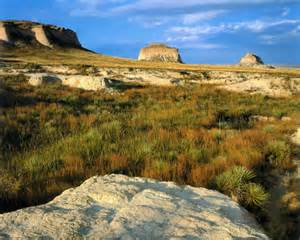
 Where I live the mountains are king and the prairie is a lowly and often forgotten cousin. But today was different if only for me. I was out in the prairie (rather than the mountains) today and this became more clear than usual. The grasslands that make up most of the state that I live in often get overlooked because of the grandiose mountains that are strung along the west. But today I decided that less would be better. Driving east I hurriedly understood the meaning of less: there was seemingly nothing. But this is the point I reminded myself.

When I stopped at the Buttes to hike around I really started to understand the less-is-better mantra. The dirt, the shrubs, the rock; they were all different and beautiful in a way that is unfortunately often overlooked. Spending a few hours out in the nothingness, listening to nothing and doing nothing, the beauty really started to show itself. There were lisps of snow between the rocks and cacti that looked innocent enough until stepping through up to your waist in the cold, windswept whiteness. The wind is constant, and a constant reminder that it is the land that is in control and not you. This is rough but beautiful country.

Many may call this land wasteland but this is a misnomer. What is wasted about the beauty of a natural prairie, the inner-workings of nature at its most simple and yet complex. How can we look at the nothingness, the quiet and the solitude and call it a waste? It is not a waste to the multitudes of unseen animals that make it their home. It is not a waste to those who take the time to go “the other way”.

I ate a simple lunch and laid on a rock, taking a nap in the wind and the cold; the sun in my face. I woke up with nothing on my mind and thanked the land for sharing its wasted beauty. I thought of all the ways such land might be viewed. Some view it for the minerals and gas that it contains. Some view it with regard for the plow. Others don’t view it as anything more than a long and boring stretch of land that stands between them and the next city. However, today I viewed this land as what it is: a reminder that more is not necessarily better, that less is often beautiful, and that it is a waste not to realize these things.