Philosophical

Essays concerning concepts and thoughts regarding metaphysics, epistemology, ethics, and politics

Age

age

  • Reminds us that we are mortal: we will die.
  • Reminds us what reality is: we live now; we die now.
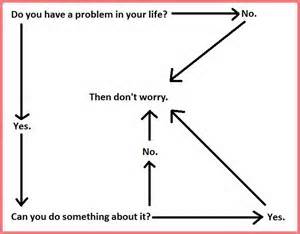
  • Reminds us to prioritize our lives: don’t worry, be happy.
  • Reminds us to think: we don’t know the answer if we don’t know the question.
  • Reminds us to live: most of the time the alternative is not better.
  • Reminds us to make a choice: if we do not, others will.
  • Reminds us to take time: time is the eternal thing that we have least of.
  • Reminds us to that nothing really matters: “Nothing we do now will matter in a million years”, and “nothing that will be the case in a million years matters now.” –T. Nagel
  • Reminds us that honesty is the best policy: we cannot lie to ourselves forever.
  • Is that inevitable reminder that change is the only consistent, that we have only one life to live, and that we often forget that fact.

Finding Your Way

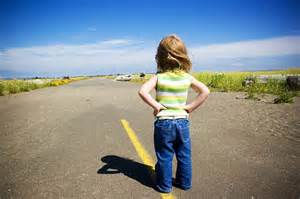
path

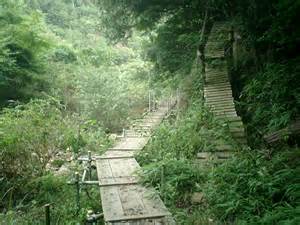
“Finding myself” is one of those phrases that deserves the despite that it often gets. Like many other words and phrases it has become a watered-down excuse in many cases. However, I think that there is something to it. We do find ourselves wondering about who we are, and especially why we are. These are those thoughts that come to us when we wake up suddenly in the middle of the night, the world outside of us silent, creating room in our heads to think. Perhaps it is this silence and space that reminds us that we have lost our way, have never found it, or simply changed without realizing it.

Of course, to lose your way, you must first know which way you are going. This, I think, is where the despite for this otherwise beautiful thought comes from. Many of us who are out to “find ourselves” have never found anything much less our “self”. We have no way to get back to if we have no way to find. This is not as obtuse as it may first seem. Consider where our societies have come to today. We are far-removed from the agrarian lifestyles that we depend upon, the nature that we are a part of, and the relationships we depend upon for our well-being. It is an unfortunate truth that many of us have never experienced any of these lost albeit necessary components to life.

If we have lost our way, then we do not need to necessarily find it again if it was not the path that we wanted in the first place. Good trips are like this: being lost is part of the fun; not having a plan makes the trip interesting and often leads us to the very thing we were not looking for, but needed, in the first place. When I became more interested and involved in agrarianism, it was surprising to me just how revolutionary (in the political sense) that food is. To “opt out” of the system in any way seems to create ripples that are not welcome. I think this is because many people are on a path that they have not chosen. Perhaps losing their way is precisely what they need?

If there is anything that we all need it is to realize that change is the only consistent in life. We all change; whether or not we realize this is up to us. I had a friend that told me that after twenty-six years of marriage he realized that he did not know who his wife was: he had changed without realizing it. They were soon divorced. If there is a purpose to getting older, perhaps that purpose ought to be that we make sure we realize how we change; that we change is not in question.

So, in the end finding your way through life is like so many of the important things in life that get lost in the shuffle: love, family, time, philosophy, fun, and happiness. It is these things that we will have left in our lives if we grow old. It is my hope that we can all find our way long before we realize we can do nothing about the path we are on. Realize change while we can still do something about it, and we will find that life is truly worth living. Finding your way, we must remember, does not necessarily imply that there is path that we ought to be on. It simply means that there is a possible path for us all.

The List

list

Perhaps one of the most significant aspects of getting older is realizing that you are, actually, getting older and realizing the implications of age. This, I understand, is difficult to understand the younger one is. However, I think the lesson learned from this realization is important no matter what age we are. Consider…

One day you receive a letter in the mailbox addressed to you personally. The letter has no return address and is handwritten. You open the letter up anticipating the contents while at the same time nervous, excited, somehow knowing what the letter is. The envelope drops to the ground and you unfold the contents. It is a list. The list, you realize, is a list of your hopes and dreams, your goals and the expectations that you have developed over the course of your life. In short, it is your bucket list. You read the list a bit nervous, a bit excited, as you come across long forgotten dreams and current expectations that you realize you’ve never shared with anyone. You put the list in a drawer, bringing it out to entertain your friends on occasion: telling the story and reliving the moment at the mailbox. Years go by and the paper yellows but does not become brittle. One day you take the list out and realize to your horror that somehow the list is shorter. The thought, “I must be mistaken!” shoots through your mind. This cannot be; lists such as this do not become shorter. But, they do, and your realize this at the same time that you realize your hand is shaking. Instead of pulling out the list to entertain friends, you now hide the list in a box on a shelf in the closet. You cannot face looking at it anymore because you realize that throughout time you have not accomplished the goals, the dreams on the list. You realize that you are getting older, and the list is getting shorter. “How can this be?!” you think. “As I get older, I need to cross out the items on my list!” But you’ve crossed out only a few. The riddle weighs heavy and you reluctantly pull the box out with the list in it. You hesitantly open the box and carefully lay the list out on the table; you unfold the list slowly. You realize when you finally look down that items on the list are slowly fading, right before your eyes. You realize what the list is: it is a list of possible dreams, of possible goals, of possible expectations. It is a list of possibilities and as you grow older that list of possibilities fades.

Although it is difficult to understand and perhaps even more difficult to accept, the list of possibilities in life grows shorter as we grow older. I can only hope that we can realize what is possible and act upon those realizations. I have been told, and have come to believe, that the most difficult step is the first step. Take the first step towards your goals before the list is nothing but a blank and brittle memory.

That Which We Cannot Do

hope

Nature teaches us a lot if we choose to listen. However, sometimes the lessons we learn from nature remind us that life is difficult, that nature truly does not, it cannot, care. The difficulty in learning this lesson is that as people we do care: we care about nature, we care about the things and people that we take responsibility for.

Two months ago, my bees were plentiful, filling three boxes. I noticed a problem (varroa mites) and treated them dutifully. I saw the results and the results looked good. I was hopeful and planned on having my bees overwinter to welcome them into the Spring. Nature had other plans, however. A few weeks ago I started noticing wasps coming and going, and noticed a drastic decrease in the number of bees that were swarming around the hive. Upon opening the hive I was horrified to find that most of the hive was empty. Rather than 30-40,000 bees I was met with 2-3000 bees!

I was and still am devastated. Questions run through my mind as I search for answers. The few remaining bees, including the queen, continue to hang on but there is not much hope for the winter. The twist in my gut continues even now, when I’m writing about this. I run through the possibilities and what I could have done differently, but the answers are the same.

I have read the books, the blogs, the forums and watched the videos. I have studied and went to classes; I have taken responsibility for my actions; I have dutifully fulfilled my obligations and still failure. I have been taught the lesson that nature teaches all things: 1) that life is difficult and that nature does not, and cannot care, 2) that there are often not answers to the questions that we ask; that there are not possible solutions to all possible scenarios. Perfection does not exist in nature not matter how much we as people care about nature and the things and people that we take responsibility for. Sometimes, there is no other way.

I am also reminded that no matter the twist that we feel in our gut, we must persevere; there is no quitting. It does not matter whether it was the wasps, varroa mites, colony collapse disorder, or my own doings, there must be a new hive next spring. Although we cannot know for sure why this must be, it must be. This is what makes us human: we must educate ourselves about the world around us, but we must also morally educate ourselves: we must educate ourselves about the world within us.

Life is a battle and even if there is no purpose for the dead and the dying, we must act as if there was. To accept the void as lifeless is to accept that there is no hope, but we are human; to accept that there is no hope is to give up the very thing that makes us human, and that, we cannot do.

Worry

worry

This time of year is worrisome for beekeepers. The cold is coming on, and we worry about food stores, hive health, and of course the cold. I have had a wasp problem these past few weeks that came after I got the mite problem under control. I was told when I began to consider beekeeping that mites and honey is the top two reasons people quit keeping bees. I can see why those issues are at the forefront.

The cold is hard on many of us, not just the bees. And it is not that cold where I live; at least not yet. I look out the window and the sun is shining. I step outside and it is below freezing. I think the bees simply react, but people, people think too much. I know that I do. I lost a lot of sleep worrying about the wasps, and then I think about the cold, the food. The worry continues. However, worry does not work; worry does not help. Worry hinders, is a vicious cycle, and is unfortunately inevitable.

On Wed the weather will warm up and I will check the hive for the last time before I close it up for winter (so I can worry about the food stores). I’ll make sure the wasps don’t have a nest in the hive (so I can wonder if I got all the wasps out if there is a nest). I put a mouse-proofer on the opening of the hive and add some insulation to the top (so I can worry about moisture this winter). I’ll wrap the hive in some black roofing paper (so I can worry less about heat).

I’ll do what I can for the bees that I’ve taken responsibility for, and this is where the worry comes from: I have taken responsibility for something. Any person who has taken, truly accepted, responsibility for something understands the worry that goes along with the responsibility. In the past few years, self-sufficiency has played an integral role in life and along with self-sufficiency comes self-responsibility.

I wonder about those people who did not have the choice of self-responsibility; they had responsibility thrust upon them by the nature of their lives. Such responsibility is a heavy burden, but perhaps (like the bees) such responsibility is not noticed because it is simply the reality of life: it is living.

In today’s society our worries have changed perhaps because our responsibilities have changed. We worry about our job, if the grocery store has what we need, if we have paid our bills and if we can continue to pay our bills, our children, our marriage. These worries are no less important, but they are different. Such responsibility is a heavy burden but after a while we do not seem to notice because it is simply the reality of our life: it is living.

I have learned, even in such a short time, from my bees that I must understand what I need to worry about. But in order to do so, I must understand what I am responsible for. Maybe that lone bee coming back to the hive on a cold day with a load of pollen is not worried because it is doing what it does, doing what it needs to do, doing what a bee does naturally. I think that perhaps what we worry about is not as important as why we worry about the things we do. Perhaps worry is not a waste of time, but a reminder that time is short, the cold is coming and we have (in fact) no time to worry.
Nothing But the Spring

future

The fall is coming and with the coming cold, change. The bees are readying the hive for winter; the garden is beginning to show signs of age. Harvest continues but the nights are getting a bit colder and the mornings are darker. Change is a cold reality as it is a reminder that all that we hold dear is temporary, and the seasons continue to march on, counted only by us.

I am reminded of the cycles of the seasons, of life in general. When I was young these cycles were nothing more than an old wife’s tale. But when I began to notice my own age, these cycles began to become recognizable from years before. The cycle of seasons became the cycles of life: Spring, Summer, Fall, and finally Winter.

It is almost as if all change is the same. It begins as an exciting possibility and grows into a busy reality becoming the aches and pains in the morning, the nematodes in the soil, the repairs on the house, the mileage on the equipment and on myself, the goals achieved and the dreams that never were. These things are not bad, but simply the reality of living. Things wear out, ideas disappear and so do we.

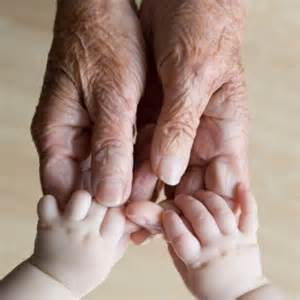
As I get older I begin to notice that my parents are old.   This realization is painful and soon I am reminded of the relentless seasons not only by my own age but also by the needs of my parents. The child becomes the parent. This too is the cycle of the seasons. Winter comes for us all and all the while I think of nothing but the spring.

Focus

focus

I’ve read a rather telling aphorism once: the greatness of a nation and its moral progress can be judged on how it treats its animals. I think Gandhi was quoted as saying it. Nevertheless, the aphorism both horrified me and struck me as very true. I wonder, as Wendell Berry and others like him have often done in the pages of their essays, if the greatness of a nation and its moral progress can be judged on how it treats its land? At the very least, I believe that how we treat animals and the land around us is a consequence of what we think of each other and ourselves.

Up to this point, this blog has considered perspectives that do not put human beings as a centered focal point but rather as a part of a greater reality, one which is grounded in objectivism. That being said, I would like to explore the homesteading theme, the environmental and creative themes that have been addressed from a perspective that does consider human beings as a center focal point. First, look outside of your window and consider what is important to human beings. Secondly, consider the cost of putting a value on that human importance.

Homesteading, small-scale farming (whatever it may be called) seems to be one of those human endeavors that shifts importance from the farmer to the farm: its environment and its animals. Of course, there are exceptions. However, those exceptions aside, I believe that this desire of some to be a part of an environment that is greater than themselves rather than to think themselves as greater than their environment comes from a deep-seated understanding that whatever our convictions the reality remains: we are not important.

Some view this as humanistic blasphemy. However, viewed from the point of view that we are part of a greater whole, the admission that we are not important leads us to ask: what is? I believe that those that have discovered the possibility of homesteading on a small-scale sustainable farm have realized what is important. Truth is important and sustainable practices in all their forms are a part of this truth. This is often presented within the framework of environmental arguments, but those arguments assume that the environment is somehow innately important. I would have to disagree: the environment is important because it reminds us that we are completely and absolutely dependent upon it for happiness not to mention our survival. The truth is, we are not important to the environment, but our environment is of utmost importance to us.

However, we do not seem to be interested in the truth of our situation: our total and utter dependence upon the environment for our happiness and survival. It seems that we put importance upon the façade of independence and the fascia of truth. The façade and fascia of independence and truth are much easier for us to achieve than is the achievement of true independence and the realization of Truth (capital T intended).

If we value comfort, then comfort will be prioritized over all else as will ease and wealth and whatever else we deem as valuable. I think that how we treat animals and the environment as a whole does mirror our false assumption that we are the focal point of the world we live in. Although the world cannot and does not care, we can and perhaps we need to start valuing our capacity to do just that.

Twist

twist 

The twist in my gut; that deep-seated pain; that long needle in my eye.

And as I lie about not knowing, feeling the hurt wind through the veins of my life,

There is no worry as to what the end will be.

There is no need to know that; it will come soon enough.

Doubt

That demon seed of our desires, with wryly fingers and wilting laughter,

It curls the vines of time around our gasping lungs, our mouths gaping open,

Our face contorted by the screw.

One day after another, this seems to never end, and in the end, we call it

Life.

The time of consciousness, the time of being aware of what is possible, and

What we are capable of.

Living consciousness and losing our grip as the coil tightens.

Going on, worsens, or is better; hard to see the difference in the end.

Twist

And writhe in the loop of life

No cycle of right, dead-end of wrong, just the twist of life

And that old forgotten lyric that we use to sing.


Time On Our Hands

working hands

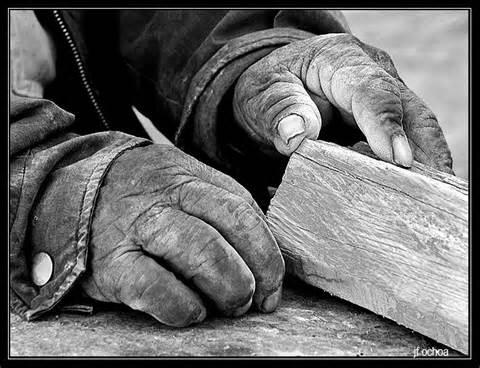
I shook a man’s hand the other day. His hand was hard and rough and his handshake was firm and full of confidence. There was no uncertainty in the shake. He was a working man in the sense of the word that his work was not something that he did to make money or bide time. This man lived his work and was proud of what he did, and this showed in his handshake and the firm, rough feel of the palm of his hands. He had time on his hands, literally.

Most of us complain that we do not have enough time on our hands; that our lives are filled up with necessary places to be and things to do, and that is probably the case. But I noticed that in my discussion with this man complaints had no place. We talked of grass-based farming, permaculture and animal husbandry. He had been up since about 3am making deliveries and there was not a hint of tiredness in his voice. He had a necessary place to be and necessary things to do; he had animals to feed, fences to mend, and grass to mow, but he also had time on his hands to talk.

We ate sausage in the parking lot while we talked. The sausage was exceptional but he was not satisfied with the texture of the meat. It was obvious that he took time with the things that he did, and that time led to a warranted pride in his work. It rained and we talked. Time was not of the essence. There was not a sign of being busy although I knew he was.

I like to meet people with time on their hands. Time has a way of rubbing off, of reminding me what is important and what is not. “You don’t mind a little dirt on the knife?” he asked as a sliced another piece of sausage.

“I don’t mind a bit!” I answered.

I don’t mind dirt on knives and I don’t mind having time on my own hands. In fact, I am working hard to put more on them. It is hard work to have time on your hands, but I do believe that doing so is one of the most virtuous things a person can do. I would suggest that we all need to work in order to have more time on our hands. In fact, a bit more time on everyone’s hands would be a great thing for us all!

I shook the man’s hand when we said goodbye. His hand was hard and rough and his handshake was firm and full of confidence. We did not bide our time but talked about meeting again at his farm. This man reminded me to live my work and do it in such a way that I can be proud of what I do. I think that I can remember to have a firm handshake full of confidence as long as I do these things. Put some time on your hands today; you’ll be glad you did.

Simplify Your Life; Complicate Your Philosophy

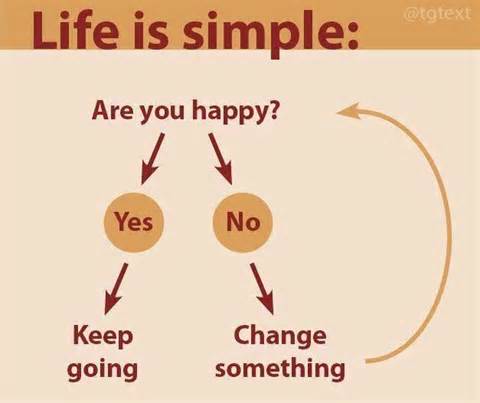
simple life 1

Wendell Berry is one of those writers that have a talent for pointing out the obvious when the obvious seems so well-hidden. In his essay “Faustian Economics” he writes, “All are entitle to pursue without limit whatever they conceive as desirable-a license that classifies the most exalted Christian capitalist with the lowliest pornographer.” (pg. 43, What Matters?) This “doctrine” as he calls it is a necessary implication of the idea of a limitless economy.

The “family farm”, the concept that Berry is defending and the goal that I am trying to achieve seems like a simple and straightforward goal…but it is not. The implications of living in such a way as to be independent are many. First, I had to understand what it is that I am trying to be independent from. Secondly, I had to address and accept the limitations of the family farm (cottage farm, hobby farm…pick your term). And lastly, I had to address the cost of giving up on the Faustian idea of economics.

There are quite a few people with similar ideas of living and many of those people have to come to terms with these ideas, including: what is wrong with accepting modern society. Berry puts it forthright! “…Shifting the cost of depletion and pollution from the producer to the general public, the future, and other species…” (Forward, What Matters?) I’m not sure that there are those that can live honestly with these consequences, but I am finding out that I am not one of them.

Like any idea, the idea of a family farm ironically begins larger than life. The would-be farmer envisions endless, healthy fields and forests with a clean running, self-fed stream with no dependence upon modern conveniences. This thought is cut short when one remembers a necessity for most of us: toilet paper. This simple idea reminds us of the difficulties that are involved in going “off grid”, or even trying to live responsibly. Money is a necessary evil on this planet, given that we desire a quality of life that can be measured by any modern means. However, it is important to remember that money is not really the root of all evil, but simply the vehicle in which we travel to find it.

So what are our options with such dreams as independent living and eating responsibly? Berry again drives home what ought to be obvious to any thinking man. The agrarian economic policies would be in order of priority: 1) Nature, 2) Economies of land use, 3) Manufacturing, and 4) Consumer economies (pg. 3, What Matters?). I’ve never thought of my dream with regard to such priorities, but seeing them in writing drives home the ultimate goal: I want to reorganize my priorities.

I would recommend to anyone considering revitalizing their commitment to true, independent living to also re-visit the priorities by which they live by. I think that they will find that to simplify their life, they must first complicate their philosophy.