philosophy

The Path Least Taken

Image

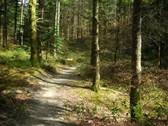
In his essay, A Native Hill, Wendell Berry writes of his forefathers in Kentucky who find a worn path used by the American Indians in the area for eons before the Europeans landed in the Americas.  He writes, “A path is little more than a habit that comes with knowledge of a place.  It is a sort of ritual of familiarity.  As a form, it is a form of contact with a known landscape.  It is not destructive.” (pg. 12, Common Places).  His story continues with his forefathers cutting down whole trees for fire while constructing a road over the ageless path through the woods.  Why, he asks.

“Roads”, Wendell writes, “on the other hand, even the most primitive road, embodies a resistance against the landscape.  Its reason is not simply the necessity for movement, but haste” (pg. 12, Common Places).  When our paths become roads we have often paved over that which is most important to our selves, and often to others: time.  We do not live our lives on the roads that we follow, but rather we rush through them not taking time to smell not the roses, but the life that we live.  In fact, such a life is not a life lived; it is a life of avoidance through haste.


Why pave over a well-worn path with cement and oil?  Why pass the landscape with the windows rolled up or cut down whole trees for a fire that could easily be made with some dead limbs?  At some point in time we must address what it is that motivates us; we must address our reason for living, for following the path that we are on or constructing a road over a well-worn habit.  If we say “my children”, then we are cheating those very children that we love by giving them nothing to look up to, no path to follow.  If we say “my wife” or “my husband” we are cheating them of shared experiences and conversation about the paths that we are on.  We will spend our life avoiding the very thing we are searching for.  I believe that we owe those we travel with something to talk about, and we owe the path that we are on our respect.


And so, by paving over the very thing that we search all of our lives for we lose the very thing that gives us what we are searching for: that path through the woods that has been pounded with the past, and meanders through unknown woods and forests becomes a black streak through a wilderness that it is alien to.  I would suggest that we pull up the concrete and wire, the asphalt and rock that we have so hurriedly laid.  I would suggest that we look for that path through the woods that we have often forgotten about.  I suggest that we take the time to take the path least taken.  Because, what we do today will be the gift or the errors that become the features of our lives.*

*My people’s errors have become the features of my country. (Berry, pg. 15)

The Freedom to Do

work

So much of our lives today seem to be about talking and listening, about feeling and being concerned with other’s feelings.  We waste our precious time talking about nothing and listening to others talk about nothing; we watch the minutes tick by as we smile blithely so as to not hurt one another’s feelings.  We cannot offend anyone, and yet when we are offended, we are silent. Most of modern life is spent watching the world through a window or on a screen and talking about how nice it would be to be able to do.  However, we do nothing.

It is not that we are not capable, we are.  It is not that we do not have the desires, we do.  It is that we are told that we cannot do this or that, that it is out of the ordinary to do this or that; we are told that people do not, and so we swallow the urge to be free, to actually do something.  We live in our suburban homes, our apartments, and condos and call fear common sense and comfort our goal.  We define honest work as labor, and laziness progress.  We actually live two virtual lives: one on the computer and one in our head: the two often intermingle and become symbiotic.  But still, this will not do.

But we can do; we do not have to shun freedom and happiness for the illusion of those things that we hold so dear.  We can learn; we can learn as long as we do and as long as we are alive.  All we need to enable action is decision; not emotion or discussion of possibilities, which are endless.  Thinking is doing, and thinking is difficult; it is the price for freedom and happiness, but only as long as it leads to action.  Thinking is practical when put into practice and is directly related to our bodies, which are literally aching to move, to do something.

While it is not true that we create our own realities, it is true that we can mold the reality in which we live.  In order to mold our reality we must make the decision to do so, and in actually doing we become free.  In becoming free we begin to pay for our education through the hardships of physical and mental aches and pains.  These are the signs of change, sometimes of age, sometimes of inactivity and sloth.  But we can even learn from these ubiquitous evils if we do something about them.

There is no shortcut to doing, no easy conduit, no pain-free path.  The cost is the inevitable change that reality is: we must face our fears and quit making excuses.  How we feel is no matter; we must act.  The reality of doing is that others will feel the pain of their inaction, but we cannot take into account how doing makes others feel.  The certainty of action is that others will talk, gossip, natter and blather, but this does not matter.  In his great book of doing, Walden on Wheels, Ken Ilgunas writes, “freedom [is] simply being able to entertain the prospect of changing your circumstances.”  Ilgunas was an indebt college student that decided to do something about it: after paying off his $35,000 debt by doing hard labor in Alaska, he lived in a van while attending Duke in order to stay out of debt.

We all have the dreams of having the freedom to do just that: get out of debt, stay out of debt, and live life in a way that would give us actually happiness.  Yet so few of us do.  We are slaves to our own fear and comfort, but even more so to the fears and expectations of others.  James Joyce writes, “When the soul of a man is born, there are nets flung at it to hold it back from flight.  You talk to me of nationality, language, religion.  I shall try to fly by those nets.”  Those nets hold us back, but sadly often we freely entangle ourselves in their snare.  As Ilgunas reminds us, “We need so little to be happy.  Happiness does not come from things.  Happiness comes from a full and exciting life.”  We have the freedom to do just that; if we would only do something about it.