Social

Essays on society and social change, political systems, and cultural movements

Industry

industry

When did the word “industrial” become synonymous with heinous attributes of our society?  To be industrial has not always meant “continued or increased military spending by the national government.” a term first used by U.S. President Dwight D. Eisenhower in his Farewell Address on January 17, 1961.  Nor has it always been “characterized by a low fallow ratio and higher use of inputs such as capital and labor per unit land area”, in contrast to traditional agriculture in which the inputs per unit land are lower.  Nor has industry been a “transition to new manufacturing processes…”  To be industrial traditionally refers to the efficient effort put forth by individuals, and not to the methodological destruction of other countries through warfare, or the planned and procedural devastation of the environment.  Nor has industry always denigrated human beings to just another “cog in the machine”.

Industrial military complexes, industrial agriculture systems, or industrial revolutions really do not refer to industry at all, but to consumption, profit motivation, and product movement.  I would like to take back the word “industrial” to mean something effective but positive; a compliment if possible.  I would like to see the industrialization of our communities by seeing lawns disappear, being replaced by gardens, and useless fences replaced by useful fencing in of a few small livestock.  I would like us to be an industrial culture once again, but in the true sense of the word.

If we are to become industrial, we must come to understand the system in which we work.  We must understand that industrialization does not mean continued or increased inputs measured in units and efficient processes that lead to positive profits.  I would like to be industrial because that is what human beings’ purpose is: to work.  But we are also moral beings, and so I would like us to be morally industrial.  If we are to work, then we ought to work towards something good, something positive, something sustainable, something worth being.

The good, the positive, is seldom complex and even more seldom reliant upon units, inputs, measured efficiencies or manipulated markets, goods and services.  It is almost as if we have let our language fall prey to the lowest common denominators of those in our society that would have us believe that progress is measured in goods and services created by our industries rather than our industry.  I would like us to be industrious without relying upon industry.  We can, if we only realize that we must.  We must, and so I can only hope we will.
Obsolete Aptitudes

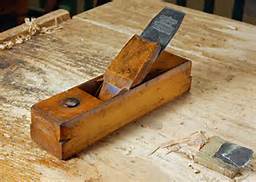
wooden plane


Just recently I was given three wooden hand planes ranging in size from a 9”-app. 16”. Since then I have been learning to use these “obsolete” tools in the shop. I have rubbed and polished the irons and waxed the soles. I’ve spent time practicing setting up the irons for just the right whoosh sound when I run the planes over the edges of the wood. In the process, I’ve learned to “read” the direction of wood grain and to feel if the irons are sharp and in place. I have learned to recognize characteristics of both the tools I am using and the wood that I am working. My education continues.


I’ve gotten better in the past weeks and it has cost me a lot of wood shavings and rough edges. But, progress is being made. I am told and hear that such things are obsolete, but I disagree. In fact, I would argue that such aptitudes are necessary to understanding not only woodworking, but also what it is that makes us human. The answers that I find in these old “outdated” wooden wood planes do not come easily, but every one of them are applicable. The questions answered by such tools are far beyond a push of a button or trigger on one of my electric tools and at the same time apply equally to both the old wooden planes and the electric planers and table saws that I use daily.


I watch my hands as I place them gingerly on the well-worn wood of the planes and feel the weight and the balance of the tool. I listen to the sounds the irons make as I hope for a smooth glide but often get the chatter of a miss-set or unsharpened blade. Where I learn to listen to one tool, I learn to coax the other. Sometimes I remind myself that I can easily joint an edge with a machine, but then I make obsolete something too important to forget.


Such experiences make for a lonely life sometimes, surrounded by modern humans and our mechanical aptitudes, but I’m not sure that convenience and modern “necessities” are worth the cost of losing ancient knowledge and know-how. Anyway, as I begin to look around, I’m not so sure how alone I am in my obsolescence.


It is hard to describe and perhaps even harder to understand, but watching the shavings pour out of the top of the planer when I do get it right is a memory that is seldom made when working with modern tools. I am asked, “Why bother!?” and to that question I must answer, “To ask that is to not understand the answer.” The experience is not mystical, but is necessary. It is not obsolete, but essential.


Vacation


vacation pic

I’ve never really enjoyed taking a vacation. The time, to me, seems ill-spent and empty. I wonder about this: is there something wrong with me, or do I simply need to “relax”? I don’t think so. I think that there is something more going on. Vacation implies the lack of work, but the lack of work is not necessarily a good thing unless, of course, you don’t like your work.


Now I’m not a great fan of polls and statistics, but to make a point here, more than 70% of Americans do not like their jobs! If that is the case, then I can certainly see why so many people put a price upon free time. But I don’t think that makes vacation a positive thing. Vacation is only seen in a positive light if you don’t like your job. Perhaps a better approach than dreaming of beach vacations and beer drinking debauchery is to simply do something that you like to do.


I love my job, and I am in the process of transitioning into another job that I believe I will love even more. This is what some in my family would call a “luxury dilemma”. I would have to concur. The dilemma, however, cannot be solved by taking a vacation but must be solved by doing some work. Research and development attitudes must be taken; assessing risk and defining responsibility must be clarified. Economic outcomes and expenses must be taken into consideration. This all sounds like work, and that is because it is.


I often hear people dreamily wave around the idea of “never working again”, but I firmly believe that they would be miserable after about two weeks. Work defines us, and not having work is in a sense losing one’s self. I am aware that in our modern and progressive societies we have been conditioned to define as work tedious tasks and mundane bureaucratic business. Often we have become nothing more than monkeys in a box looking longingly out sealed windows. We have defined work by profit rather than work by principle, and I think this is where the problem is. We must work for reasons other than making a profit.


I am not saying that we need to give the responsibility of our lives over to someone or something else. However, I am saying that our relentless hunt for more money is making us (and many others) miserable. Vacation entails time to be free from work, but this is only a problem if we do not have a job that we would do for free. Being honest with yourself is often difficult, but is always free. Maybe we need to remember that time is easy but is never free. In fact, it may be the most expensive thing we have.

This Old Hat

old hats

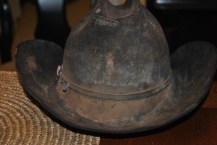
I have an old hat that a friend of mine used to wear.  Now it’s faded and the threads are starting to wear thin.  I’ve washed it a few times, always by hand, but every time I wash it, it seems to get weaker.  My friend, Turid, was from Norway.  She died a few years back of a brain tumor.  When her hair fell out she wore this hat to keep her head warm.  Now I wear it to keep my head warm.

I can’t say that it’s the best looking of hats.  It was bought in the airport in Oslo; kind of a last minute thought.  It’s come a long way from the rack in an airport kiosk.  It is probably my favorite hat, but when I wear it there are many that make fun of me.

“You look like a fisherman in that hat!” they’ll say.

Or, “That’s kinda funky…”

Or, “Have you thought about buying another hat?!”

I smile; they mean no harm.  But, I think of what they’d say if I told them the story of Turid and the hat.  I never do, because I learned from Turi to never say anything that might make people feel bad, if you don’t have to.

I suppose that I could quit wearing the hat and put it up in a special place, a box or frame, to remember her by.  But I’m fairly certain that she would frown upon such a scheme.  “A hat is to be worn…” she might say, “So, wear the hat!”  And I do.

Of course, I’m attached to the hat; it means a lot for obvious reasons, but it has come to stand for more than it means.  I am committed to the hat, one may say.  There are new, and better hats, but none quite so good as this one.  There are warmer hats, and hats that cover my ears on cold days, but none quite so comforting as this hat.

Turid died some years ago, but I had the pleasure of meeting her parents in Bergen Norway, as well as her children.  Her parents made a mark on me; a mark that people rarely make.  They were honest and sincere, and we hit it off right off the bat.  They had dignity and integrity; they had character and were committed.  They were set in ways, not because of tradition, but because the ways were trustworthy, practical, and utilitarian: they are simply right.

Although I only met them for a few hours one night, Turid’s mother hugged me (very un-Norwegian), and told me to take care of Gunnar (Turid’s husband, also a good friend of mine).  Her father showed me his old woodworking bench, worn by years of use.  He, like I have become, was committed.

So, the hat and I have a history and it has become a part of my history.  I love this old, ugly hat but in a way that only those who understand the importance of committing one’s self to something inherently good can do.  I think it’s funny how some cheap, stitched up airport hat can become a treasure and I wonder about those who make a treasure out of things they are not committed to.  This old hat has at least taught me that, and it keeps my head warm enough for all that.

Rant #1

extinction

“Our global society has started to destroy species of other organisms at an accelerating rate, initiating a mass extinction episode unparalleled for 65 million years.”     -http://sciencemag.org

When will we remember that we are not the only species on this planet, nor are we the only one that matters?  The time for most creatures on this planet is nearing an end, because of us.

We are arrogant.  We are selfish, and we are violent.  We do not deserve, nor will we inherit this planet.  The weak will not inherit anything except pain and misery before they die.  They will welcome death long before it comes.  The strong will win nothing.  They will live to see their children die and the things they’ve cherished so much go to ruin and realize in the end that it was not worth the price they paid.

Human beings are capable of so much, including choice, but we tend to choose the easiest, the shiniest, the quickest, and the most at the cost of the best, the right, the quality, the moral, the many,  and the few.  We create amazing ideas and horrible monsters.  We are capable of love and torture, of empathy and psychopathy.  We are our own saviors and our own destroyers.  We are capable of intellect and kindness and act stupidly and mean.  We understand how to understand the universe we live in and dismiss the the only method that will give us Truth for superstitious mysteries that will lead to our demise.

We dishonest with ourselves, even when it comes to saving our selves.  This is on us, our parents, and our grandparents and it will be our children that will bear the brunt.  We know this and yet we soldier on.  We talk about problems rather than solve them because we do not face them and hence cannot find solutions; solutions that are often right in front of us.

Mother nature is the ultimate assassin; she takes no prisoners and we will not be an exception.  We can pretend and we can lie, but we cannot change that truth.  We can argue, we can choose not to confront, but like us truth will also soldier on…blindly.  Mother nature will win; there is no contest no matter how much we believe that there is.

There is only one thing left to do, and that is the right thing.  We know what it is, and we know how to do it.  It is only left to us to humble ourselves, to realize that we share this planet, and must work together and within the parameters that it holds us to.  We must earn the respect that we believe we are entitled.  We must make the most of our capacities and act like the intelligent human beings that we are capable of being in order to save the animals that we are.

Time On Our Hands

working hands

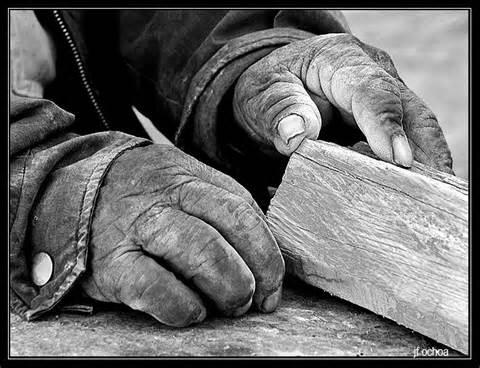
I shook a man’s hand the other day. His hand was hard and rough and his handshake was firm and full of confidence. There was no uncertainty in the shake. He was a working man in the sense of the word that his work was not something that he did to make money or bide time. This man lived his work and was proud of what he did, and this showed in his handshake and the firm, rough feel of the palm of his hands. He had time on his hands, literally.

Most of us complain that we do not have enough time on our hands; that our lives are filled up with necessary places to be and things to do, and that is probably the case. But I noticed that in my discussion with this man complaints had no place. We talked of grass-based farming, permaculture and animal husbandry. He had been up since about 3am making deliveries and there was not a hint of tiredness in his voice. He had a necessary place to be and necessary things to do; he had animals to feed, fences to mend, and grass to mow, but he also had time on his hands to talk.

We ate sausage in the parking lot while we talked. The sausage was exceptional but he was not satisfied with the texture of the meat. It was obvious that he took time with the things that he did, and that time led to a warranted pride in his work. It rained and we talked. Time was not of the essence. There was not a sign of being busy although I knew he was.

I like to meet people with time on their hands. Time has a way of rubbing off, of reminding me what is important and what is not. “You don’t mind a little dirt on the knife?” he asked as a sliced another piece of sausage.

“I don’t mind a bit!” I answered.

I don’t mind dirt on knives and I don’t mind having time on my own hands. In fact, I am working hard to put more on them. It is hard work to have time on your hands, but I do believe that doing so is one of the most virtuous things a person can do. I would suggest that we all need to work in order to have more time on our hands. In fact, a bit more time on everyone’s hands would be a great thing for us all!

I shook the man’s hand when we said goodbye. His hand was hard and rough and his handshake was firm and full of confidence. We did not bide our time but talked about meeting again at his farm. This man reminded me to live my work and do it in such a way that I can be proud of what I do. I think that I can remember to have a firm handshake full of confidence as long as I do these things. Put some time on your hands today; you’ll be glad you did.

Garden Tips You Don’t Want to Hear

Damaged plant on right Damaged plant on right

#1 Raise Your Expectation to Fail

This is a tough lesson to learn and does not get easier with time. However, as Joel Salatin of Polyface Farms is quoted as saying: “If something is worth doing, it is worth failing.” Failing is a key element in learning, and learn we will if we only remember those things we failed at.

#2 But…Lower All Other Expectations

I expected my garden to double the output this year. It is the second year, and I have bees. I expected my bees to give honey this year; although it is the first season they’ve had in their new home, they are doing so well. I expected my soil to come into its own; it is the second year that I’ve added compost, grass clippings and manure. I expected so much.


#3 Don’t Give In

I watched late in the summer as my tomato plants started developing yellowing leaves on the bottom, and continued to watch as the yellowing leaves made their way towards my beautifully big green tomatoes. I watched as my onions fell over but retained their green stalks and the bulbs quit growing. I watched as my leek went to stalk, and the yellow cherry tomatoes I planted reached and reached for the light that was not available. I watched as my peppers seemed to not grow and was reminded how fragile life is, but how persistent the human spirit can be.


#4 And Remember that Nature Rules.

No matter what we do; no matter how much we care, nurture, pick, pluck, plant and ply: nature rules. It is not we that are the masters of our lives, nor is it a god. Nature it has been said is the most effective serial killer there is. If that is not enough, nature has only rules that it itself creates. As we go about our “important” business of living we forget that we ourselves are part of nature and not the other way around. Our gardens remind us of that when hale pounds our plants pitifully in the middle of summer, and we watch in horror as unknown diseases and plights overtake once healthy dreams. But remember that nature does not dream and you do!


#5 Do Your Best

Do your best, but remember that doing your best guarantees nothing (see #1-4 above). Do your best because doing your best is the meaning that we create in our lives. While it is true that we are what we eat, it is also true that we are what we think. If you do not do your best you have already wasted your time and nature will not lie to you about it.


#6 But Remember Your Best Is Never Good Enough.

I know that this seems harsh but there are plenty of people that will attest to this for you. I know that in school those nice “teachers” tended to remind you that everything will be OK, but they were lying. You received grades that you did not earn. I know that your friends will compliment you on such a fine job you’re doing, but they are just being nice and you know when that’s the case. Your best is never good enough because when it is you cease to learn and you will be reminded harshly of #4. On the other hand if you ever find that you believe these people it is probably because of #3.


#7 Remember: What Else Do You Have to Do?

The human lifespan is short. There is not enough time to waste on excuses although we all waste ample hours in doing so anyway. Your job is only an excuse. It may be that it pays for your garden. Or perhaps gardening is your job in which case #1-6. Either way you must eat and why not know what you are eating? Your children are only an excuse. They need you to live your life and not theirs. Give them something to look up to: teach them the importance of self-sustainability and food. Life is what we make of it. Ask yourself what you want to make of yours and perhaps more importantly why. Go out and tend your garden there really isn’t anything more important to do.


Being Human

human

The school semester is about to start again and it reminds me of something that is very important: learning.  Actual learning seems to be a rarity in our society, filled with instant gratification through things such as computers and food.  And what do computers and food have to do with learning? They are perfect examples of how much we do not know.

First, while it may seem obvious how computers relate to learning, as with many things we do not often discuss the topic in full.  The internet is a seemingly infinite source of facts, figures, and what is commonly called knowledge.  And while the internet is an amazing invention that has no doubt furthered many aspects of learning, it is not a place of learning.  The internet has made available information which was before either not available or extremely difficult to find.  Access to information is not learning about the information.  It is simply access.

Computers are not only a vehicle for the internet, however.  Computers allow us to live the way we do in ways most of us do not think about.  Without computers most of our infrastructures in our societies would fail; people would not get paid; lights would go out.  Computers help in countless ways, but the cost of that help is high.  Reliance upon computers has created dependence rather than independence.  Knowing that infrastructures exist, and that we rely upon them is not knowledge: the facade of knowledge is not knowledge.  It is simply rhetoric.

We do not know how the infrastructure that we rely upon works, and in fact, we often do not know when it does not work. Our food supply is a perfect example. The grocery store provides food in the same way that computers provide access. We can simply walk into the great building and there are rows and rows of “food”. Most of the edible products in a grocery store are not food in the real sense of the word. They are a combination of HFCS, salt and fat. These ingredients are often processed through means of chemical and mechanical manipulation. Furthermore, these products are not created to feed, but rather to make a profit. The cost of profit over food is unhealthy eating habits, addiction, and a lowering of all of our qualities of life. Having access to products to eat is not necessarily having access to food.

Many of the products available to “consumers” (the word to describe those who buy and use) are ready-made, pre-packaged, and designed to be quick and easy. Michael Pollan wrote that it is not thought that differentiates human beings from other animals, but cooking. These ready-made, pre-packaged units (the word used to describe what a vender is selling) take the necessity (and knowledge) of cooking away, and hence a bit of our humanity away. Adding water or turning on a stove is not necessarily cooking; it is preparing.

And so what do computers and food have to do with learning? Learning is a process that takes time; there are no shortcuts. There are no shortcuts because the process has to do with understanding, and to understand one must study the long and short-term implications. Computers create easy processes that do not rely upon long and short-term implications. This is not to say that computers are not useful tools for learning. But it is to say that the process of learning does not change even though a computer is being used.

The same goes for food. A credit card can buy a shopping cart full of products, but these products are not necessarily food in the real sense of the word. Furthermore, grocery stores and corporations that sell and provide products for consumption are not always interested in the consumer knowing the difference. Learning the difference, however, is a key component of knowledge: the byproduct of learning. Finally, and perhaps the most insidious implication of our ignorance, or perhaps indifference, towards learning is that we lose our independence without ever realizing it. Cooking is the key foundation to independence, for without it we are truly no different than our not-so-distant cousins in the forests and jungles. Simply being a human being is not being human. It is what we learn that makes us people.


Simple Lessons

IMG_1674

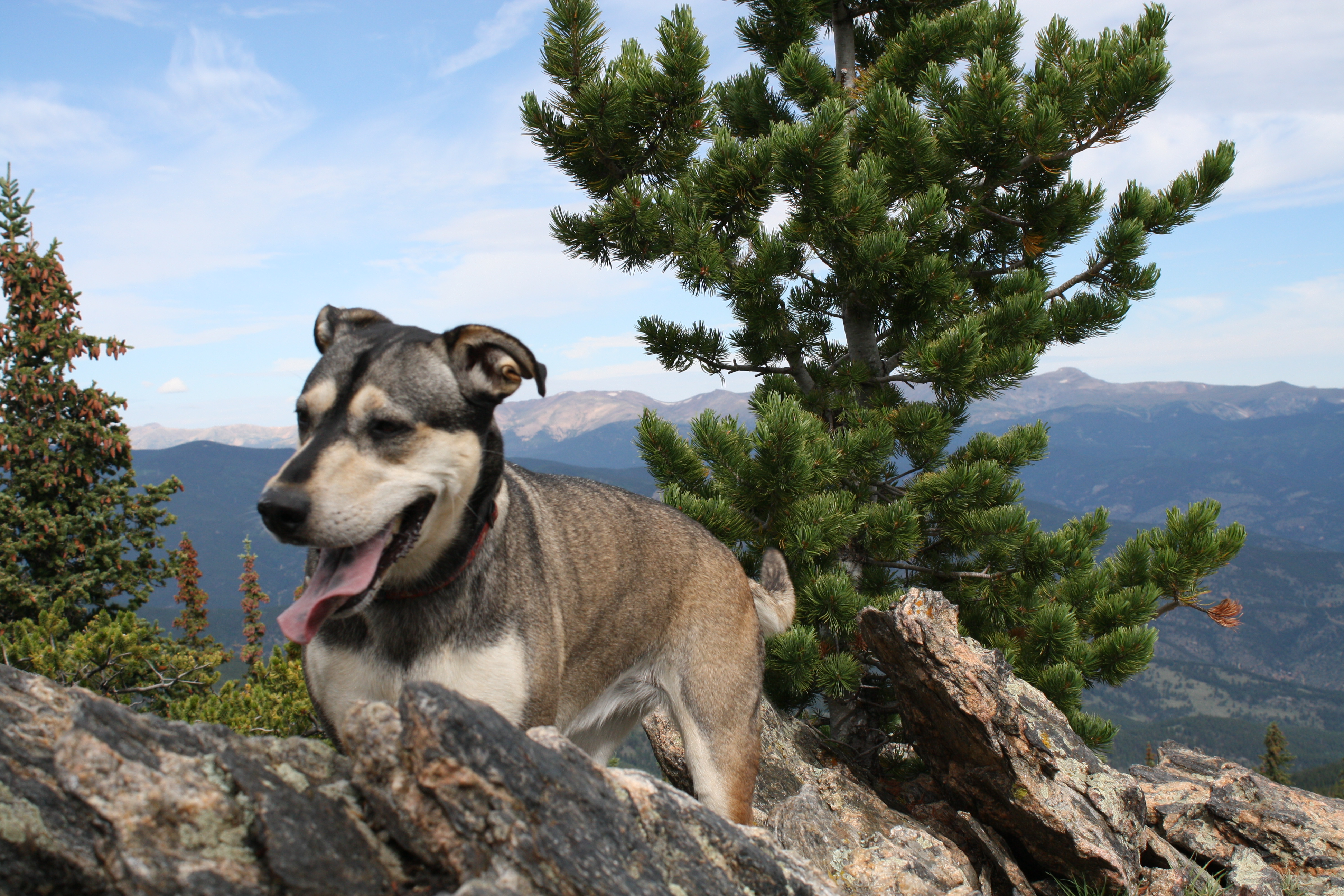
Sometimes I get angry and lash out, mostly at inanimate objects. Or, I complain, mostly to my wife. But four and ½ years ago I found a dog at the pound, and that changed a lot of things. I still get angry and lash out, mostly at inanimate objects and I still complain, mostly to my wife, but now when I am angry or frustrated my dog, Maggie, comes up to me, tail tucked and nuzzles me gently. Now I have to calm my anger and curb my complaining. It is difficult at times, but it forces me to reconsider.

I have to calm my anger and curb my complaining because Maggie does not understand why I am angry, frustrated, or generally grouchy. She simply knows that I am. She comes up slowly with her head bowed low and her tail tucked and she creeps up to me, nuzzles my arm and begs for petting. Without knowing it she reminds me that I have a great life and that most likely my anger and frustration while perhaps warranted is simply not worth it.

This is a hard lesson and I am a difficult student, but Maggie is a relentlessly patient teacher. I get mad and the tail tucks. I get frustrated and I feel a wet nose against my arm. This relentless reminder is irritating at times, but I cannot afford to let that show lest the cost of doing so is paid. That is, I must look into the dark brown eyes of my teacher, my pet, my companion and without being able to explain that it is not her that I am mad at, reconcile her worries the best I can.

I am reminded by my wife that I could give her the same respect and consideration, but I remind her that she understands my anger and frustration while Maggie does not. I know, and at times am reminded by Maggie, that this argument is not a good one, but like I said: I am a difficult student. I wonder why I do not react to people, my wife, the same way that I react to Maggie, but then the answer comes: people do not react the same way to others as dogs react to people.

There is a lot of honesty in a dog: it cannot lie. It does not have ulterior motives nor does it revel in its own ignorance proudly. I calm my anger and curb my frustration because I do not want my dog to be unhappy, and she shows me love and affection because she does not want me to be unhappy.

Such a simple lesson to be learned from a dog from the pound.