agrarian

An Update on the Experiment

experiment

This particular post is two things: an apology and and explanation.

First, an apology.  I realize that blogs are particularly important to those who write them, and less so to those who read them.  That being the case, I must still apologize for not being consistent, if only to myself.

Secondly, an explanation.  I have embarked upon an experiment in self-sustainability that involves moving from one side of this country to the other.  Such a move takes time and effort which explains my apology above.  This experiment involves buying a small (22 acre) plot of land with a house, a barn foundation, and a full woodworking shop.  This is the result of several years of contemplation and contrary thinking that has cost comfort and security, I hope, to a good end: to see just how self-sustaining an individual can be.

To this end I would like to invite anyone interested to visit two new sites that will be up and running this fall.  First, I will have a podcast called “The Philosophy of Gardening” and at some point and time a youtube channel called Trollcastle Works.  These endeavors will simply be a video/audio blog of ongoings around the property that will include forestry work, woodworking and of course gardening.

I hope to have several projects going that include: a small fruit orchard, vegetable garden, furniture making and carpentry, hops and grain fields, and brewing beer.  The podcast and videos, I hope, will be of interest to anyone that might consider self-sustainability as a way of life.

I call this an experiment, because I see 100% self-sustainability as being the speed of light, and the experiment’s goal itself being to see how close to this ideal that I can get.  There will be failures and there will be accomplishments, and I hope to share both.

The reason for this experiment is, of course, personal, but it stems from a belief that self-sustainability for individuals and families is the only moral option.  What better way to test this belief than putting it in practice!

I hope that some of you consider following me on this adventure!
Industry

industry

When did the word “industrial” become synonymous with heinous attributes of our society?  To be industrial has not always meant “continued or increased military spending by the national government.” a term first used by U.S. President Dwight D. Eisenhower in his Farewell Address on January 17, 1961.  Nor has it always been “characterized by a low fallow ratio and higher use of inputs such as capital and labor per unit land area”, in contrast to traditional agriculture in which the inputs per unit land are lower.  Nor has industry been a “transition to new manufacturing processes…”  To be industrial traditionally refers to the efficient effort put forth by individuals, and not to the methodological destruction of other countries through warfare, or the planned and procedural devastation of the environment.  Nor has industry always denigrated human beings to just another “cog in the machine”.

Industrial military complexes, industrial agriculture systems, or industrial revolutions really do not refer to industry at all, but to consumption, profit motivation, and product movement.  I would like to take back the word “industrial” to mean something effective but positive; a compliment if possible.  I would like to see the industrialization of our communities by seeing lawns disappear, being replaced by gardens, and useless fences replaced by useful fencing in of a few small livestock.  I would like us to be an industrial culture once again, but in the true sense of the word.

If we are to become industrial, we must come to understand the system in which we work.  We must understand that industrialization does not mean continued or increased inputs measured in units and efficient processes that lead to positive profits.  I would like to be industrial because that is what human beings’ purpose is: to work.  But we are also moral beings, and so I would like us to be morally industrial.  If we are to work, then we ought to work towards something good, something positive, something sustainable, something worth being.

The good, the positive, is seldom complex and even more seldom reliant upon units, inputs, measured efficiencies or manipulated markets, goods and services.  It is almost as if we have let our language fall prey to the lowest common denominators of those in our society that would have us believe that progress is measured in goods and services created by our industries rather than our industry.  I would like us to be industrious without relying upon industry.  We can, if we only realize that we must.  We must, and so I can only hope we will.

The Foundation of Life

soil

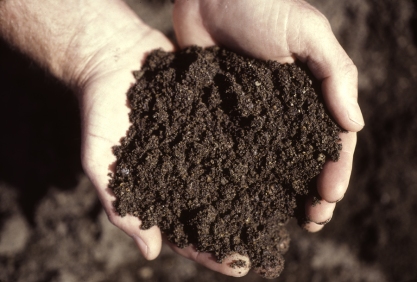
Soil is the foundation of life, and so in my quest for self-sustainability I have chosen to start at that foundational point this year. On my quest to be self-sustaining, this year started with building my own seed starting soil. With $8 worth of vermiculite I have about three wheelbarrows full of starter soil, and the vermiculite was optional. I think a little sand would have done the trick. Nevertheless, the path is clear.

Self-sustainability is becoming more and more important as the industrial agriculture machine slowly chews up its gears and we are left with fewer and fewer moral options. But why stop at not buying industrial food products? This is just a beginning, and a beginning that ironically ends at the very soil that all of our food eventually comes from.

I started with well composted manure, grass and food scraps collected all last year and turned regularly until winter set in. Before putting the soil in my homemade boxes, I ran it through the chipper/shredder. This fluffed up the soil and chewed up some of the bigger chunks. I then filtered it through my homemade soil colander (four 4×4’s with ¼ wire stapled to the bottom) into a wheelbarrow and added vermiculite.

I have started my leek, onion, cabbage, and peppers in this mix and have watered (so far) about four times with no sign of compaction. I have yet to see if my little seedlings, after sprouting, like their new home. Tomatoes go in this weekend.

It is difficult to explain the satisfaction of not buying products in order to be self-sustaining. Although I have a long way to go, this new starter soil is a further new beginning on the road to independence.

Plantitics

plantitics

Its coming up, and it’s coming up soon! Plans are being made as we speak in back rooms and workshops; in dusty places and in living rooms and across America. Are we all ready? Are we all willing? What will happen in the future!?

Tomatoes must be started just at the right time, but can they share the manure with the peppers, and where will the leek and onion be placed (those feisty fellows)? I have to sell the cabbage on sharing the space with the eggplant and at the same time make sure the squash have enough room to spread their greedy tendrils.

The funding must be in place and I have to find it somewhere. I know a rich banker down the street with horses. Perhaps there? I’ve found the gold there before; maybe again.

Of course, I’ve readied the playing field last fall but there are always changes and surprises. The beans let me down every year, but the hops always have my back.   This year the fruit trees will bear fruit and the raspberries look strong. It’ll be rough and some will go down in their prime, but that’s the rough and tumble game of plantitics.

I have to appease the worms, but they are blind and powerless; I, of course, am the master and they the slave. I have the power as the president of my garden!!!   I am the slave to no one!!! The plants will do as I say!!! They will bend before my mobility. But the worms…

I have to appease the women’s vote of course and so I’ve planted some early food in the hives to get them on my side. They’re coming out in droves on the warm days. I can count on them. I am for women’s rights and have promised a new super when the summer comes. They know I’m good for it.

I have to answer to the herb garden’s requests as they can be finicky at first.   But the tomatoes fund my work. You can never trust the ketchup lobby, but I’m strong in the salsa community. I will over the garden this year by promising to keep the “invaders” out. The Japanese beetle will be banded from our garden!

I have a plan for the plantitics of this year by pleading my case to the courts of nature. My garden will succeed and I will live as a king yet again…at least for another year.

A Split-Second Decision


John Cage was a composer who “wrote” and performed a piece of silence called 4” 33’ (four minutes and thirty-three seconds). It was simply himself, on stage, and sitting at a piano for four minutes and thirty-three seconds. However simplistic and absurd it might have seemed and still perhaps is, I believe that the art, while not found in the actual performance is in fact found in the thought. This is culture.


I believe that many of us are realizing that what we consider culture is really nothing at all but consumerism. Culture is virtuous; consumerism is not. A man sitting at a piano and not playing the instrument, I thought, can be analogous to individuals who find themselves in a consumerist society without being consumers. I know this is a stretch, perhaps, but I believe there is something true in it.


To play a piano is a choice and one must learn, and learning takes time and effort; much time and much effort. That is why so many begin by taking lessons but few come to play the piano. Not being a consumer takes time and much effort.


The burgeoning agrarian movement that seems to be blossoming in this country can be seen as a reaction to a society that has lost its priorities to profit and consumerism, but I like to think of it as a choice, an idea that often times is ridiculed (as John Cage was when he performed his piece).


Perhaps John Cage was reacting to the ever-more complexities of modern classical music at the time? And if so, the analogy becomes even more similar. Rather than complaining as a composer, Cage did something to point this out. In the same way, we can make choices that go against the relentless pressure to consume.


Some may argue that actions such as Cage’s piece or the agrarian movement are simply fads, but I’m not sure that the argument stands. Cage’s piece is famous (or infamous) even today and he as a composer changed the landscape of modern classical music. In the same way I think that as more and more people realize the cost of a consumer lifestyle is not sustainable, they too will choose to take a stand. In Cage’s situation it was not too play for 4 minutes and thirty three seconds.


Our stand against consumerism can start with a split second decision.


Obsolete Aptitudes

wooden plane


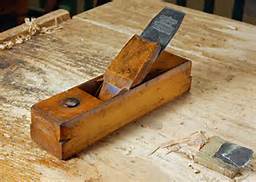
Just recently I was given three wooden hand planes ranging in size from a 9”-app. 16”. Since then I have been learning to use these “obsolete” tools in the shop. I have rubbed and polished the irons and waxed the soles. I’ve spent time practicing setting up the irons for just the right whoosh sound when I run the planes over the edges of the wood. In the process, I’ve learned to “read” the direction of wood grain and to feel if the irons are sharp and in place. I have learned to recognize characteristics of both the tools I am using and the wood that I am working. My education continues.


I’ve gotten better in the past weeks and it has cost me a lot of wood shavings and rough edges. But, progress is being made. I am told and hear that such things are obsolete, but I disagree. In fact, I would argue that such aptitudes are necessary to understanding not only woodworking, but also what it is that makes us human. The answers that I find in these old “outdated” wooden wood planes do not come easily, but every one of them are applicable. The questions answered by such tools are far beyond a push of a button or trigger on one of my electric tools and at the same time apply equally to both the old wooden planes and the electric planers and table saws that I use daily.


I watch my hands as I place them gingerly on the well-worn wood of the planes and feel the weight and the balance of the tool. I listen to the sounds the irons make as I hope for a smooth glide but often get the chatter of a miss-set or unsharpened blade. Where I learn to listen to one tool, I learn to coax the other. Sometimes I remind myself that I can easily joint an edge with a machine, but then I make obsolete something too important to forget.


Such experiences make for a lonely life sometimes, surrounded by modern humans and our mechanical aptitudes, but I’m not sure that convenience and modern “necessities” are worth the cost of losing ancient knowledge and know-how. Anyway, as I begin to look around, I’m not so sure how alone I am in my obsolescence.


It is hard to describe and perhaps even harder to understand, but watching the shavings pour out of the top of the planer when I do get it right is a memory that is seldom made when working with modern tools. I am asked, “Why bother!?” and to that question I must answer, “To ask that is to not understand the answer.” The experience is not mystical, but is necessary. It is not obsolete, but essential.


The Choices We Make


choices

When I chose to get a dog from the pound about five years ago, little did I know of the ritual that would soon become my life. Every morning up at 5:30 and after the coffee cup hits the coffee table for the final time, a nudge (toy in mouth) and off we go for our morning walk. In the afternoon after work another walk, work in the woodshop or in the garden, and some playing in the yard until it is time to eat. Then, off to the favorite bed she goes watching the house from her favorite perch.

The choice to get a dog from the pound has obvious implications. My life has changed, but so has hers. I made a choice, and that choice has brought me as well as my dog a great deal of happiness. These are the choices we make, and we continually make. Other choices that we make do not always have obvious implications.

When I choose to go to the grocery store (the walk of shame as I call it), or to buy something at the local hardware store the choices we make there also have implications. However, those implications are not always as clear as bringing a dog into your life. There are animals that pay a high price for the choices we make. We make choices for many reasons, but those reasons should always be clear to us as well as the consequences of the choices we make.

An easy choice is not always the right choice, and those choices that we deem as difficult should not always be difficult. We can choose to do the right thing, but to simply do the right thing takes time, it is a habit that we must acquire. I believe that most of us know what the right choice is but are often tempted by the easy and swayed by the convenient. Our choices become others and not our own.

Perhaps it’s time to take our choices back, but this too is a choice; at least for now.

Two Sides of a Coin

two sides of a coin

Money is typically defined as anything of value. Money is often used as a means of barter, trade, and for transactions. And so money is not often valued for itself, but for what it can get us. Money, then is useful, but not necessarily valuable. In thinking of this, I realize that there are two sides to every coin.

It seems that much time and effort is spent in trying to become rich in order to buy things that are not necessarily valuable or useful using something that is not necessarily valuable. This seems strangely  a waste (rather than a valuable)  of our time. However, most of us live our lives by this axiom; most of us.

The recent upswing in locavore, organic, self-sustainability and other descriptive ways of living seem to be motivated not by money, but by something far more valuable: happiness. The motivation to turn away from money to “do what’s right”, or to “be more healthy” seems to have its basis in virtue.

Virtue is a philosophical ethical theory founded upon a moral education, which is considered by Aristotle as a good in itself because such a life leads to a higher quality of happiness. Without getting into the philosophy too much, the value of living such a life is found in actually living that life. Money is not valuable in itself. However, living a life of virtue is.

So, one side of the coin seems to be the motivation to be happy, and the other side of the coin seems to be the kind of happiness that matters: the quality of our happiness. Money seems to abide by one side of the coin, but not to the other. Don’t get me wrong; I think that money is a viable tool, a useful means to live comfortably and securely. But I’m not sure that it is the best means.

The current movement towards more viable and sustainable agricultural methods and cultural beliefs is certain to lead to jobs and opportunities that are yet to be seen. But these movements do seem to be good in themselves as well.  We have to be careful. On the one hand, money is a motivator for our dreams, but on the other hand money often undermines the dream itself. Perhaps what we must always remember is that what is useful is often not what is valuable, and what is valuable is not always useful: there are always two sides to a coin.

a Dead Leaf

a dead leaf

Fall is often looked upon as the end of summer. In fact, as I ride around the area where I live, I see everyone sweeping up the remains of the summer: the leaves on the ground, now brown, yellow, and red. They bag these remnants up and leave them on the curb to be picked up. The trees stand lifeless and the mess which is nature is uncovered for all to see. It is as if we hide behind the fullness of life until our secrets are revealed with the death of a leaf. However, a dead leaf is much more than the end; it is in fact, the future.

I cannot stand the sight of leaves being crushed in the middle of streets under the tires of cars. This unconscious act seems to denigrate the value of death because it is often seen as the end. The leaves have done their job and are discarded, unimportant and we busy ourselves “cleaning up” the mess left behind without thinking of the cost. The trees sometimes seem disgraced in their gnarly nakedness; nothing left to the imagination. However, it is the fallen leaves that hold the future and our lack of imagination the dooms us to repeat the mistakes that we seem to believe justified.

Gardens in the fall do not help. Our gardens have produced and are now left flat and unappealing; the dirt mocking the very labor that we have spent the summer on. The end is all around us and we sweep it into bags and under the eaves of the house. We prune the leftovers almost wishing that no one will notice the seeming ugliness that we uncover.

The fall is not the end, but the beginning. A dead leaf is much more than the end, or even a representation of the end, it is the beginning. In fact, the deadness of the leaf is only an illusion because it is the life that it holds that counts. The dead leaf holds the key to the future. It is such a simple concept; an endless cycle of birth and rebirth, Buddhist in its nature. I picked up a leaf before throwing it into the shredder and looked upon its brown acquiescence. I thought as I threw it into the machine that it was at my mercy. But I was wrong: it is the other way around.

We are at the mercy of the fall and what it promises us. The fall is in fact the beginning of what will be. The labor of the summer is a direct consequence of our understanding that it is we that are at the mercy of the leaves in the fall. It is they that hold the answers and them that hold our future. Within the thin, crackly membrane of a dead leaf is the necessities of life. If we do not understand this, we are in fact, doomed.

So, grab those black bags that hold so much; rip them open and spill their precious contents over your garden, over your lawn, over your land. Remember, the land will only give back as much as we let it. The dead leaf that you crumple in your hand is a deciding factor not only for your garden, but for our lives. A society that does not value the importance of a dead leaf, is a society that is unable to value the importance of a sustainable life.

Freedom of Food

canned food

When I first began finding the joys and understanding the necessity of growing my own food, I hurriedly began finding the necessity and understanding the joys of canning my own food. After all, what good is a garden if what it produces goes to waste.

Canning is pretty straight-forward and does not rely upon refrigeration. The basic principles are the same no matter what you can, but I really enjoy canning tomatoes, red cabbage, and beets. It’s a nice feeling to open the cupboards of your kitchen and look over the summer’s work. Also, it’s a great thing to look forward to all the freshly canned food that you will have when you are working on those hot, summer days in the garden.

So, get your canning on!

  1. Grow your own food without pesticides or artificial fertilizer.
  2. Pick, eat what you want, and save the rest.
  3. When ready, get some heat-resistant bottles for canning
  4. Boil the lids and bottles for at least 15 minutes.
  5. Prepare the food to be canned.
  6. Always, always make sure everything is clean, clean, clean.
  7. After canning the veggies, boil the newly bottled veggies for about 10 more minutes.
  8. Take the canned food out and listen for the wonderful  “pop” of the lid.
  9. Try different recipes, or just can some veggies.
  10. Mark the tops with the date including the year.

There are some important things to be aware of. First, some of your canning endeavors will fail. This is called compost in the canning world. Secondly, some of your recipes will not taste as good as you’d like. You have two options: compost or creativity. Mix some of these with other foods and sometimes you’ll be surprised.

I have read that growing your own food and putting it up is the ultimate revolutionary act and have found through the years found this to be true. So, if you want to taste true freedom, true self-sustainability, and experience what I would equate with being human, grow and can your own food!

It’s an amazing sense of freedom and the food, well, it tastes great!