agrarian

The Logic of Food

the logic of food

To eat is to have a garden.

To have a garden is to cook food.

So, to eat is to cook food.

To eat is to cook food

To cook food, is to have a garden.

So, to eat is to have a garden.

To eat is to have a garden.

To have garden is to understand how food is grown.

So, to eat is to understand how food is grown.

To eat is to understand how food is grown.

To understand how food is grown is to understand nature.

So, to eat is to understand nature.

To eat is to cook food.

To cook food is to have a garden.

To have garden is to understand how food is grown.

To understand how food is grown is to understand nature.

To understand nature is to have the world at your fingertips.

Perma-mess

perma mess

This year I tried a permaculture approach to the garden. I have hops, viola, and tomatillos vying for space in a single bed while across the boardwalk, there’s squash and red cabbage throwing around with tomatoes and potatoes. Walk a way down and I find asparagus poking through the long tendrils of the leek bedded down for winter. I look over the garden from the asparagus and notice the peppers peering around the eggplants and what’s left of the cauliflower. One bed has a few kale plants readying themselves for winter; the rest of the bed being laid fallow, compost and manure being soaked in by the soil and the worms wiggling around in it.

The garden is unorganized, unplanned and well, messy looking. But a walk through it and I find that the plants are thriving, healthy, and somewhat natural looking in their environment. However, this is not the English garden that so many have in mind. Recently, I’ve been reading about permaculture and the idea that we should learn from nature. I’ve found much of permaculture is permeated with types of new age thinking, but this is not the permaculture that I recognize.

There is nothing new about permaculture. In fact, it is as old as the earth itself. Permanent agriculture, the full name, refers to a train of thought that is Zen like in its simplicity, but takes the patience of a saint and the wherewithal to understand that such agriculture is not measured by profit or product, but by quality and produce. It may be that this way of thinking is not profitable. But, it is sustainable, which in this day and age we are finding to be more and more necessary.

One thing that I must come to be accustomed to is the aesthetic of permanent agriculture. First, I learn that I must relinquish control. Secondly, I must learn that such agriculture is time-intensive and in a time when attention spams are measured in minutes, permaculture can seem very unappealing. Lastly, I am learning to take chances and to trust what I have put into motion. Put in and step back is my new motto.

The consequences are messy and disorganized. However, at this late date in the season I’ve found a certain beauty and even pride in the necessity of stepping over vines and cabbage leaves to get to the tomatoes buried among the basil and asparagus. Time, I think, is something that we have available to us, but to take the time often messes up our lives. We have come to like efficiency and modern cleanliness. Permaculture is not that efficient and is certainly not appealing to the hard line English gardener. However, the permanence of permaculture is an acquired taste; a taste that given our environmental problems and looming changes is necessary.

So, give up the ghost to a natural and often fun way of gardening: permaculture. I think you’ll find that permanence is a lot more fleeting than you may think!

Where There’s Honey, There’s Bees

courteous

I have bees and in having bees I believe that I owe them a “common” courtesy. I must supply them with a safe place to live and to food and water. I must consider their needs during different times of the year and I must do my best to assure their health. I’m not sure that many would disagree with these responsibilities, but perhaps with the use of the word “courtesy”.

In the beekeeping world the question of what to do with a weak hive is ubiquitous. Some recommend doing nothing and letting them die out. This method is, after all, the most natural of methods. However, I would consider this to be somewhat discourteous. The Europeans did bring the honeybee to this continent and so we seem to at least partially responsible for their well-being.

Does courtesy, especially to animals such as bees, actually apply? I think it does. I don’t open the hive up unless absolutely necessary. I consider that hive their home and I a guest (when I do open it up). Of course, I want my bees to survive, but my own desires for their well-being aside, the idea of being courteous seems to be a much nicer way of going about keeping animals of any kind. Just think of the changes in attitudes towards pets such as dogs if we were only to be courteous to them.

This brings up an interesting issue: being courteous to one species is not necessarily being courteous to another. A dog needs exercise on a daily basis. To not allow the dog to exercise is in a sense being discourteous.   To expect the dog to be “good” and not allow it the needed exercise is irresponsible. Bees need a certain environment in which they can thrive in the same way that a dog needs a certain environment in order to thrive.

But does this concept apply to all creatures? Again, I think it does; and to the environment as a whole. What if we were all to think of ourselves as guests on this beautiful planet! As a guest, I must be courteous to the host, not overstay my welcome, and respect the boundaries that define…being courteous.

This concept of courteousness seems to be in line with the old analogy of the sandbox: the rules that apply in a sandbox full of children, apply to all adults in the world. I would only broaden that analogy to all creatures and to the earth itself. The old adage rings true not matter: we can catch more bees with honey than with vinegar. But to get honey, it would help to consider the bees!

Worry, Worry, Worry

worry

That is, the end of summer and the beginning of cooler nights and the faintest of hints of fall and eventually winter. This is the time to check the hives for health and food. This is the time that the bees begin to make the last push, sometimes swarm (and die), or begin to ready the population for the winter period.

There’s not much one can do as a beekeeper except to watch for swarms, feed if necessary, and ready the hives for winter. I usually wrap mine in black roofing paper and add a layer of insulation under the roof of the hive. I will poke a few small holes in the insulation for venting, and try not to open the hives too much from now on.

This is, I hope, my first winter with bees but I certainly hope it will not be my last. Beekeeping is an adventure and as with all adventures there is a degree of failure. As I have learned, beekeeping is no longer a simple process which (depending upon your attitude) makes the adventure loathsome or more challenging.

These are, after all, my girls and I cannot help but care for the hives that I have. As I am reminded: I have done all that I can. However, it never seems enough. Perhaps it is the human condition that makes us continue to want “more”, to do “more”. We cannot fail; so we tell ourselves. But failure is part of evolution, both the evolution of us as individuals and the evolution of beekeeping as it has become.

In fact, often adventure begins with failure. I know that my short stint in beekeeping began with failure. But the important thing, as the platitude goes, is that we must learn from our mistakes. More importantly, we must continue to learn.

Bees are a good teacher because they never seem to worry. They act. And so, perhaps adventure starts with action, with acting within the moment and not thinking about it too much. Thinking too much is a euphemistic way of saying “worrying” too much, which is what I seem to do with my bees. I’ll do what I can, and have done what I could. That must be enough, although it never is and seems to be the one thing I cannot learn. There is always ignorance, and that is enough to keep one worrying all winter long.

Revolution

revolution i

Reading Paul Roberts’ book, The Impulsive Society, I am reminded how all things are interconnected. It is impossible for us to rectify social problems without first rectifying the economic problems. However, economic problems will be beyond us as long as the political problems ensue. These connections are simple enough to recognize. However, the connectivity does not stop there. In fact, it only begins.

Roberts’ book has to do with social, economic and political interconnectivity, but working in the garden and hiking in the mountains reminds one that the important connections are not social, economic or political at all: they are environmental; environmental on a global scale.

In reading classic philosophical texts (Adam Smith, John Locke, Thomas Jefferson f.ex) it seems that the writers and thinkers of the time realized this, but we have, in our modern and technologically advanced societies, seemed to have lost the capacity for recognizing the “bigger” picture. Roberts’ book compares the individual to the society, but perhaps a more apt comparison is that between human beings and the environments we live in, the greatest environment being the planet as a whole.

I cannot help but think that the social, economic and political problems will continue to be inevitable as long as we view the planet upon which we live as our own personal trashcan. Such thoughts are not consoling, but they seem to be true nevertheless. Such thoughts, however, are often the seed of actions. As we all know, or ought to know, we are on an environmental precipice; we all have heard the global issues that we face not only as nations, but as a species.

Problems faced as a species cannot be rectified by an individual, which goes against the grain of modern consumeristic thought that has pervaded most western societies. But, the fact remains that without society there are no freedoms. Just as in more natural environments: there is no free lunch. So, our social, our economic, and our political problems must (oddly enough) be addressed not from a social, an economic, or a political point of view, but from an environmental, a bio-diverse and even bio-centric point of view.

Think about that the next time you plant a non-GMO tomato or pepper, or the next time you take out some of your lawn to plant perennial, bee-friendly blooms. Consider being part of the solution when you ride a bike to work, or buy only local beef, pork, and chicken. Consider that planting a garden, being a locavore, or riding a bike is a socio-economic-political movement, a revolution, towards a better life for all individuals, human or not.

It Sure is Hot Out There

climate change

The summer has finally come, after a wet and strange spring. I’m afraid that my foraging plans will be cut short by the late frost this year. The apple, plum and cherry blossoms got hit hard. For some reason the beets that I planted as well as a great deal of the kale seeds did not even make it out of the ground. Bad seeds? I’m not sure. However, the tomatoes look good, the cucumbers and the hops are doing well. Cauliflower, cabbage and the asparagus are going gangbusters. The peppers are slow, but have fruited.

The herbs are going well, especially the established ones. A lot of rain this spring did a lot of good. There are still varroa problems with the bees, but I have hope that I can get them through September, and then through the winter. I’m hoping that they will do well on their own. It’s been pretty “hands off” this year. I planted new peach and cherry trees as well as a few berry bushes. We started mushrooms this year and they have taken to the logs that we inoculated.

The front door is sticking and I am hoping that the wood settles after I fixed the irrigation head that was allowing it to get soaked at night. I built a food dehydrator and installed new poles and wires for the hops. The weeding continues uninterrupted. Again, the cilantro was weak as was the salad. Who knows why as I planted both earlier this year. Maybe too early?

These are issues that most of us do not have to worry about, at least not directly. For most of us in the west we leave these worries to others; to the “industry” and to science. However, these are honest and necessary worries. That broad descriptive, “weather”, contains much of the above but the devil is in the details; most of the details that go unaware.

It seems that these days the details of the farmer, the gardener, the agrarian are making themselves known more and more by making the details of weather more and more known. The crumbs of climate changes are leaving a trail, but what we do with those crumbs is up to us. I’m not sure what I will do…

I will go out and see if there are apples, plums and cherries to be had off the trails. Perhaps the mushrooms in the mountains will be plentiful because of the rains. I’ll can the tomatoes with the great crop of basil, but will need to buy beets from the Farmer’s Market down the street. I hope to get a crop of fall kale and pickle a few cucumbers. I suppose all that we can do is to follow the trail of crumbs and wish for the best. It is only weather, after all.

Limits

limits

I recently completed a one thousand mile motorcycle ride (in one sitting) to visit my family. Nineteen hours later (fuel stops included) I was standing (not sitting) at their kitchen counter drinking a beer. I was thinking about limits. The ride had reminded me how important it is to know your own limits, and while riding through the Missouri hills I thought about how important limits are to all of us.

Right now most of us are not aware of limits, but a motorcycle (in my case) is a very bad place to first learn of them. I think I was at mine when I was singing loudly into my helmet a version of “Spiderman” that I called “Bobblehead”. Any athlete will know their limits, how to stretch them and when it is a good idea not to. Not to know your limits will sometimes cost you your life and other times just make things a bit uncomfortable; in the former you met your limits and in the latter you stretched your limits.

There are limits that we must all abide by, both our own and the ultimate limit that we all share: reality. Right now we do not seem to understand that the ultimate limit applies to all of us; no matter what, and no matter who we are. I once read that if a jet engine had a purpose, that purpose was to blow up. That struck me in an odd way. Evolution is a blind machine that, perhaps, has the same purpose. Watching a beehive, for example, is a brutal reminder of that “purpose”.

So, what do airplanes and Evolution have in common with this kinda-sorta preachy little bit about limits? Well, for one thing neither evolution nor airplanes have limits: extinction and explosion are not limits. Such things simply act as their nature (and nature itself) dictate. We humans are a bit different: we have the capacity for thought and the belief that we can act upon those thoughts. We have limits that we can stretch for these reasons. Or do we?

Is it the nature of human beings to destroy themselves, to not stretch but break the natural confines in which we live? Such a thought is disturbing to many and for many reasons. First, we are doomed if this is so. Secondly, we are not free if this is so. Third, the capacity for thought is an illusion. Perhaps we are just another blind alley that Evolution follows. I don’t like to think so, but I am wary of not doing so.

Destruction is part of nature, it is inevitable, but our own destruction at our own hands (I would like to think) is not; it cannot be. However, in order for us to learn how to stretch our limits, we must first know that we have limits. Perhaps it is time for us to find a way to define our limits before those inextricable and inescapable limits cost us the very thing that we are so fond of: living at any cost.

The Agrarian

 Agrarian

  • It takes 1-3 Years to plant with the long term consequences in mind. Plant with space and needs in mind. The plants will start slow and eventually take hold. All the while we must nurture them to give them the best of all possible beginnings.
  • After 1-3 years and the continual planting and possible replanting, the introduction of poultry and other animals for pest control. This introduction has its issues and will never go as smoothly as we think. The animals introduced must be, as the plants must be, if not indigenous, then only what the plants and the land itself will allow.
  • From 5-7 years we must “chop and drop” roughage from the pruning that we will do. The introduction of trees for timber must be introduced but these must not affect the fruit trees bushes, and other perennials that we have worked so hard to keep alive.
  • This is what it takes to eat honestly.

These steps and these processes are necessary because we have not taken the time to follow in the footsteps of mother nature; we have taken shortcuts and continue to do so. But, we must remember that mother nature neither nurtures nor does she care; she simply does. She expects nothing but gives so much to those that will understand her.

We do not seem to understand mother nature any longer. We cannot “google” it, or find it on the ubiquitous internet. We must get our hands dirty, and fail. We must see the dirt under our fingernails and feel the cuts on our hands, the sweat on our brow. We must feel the bites of insects and the heat of the sun. Our cellphones must be put aside and the supermarkets must be forgotten. Technology is not a boon but a bane.

The comfort of our homes and the illusion of civilization must always be put into perspective of the natural reality in which we live. If we do not come to understand this, then we fail as individuals and as a race. Our mother will remind us of this either with our blessings or our pleas.

A good home brew helps!

Sage Advice

buddha

It hailed today and luckily the tomatoes that I planted out were covered by the hoophouse I built around them. I learned my lesson last year, and in years before: never trust nature to do what you want it to do. I know that I will learn this lesson many times to come, but the lesson never comes easy.

The hops were troopers; I believe that they are the marines of the plant world: nothing phases them. The rhubarb was sheltered by the large bank of bushes, and most of the seeds planted out last week have not come up. I hop the newly peeking asparagus shoots are OK.

The bees finally had a time of it on their cleansing flights after so much grey rainy weather that we’ve been having; that is, before the hail set in. I had put out a swarm capture box as I was having an inkling that there was a swarm around that had been trying to get into one of the hives. They had had no luck, and so I put the box out, wondering if they’d be interested. I think they were, but it’s too early to tell.

Lots of hard work in the garden these days for all of us. It’s not nature that is a taskmaster as she simply doesn’t care. It is the hopes and dreams of canning tomatoes, making salsa and rhubarb jam, freezing kale, brewing beer, making apple sauce, putting up pickles and beets, juicing plums and crabapples, picking fresh carrots and digging up potatoes. It is pesto with your own basil and tea with your own honey. It is all of these things and more.

This time of year is both hopeful and hellish; everything seems so fragile and yet so much is riding on it. This time of year is the start of catching up. Farmers and gardeners alike play “catch-up” from now on out. The weeds will come, wasps will attack the bees and plants will die. It’s all out there in the mysterious future as are the hopes and dreams of those who try to understand the soil and the plants that come out of it.

As I said it hailed tonight and probably took out a lot of folk’s work. I can almost hear the profanity even if we did need the moisture. There is more where that came from. We all know it. Buddha supposedly said, of nirvana: figure it out yourself. I think that such advice is sage (good in sausage and olive oil for dipping bread). And so, I hope that we all figure it out. But for now, I’m off on an adventure of my own, and wish you all the best that your hard work will offer on yours.

Why?

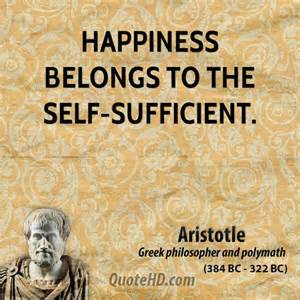
aristotle quote

Two year old’s ask it all of the time, and we (as adults) often dismiss the question: why? You are asked: “What do you do?” but how many times are you asked: “Why do you do what you do?” To answer that question would take some thought, and would probably open us up to thoughts that we might not want to consider.

For those of us striving to live an environmentally sound life, the question can be uncomfortable. Why do I keep bees, have a large garden, collect water, compost grass and food scraps, save seeds, use no pesticides or herbicides, can and forage food, recycle wood for the projects around the place? Why do I want to do more?

Answers begin to bubble up if we think long enough about what we do. Often when we explain those answers to others, they come across as ideological and sometimes self-righteous, sometimes we just don’t know. We become accustomed to the “glazed” look after a minute, and we realize that the answer has become rambling, incoherent or that the question was only asked out of feigned politeness.

Answers range from philosophical to utilitarian, from selfish and self-righteous to ideological and ambiguous. “It’s just the right thing to do.” Of course, the answers rely upon the question. When people ask: “What do you do?” the simple answer is to tell them you get paid to do it. However, if someone asks: Why do you do it?”

“For the money!” becomes an empty answer; one that reminds us of who we are. Money doesn’t cut it at the end of the day.

And so we are left wondering why. There is only one reason to do anything and it is right under our nose whether that is the compost pile or the wild apple and plum trees that we might pass everyday while walking the dog (rescued from the pound).

Why do I keep bees, have a large garden, collect water, compost, save seeds, and use no poisons? Why do I recycle scrap wood for projects? Because not to do so would take away a quality of happiness that doing such things gives me.

Why do I do what I do? It gives me a higher quality of happiness, and as Aristotle wrote: happiness depends upon ourselves, and the highest quality of happiness depends upon why we do what we do.