agrarian

Perfect Imperfection

perfection

I decided that putting the leek starts in the ground, most of them looked dead or dying, was a chance that I was willing to make. The onion starts look good. Last year, our onion crop wasn’t that good and I remember wondering why home gardeners don’t often get those vegetables that we all see in the supermarket: those red, oval tomatoes, all sized and shapely, taking their place on the well prepared produce stands or that green, full-leafed lettuce plants in February. Gardeners, at least of my ilk, live in a different world; they live in a world where food often looks like well, food and not products.

With the ongoing and growing movement with regard to food culture, many people are more and more aware of the processes that are necessary to get food to the market. The process is in fact amazing! The process, however, gives us a false sense of what food is. It is not a commodity, the consequence of a closed and well-oiled system. Rather, food is a product of the rather imperfect world in which we live. Food is a product of the soil, of water, and of time and effort and more often than not, chance.

I try to remember this as a put down the small starter potatoes, just poking out their first shoots. I remember my last crop of potatoes. They seemed small and pathetic, at least until I took a bit of them. A little salt water, heat and time and such a potato is truly a work of art. Like art, producing food relies upon a bit of imagination and a lot of elbow grease. The result, whether on canvas or in the ground, is often not what we started out thinking it would be. However, the results, somehow, are always satisfying.

My leeks are doing well as are the onion starts. My tomato seedlings have little blossoms on them as they stare up out of the hothouse. I don’t know what will come of these as the season progresses, but I know the results will not be perfect.

Nature’s process is not perfect, but nature is perfect in its imperfection. While nature is not an artist, nor does it “produce” food, it is a process that we must and always will, rely upon. Nature is a verb, perhaps, but a verb that changes meaning over time; it never sits still awaiting definition. Nature offers a bit of insight into something that we must accept: the idea of perfect imperfection. But if my memory serves me right, imperfection can taste perfectly good!

Profit and Progress

progress

For people who grow their own food, this time of year is a mix of stress and excitement. Seedlings are coming up, but in many parts of the country, it’s too early to put them out. The bees are beginning to get busy, but sometimes they swarm. The worries of a warm summer are coveted because of the unrelenting rain and cool spells that inevitably come. Animals birth, and some die. Farmers start ramping up the season, but have to wait for the always elusive “goldilocks” weather. This mix and match dichotomy is not limited to seasons.

Most of us live in societies where money is the method behind the madness, but want to trust our food while not paying unreal prices for it. For those brave souls who decide to give us what we want, they must try to do the right thing while figuring out the right thing to do in order to keep doing what they love. There must be a pay-off but the cost of that pay-off needs to be taken into consideration as well. Do you sell your soul out of necessity, or is it necessary to keep your principles in order to progress?

From farming come these philosophical conundrums. Gardening is not different. Running a business is, well… no different. Many of us begin the long road of life considering profit as progress. Some of us realize that profit in fact stands in the way of progress. But, these are not solutions; they are challenges that each of us seem to face no matter what we do. I have a dream, yes, but that dream and the reality that it creates are often not one in the same. Profit and progress come in many forms.

A few principles might help. First, be honest; not only with everyone around you, but perhaps most importantly with yourself. Second, know the hill that you will “die on”. There comes a time when profit is no longer a measure of progress, but a detriment to development. The change from one to the other is often slight and barely perceptible. Third, know why you do what you do. We often ask strangers “What do you do?” Perhaps we should start asking: “Why do you do what you do?” A more pertinent question if we are to profit from our progress.

Listen!

bee

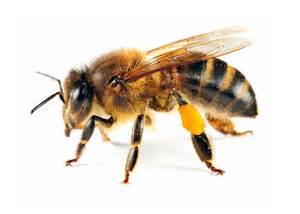
I lost a beehive last year. It was a devastating experience. Everything seemed right; it was a strong hive, but alas the hive failed. I take responsibility. However, this is not about the past except that we must learn from it. The past is, in fact, useless unless we do just that.  But what do I need to learn?

And so this coming Saturday I will start the process over with the experience and education that I wracked up last year. This Saturday I am starting over with two hives. To say that I am nervous is actually not accurate; I am not nervous, but hesitant. I don’t want to fail because failure in beekeeping means that lots of life is wasted.

I am starting with two hives because I am told that it is insurance, that two hives gives the keeper a way to compare; two hives will help educate me. I only hope that my education does not cost the bees their lives. I will do my best, but I know that the bees will do their best. They don’t have a choice, but I do.

The choices we make define who we are, failures and successes. The choices we make define who we will be, and who we have become. I believe that the death of last year’s hive defined who I am today, and inevitably the hives that come on Saturday will define who I will become.

Last week progress was on my mind, and progress can be defined in many ways; some bad, some actually, well…progressive. To fail and to step back up to the plate says a lot about a person. I must remember that bees do not fail in the sense that I do. They simply act; it is us that determine pathways and judge failure against success.

The simplicity of the beehive is amazing; the complications that we create are just as remarkable. In studying all winter long, with the readings and online research I need to remember that complication is not necessarily progress. Progress is simple: the recognition of the shortest, most realistic path to the goal.

Bees do not need much, and they ask nothing of the individuals who decide to “keep” bees. It is in fact not necessary to “keep” bees at all. This year I will endeavor to stay out of my own way and more importantly, to stay out the bees’ way. This year I will progress by not necessarily acting upon the bees, but learning how to act with the bees.

This sounds so simple, but simplicity, I have found, is not so simple.   I can only hope that the “girls” are able to teach me to step back, give them room and not worry so much. It’s quite the advice from such a simple creature. If only more of us could listen.

The “P” Word

progess

Progress is a peculiar word. And to make matters worse, it is a political word as well. Perhaps the problem is that we humans are a particular bunch, often specious and many times self-promoting. Progress is not often synonymous with tradition but perhaps that is only because we define it as profit. We have, no doubt, progressed but with profit as progress comes a price.

The price for the particular progress that is being promoted by the current preliminary agricultural programs being put forth under numerous and often publicized public interest in agrarian lifestyles and sustainable food-growing is that often progress is not seen as progress at all. However, I am here to tell you that sustainability in any form is most definitely growth, advancement, improvement, development: it is progressive!

While it is true that profitable progress will pay the price in the beginning, proper progressive movement relies upon the propensity of those involved to understand, to recognize, to perceive (if I may) the parallel between the proper way to grow, choose and eat food and the priorities that we choose to make. In short, progress is defined by why and what we prioritize. If we prioritize profit over progress than we get what we deserve which is exactly what we are getting now.

To prioritize profit and production over sustainable progress and points of virtue is to presuppose that profit is a necessary participant in proven progress. The point is that progress is not always profit-driven. Progress can be profitable but only if it is sustainable. So, while sustainable lifestyles seem in vogue and are popular with a growing number of the populace, it is not a popularity contest. Furthermore, although the progressive movements with food production often rely upon pre-industrial ideas, the proposed changes are necessary if we are to remain progressive.

The phenomenon is primarily a progressive one that is properly founded upon proven production means that are both profitable and practicable if not predictable.

Thanks for reading!  Philo

Revolution!

food revolution

The “new” food revolution seems to be upon us, and I hope that it turns out to be a revolution that lasts. As revolutions go, this is a more positive one as it is seems to be a return to basic facts rather than pie-in-the-sky, wishful thinking on the wings of dreams. The new food revolution is, rather, pie-in-the-pan, hard-work on the backs of those who see the potential in acting upon truth.

As most revolutions, this one has its (let’s say) issues. First, while the wagon has pulled out, there are still those jumping that don’t belong. Simple words like “organic” are now being touted by very non-organic growers and worse, being taken over by bureaucratic system that has spent so much time and effort working so hard against the faithful cultivators of quality; just ask Joel Salatin! Other corporate confusions now include honest and innocent terms like “free range”, “cage-free”, and of course we have the GMO-battle: a dishonest battle about honest labeling.

As opting out becomes more and more tempting, we must remember that perhaps these dishonest, deceitful, and mendacious moves by agribusiness all over the world may just be desperate endeavors by the few and the powerful. We must plant on! Discard the lawns and the mowers, pick up the hoes and the rakes. Buy a chipper for god’s sake! Let ‘s ignore the ignorant and take on the towers of trade that would keep us under their thumb!

Feed the worms, and feed yourself! The time is now!

Patience my…

patience

I put the hops in this last weekend. We also planted six berry bushes, some asparagus and threw in some lettuce and Arugula for good measure. It feels good to get in the dirt again. I can almost smell the pungent, green buds and the rich red and purple clumps of berries. The asparagus is a different story: it takes years, not months. I threw the dill out in the herb bed and watered the turnips. The seedlings are coming up…all in due time.

If you begin to grow your own food you soon find that doing so is an exercise in patience. While patience is not necessarily a virtue, it is a necessity. This is true with many things and in many situations. Patience is not easy. Everyday I wake up and check the plants, opening the hot house according to the weather (this morning at 6am before work). Coming home, I expect change, but often there is none.

Patience, I am told, becomes a habit with practice. I’ve not found this to be true. Patience, I feel, is often a detriment to good ideas, holding back intuitive blasts of genius. Patience is often accepted as reasonable when it is often cowardly. It is reasonable to wait, when what we mean is that we cannot make a move towards what we know is the right thing. These kinds of decisions and challenges are part of life, but with gardening patience is neither good nor bad, detrimental or progressive, it simply is.

I’ll wait to plant the rest of the garden: the beans, the squash, the onions and leek, the beets, and the tomatoes plus a few other nicknacks.   I will wait, but I won’t be happy about it. I’ll wait to work the soil some (I’m going “till-less” this year), and set the irrigation system up, but the waiting will be long and arduous. Patience is that long journey that we sometimes take, telling ourselves that it is the trip that matters while knowing all the time that it is the destination that really matters.

Every Spring

seedling2

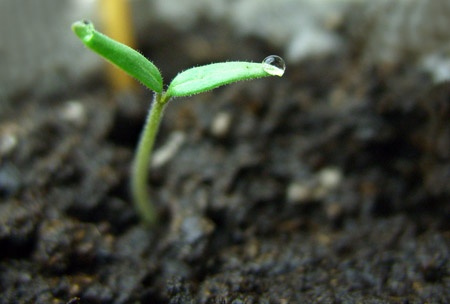
Every spring I put small seeds into small containers filled with dirt. Every spring some of those small seeds “miraculously” sprout into small plants; all reaching for something bigger. This year I am trying an array of plants; some of which are new, and some of which I have been saving from previous plants in previous years. It is this saving of seeds that is truly the cornerstone of growing food.

The Dester tomato seeds from one of last year’s tomatoes were the first to sprout, is the biggest and all of the six seeds from the fruit has now come up, and continues to grow at a truly admirable rate. The newest of the seeds seem shy, poking their small leaves from the soil slowly. The garden awaits and the seeds are willing.

I have started all the seeds in my hothouse. This year I built some homemade warming tables from a few pallets I got from a local hardware store. Covered in black plastic and sat on buckets, the heater placed under the tables provides the needed heat and the green netting draped over the large glass covers provides the needed cool. A balance, which is in the end: life itself.

I water from the fifty-gallon drum that I collect water in. The water is green, dirty and filled with time and patience. It is nature and somehow I must believe that there is balance in the liquid muck. The system has worked so far; the microcosm of life beginning and I look in upon it on a daily basis thinking that I am in control, but realizing that I am only a caretaker.

This year holds surprises that I have yet to discover. A new irrigation system to put in and try; additional beds and paths, new plants mean new beginnings and failures that mean new endings. There is a cycle here that is reminder of the greater cyclical nature that we are all a part of. To lose perspective of this is to lose track of the truth.

I am not the first to say this, but gardening is truth. I am not the first to realize this, but we do not control nor do we own; we are custodians and we loan a bit of time to find out what we can do and what we cannot do. This knowledge comes one plant at a time; one day a year when we notice the slightest bulge in the soil and begin making our plans.

The Patient Gardener

snow garden

Gardeners tend to regard snow with disdain. The coldness keeps us from going out and feeling the dirt between our fingers. The snow blankets all of our past work and the plants are leafless and lifeless. At least that’s what it looks like. However, there’s a dry spot in my garden out back where I will plant hops this coming spring and I found myself shoveling wheelbarrows of snow onto the spot to bring the soil to life. It is arid during the season and I have always had problems getting things to grow there.

At the end of the day, gardeners are in the business of building up soil and while I was trudging around in my garden the other day in 8” of snow, shoveling the stuff onto my “dry spot”, I was reminded that nothing in nature is without ground; both figuratively and literally. The snow acts as insulation against the raw windy cold. Snow melts slowly into the ground breaking up clods and working manure into the soil. Snow provides moisture over time and gives the soil time to recover from the gardener’s incessant need to interfere with what nature does best.

This last point is the cornerstone of a subject that I have become more and more interested in: permaculture. It seems to go against the concept of gardening itself: just leave it alone. I have found that it helps to remember that we are not really managers as much as stewards. That answering the question “How?” does not answer the question “Why?” As a gardener, I want to produce food and resources for food. I want hops not because hops are somehow inherently good, but because I love beer and want to make beer that tastes good. Hops makes beer taste good!

However, permaculture does not dismiss our utilitarian desires. Rather, it reminds us that our utilitarian desires need to be limited by the resources that we actually have and the resources that we actually have can be more than enough…as long as we don’t get greedy. It takes patience not to be greedy.

Snow forces us to be permaculturists rather than gardeners in the true sense of the word: work intentionally and don’t do too much and don’t take too much. It’s funny that we have to be taught these things as they seem to be self-evident. Maybe the lesson to be learned is: gardening is easy if you have patience, but being patient makes gardening difficult. I, for one, find that to be true anyway.

Permanent Culture

permaculture

We want something permanent and permaculture seems to offer the certainty that we search for. The answer, like so many answers that we find, is difficult to accept and at first glance we often sway away from it. However it has grown patient, being accustomed to our ignorance of it. It waits patiently, knowing we do not have a choice. We ignore it and it sits back down silently awaiting our return; we will return. We must return.

Permaculture does not begin with digging a hole, planting ground cover, planting bushes, fruit trees, and finally large, slow-growing giants. Rather, permaculture starts with an understanding that we can be a part of something greater than ourselves. It is almost religious, but without the reliance upon religious doctrine or dogma. Permaculture relies upon time and our acceptance that it is beyond us and at the same time makes up the core of what we, as agrarians, really are: stewards, renters of the land that we love.

We strive in so many ways to be remembered, to leave a legacy but these ways are bound to fail. Children forget and businesses crumble; blood is thin and love is short lived; people are irresponsible and the greatest of natural places fall to ruin. Permanence comes at a cost and permaculture does not let us forget this fact easily. Plant a tree that you know you will never see come to full fruition; be a part of an ecosystem that is not anthropocentric. Be a part of an infinite system that you somehow love and that cannot love you back. Pay the price to protect the one thing that can protect you.

The permaculture that we work toward now will become the permanent culture that lives after us. Permaculture is progress, but it is progress that stretches beyond the borders of desire, of economy, and even of human imagination. Stretch the limits of abilities and see what happens. Make permaculture permanent in our culture.

Life, Death, Life, Death…Life.

bees

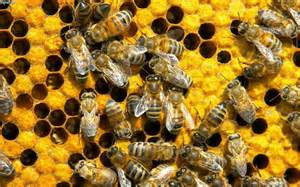
As I stated in the last blog about bees, my bees had been plentiful throughout the summer, filling three boxes. However, I noticed a problem (varroa mites) and treated them dutifully. I saw the results and the results looked good. I was hopeful but eventually was horrified to find that most of the hive was empty. Rather than 30-40,000 bees I was met with 2-3000 bees!

The decision to leave the small remainder of bees to their fate was hard. However, nature rarely gives us a choice and remembering that gave me some solace, if not peace. The bees died shortly afterwards and it took me a few months before I could muster the heart take the hive apart. I eventually did, and cleaned it up even going so far as cleaning the foundation of most of the remnants of my little hive. I was left with some beautiful comb and even some honey stores. Not much, but then I was ahead of the game because my beehive had given its life to do what it had no choice in doing.

I think this is important to remember about death; that there is no choice. Life and death is not a choice and bees are no different. During the last few days the hive was robbed, the queen and her small entourage died and the hive was left empty. It sat as a reminder that it is often a mistake to expect nature to act differently simply because we have a vested interest in it doing so. Nature offers us no choices and that thought reminded me that my dead colony left me with yet another gift: philosophy.

And so I ordered more bees from my local supplier (the bees are local bees with semi-local queens). It was actually a hard decision because as a beekeeper I must accept at least partial responsibility for the death of the hive that I chose to take responsibility for. Mismanagement was almost certainly a culprit in the loss of my hive, but in more ways than one. Varroa mites were also to blame. However, even the mites that were eventually the cause of death were simply following the hallowed and harsh laws of nature. They were doing what they do best: survive. With this in mind I look forward to my new bees arriving in April.

With the arrival of the new bees I will become explicitly involved in the most natural of cycles: life and death, and I hope that my explicit involvement will somehow sway the likelihood of survival for my bees instead of the other way around. I have read that because of the varroa destructor problem that human involvement is now necessary for the survival of honey bees. I’m not sure that I agree with the argument entirely as it was human involvement that created the problem in the first place. I will certainly try to do my best and the bees will do what the bees will do. Life and death to them is simply the law of nature, but I will continue to try to be the best beekeeper that I am capable of being by continually trying to understand the nature of that law.