agrarian

Aunt Ruth

abandoned farm

 I was remembering my Aunt Ruth the other day. Aunt Ruth lived outside of Delhi Louisiana on a farm and her son and my cousin, Bill, farmed the thousand or so acres that surrounded the old house. I remember that he was always busy repairing the irrigation systems that stood like giant centipedes along the dirt roads that crisscrossed the fields. I helped every now and then, and remember it was quiet except for the clanking of wrenches and the odd tractor in the distance. I remember the smell of diesel, of horses and hay, and of water and dirt. I also remember the chicken.

Aunt Ruth was a seminal cook; a chef, a magician of food that is rarely made anymore.   When I would help Bill on my visits to the farm Aunt Ruth would always have a table full of magic when we arrived home for lunch. There would be fried chicken (from the yard outside the house), green beans (from the garden), macaroni and cheese (homemade of course), okra (fried and sautéed), homemade tomato jelly, buttered rolls, ice tea, several pies, and sometimes homemade bread. On top of all of that Aunt Ruth would serve us all with a smile and throw in a few laughs for good measure.

These memories cropped up in me some years later after I had “grown up” and I made a trip back to Delhi to reminisce. I stayed at a hotel off the highway and drove to the cemetery to visit some family. I drove to the old house where my family had taken me to visit their families, my grandparents and to the old farm where I used to play with the kids who looked after the place. I drove past the house where my uncle who used to hide whiskey in the toilet tank and yell at the help through the screen door on the back porch. I drove through the memories that have since haunted me and still haunt me today and I drove by Aunt Ruth’s house. I loved those people and what they stood for; something that I did not realize at the time because I was young, because I was from the city, and because I did not put a price on the priceless.

Those days are gone, but I believe it is up to me to remember them, to keep them alive; something I am working towards as best I can because like so many others today I have tended to hide behind the walls of houses too often, buy ease at the store and comfort with a credit card. Those people in our pasts, that we remember, were not perfect and they were certainly not saints, but I believe that my Aunt Ruth was a rare commodity, a rare species of person that has made the idea of what I think of when I think of the freedom that America offers.

Freedom and self-sufficiency are words now that are becoming more and more popular, perhaps a bit overused. But I believe in them and am striving to live up to their ideals. However, these ideals require work, character, time and talent as well as a smile and a laugh. My Aunt Ruth gave me the memory of an old house, creaking floors and a musty smell, smiles and care, but most of all she gave me a piece of herself in the form of food not bought from a store, or made from a box. In a few hours Aunt Ruth gave me memories that would last for a lifetime. I believe I need a lifetime to keep those memories alive for a few more hours.

Two Boxes of Bugs

beeyard

I have ordered two new packages of bees, and I have mixed feelings for doing so. My bees died abruptly last September, in part because of Varroa mites. It was really a heart-breaking experience. A few weeks ago I took the hive apart and thoroughly cleaned it, stored it, and have now begun building a new hive for one of the two new packages that I have ordered.

Why do I have mixed feelings?   The answer is simple: I was unable to keep my previous hive alive even before winter set in; I am acutely aware of the responsibility that I am taking on. However, I believe it is important not to give up, and to do what I can to help the bee population (killing them aside) by learning about the animals and continuing to try to help them in the best way I know how.

This conclusion led me to understand that Truth is more important than fiction. The truth is: bees are going through hard times, and need our gentle help. The illusion would be to turn our backs on the problems that we are made aware of (I was made aware of last year). The truth is: human beings are at least in part responsible for the problems that bees are having. The illusion would be to pretend that we are innocent with regard to the problems that we have caused.

With all of this in mind, I am cautiously optimistic about the bees that I will receive. I will do my best (but what if my best is not good enough). I will use the knowledge that I learned from my first hive (but what if I cannot know enough). The only answers that I have are that I will continue to try to do better, and I will continue to try to know more. This is the best I have, and all that I can do. I hope the bees that I get somehow understand, and I hope they have the patience to put up with my mistakes.

Even in their death, my bees continue to teach me things that only experience can teach.   This is yet another reason that I continue to be so thankful for my box of bugs. I will have two boxes of bugs in April, and will no doubt learn even more from them. I only hope that my student-ways are enough to keep them healthy, happy, or at the very least alive so that they can teach me even more.

That Which We Cannot Do

hope

Nature teaches us a lot if we choose to listen. However, sometimes the lessons we learn from nature remind us that life is difficult, that nature truly does not, it cannot, care. The difficulty in learning this lesson is that as people we do care: we care about nature, we care about the things and people that we take responsibility for.

Two months ago, my bees were plentiful, filling three boxes. I noticed a problem (varroa mites) and treated them dutifully. I saw the results and the results looked good. I was hopeful and planned on having my bees overwinter to welcome them into the Spring. Nature had other plans, however. A few weeks ago I started noticing wasps coming and going, and noticed a drastic decrease in the number of bees that were swarming around the hive. Upon opening the hive I was horrified to find that most of the hive was empty. Rather than 30-40,000 bees I was met with 2-3000 bees!

I was and still am devastated. Questions run through my mind as I search for answers. The few remaining bees, including the queen, continue to hang on but there is not much hope for the winter. The twist in my gut continues even now, when I’m writing about this. I run through the possibilities and what I could have done differently, but the answers are the same.

I have read the books, the blogs, the forums and watched the videos. I have studied and went to classes; I have taken responsibility for my actions; I have dutifully fulfilled my obligations and still failure. I have been taught the lesson that nature teaches all things: 1) that life is difficult and that nature does not, and cannot care, 2) that there are often not answers to the questions that we ask; that there are not possible solutions to all possible scenarios. Perfection does not exist in nature not matter how much we as people care about nature and the things and people that we take responsibility for. Sometimes, there is no other way.

I am also reminded that no matter the twist that we feel in our gut, we must persevere; there is no quitting. It does not matter whether it was the wasps, varroa mites, colony collapse disorder, or my own doings, there must be a new hive next spring. Although we cannot know for sure why this must be, it must be. This is what makes us human: we must educate ourselves about the world around us, but we must also morally educate ourselves: we must educate ourselves about the world within us.

Life is a battle and even if there is no purpose for the dead and the dying, we must act as if there was. To accept the void as lifeless is to accept that there is no hope, but we are human; to accept that there is no hope is to give up the very thing that makes us human, and that, we cannot do.

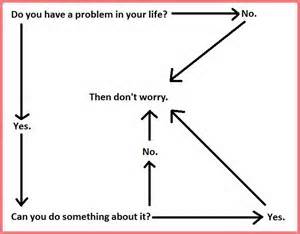
Worry

worry

This time of year is worrisome for beekeepers. The cold is coming on, and we worry about food stores, hive health, and of course the cold. I have had a wasp problem these past few weeks that came after I got the mite problem under control. I was told when I began to consider beekeeping that mites and honey is the top two reasons people quit keeping bees. I can see why those issues are at the forefront.

The cold is hard on many of us, not just the bees. And it is not that cold where I live; at least not yet. I look out the window and the sun is shining. I step outside and it is below freezing. I think the bees simply react, but people, people think too much. I know that I do. I lost a lot of sleep worrying about the wasps, and then I think about the cold, the food. The worry continues. However, worry does not work; worry does not help. Worry hinders, is a vicious cycle, and is unfortunately inevitable.

On Wed the weather will warm up and I will check the hive for the last time before I close it up for winter (so I can worry about the food stores). I’ll make sure the wasps don’t have a nest in the hive (so I can wonder if I got all the wasps out if there is a nest). I put a mouse-proofer on the opening of the hive and add some insulation to the top (so I can worry about moisture this winter). I’ll wrap the hive in some black roofing paper (so I can worry less about heat).

I’ll do what I can for the bees that I’ve taken responsibility for, and this is where the worry comes from: I have taken responsibility for something. Any person who has taken, truly accepted, responsibility for something understands the worry that goes along with the responsibility. In the past few years, self-sufficiency has played an integral role in life and along with self-sufficiency comes self-responsibility.

I wonder about those people who did not have the choice of self-responsibility; they had responsibility thrust upon them by the nature of their lives. Such responsibility is a heavy burden, but perhaps (like the bees) such responsibility is not noticed because it is simply the reality of life: it is living.

In today’s society our worries have changed perhaps because our responsibilities have changed. We worry about our job, if the grocery store has what we need, if we have paid our bills and if we can continue to pay our bills, our children, our marriage. These worries are no less important, but they are different. Such responsibility is a heavy burden but after a while we do not seem to notice because it is simply the reality of our life: it is living.

I have learned, even in such a short time, from my bees that I must understand what I need to worry about. But in order to do so, I must understand what I am responsible for. Maybe that lone bee coming back to the hive on a cold day with a load of pollen is not worried because it is doing what it does, doing what it needs to do, doing what a bee does naturally. I think that perhaps what we worry about is not as important as why we worry about the things we do. Perhaps worry is not a waste of time, but a reminder that time is short, the cold is coming and we have (in fact) no time to worry.

The Lowest Common Denominator

 lowest common

Often and unfortunately our conversations concerning what we do land upon the lowest perch of human achievement: that of measuring all accomplishments by their economic consequences. This is what I refer to as the lowest common denominator. I cannot accept that the ultimate consideration of our acts is monetarily important at all. When discussing new movements in farming for example, as we are seeing in this country (the US) today, I cannot imagine that the people involved in the agricultural movement are involved only for economic gains and monetary profits.

I do not consider the profit received from my garden, and from buying locally produced meats to be measured monetarily. Rather, the rewards that I get from knowing where my food comes from and how it was treated overrides any economic cost. I would argue that those of us who take pride in learning new skillsets and in understanding concepts that society tends to take for granted are not motivated by possible profits, but by personal gains in knowledge, in peace of mind, in the understanding that what we do can have a virtuous aspect that cannot be bought and sold.

I would suggest that the food-movement not consider itself by the judgment of others that can only understand or are only interested in monetary motivations. It is difficult not to do so, especially when being considered from a public point of view. The phrases “there is no money in it” with regard to small-farming enterprises is easily dismissed with closer inspections of the facts. The argument that small-farms are in fact more profitable than large, agri-businesses if the subsidies to such businesses are taken out of the equation are beside the point. More important to the point is that most small-farm enterprises are not motivated by money alone. The point is that in not relying upon agricultural subsidies, small farms are more autonomous, offer a more honest product, and are not held accountable by faceless stockholders but by local consumers that many know by name.

While it is true that to live in this society, money is a necessary component; it is not true that money is the most important component. This viewpoint has led us to the deplorable situations that we find ourselves in today both in and outside of agriculture. The small-farming movement that seems ubiquitous in the country today reminds both those who are brave enough to venture out and those who are thoughtful enough to support such operations that money is the least important of all aspects of our lives. It is by the standards of bravery, of thoughtful action, of honesty and honest work that we ought to judge ourselves and expect others to judge us by.

While we cannot often fight the filth of large agribusiness we can battle the ignorance that allows such business to flourish. However, I would argue that we cannot do so by judging ourselves and what we do by the lowest common denominator. There is so much more that we are motivated by other than money. It is important for us involved in this movement to remember this fact and remind others that money is not always worth the trouble.

The Limitation of Money

money

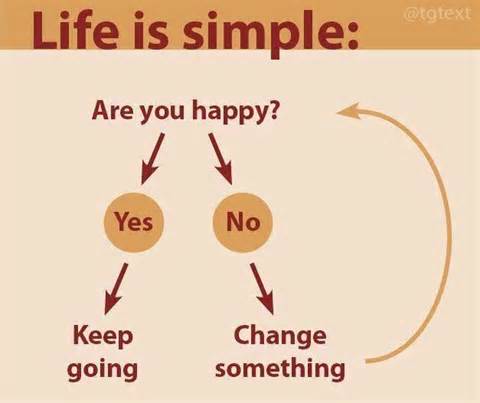
When faced with decisions that have ultimate implications for your happiness, it is necessary to consider that happiness from as many different perspectives as possible, not just the economic perspective. Otherwise we become defined by the narrow and limiting perspective of money, not the actual limitations that we have. Perhaps, we must consider, it is more useful to make less money. As un-American as this may seem, our happiness as individuals and as a nation seems to be at stake, but not for the reasons that we might believe.

The more dependent upon money we become, the more impoverished we become. I am realizing that the ability to fend for myself, to provide for myself, and to be motivated not by the usefulness of my ability to make money but by the usefulness of my abilities is providing the richness of life that I need, the perspective that I need to be happy. It is indeed true that money cannot buy happiness. In fact, often times it purchases discontent.

For example, my wife said something to me that has stuck. She grew up on an eight-generation farm in Europe. She remembers having no money, but always having enough to do and enough to eat. The fear of poverty is still with her, but through our discussions she has come to realize that the poverty that her family endured was not because of the farm, but because of the motivation to make money. To farm, to homestead is to give up on our dependency upon money. However, in giving up on our dependency upon money, we do not become impoverished, but enriched.

As backward as this may seem to many, it is true. I am learning to live without money is unrealistic but only because I am realizing the limitations of my abilities. Money does not provide independence, but only dependence upon those with the abilities that I lack. It is not living without money that is unrealistic; it is living without knowing your own limitations.

A homestead provides ample opportunity for experiencing limitations, limitations that money cannot conquer. In cities across this nation I do not believe that it is the lack of money that is problematic, but only the lacking realization that we are limited. We cannot “do” what we want to “do” if we do not know how to “do” it. We can “think” what we want to “think” if we do not know how to “think”. In fact, I believe that money as a sole motivator lessens the ability to realize our own limitations and in doing so gives us a false sense of security; I have certainly experienced that in my own life.

I have also experienced the frustration of my own ignorance and short-comings with regard to my own limitations. In rebuilding a 1939 Farmall F-20 I learned that it will not start simply because it is supposed to start. It is the same with money actually. Simply because money is supposed to be able to buy you happiness does not mean that it actually will.

Simplify Your Life; Complicate Your Philosophy

simple life 1

Wendell Berry is one of those writers that have a talent for pointing out the obvious when the obvious seems so well-hidden. In his essay “Faustian Economics” he writes, “All are entitle to pursue without limit whatever they conceive as desirable-a license that classifies the most exalted Christian capitalist with the lowliest pornographer.” (pg. 43, What Matters?) This “doctrine” as he calls it is a necessary implication of the idea of a limitless economy.

The “family farm”, the concept that Berry is defending and the goal that I am trying to achieve seems like a simple and straightforward goal…but it is not. The implications of living in such a way as to be independent are many. First, I had to understand what it is that I am trying to be independent from. Secondly, I had to address and accept the limitations of the family farm (cottage farm, hobby farm…pick your term). And lastly, I had to address the cost of giving up on the Faustian idea of economics.

There are quite a few people with similar ideas of living and many of those people have to come to terms with these ideas, including: what is wrong with accepting modern society. Berry puts it forthright! “…Shifting the cost of depletion and pollution from the producer to the general public, the future, and other species…” (Forward, What Matters?) I’m not sure that there are those that can live honestly with these consequences, but I am finding out that I am not one of them.

Like any idea, the idea of a family farm ironically begins larger than life. The would-be farmer envisions endless, healthy fields and forests with a clean running, self-fed stream with no dependence upon modern conveniences. This thought is cut short when one remembers a necessity for most of us: toilet paper. This simple idea reminds us of the difficulties that are involved in going “off grid”, or even trying to live responsibly. Money is a necessary evil on this planet, given that we desire a quality of life that can be measured by any modern means. However, it is important to remember that money is not really the root of all evil, but simply the vehicle in which we travel to find it.

So what are our options with such dreams as independent living and eating responsibly? Berry again drives home what ought to be obvious to any thinking man. The agrarian economic policies would be in order of priority: 1) Nature, 2) Economies of land use, 3) Manufacturing, and 4) Consumer economies (pg. 3, What Matters?). I’ve never thought of my dream with regard to such priorities, but seeing them in writing drives home the ultimate goal: I want to reorganize my priorities.

I would recommend to anyone considering revitalizing their commitment to true, independent living to also re-visit the priorities by which they live by. I think that they will find that to simplify their life, they must first complicate their philosophy.

The Workshop Universe Pt. III (Edited)

Lagoon Nebula (Messier 8)


The Big Bench Bang, then the year after the bench was built it is claimed in the tradition of mythology that most of the tools present were in place, had a place and were all accounted for. Of course, this is just a myth because looking at the place now it really does seem impossible. Five years later, the spread of the universe accumulates in the form of an electric welder and the first and only cleaning on record is applied. Organization and then entropy ensues afterwards. Ten years later an assortment of what is now the stuff of the universe is acquired: wrenches, ratchet sets appear and the space between appears as blackness, cleaning is but a faded memory. Fifteen years after the Big Bang, the gas welder appears from the nothingness and afterwards the black hole appears spitting forth hand tools from one end and sucking up all that comes within its reach, cleaning becomes a myth for some and a wish for others. Shelving falls and it and all its contents lay untouched for two years until by sheer force and will organization fights the chaos of the Universe; the act of cleaning is outlawed by the creator himself. There was a few wars fought in defense of organization and a simple wash but all were quashed in the name of chaotic order. There are some that ask about the time before the Big Bench Bang and the answer is simple: it was a workshop for the wagons and horses. Another little side-use was the slaughtering of pigs. It is in fact where I learned to do such things.

Pigs have lost their lives in the Universe long before its inception. Actually, since about 1934 pigs have been slaughtered here. The war-grounds for pork is marked territory with the blood and grease of man and pig. The times that the author was involved in the wholesale fight for meat a large, round metal bowl was used; a left-over from the second world war, a “horn-mine” that was found by the father of the creator of the universe (yes, the creator has a father) on the nearby beach but before that a wooden cask was used to hold the hot water that cleaned the carcass before the hair was burnt off the skin. It is neither a pretty sight or a quaint smell that ensues when pigs are slaughtered and both are permanent parts of the workshop. The pig is killed, hung and bled. Then parted while cats and dogs claw over the innards and the grandfather tool (the axe) is put to use to half the carcass. The head is fought over while entrails are dragged out into the darkness of space by cats and dogs alike. All of this happens within the workshop leaving the place with a different kind of smell. I wonder if because water is used if this is counted as a cleaning.

Today the shop is off-limits to any hired help because of unknown realities and time-warp related worries. It continues to grow both in sight and smell. The black hole grows, sucking in the shelving at times, and at other times parts and tools but it nevertheless continues to exist; a parody to existence itself, a stubborn trophy waved in the face of the belief in design and order. Both and anachronism and a study in the future of mankind itself, the Universe of the shop defies definition and yet defines itself as the matrix of change and the canvas of the future. Entropy ensues and it is good.

A Time of Peace


Image


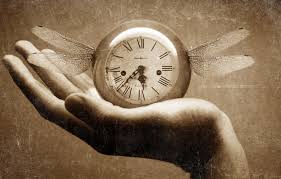
There is something calming about noticing a flower that you have never noticed before; there is something that is exciting about waking up in the morning and seeing that the plants have been busy the night before. There is something that is humbling when we realize that life goes on without our taking the time to notice, that we are a mere blip in the endless sea of time that laps over the beachhead.


That life goes on without us forces us to realize that we live on borrowed time; no one owns their time, and peace of mind comes from realizing that we are on borrowed time. I notice this when I stop to realize that my new bees only live for six or so weeks. I realize this every time I think of the twenty-five years of marriage that I have enjoyed. These relationships and the things that we deem as so important come as waves on a beach, dissipating into the sand. Time is limitless but our time is limited.


Our time is limited, but what we do with our time is not. How we spend our time is up to us, but that we spend our time is not. Perhaps this is why peace of mind is so often found in nature, on a piece of land: time is free there because nature is time incarnate: timeless.


This is perhaps the reason that real peace of mind can only be found in noticing a flower that you have never noticed before, or hearing the buzzing of a few bees in the honeysuckle. This time is never wasted because it is time not being spent. I am learning not to waste my time because I am learning that my time is borrowed. I am learning to spend my time wisely because again, my time is only borrowed. That flower that I notice today will be gone tomorrow, another taking its place. That piece of land that is so beautiful costs nothing to notice, but not noticing it costs so much.


The wrinkles that show up on my face remind me of the things that are so important, and that they are important only because my lack of time makes them so. I have found that it takes time to enjoy peace of mind, and that such time is well spent. I have found that like everything else, truth is embedded in time itself: it is a process, and such is life as well as death.


There is no cheating time, we only get so much. We will only have time to barter with in our dying breath as Mr. Death comes to take the last coins of seconds that we have left. This is why it is so important to spend your time wisely. Notice the flower in the garden, the bees in the hive, the garden and everything else which is timeless. It is only these things that are free, and perhaps because of that bring peace of mind. Peace of mind comes with no buyer’s remorse. Perhaps this is because in the end it is the only thing that gives us a time of peace.


The Box of Bugs

Image

I awoke excited about the day. The bees were in this morning and I was to pick them up soon: my first package of bees! I bought them from a local supplier and they had spent the night traveling the four hours from their previous home to the pick-up location. Already they were “my girls”. The pick-up was uneventful, the way they should be, but I had to introduce my girls to their new home, a hive that I had built by hand and placed in the large backyard of my home. The fifteen minute ride home, bees in the backseat, was filled with even more excitement both from the backseat and the front.

Readying my tools for the introduction, I brought out the food that I had mixed up the night before (sugar water in short). Setting the bees down next to the hive, I removed four or five frames from the hive and set them aside. I then pulled the small feeding can from the package and grabbed the queen cage putting it in my pocket to keep the queen inside warm and replacing the can with a small cover to keep most of the bees in the package. A few bees flew out and the package was hurriedly coming to life. I thumped the package lightly down to shake the bees to the bottom of the package and then turned the package over the hive dumping thousands of bees into (hopefully) their new home. I hung the queen cage on a frame a bit off to the side, set the few frames taken out back in, set the feeder and the top on and then pulled up a chair and poured some coffee. My work was done for the time being.

The entire event was filled with child-like excitement, hope, and worry, not lasting for more than ten minutes or so. I felt the responsibility of thousands of lives begin to weigh down on me. I watched as bees flurried about coming in and out of the hive. I heard the excitement around and in the hive itself. I watched as something that I had built from a living thing came to life in a whole different way. I could not help wondering if the new hive was busily making the place its new home much in the same way a family might make a new house theirs. I couldn’t help wondering if they would be safe, be warm, secure in their new surroundings. I had readied the hive and our ½ acre of yard for the bees to the best of my ability. I had looked forward to this day for the months that I had waited for the package to come. I was nervously ecstatic, I was unbearably happy; I was fifty years old!

I was fifty years old with the glee of a small child. I have owned a small business, have a career and held a job my whole life and yet these bees were one of the most exciting events that I could remember. I must admit that the reason for getting bees in the first place was that I had found an old honey extractor from the 1920’s for a reasonable price and simply thought it to be an interesting piece of equipment. But what is a honey extractor without bees to make honey? The following months of avid reading about bees and beekeeping hurriedly changed my attitude: I was taking on the responsibility of a society of animals.

The first day of being a beekeeper and I already owed the bugs a nod of gratitude! The day that I dumped the package into the hive I realized that the bees were much more than honey or even pollination of the garden, but they were the realization of a greater thing, a greater idea, a symbol of an ideal life. The bees reminded me that I was responsible for myself and in being responsible for myself, I was responsible for them. There are not many better lessons to learn, and what better way to learn such lessons than from a box of bugs!