agrarian

Garden Variety Philosophy       

Image


I’m relatively new to gardening, and like most people the idea of gardening conjures up numerous images. First of course is the image of an overflowing abundance of plants popping with vegetables, fruits and flowers. Secondly, tools come to mind: the shovel, the rake, the hoe, the tiller. And perhaps the shape and color of the garden: should it be square, circular, and what about the soil? What is humus? Gardeners such as myself probably spend hours contemplating odd things such as these and the seeds…the seeds. The spacing of the seeds seems to be all-important according to some books, and in others it is the soil that the seeds are planted in; raised beds, rows, grouping: the list goes on. Both the questions and the answers seem endless, but all I want to do is to plant a garden.

One of the activities of gardening that I simply do not like is the pulling up of seedlings that are un-needed, or deemed lesser. Somehow it seems that I am killing an innocent, but gardening is like that. Gardening seems like an innocent endeavor, but the details prove it to be otherwise. To be a gardener, one must be ruthless in a sense. But this ruthlessness seems out of place in an activity that seems so peaceful. To be a gardener one must be both a mother and a warlord.

I look at the garden in the winter, covered in leaves, mulch and manure with its light brown, dusky color and imagine its future. Then I remember the aphids and the beetles that I fought valiantly with the year before, losing battles while hoping to win the war. I like to think of the garden as a way of giving, of helping the world, and the earth itself; planting and eating my own food. But, I also demand of the soil to produce and tear at the earth with the tools of the trade leaving it brown and uncovered, only to cover it again with remnants of what I previously took from it.

Then Spring comes and a renewed belief that what I do is good. Watching the seeds germinate under the plant light, the warming mat keeping the tomatoes and peppers warm on cool nights. The plans are laid and the seeds bought, I feel the heavy load of work to come which is the love and loathing of gardening. Such a simple task gardening and one that is directly related to being human. The garden represents change and consistency, husbandry and freedom.

And so the garden is a dichotomy of terms and ideas. But there is an underlying foundation to all gardens and this has much to do with why we garden. People garden for different reasons, but somehow those different reasons are more similar than not: curiosity, the desire for independence, love of nature. One is not a gardener for long if one is not curious about the plants, the earth that they are planted in, and the correlations between all life including the garden itself. Most of us speak of our independence, but until you can feed yourself, your independence is an illusion. Also, while gardening seems to be a process that brings order to an otherwise un-orderly natural environment, gardening puts us in touch with that very nature: we get our hands dirty and learn what our precious plants need in order to give us what we desire.

There is so much in a garden, philosophically, physically, and psychologically. A garden can be conceptual, representing a form of beauty or utility; maybe both. Gardening is most definitely a physical thing that demands physical work. And a garden demands of the garden a certain presence of mind and a drive to perhaps complicate your life. A garden can also be poetic with running rhymes strewn throughout with symbols of pleasure.

I think that in the end what truly defines a gardener is the reason that we each do it. A garden symbolizes what we want from life and our willingness to work to get it. But in the end, to garden is to realize that we are part of the nature that unfortunately we have spent much time and energy alienated ourselves from. The reason, I believe, that we garden is that it gives us a sense of belonging to a world that is far greater than ourselves. Just like our civilizations and societies, a garden gives us the illusion of control. But, just like the plants in the garden, we grow, live and we die. The garden reminds us that that is life, and that we are simply part of that thing that we so often take for granted, all started from a seed and some soil.
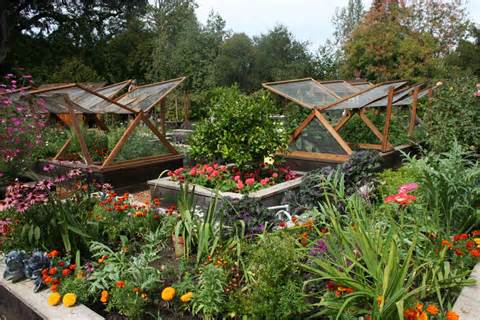

The Garden

Image

This time of year is difficult for the gardener.  It is that time when the first seeds are put into trays and put under lights to “extend the season” as we say around here.  I am no different.  I have my onion sets, my kale, hyssop and lemon mint (for the bees) already going.  I just put up trays of peppers and tomatoes in my workshop where they are protected from the cold-swings outside.  This time of year reminds me of something that I typically don’t like to be reminded of: that I have no patience.

But patience is what it takes to succeed.  Patience to remember because “All good human work remembers its history” as Wendell Berry writes, and patience to realize that all that we desire will not be fulfilled.  Gardening, and all that it stands for is a pleasant but often stern reminder that we lack the very thing that we need the most; that is, the patience to truly understand that it is not necessary to always get what we want.  Philosophy is an endeavor that is very closely related to gardening.

Philosophy is directly translated as “ philo-sophia: the love of wisdom”, and wisdom takes patience just as growing food takes patience.  There are those that understand this such as John Seymour, Michael Pollan and Wendell Berry and others. But in doing philosophy, one soon comes to understand that the first step in being a philosopher is to recognize one’s own limitations, called ignorance.  The gardener soon comes to realize their ignorance by recognizing microclimates, soil and the plants themselves among many other things.  This process of recognizing and further more accepting one’s own ignorance takes patience whether that is with regard to gardening or to understanding philosophical concepts.  The trick is to recognize our limitations, overcome our ignorance and have the curiosity to realize that doing so is important.  That takes patience.

To become patient takes discipline. Berry writes, “Correct discipline cannot be hurried, for it is both the knowledge of what ought [italics mine] to be done, and the willingness to do it.” (People, Land, and Community)  There is an “ought” to the correct discipline, and it is in this aspect that we have lost our way.  We “ought” not take advantage of each other and we “ought” not treat the environment as a source of raw material and a place to cast our trash.  We can and we do, but we ought not to.

We have lost our way but in doing so, we become aware that we have lost our way.  From this point it will take time, and with that cost comes the necessity of correct discipline and patience to adjust ourselves to the ignorance that has engrossed us.  Our curiosity has led us down paths unimaginable.  We have created environments and introduced changes that were far beyond most people’s wildest dreams a mere fifty years ago.  Our curiosity alone, however, has proven to be problematic because we have not had the patience to learn how to use it.  A garden can put your curiosity back on track; it can teach us what we ought to do with the time that we have.

Rather than a philosopher that happens to garden, my garden has become a simple reminder of what it takes to be a philosopher: correct discipline, correct curiosity and the patience to tell the difference.  It reminds me that I have limitations that I must live within or pay the price for not doing so.  It reminds me that I am dependent upon people that I do not know and processes that I am not aware of nor have control over, and that I have a choice to change these problematic realities.  My garden reminds me that I have yet to gain the patience that I need in order to gain the knowledge that I must have. My garden reminds me that I have time that I must take, that I must be patient to do so, and that I must take the time to realize that.

Grow Like a Tree, Not a Fire

Image

There seems to be much anger in our society today.  It is prevalent on the streets and highways and in the stores where we shop.  Sometimes it is outright and sometimes a bit more subtle, but ubiquitous in the end.  This anger, I believe, is a result of the slow realization that we are not who we want to be, but who we have been told to be.  We have found that there are no shortcuts to being who we want to be, but in realizing this we also realize that we have taken one.

Barreling towards more ease, more consumption, more and more, and more… and calling it progress is the justification that our societies continue to use to steal, destroy and decimate other countries, other people, but most of all the land itself, the places that we live.  We call economic progress freedom, and we call luxuries the necessity of that progress.  Many of us pride ourselves on being independent, but in the back of our minds we know there really is no such thing.  Religions preach to us that we are special, but we are not.  Our governments tell us that there are political answers, but these are lies.  We tell ourselves that “it’s not as bad as all that…” but it is.  We have been sold down the river, and continue to sell ourselves as so much product. As the present, living societies we have a choice: to buy back that which our forefathers and ourselves have sold for cold hard cash, or perish.

Wendell Berry writes: It is foolish to assume that we will save ourselves from any fate that we have made possible simply because we have the conceit to call ourselves homo sapiens.” (Common Places)  It is that conceit that has taken what actually does make us special: the ability to think.  We have become proud of our ignorance.  Rather than think we react, we demand, we press and desire.  We cannot continue in this fashion!  Our conceit leads us to believe that we can continue to take without giving back.  Our conceit leads us to believe that we have a right, a duty, to reap benefits economically at the cost of environmental degradation.

What did our forefathers sell in order to reap economic benefits?  What was the priceless thing they sold for the pittance they received?  It was an idea.  They sold the idea that abundance was not endless; and that we belonged to a place, rather than being the owner of a place.  The ideas that they sold, however, are facts and they sold them for wishful thinking and on faith.  For a handful of dollar bills we continue to sell our future to a few that still remain in the trance of greed and the belief in endless abundance and rights as defined by economy rather than responsibility.  With the lie that abundance is endless, we have been taught that to work with nature is to be a slave and to use nature is to master it.  They were wrong, and we are wrong for continually accepting their errors.

The callouses on your hands and the sweat under your hat that are gifts from working with nature are signs that you are free, not the ability to buy and sell nature as nothing more than a commodity.  The knowledge that you are responsibly effective even at the cost of industrial efficiency is a sign that you are free: the craftsman rather than the conveyor belt.  The realization that the “smell of money” is the same as rotting flesh, but the smell of fresh grass and pasture is the smell of life.  These things and that desire is not need are the starts of actualizing freedom.  The freedom to fail, and doing so honestly is the freedom to learn and that is the start of progress, and eventual freedom.

I believe that we are angry because we have been sold a bill of goods that are worthless, that make life worthless, that make us worthless.  We have been sold the rotten idea that the land and the animals around us are there to be used and diminished at our will.  We are angry because as we do, we have realized that we continue to wilfully diminish ourselves.  We have been sold the shiny penny of an idea that ease is freedom, but it is not: it is entrapment.  We have been sold that our sole motive in life is to make our lives easier, but ease is usury that must be paid back with the difficulty that is reality.  We must realize that in laying down the cash for things that we have no right to buy or to sell is to redefine who we are, who we become, but not who we want to be.  We will die by credit, but live by work.  We will die in ignorance or learn to respect the very thing that gives us life  In order to quell the anger that will eventually subsume us, “We must learn to grow like a tree, not like a fire.” (Common Places)