agriculture

Revolution!

food revolution

The “new” food revolution seems to be upon us, and I hope that it turns out to be a revolution that lasts. As revolutions go, this is a more positive one as it is seems to be a return to basic facts rather than pie-in-the-sky, wishful thinking on the wings of dreams. The new food revolution is, rather, pie-in-the-pan, hard-work on the backs of those who see the potential in acting upon truth.

As most revolutions, this one has its (let’s say) issues. First, while the wagon has pulled out, there are still those jumping that don’t belong. Simple words like “organic” are now being touted by very non-organic growers and worse, being taken over by bureaucratic system that has spent so much time and effort working so hard against the faithful cultivators of quality; just ask Joel Salatin! Other corporate confusions now include honest and innocent terms like “free range”, “cage-free”, and of course we have the GMO-battle: a dishonest battle about honest labeling.

As opting out becomes more and more tempting, we must remember that perhaps these dishonest, deceitful, and mendacious moves by agribusiness all over the world may just be desperate endeavors by the few and the powerful. We must plant on! Discard the lawns and the mowers, pick up the hoes and the rakes. Buy a chipper for god’s sake! Let ‘s ignore the ignorant and take on the towers of trade that would keep us under their thumb!

Feed the worms, and feed yourself! The time is now!

Patience my…

patience

I put the hops in this last weekend. We also planted six berry bushes, some asparagus and threw in some lettuce and Arugula for good measure. It feels good to get in the dirt again. I can almost smell the pungent, green buds and the rich red and purple clumps of berries. The asparagus is a different story: it takes years, not months. I threw the dill out in the herb bed and watered the turnips. The seedlings are coming up…all in due time.

If you begin to grow your own food you soon find that doing so is an exercise in patience. While patience is not necessarily a virtue, it is a necessity. This is true with many things and in many situations. Patience is not easy. Everyday I wake up and check the plants, opening the hot house according to the weather (this morning at 6am before work). Coming home, I expect change, but often there is none.

Patience, I am told, becomes a habit with practice. I’ve not found this to be true. Patience, I feel, is often a detriment to good ideas, holding back intuitive blasts of genius. Patience is often accepted as reasonable when it is often cowardly. It is reasonable to wait, when what we mean is that we cannot make a move towards what we know is the right thing. These kinds of decisions and challenges are part of life, but with gardening patience is neither good nor bad, detrimental or progressive, it simply is.

I’ll wait to plant the rest of the garden: the beans, the squash, the onions and leek, the beets, and the tomatoes plus a few other nicknacks.   I will wait, but I won’t be happy about it. I’ll wait to work the soil some (I’m going “till-less” this year), and set the irrigation system up, but the waiting will be long and arduous. Patience is that long journey that we sometimes take, telling ourselves that it is the trip that matters while knowing all the time that it is the destination that really matters.

Every Spring

seedling2

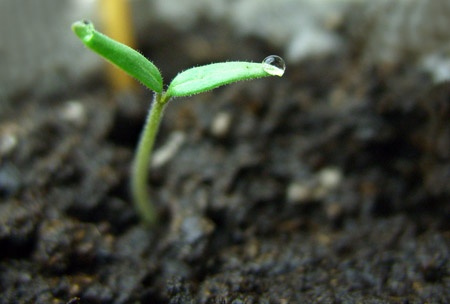
Every spring I put small seeds into small containers filled with dirt. Every spring some of those small seeds “miraculously” sprout into small plants; all reaching for something bigger. This year I am trying an array of plants; some of which are new, and some of which I have been saving from previous plants in previous years. It is this saving of seeds that is truly the cornerstone of growing food.

The Dester tomato seeds from one of last year’s tomatoes were the first to sprout, is the biggest and all of the six seeds from the fruit has now come up, and continues to grow at a truly admirable rate. The newest of the seeds seem shy, poking their small leaves from the soil slowly. The garden awaits and the seeds are willing.

I have started all the seeds in my hothouse. This year I built some homemade warming tables from a few pallets I got from a local hardware store. Covered in black plastic and sat on buckets, the heater placed under the tables provides the needed heat and the green netting draped over the large glass covers provides the needed cool. A balance, which is in the end: life itself.

I water from the fifty-gallon drum that I collect water in. The water is green, dirty and filled with time and patience. It is nature and somehow I must believe that there is balance in the liquid muck. The system has worked so far; the microcosm of life beginning and I look in upon it on a daily basis thinking that I am in control, but realizing that I am only a caretaker.

This year holds surprises that I have yet to discover. A new irrigation system to put in and try; additional beds and paths, new plants mean new beginnings and failures that mean new endings. There is a cycle here that is reminder of the greater cyclical nature that we are all a part of. To lose perspective of this is to lose track of the truth.

I am not the first to say this, but gardening is truth. I am not the first to realize this, but we do not control nor do we own; we are custodians and we loan a bit of time to find out what we can do and what we cannot do. This knowledge comes one plant at a time; one day a year when we notice the slightest bulge in the soil and begin making our plans.

The Patient Gardener

snow garden

Gardeners tend to regard snow with disdain. The coldness keeps us from going out and feeling the dirt between our fingers. The snow blankets all of our past work and the plants are leafless and lifeless. At least that’s what it looks like. However, there’s a dry spot in my garden out back where I will plant hops this coming spring and I found myself shoveling wheelbarrows of snow onto the spot to bring the soil to life. It is arid during the season and I have always had problems getting things to grow there.

At the end of the day, gardeners are in the business of building up soil and while I was trudging around in my garden the other day in 8” of snow, shoveling the stuff onto my “dry spot”, I was reminded that nothing in nature is without ground; both figuratively and literally. The snow acts as insulation against the raw windy cold. Snow melts slowly into the ground breaking up clods and working manure into the soil. Snow provides moisture over time and gives the soil time to recover from the gardener’s incessant need to interfere with what nature does best.

This last point is the cornerstone of a subject that I have become more and more interested in: permaculture. It seems to go against the concept of gardening itself: just leave it alone. I have found that it helps to remember that we are not really managers as much as stewards. That answering the question “How?” does not answer the question “Why?” As a gardener, I want to produce food and resources for food. I want hops not because hops are somehow inherently good, but because I love beer and want to make beer that tastes good. Hops makes beer taste good!

However, permaculture does not dismiss our utilitarian desires. Rather, it reminds us that our utilitarian desires need to be limited by the resources that we actually have and the resources that we actually have can be more than enough…as long as we don’t get greedy. It takes patience not to be greedy.

Snow forces us to be permaculturists rather than gardeners in the true sense of the word: work intentionally and don’t do too much and don’t take too much. It’s funny that we have to be taught these things as they seem to be self-evident. Maybe the lesson to be learned is: gardening is easy if you have patience, but being patient makes gardening difficult. I, for one, find that to be true anyway.

Permanent Culture

permaculture

We want something permanent and permaculture seems to offer the certainty that we search for. The answer, like so many answers that we find, is difficult to accept and at first glance we often sway away from it. However it has grown patient, being accustomed to our ignorance of it. It waits patiently, knowing we do not have a choice. We ignore it and it sits back down silently awaiting our return; we will return. We must return.

Permaculture does not begin with digging a hole, planting ground cover, planting bushes, fruit trees, and finally large, slow-growing giants. Rather, permaculture starts with an understanding that we can be a part of something greater than ourselves. It is almost religious, but without the reliance upon religious doctrine or dogma. Permaculture relies upon time and our acceptance that it is beyond us and at the same time makes up the core of what we, as agrarians, really are: stewards, renters of the land that we love.

We strive in so many ways to be remembered, to leave a legacy but these ways are bound to fail. Children forget and businesses crumble; blood is thin and love is short lived; people are irresponsible and the greatest of natural places fall to ruin. Permanence comes at a cost and permaculture does not let us forget this fact easily. Plant a tree that you know you will never see come to full fruition; be a part of an ecosystem that is not anthropocentric. Be a part of an infinite system that you somehow love and that cannot love you back. Pay the price to protect the one thing that can protect you.

The permaculture that we work toward now will become the permanent culture that lives after us. Permaculture is progress, but it is progress that stretches beyond the borders of desire, of economy, and even of human imagination. Stretch the limits of abilities and see what happens. Make permaculture permanent in our culture.

Life, Death, Life, Death…Life.

bees

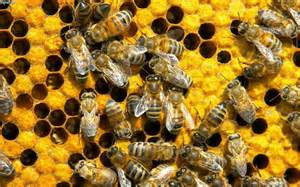
As I stated in the last blog about bees, my bees had been plentiful throughout the summer, filling three boxes. However, I noticed a problem (varroa mites) and treated them dutifully. I saw the results and the results looked good. I was hopeful but eventually was horrified to find that most of the hive was empty. Rather than 30-40,000 bees I was met with 2-3000 bees!

The decision to leave the small remainder of bees to their fate was hard. However, nature rarely gives us a choice and remembering that gave me some solace, if not peace. The bees died shortly afterwards and it took me a few months before I could muster the heart take the hive apart. I eventually did, and cleaned it up even going so far as cleaning the foundation of most of the remnants of my little hive. I was left with some beautiful comb and even some honey stores. Not much, but then I was ahead of the game because my beehive had given its life to do what it had no choice in doing.

I think this is important to remember about death; that there is no choice. Life and death is not a choice and bees are no different. During the last few days the hive was robbed, the queen and her small entourage died and the hive was left empty. It sat as a reminder that it is often a mistake to expect nature to act differently simply because we have a vested interest in it doing so. Nature offers us no choices and that thought reminded me that my dead colony left me with yet another gift: philosophy.

And so I ordered more bees from my local supplier (the bees are local bees with semi-local queens). It was actually a hard decision because as a beekeeper I must accept at least partial responsibility for the death of the hive that I chose to take responsibility for. Mismanagement was almost certainly a culprit in the loss of my hive, but in more ways than one. Varroa mites were also to blame. However, even the mites that were eventually the cause of death were simply following the hallowed and harsh laws of nature. They were doing what they do best: survive. With this in mind I look forward to my new bees arriving in April.

With the arrival of the new bees I will become explicitly involved in the most natural of cycles: life and death, and I hope that my explicit involvement will somehow sway the likelihood of survival for my bees instead of the other way around. I have read that because of the varroa destructor problem that human involvement is now necessary for the survival of honey bees. I’m not sure that I agree with the argument entirely as it was human involvement that created the problem in the first place. I will certainly try to do my best and the bees will do what the bees will do. Life and death to them is simply the law of nature, but I will continue to try to be the best beekeeper that I am capable of being by continually trying to understand the nature of that law.

Two Boxes of Bugs

beeyard

I have ordered two new packages of bees, and I have mixed feelings for doing so. My bees died abruptly last September, in part because of Varroa mites. It was really a heart-breaking experience. A few weeks ago I took the hive apart and thoroughly cleaned it, stored it, and have now begun building a new hive for one of the two new packages that I have ordered.

Why do I have mixed feelings?   The answer is simple: I was unable to keep my previous hive alive even before winter set in; I am acutely aware of the responsibility that I am taking on. However, I believe it is important not to give up, and to do what I can to help the bee population (killing them aside) by learning about the animals and continuing to try to help them in the best way I know how.

This conclusion led me to understand that Truth is more important than fiction. The truth is: bees are going through hard times, and need our gentle help. The illusion would be to turn our backs on the problems that we are made aware of (I was made aware of last year). The truth is: human beings are at least in part responsible for the problems that bees are having. The illusion would be to pretend that we are innocent with regard to the problems that we have caused.

With all of this in mind, I am cautiously optimistic about the bees that I will receive. I will do my best (but what if my best is not good enough). I will use the knowledge that I learned from my first hive (but what if I cannot know enough). The only answers that I have are that I will continue to try to do better, and I will continue to try to know more. This is the best I have, and all that I can do. I hope the bees that I get somehow understand, and I hope they have the patience to put up with my mistakes.

Even in their death, my bees continue to teach me things that only experience can teach.   This is yet another reason that I continue to be so thankful for my box of bugs. I will have two boxes of bugs in April, and will no doubt learn even more from them. I only hope that my student-ways are enough to keep them healthy, happy, or at the very least alive so that they can teach me even more.

That Which We Cannot Do

hope

Nature teaches us a lot if we choose to listen. However, sometimes the lessons we learn from nature remind us that life is difficult, that nature truly does not, it cannot, care. The difficulty in learning this lesson is that as people we do care: we care about nature, we care about the things and people that we take responsibility for.

Two months ago, my bees were plentiful, filling three boxes. I noticed a problem (varroa mites) and treated them dutifully. I saw the results and the results looked good. I was hopeful and planned on having my bees overwinter to welcome them into the Spring. Nature had other plans, however. A few weeks ago I started noticing wasps coming and going, and noticed a drastic decrease in the number of bees that were swarming around the hive. Upon opening the hive I was horrified to find that most of the hive was empty. Rather than 30-40,000 bees I was met with 2-3000 bees!

I was and still am devastated. Questions run through my mind as I search for answers. The few remaining bees, including the queen, continue to hang on but there is not much hope for the winter. The twist in my gut continues even now, when I’m writing about this. I run through the possibilities and what I could have done differently, but the answers are the same.

I have read the books, the blogs, the forums and watched the videos. I have studied and went to classes; I have taken responsibility for my actions; I have dutifully fulfilled my obligations and still failure. I have been taught the lesson that nature teaches all things: 1) that life is difficult and that nature does not, and cannot care, 2) that there are often not answers to the questions that we ask; that there are not possible solutions to all possible scenarios. Perfection does not exist in nature not matter how much we as people care about nature and the things and people that we take responsibility for. Sometimes, there is no other way.

I am also reminded that no matter the twist that we feel in our gut, we must persevere; there is no quitting. It does not matter whether it was the wasps, varroa mites, colony collapse disorder, or my own doings, there must be a new hive next spring. Although we cannot know for sure why this must be, it must be. This is what makes us human: we must educate ourselves about the world around us, but we must also morally educate ourselves: we must educate ourselves about the world within us.

Life is a battle and even if there is no purpose for the dead and the dying, we must act as if there was. To accept the void as lifeless is to accept that there is no hope, but we are human; to accept that there is no hope is to give up the very thing that makes us human, and that, we cannot do.

The Lowest Common Denominator

 lowest common

Often and unfortunately our conversations concerning what we do land upon the lowest perch of human achievement: that of measuring all accomplishments by their economic consequences. This is what I refer to as the lowest common denominator. I cannot accept that the ultimate consideration of our acts is monetarily important at all. When discussing new movements in farming for example, as we are seeing in this country (the US) today, I cannot imagine that the people involved in the agricultural movement are involved only for economic gains and monetary profits.

I do not consider the profit received from my garden, and from buying locally produced meats to be measured monetarily. Rather, the rewards that I get from knowing where my food comes from and how it was treated overrides any economic cost. I would argue that those of us who take pride in learning new skillsets and in understanding concepts that society tends to take for granted are not motivated by possible profits, but by personal gains in knowledge, in peace of mind, in the understanding that what we do can have a virtuous aspect that cannot be bought and sold.

I would suggest that the food-movement not consider itself by the judgment of others that can only understand or are only interested in monetary motivations. It is difficult not to do so, especially when being considered from a public point of view. The phrases “there is no money in it” with regard to small-farming enterprises is easily dismissed with closer inspections of the facts. The argument that small-farms are in fact more profitable than large, agri-businesses if the subsidies to such businesses are taken out of the equation are beside the point. More important to the point is that most small-farm enterprises are not motivated by money alone. The point is that in not relying upon agricultural subsidies, small farms are more autonomous, offer a more honest product, and are not held accountable by faceless stockholders but by local consumers that many know by name.

While it is true that to live in this society, money is a necessary component; it is not true that money is the most important component. This viewpoint has led us to the deplorable situations that we find ourselves in today both in and outside of agriculture. The small-farming movement that seems ubiquitous in the country today reminds both those who are brave enough to venture out and those who are thoughtful enough to support such operations that money is the least important of all aspects of our lives. It is by the standards of bravery, of thoughtful action, of honesty and honest work that we ought to judge ourselves and expect others to judge us by.

While we cannot often fight the filth of large agribusiness we can battle the ignorance that allows such business to flourish. However, I would argue that we cannot do so by judging ourselves and what we do by the lowest common denominator. There is so much more that we are motivated by other than money. It is important for us involved in this movement to remember this fact and remind others that money is not always worth the trouble.

The Limitation of Money

money

When faced with decisions that have ultimate implications for your happiness, it is necessary to consider that happiness from as many different perspectives as possible, not just the economic perspective. Otherwise we become defined by the narrow and limiting perspective of money, not the actual limitations that we have. Perhaps, we must consider, it is more useful to make less money. As un-American as this may seem, our happiness as individuals and as a nation seems to be at stake, but not for the reasons that we might believe.

The more dependent upon money we become, the more impoverished we become. I am realizing that the ability to fend for myself, to provide for myself, and to be motivated not by the usefulness of my ability to make money but by the usefulness of my abilities is providing the richness of life that I need, the perspective that I need to be happy. It is indeed true that money cannot buy happiness. In fact, often times it purchases discontent.

For example, my wife said something to me that has stuck. She grew up on an eight-generation farm in Europe. She remembers having no money, but always having enough to do and enough to eat. The fear of poverty is still with her, but through our discussions she has come to realize that the poverty that her family endured was not because of the farm, but because of the motivation to make money. To farm, to homestead is to give up on our dependency upon money. However, in giving up on our dependency upon money, we do not become impoverished, but enriched.

As backward as this may seem to many, it is true. I am learning to live without money is unrealistic but only because I am realizing the limitations of my abilities. Money does not provide independence, but only dependence upon those with the abilities that I lack. It is not living without money that is unrealistic; it is living without knowing your own limitations.

A homestead provides ample opportunity for experiencing limitations, limitations that money cannot conquer. In cities across this nation I do not believe that it is the lack of money that is problematic, but only the lacking realization that we are limited. We cannot “do” what we want to “do” if we do not know how to “do” it. We can “think” what we want to “think” if we do not know how to “think”. In fact, I believe that money as a sole motivator lessens the ability to realize our own limitations and in doing so gives us a false sense of security; I have certainly experienced that in my own life.

I have also experienced the frustration of my own ignorance and short-comings with regard to my own limitations. In rebuilding a 1939 Farmall F-20 I learned that it will not start simply because it is supposed to start. It is the same with money actually. Simply because money is supposed to be able to buy you happiness does not mean that it actually will.