animals

Empathy

What is empathy but a weakness and a strength. It is a both powerless and powerful. It can stop a tank and is unable to change the violence of humanity. It is a virtue and a weapon. It is learned and intuitive. It can change you for the better and for the worse.

Empathy is a balancing act. An unempathetic animal is one that is lost. An unempathetic human animal is one that is ignorant. You cannot lose yourself in empathy nor dismiss it as unworthy. But where does empathy get its strength? Perhaps it is from the same spring as wisdom.

It is the wise man that looks mortality in the eye and realizes that nothing lasts. It is the wise man that guages respect for and of others carefully. It is the wise man that is secure and confident enough to care for others that deserve it and to know how to tell the difference.

Empathy is a worthy gift and a priceless attribute. And it must be given and received with care. it is strange that every animal other than the human one, the only one capable of the level of empathy that our intelligence gives us, deserves unlimited empathy and we must deserve it or it becomes a weakness.

Paying Attention

On a whim, we bought four chicks from a well-known agriculture store to supplement our existing flock.  After a few weeks, we find that we have three roosters and a hen.  Right now they’re cute; they run around playing and chirping, but I know the future for the three little roosters.

That future is a reality for people who have decided to be self-sufficient.  The first lesson to learn is that self-sufficiency is not always bucolic, it is not always so peaceful.  Every day I take the little chicks out of their box in the coop and transfer them to the chicken tractor to enjoy the grass and sunshine.  And all the time, I know that the rooster’s days are numbered.

Last year, I “processed” about sixty five chickens and two pigs.  The killing is not easy, but the passing of the days with the animals was enjoyable.  Don’t let anyone lie to you: animals have a personality and I firmly believe that they smile in their own way.  This does not make my job easier and nor should it.  When it becomes easy to kill or worse, enjoyable, then we as a society have a problem.

This problem shows itself in many ways, often subtle but equally disturbing.  Taking a life, human or otherwise, should never be an act taken lightly, but because we often want easy, it has become just that.  Every morning I take the chicks out, and I let the hens out.  All of them have a limited time on earth and so do we.  Death is inevitable, but it is the time before death that counts.

Maybe we should pay attention to life a bit more and we will finally realize just how precarious it is.

Here’s Knowing You!

Pork and Belly 2


It was a good day yesterday. Pork and Belly, our pigs, are hanging in the garage and the job of butchery begins tomorrow. We have four sides to get through and the process will be a learning situation. The process of raising, slaughtering and butchering your own meat is (as the words used to describe the process) a somewhat violent process towards the end but I choose to broaden my perspective and see the beauty in the cycle of life.

Pork and Belly were happy right up to the end. Sniffing at the barrel of the pistol that was about to end his life, Pork was at ease and full of trust; never stressed and never felt a thing. As I took a minute or two to calm my nerves, holding the pistol and watched as he poked at it innocently. I describe this not to disgust or dismay, but to remind us all (including me) that death is not the important thing: life is.

While it is true that Pork and Belly trusted me and I broke that trust, it is also true that I built that trust by giving them the best life that I could. Their life was full of rutting around, eating acorns, pats and scratches and a warm bed of hay every night. There lives were good by any standard and it is that life that I am proud of.

This is a process that I believe is necessary if we insist upon eating meat. It affords us the understanding that by eating we take something of great value, something that we must come to appreciate as we cannot bring it back: a living, breathing, and thinking entity. I do not thank a god or gods for their lives. I am thankful that I have been given the chance to look at life straight in the eye; all the blood and beauty of it. It only gives me a greater appreciation of the food that I eat, and the animals’ lives that I take in order to do just that.

Raise a glass with me to Pork and Belly
Good pigs they were, and good food they are!

Sometimes…

bob the rooster

In Memory of “Bob” the rooster and one of his girls.

This last week we have lost a beautiful rooster and hen; one to a hawk, and the rooster to  (what I believe) to be a fox.  These losses were unfortunate, but the fact remains: this is what those animals do.  They are predators and they were acting naturally.  As a farmer, my natural reaction is and was anger: something must pay, and the hawk and fox were prime possible recipients.  As an intelligent person, however, I am capable of understanding justice.

Sometimes we are faced with difficult decisions and in these situations we must make a choice: to react or act.  I could shoot hawks and hunt fox but for what reason?  There is only one answer to this: revenge.  Perhaps killing the fox is necessary for it will return, but the hawk…and at best such a decision is only partially reasonable.

This led me to consider reason.  As humans we are emotional creatures with the capacity, with the freedom, to act intelligently.  Unfortunately often enough we do not act accordingly.  The loss of my rooster and hen presented a situation in which I was presented a choice: to act reasonably or emotionally.  But I had left out another choice: the middle ground: to act both reasonably and emotionally.

I was saddened to lose my rooster and hen, but I could not get myself to simply kill animals for what they do naturally: they cannot be held accountable and so it would be immoral of me to kill them for acting the way they act.  However, I did not want them to return and kill more livestock.  The logical conclusion, was to accept the losses and try to lessen the chances of the predator’s capability of doing what comes naturally: to give them a chance to learn.

Many farmers would tell me that it is not worth the trouble: to kill the animals, and sometimes they would be correct.  However, I value my farm animals and other animals and their lives in a different way: as living things.  So, according to my values it is “worth” my trouble to find a compromise.  Sometimes a little emotion goes a long way, and sometimes (in order to remain moral creatures) we must learn to value all life rather than simply the life we deem worthwhile.

A Good Day to Die

MeatChickens

Farming sounds romantic: the bucolic environment, the clucking of chickens and the smell of manure and soil.  Certainly, there are aspects of farming that are romantic.  There is the peace and quiet, the honesty of the work, the freedom of the day as well as the rituals of the chores.  But farming, especially when the farm includes animals, is a reality that soon makes itself clear.

This week I will be slaughtering the first set of chickens as well as some roosters.  And while I’ve done this before the act is never comfortable.  Most of us eat meat, but most of us do not slaughter our own meat.  This disconnect is clear for the farmer, and the disconnect soon becomes a cohesive whole as the day for the killing nears.

Killing an animal should never be easy, for any reason, even for food.  But when one sets off to the country to be self-sufficient, killing to eat becomes a reality.  Most hunters make this argument but I doubt that many of them kill simply to eat.  Perhaps the hunt becomes separated from the killing;  I’m not a hunter, and don’t see the point in it with few exceptions.  But I eat meat, and that necessitates the act that I will soon partake in: killing animals.

I believe that there is an honesty in killing your own food, but that honesty comes at a price: we must look our meals in the eye while we put knife to throat.  There is no easy way around this, at least any way that is honest.  But the fact remains: if I cannot kill the animals that I have raised, I should not be eating meat.  Peter Singer goes further with his concept of speciesism.

To raise animals for food is really a balancing act between morality and need, or perhaps desire: that I’ve not figured out yet.  However, if we decide that we cannot kill our food but expect others to do it for us, we really should not be eating meat.  I like bacon, and barbecued chicken and for those reasons I must do the deed and pay the price.  Moral food has a price.

Playing God

IMG_5231

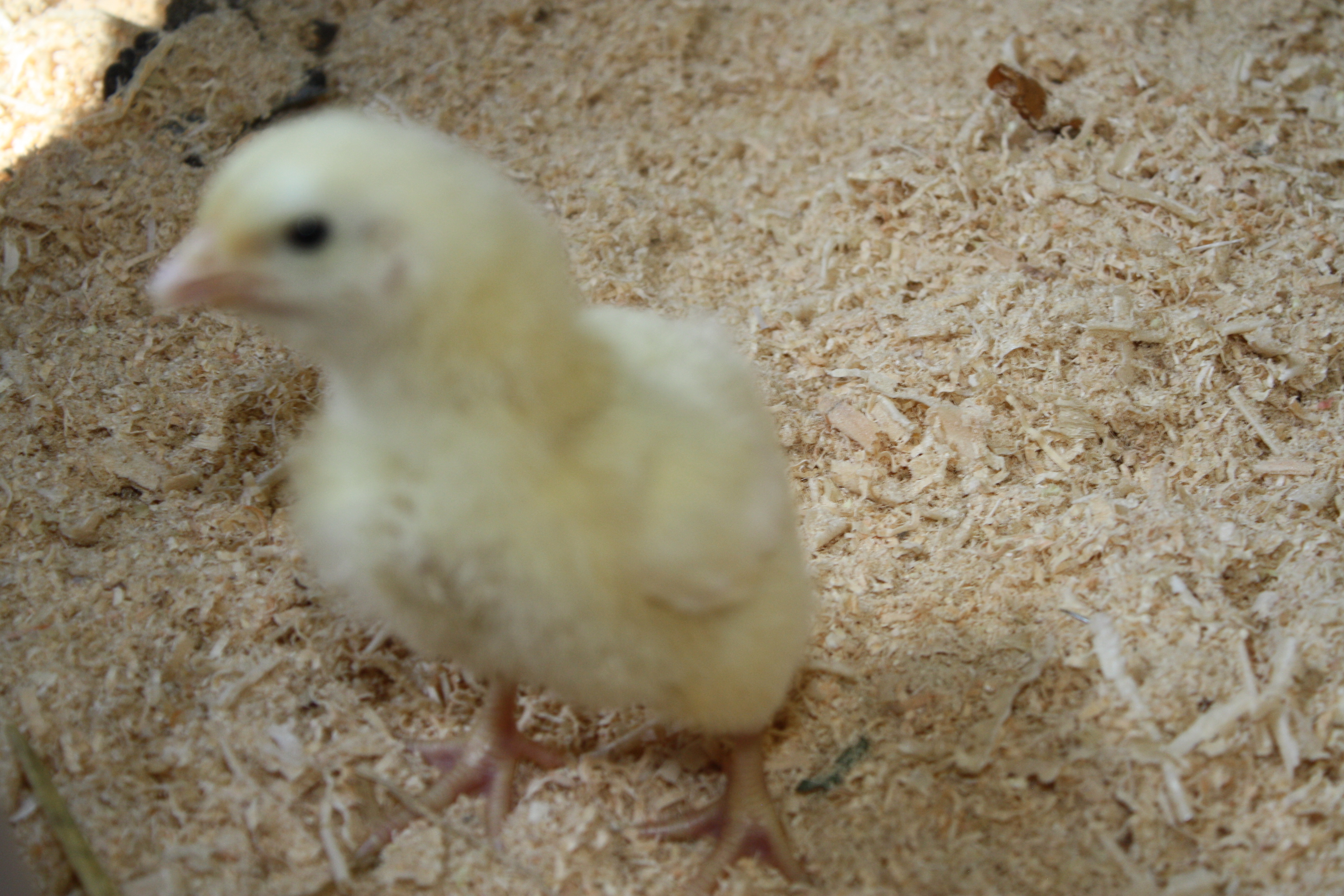
There is no better way to get a perspective on one’s life than to start raising the very food that you eat.  Life is a cycle that is often times invisible to us both mentally and physically but on a farm, a self-sufficient farm where nature is allowed to take its course, that cycle is clear.  We raise chicks here on the farm and we start them in an enclosure complete with clean sawdust, clean water and ample food.  They enjoy the digs, they eat and drink.  Their fate is sealed: they will be dinner.  But, they are oblivious to this and most other things, as long as they have their food and water.

As I look down into the box at the chicks as they create their world, I think to myself that their world is not much different than most of ours: we eat, we drink, we sleep and do not question much as long as we are comfortable: our fate is sealed, as long as we have our comfort.  At the end of the day there is not much of a difference.

Of course, we have more potential, but what is potential and how many of us actualize that potential?  What is potential to the chicks?  They are potential food, potential compost makers, they give back what they receive, probably more, but in the end their lives will end on the sharp edge of a knife wielded by me.  They will end up in my freezer and will supply me with the comfort of knowing that I will have food.  They will supply my compost pile and then my garden.

Their potential is in effect endless.  I wonder, then, who is god: us or them?  They fulfill their potential without ever knowing it while we struggle to even know ours.  They are efficient users of resources and effective suppliers of the very thing that sustains life; we are consumers without understanding what we consume.  This is all not to judge, but simply to ponder the fate of god, the fate of us all, which is to supply life in all its confounded mystery and magnificence.

Mothers

mothers

I am reminded, on Mother’s Day, of those mothers that do not have a voice, but love nevertheless.  I am reminded that all of life has a mother; one who loves in their own way, even if it is not ours.  I am, of course, referring to the mothers that we all often forget.  I am reminded of them when I walk out my door.

I hear them in my yard and see them scamper up trees and into the wood pile out back.  In the mornings I see them walking slowly through the forest on our property.  And sometimes I hear them in the back and have seen their black flash run through the woods.  I read about them and see pictures of them lovingly licking their young children or sleeping.

I must admit that I have disturbed a few when I lifted some wood or mixed the compost pile.  They look up at me and I feel a shutter run through me.  I quickly replace the wood, or cover them back up; them and their young.  I hear them chatter angrily when I let the cat out, and I hurriedly pack poor old Fimp back inside.  I know there are mothers that are afraid, that are hunted by the heartless among us and they too have mothers.  I cannot seem to get myself to read or watch about these things.

I would ask all of you to give a thought to all the mothers of the world and consider that they all, in their own way, love their children.  I think, especially in this age of inconsideration, that it is time that we consider those that deserve much more than just a passing thought.  I love my mother, and she loves me.  I also know that there are others do the same.

New-Old Lifestyles

Image result for old farm tools

When talking to people, especially older people who sometimes don’t understand why anyone would want to “go back” to raising and slaughtering your own meat, growing your own food and working your own land, they often point out that they are “fine” eating the modern products and processed foods of our current world.  They are right, of course; at least sometimes, or partially.

But the real point is lost on them; the point is not just the healthy aspect, but also the moral aspect.  We humans have somehow lost the necessary respect that life deserves and demands.  It is not just for health reasons that we till our own gardens and raise and slaughter our own meat.  It is healthier and better (lacking the additives and antibiotics) but is most certainly a more moral choice (respect for life and the living): a better choice.

A respect for life is the cornerstone of the agrarian lifestyle.  This does not preclude, but does not necessarily include, a religious adoration of life, but it is a necessary moral choice that does much to define who we are at the end of the day.  People that were raised on farms eighty years ago seem to remember the drudgery and forget the community.  They seem to remember the hardships and forget the rewards.  I’m not sure why and perhaps I will too at some point, but I hope not.

The irony of talking to older people who have had such “lifestyles” is that they seem to look upon the new crop of self-sufficient people as being a bit spoiled, but I would argue that the new farmers of old ideas are not spoiled, but curious and willing to do the work.  Although many people will fail at these new old endeavors (because the physicality and harshness of the work have not changed) there are many who have found solace and education in pursuing  “non-progressive” ways of life.

I think that when an honest lifestyle is dismissed so easily by others that it is because those that dismiss it have never really thought about their own life.  To do so, like the new agrarians will find, is physically and morally demanding; no less than the new- life that they have chosen to lead.

The Choices We Make


choices

When I chose to get a dog from the pound about five years ago, little did I know of the ritual that would soon become my life. Every morning up at 5:30 and after the coffee cup hits the coffee table for the final time, a nudge (toy in mouth) and off we go for our morning walk. In the afternoon after work another walk, work in the woodshop or in the garden, and some playing in the yard until it is time to eat. Then, off to the favorite bed she goes watching the house from her favorite perch.

The choice to get a dog from the pound has obvious implications. My life has changed, but so has hers. I made a choice, and that choice has brought me as well as my dog a great deal of happiness. These are the choices we make, and we continually make. Other choices that we make do not always have obvious implications.

When I choose to go to the grocery store (the walk of shame as I call it), or to buy something at the local hardware store the choices we make there also have implications. However, those implications are not always as clear as bringing a dog into your life. There are animals that pay a high price for the choices we make. We make choices for many reasons, but those reasons should always be clear to us as well as the consequences of the choices we make.

An easy choice is not always the right choice, and those choices that we deem as difficult should not always be difficult. We can choose to do the right thing, but to simply do the right thing takes time, it is a habit that we must acquire. I believe that most of us know what the right choice is but are often tempted by the easy and swayed by the convenient. Our choices become others and not our own.

Perhaps it’s time to take our choices back, but this too is a choice; at least for now.

Where There’s Honey, There’s Bees

courteous

I have bees and in having bees I believe that I owe them a “common” courtesy. I must supply them with a safe place to live and to food and water. I must consider their needs during different times of the year and I must do my best to assure their health. I’m not sure that many would disagree with these responsibilities, but perhaps with the use of the word “courtesy”.

In the beekeeping world the question of what to do with a weak hive is ubiquitous. Some recommend doing nothing and letting them die out. This method is, after all, the most natural of methods. However, I would consider this to be somewhat discourteous. The Europeans did bring the honeybee to this continent and so we seem to at least partially responsible for their well-being.

Does courtesy, especially to animals such as bees, actually apply? I think it does. I don’t open the hive up unless absolutely necessary. I consider that hive their home and I a guest (when I do open it up). Of course, I want my bees to survive, but my own desires for their well-being aside, the idea of being courteous seems to be a much nicer way of going about keeping animals of any kind. Just think of the changes in attitudes towards pets such as dogs if we were only to be courteous to them.

This brings up an interesting issue: being courteous to one species is not necessarily being courteous to another. A dog needs exercise on a daily basis. To not allow the dog to exercise is in a sense being discourteous.   To expect the dog to be “good” and not allow it the needed exercise is irresponsible. Bees need a certain environment in which they can thrive in the same way that a dog needs a certain environment in order to thrive.

But does this concept apply to all creatures? Again, I think it does; and to the environment as a whole. What if we were all to think of ourselves as guests on this beautiful planet! As a guest, I must be courteous to the host, not overstay my welcome, and respect the boundaries that define…being courteous.

This concept of courteousness seems to be in line with the old analogy of the sandbox: the rules that apply in a sandbox full of children, apply to all adults in the world. I would only broaden that analogy to all creatures and to the earth itself. The old adage rings true not matter: we can catch more bees with honey than with vinegar. But to get honey, it would help to consider the bees!