beehive

Simple Pleasures

pleasure

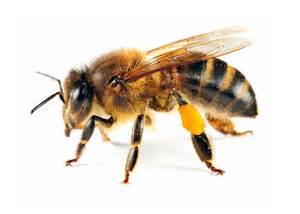
There’s something beautiful about seeing bees come out on a winter’s day. Walking out to the bee yard I noticed a few girls flying around. Although the sky was grey, it was just warm enough for a few brave hearts to venture outside. It is a simple pleasure, I know, but a pleasure nevertheless.

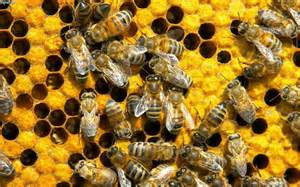
It is pleasures like this that make life worth living. It does not take money; in fact money alone is void of the kind of pleasure that is available if we just take time to notice. The garden, newly manured, sitting in the snow reminds me that there are worms deep under the soil. My ear up against the beehive and the scratching and buzzing that I hear, reminds me that we all want the same thing: a safe, warm place.

Perhaps it is this realization that warms my heart on cold winter days. When I realize the beauty that is nature I just have to stop and stare in wonderment. I think that it would be a much better world if we all took time to stand and stare in wonderment at the simple and often forgotten corners of our world.

In the back I hear chickens clucking away. I know that they are fussing about the snow, and perhaps feel a bit of cabin fever already. But they too venture out picking around in the snow, hoping to find a morsel, or maybe just doing it out of curiosity.

I like the smell of a kitchen that people cook in. I like the warmth of a home, and the cold against my face on an early morning walk. I like knowing that we all have a place, all animals; all living creatures. I like to think that there are places that are safe, that people want the best and are willing to work for it. I like to think that there is love in the world, and that there are those that are loved.

I know that these are simple pleasures, but as simple as they are, they are also simply priceless. And so I walk out back and stick my hand down in the dirt, I work on winter carpentry projects with the hope of the coming Spring and Summer. I put my ear up against the hive. I do these things and a smile comes to my face; just another simple pleasure to be thankful for.
 

For Beekeepers Everywhere

IMG_20151019_172442588

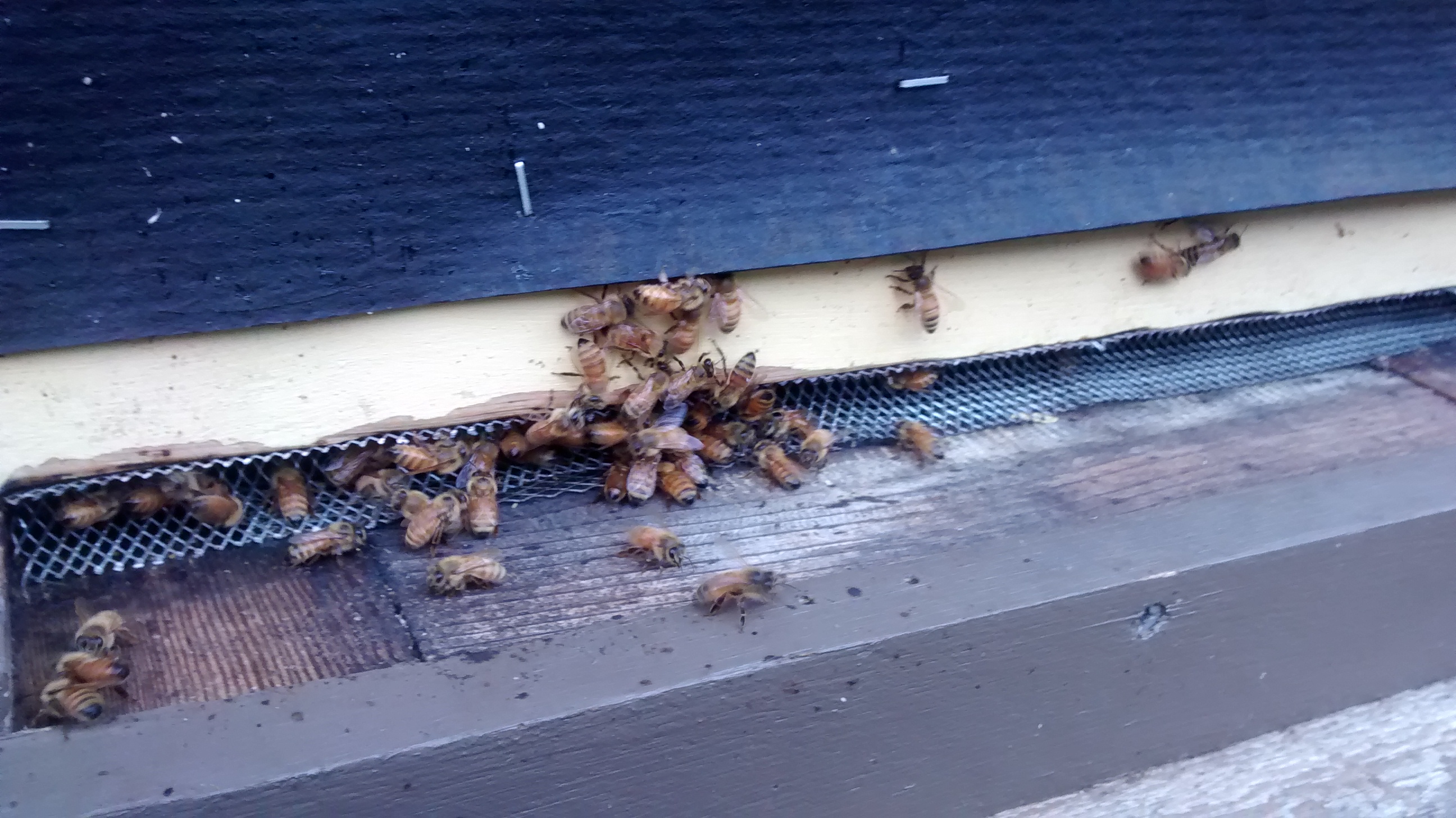
For beekeepers, fall is sometimes the time for raider bees: those bees that look for the year’s last source of food, which is sometimes a weak hive.   The raiders make for the entrance en force and then raid food stores of the hive. Once in, the raiders have no problems, as the defense of the hive is limited. The raiders gorge themselves with food and make their way out of the raided hive and to their own.

Raiding is a problem for beekeepers because it often leads to the death of hives during and sometimes before winter but the issue is not that bees raid; that’s what bees do: survive. The issue is how to stop raiding bees. In my battles with raiding bees I noticed that I was approaching the problem as a human being rather than approaching the problem from the perspective of the bee.

As humans we are capable of empathy, but bees are not empathetic. As humans we approach things intellectually, but bees are not and do not respond to intellect. As humans we understand praise and penalties, but bees do not make these correlations.

With this in mind, I fashioned a screen with some scrap wire and fitted it to the entrance of the hive being raided. I did this early in the morning before the raiders showed up. In the afternoon the raiding bees were bunched up on the screen as were my own bees, but in the safety of their own hive.

I felt bad for my bees being locked in. Later in the day, in fact late in the afternoon I noticed that the raiding bees began to thin out. At that time a removed the screen until the next morning giving my bees a few hours outside and the ability to defend the hive against the few remaining raiding bees.

During this time I provided feed for the hive with a top bar feeder. I have found that after a few days, or at worst after the first freeze that the raiding bees ceased and desisted. My problem, then, was only supporting the weak hive over the winter. Some say that supporting a weak hive is not worth the effort, but after all I am only human; my empathy a weakness, my love of lost causes a fortune.

Where There’s Honey, There’s Bees

courteous

I have bees and in having bees I believe that I owe them a “common” courtesy. I must supply them with a safe place to live and to food and water. I must consider their needs during different times of the year and I must do my best to assure their health. I’m not sure that many would disagree with these responsibilities, but perhaps with the use of the word “courtesy”.

In the beekeeping world the question of what to do with a weak hive is ubiquitous. Some recommend doing nothing and letting them die out. This method is, after all, the most natural of methods. However, I would consider this to be somewhat discourteous. The Europeans did bring the honeybee to this continent and so we seem to at least partially responsible for their well-being.

Does courtesy, especially to animals such as bees, actually apply? I think it does. I don’t open the hive up unless absolutely necessary. I consider that hive their home and I a guest (when I do open it up). Of course, I want my bees to survive, but my own desires for their well-being aside, the idea of being courteous seems to be a much nicer way of going about keeping animals of any kind. Just think of the changes in attitudes towards pets such as dogs if we were only to be courteous to them.

This brings up an interesting issue: being courteous to one species is not necessarily being courteous to another. A dog needs exercise on a daily basis. To not allow the dog to exercise is in a sense being discourteous.   To expect the dog to be “good” and not allow it the needed exercise is irresponsible. Bees need a certain environment in which they can thrive in the same way that a dog needs a certain environment in order to thrive.

But does this concept apply to all creatures? Again, I think it does; and to the environment as a whole. What if we were all to think of ourselves as guests on this beautiful planet! As a guest, I must be courteous to the host, not overstay my welcome, and respect the boundaries that define…being courteous.

This concept of courteousness seems to be in line with the old analogy of the sandbox: the rules that apply in a sandbox full of children, apply to all adults in the world. I would only broaden that analogy to all creatures and to the earth itself. The old adage rings true not matter: we can catch more bees with honey than with vinegar. But to get honey, it would help to consider the bees!

Worry, Worry, Worry

worry

That is, the end of summer and the beginning of cooler nights and the faintest of hints of fall and eventually winter. This is the time to check the hives for health and food. This is the time that the bees begin to make the last push, sometimes swarm (and die), or begin to ready the population for the winter period.

There’s not much one can do as a beekeeper except to watch for swarms, feed if necessary, and ready the hives for winter. I usually wrap mine in black roofing paper and add a layer of insulation under the roof of the hive. I will poke a few small holes in the insulation for venting, and try not to open the hives too much from now on.

This is, I hope, my first winter with bees but I certainly hope it will not be my last. Beekeeping is an adventure and as with all adventures there is a degree of failure. As I have learned, beekeeping is no longer a simple process which (depending upon your attitude) makes the adventure loathsome or more challenging.

These are, after all, my girls and I cannot help but care for the hives that I have. As I am reminded: I have done all that I can. However, it never seems enough. Perhaps it is the human condition that makes us continue to want “more”, to do “more”. We cannot fail; so we tell ourselves. But failure is part of evolution, both the evolution of us as individuals and the evolution of beekeeping as it has become.

In fact, often adventure begins with failure. I know that my short stint in beekeeping began with failure. But the important thing, as the platitude goes, is that we must learn from our mistakes. More importantly, we must continue to learn.

Bees are a good teacher because they never seem to worry. They act. And so, perhaps adventure starts with action, with acting within the moment and not thinking about it too much. Thinking too much is a euphemistic way of saying “worrying” too much, which is what I seem to do with my bees. I’ll do what I can, and have done what I could. That must be enough, although it never is and seems to be the one thing I cannot learn. There is always ignorance, and that is enough to keep one worrying all winter long.

Listen!

bee

I lost a beehive last year. It was a devastating experience. Everything seemed right; it was a strong hive, but alas the hive failed. I take responsibility. However, this is not about the past except that we must learn from it. The past is, in fact, useless unless we do just that.  But what do I need to learn?

And so this coming Saturday I will start the process over with the experience and education that I wracked up last year. This Saturday I am starting over with two hives. To say that I am nervous is actually not accurate; I am not nervous, but hesitant. I don’t want to fail because failure in beekeeping means that lots of life is wasted.

I am starting with two hives because I am told that it is insurance, that two hives gives the keeper a way to compare; two hives will help educate me. I only hope that my education does not cost the bees their lives. I will do my best, but I know that the bees will do their best. They don’t have a choice, but I do.

The choices we make define who we are, failures and successes. The choices we make define who we will be, and who we have become. I believe that the death of last year’s hive defined who I am today, and inevitably the hives that come on Saturday will define who I will become.

Last week progress was on my mind, and progress can be defined in many ways; some bad, some actually, well…progressive. To fail and to step back up to the plate says a lot about a person. I must remember that bees do not fail in the sense that I do. They simply act; it is us that determine pathways and judge failure against success.

The simplicity of the beehive is amazing; the complications that we create are just as remarkable. In studying all winter long, with the readings and online research I need to remember that complication is not necessarily progress. Progress is simple: the recognition of the shortest, most realistic path to the goal.

Bees do not need much, and they ask nothing of the individuals who decide to “keep” bees. It is in fact not necessary to “keep” bees at all. This year I will endeavor to stay out of my own way and more importantly, to stay out the bees’ way. This year I will progress by not necessarily acting upon the bees, but learning how to act with the bees.

This sounds so simple, but simplicity, I have found, is not so simple.   I can only hope that the “girls” are able to teach me to step back, give them room and not worry so much. It’s quite the advice from such a simple creature. If only more of us could listen.

Life, Death, Life, Death…Life.

bees

As I stated in the last blog about bees, my bees had been plentiful throughout the summer, filling three boxes. However, I noticed a problem (varroa mites) and treated them dutifully. I saw the results and the results looked good. I was hopeful but eventually was horrified to find that most of the hive was empty. Rather than 30-40,000 bees I was met with 2-3000 bees!

The decision to leave the small remainder of bees to their fate was hard. However, nature rarely gives us a choice and remembering that gave me some solace, if not peace. The bees died shortly afterwards and it took me a few months before I could muster the heart take the hive apart. I eventually did, and cleaned it up even going so far as cleaning the foundation of most of the remnants of my little hive. I was left with some beautiful comb and even some honey stores. Not much, but then I was ahead of the game because my beehive had given its life to do what it had no choice in doing.

I think this is important to remember about death; that there is no choice. Life and death is not a choice and bees are no different. During the last few days the hive was robbed, the queen and her small entourage died and the hive was left empty. It sat as a reminder that it is often a mistake to expect nature to act differently simply because we have a vested interest in it doing so. Nature offers us no choices and that thought reminded me that my dead colony left me with yet another gift: philosophy.

And so I ordered more bees from my local supplier (the bees are local bees with semi-local queens). It was actually a hard decision because as a beekeeper I must accept at least partial responsibility for the death of the hive that I chose to take responsibility for. Mismanagement was almost certainly a culprit in the loss of my hive, but in more ways than one. Varroa mites were also to blame. However, even the mites that were eventually the cause of death were simply following the hallowed and harsh laws of nature. They were doing what they do best: survive. With this in mind I look forward to my new bees arriving in April.

With the arrival of the new bees I will become explicitly involved in the most natural of cycles: life and death, and I hope that my explicit involvement will somehow sway the likelihood of survival for my bees instead of the other way around. I have read that because of the varroa destructor problem that human involvement is now necessary for the survival of honey bees. I’m not sure that I agree with the argument entirely as it was human involvement that created the problem in the first place. I will certainly try to do my best and the bees will do what the bees will do. Life and death to them is simply the law of nature, but I will continue to try to be the best beekeeper that I am capable of being by continually trying to understand the nature of that law.

The Box of Bugs

Image

I awoke excited about the day. The bees were in this morning and I was to pick them up soon: my first package of bees! I bought them from a local supplier and they had spent the night traveling the four hours from their previous home to the pick-up location. Already they were “my girls”. The pick-up was uneventful, the way they should be, but I had to introduce my girls to their new home, a hive that I had built by hand and placed in the large backyard of my home. The fifteen minute ride home, bees in the backseat, was filled with even more excitement both from the backseat and the front.

Readying my tools for the introduction, I brought out the food that I had mixed up the night before (sugar water in short). Setting the bees down next to the hive, I removed four or five frames from the hive and set them aside. I then pulled the small feeding can from the package and grabbed the queen cage putting it in my pocket to keep the queen inside warm and replacing the can with a small cover to keep most of the bees in the package. A few bees flew out and the package was hurriedly coming to life. I thumped the package lightly down to shake the bees to the bottom of the package and then turned the package over the hive dumping thousands of bees into (hopefully) their new home. I hung the queen cage on a frame a bit off to the side, set the few frames taken out back in, set the feeder and the top on and then pulled up a chair and poured some coffee. My work was done for the time being.

The entire event was filled with child-like excitement, hope, and worry, not lasting for more than ten minutes or so. I felt the responsibility of thousands of lives begin to weigh down on me. I watched as bees flurried about coming in and out of the hive. I heard the excitement around and in the hive itself. I watched as something that I had built from a living thing came to life in a whole different way. I could not help wondering if the new hive was busily making the place its new home much in the same way a family might make a new house theirs. I couldn’t help wondering if they would be safe, be warm, secure in their new surroundings. I had readied the hive and our ½ acre of yard for the bees to the best of my ability. I had looked forward to this day for the months that I had waited for the package to come. I was nervously ecstatic, I was unbearably happy; I was fifty years old!

I was fifty years old with the glee of a small child. I have owned a small business, have a career and held a job my whole life and yet these bees were one of the most exciting events that I could remember. I must admit that the reason for getting bees in the first place was that I had found an old honey extractor from the 1920’s for a reasonable price and simply thought it to be an interesting piece of equipment. But what is a honey extractor without bees to make honey? The following months of avid reading about bees and beekeeping hurriedly changed my attitude: I was taking on the responsibility of a society of animals.

The first day of being a beekeeper and I already owed the bugs a nod of gratitude! The day that I dumped the package into the hive I realized that the bees were much more than honey or even pollination of the garden, but they were the realization of a greater thing, a greater idea, a symbol of an ideal life. The bees reminded me that I was responsible for myself and in being responsible for myself, I was responsible for them. There are not many better lessons to learn, and what better way to learn such lessons than from a box of bugs!