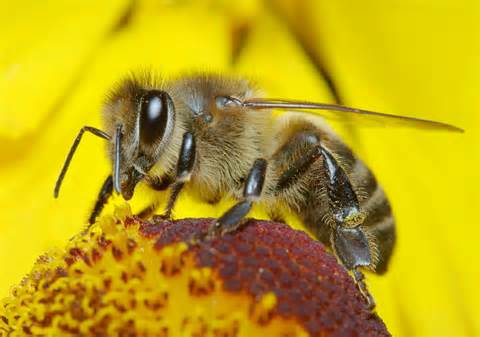
bees

Two Boxes of Bugs

beeyard

I have ordered two new packages of bees, and I have mixed feelings for doing so. My bees died abruptly last September, in part because of Varroa mites. It was really a heart-breaking experience. A few weeks ago I took the hive apart and thoroughly cleaned it, stored it, and have now begun building a new hive for one of the two new packages that I have ordered.

Why do I have mixed feelings?   The answer is simple: I was unable to keep my previous hive alive even before winter set in; I am acutely aware of the responsibility that I am taking on. However, I believe it is important not to give up, and to do what I can to help the bee population (killing them aside) by learning about the animals and continuing to try to help them in the best way I know how.

This conclusion led me to understand that Truth is more important than fiction. The truth is: bees are going through hard times, and need our gentle help. The illusion would be to turn our backs on the problems that we are made aware of (I was made aware of last year). The truth is: human beings are at least in part responsible for the problems that bees are having. The illusion would be to pretend that we are innocent with regard to the problems that we have caused.

With all of this in mind, I am cautiously optimistic about the bees that I will receive. I will do my best (but what if my best is not good enough). I will use the knowledge that I learned from my first hive (but what if I cannot know enough). The only answers that I have are that I will continue to try to do better, and I will continue to try to know more. This is the best I have, and all that I can do. I hope the bees that I get somehow understand, and I hope they have the patience to put up with my mistakes.

Even in their death, my bees continue to teach me things that only experience can teach.   This is yet another reason that I continue to be so thankful for my box of bugs. I will have two boxes of bugs in April, and will no doubt learn even more from them. I only hope that my student-ways are enough to keep them healthy, happy, or at the very least alive so that they can teach me even more.
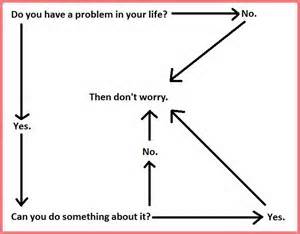
Worry

worry

This time of year is worrisome for beekeepers. The cold is coming on, and we worry about food stores, hive health, and of course the cold. I have had a wasp problem these past few weeks that came after I got the mite problem under control. I was told when I began to consider beekeeping that mites and honey is the top two reasons people quit keeping bees. I can see why those issues are at the forefront.

The cold is hard on many of us, not just the bees. And it is not that cold where I live; at least not yet. I look out the window and the sun is shining. I step outside and it is below freezing. I think the bees simply react, but people, people think too much. I know that I do. I lost a lot of sleep worrying about the wasps, and then I think about the cold, the food. The worry continues. However, worry does not work; worry does not help. Worry hinders, is a vicious cycle, and is unfortunately inevitable.

On Wed the weather will warm up and I will check the hive for the last time before I close it up for winter (so I can worry about the food stores). I’ll make sure the wasps don’t have a nest in the hive (so I can wonder if I got all the wasps out if there is a nest). I put a mouse-proofer on the opening of the hive and add some insulation to the top (so I can worry about moisture this winter). I’ll wrap the hive in some black roofing paper (so I can worry less about heat).

I’ll do what I can for the bees that I’ve taken responsibility for, and this is where the worry comes from: I have taken responsibility for something. Any person who has taken, truly accepted, responsibility for something understands the worry that goes along with the responsibility. In the past few years, self-sufficiency has played an integral role in life and along with self-sufficiency comes self-responsibility.

I wonder about those people who did not have the choice of self-responsibility; they had responsibility thrust upon them by the nature of their lives. Such responsibility is a heavy burden, but perhaps (like the bees) such responsibility is not noticed because it is simply the reality of life: it is living.

In today’s society our worries have changed perhaps because our responsibilities have changed. We worry about our job, if the grocery store has what we need, if we have paid our bills and if we can continue to pay our bills, our children, our marriage. These worries are no less important, but they are different. Such responsibility is a heavy burden but after a while we do not seem to notice because it is simply the reality of our life: it is living.

I have learned, even in such a short time, from my bees that I must understand what I need to worry about. But in order to do so, I must understand what I am responsible for. Maybe that lone bee coming back to the hive on a cold day with a load of pollen is not worried because it is doing what it does, doing what it needs to do, doing what a bee does naturally. I think that perhaps what we worry about is not as important as why we worry about the things we do. Perhaps worry is not a waste of time, but a reminder that time is short, the cold is coming and we have (in fact) no time to worry.

Box of Bugs: Chapter 2

Description Beehive.JPG

It’s been two months since I became a beekeeper, and yesterday I ended my stint as a beekeeper. I still have the bees, make no mistake, but yesterday I decided to quit feeding them. You see, in the beginning when you buy a package of bees they have nothing but the box you give them. To give them a head start, you feed them sugar water. Yesterday I took the feeder off the hive since they have grown significantly. Now they forage for their own food as bees should. It was difficult: becoming a bee-watcher rather than a beekeeper. I worry about them. I know that I shouldn’t because they are bugs that forage for food; that’s what bees do.

But nevertheless, my mind won’t let go. They are “my” bees after all. It seems that I have a relationship with each of the 30,000 or so bees that must live in the two-deep hive that they have made home. Although I know that it is impossible, I still can’t get around the hope that they know me. The have no such thoughts, I know. All of this anthropomorphism is tiring, and yet I know that when I am done writing this I will go out back to visit them.

Yesterday they bearded the front of the box as it was hot, and as bees are apt to do; and yesterday I worried and fretted. This morning I sat in my chair outside the hive with coffee and watched as the hive came to life. Perhaps this is the life of that which I have become. It is true that it is simply a box of bugs as I have written previously, but it is a box of bugs that is full of mystery and muster a fascination that I have not had in a while. I want us to understand each other, but realistically they are barely aware of me. They do what bees do and I, well I watch what bees do.

When I open the hive see the amazing amount of work that they do, both as individuals and as a hive I am dumfounded and they continue to work. Work defines the bee. I cannot help but be a little envious of such a life: doing what needs to be done, when it needs to be done, for no other reason than it needs to be done. What simplicity. What directed significance; and all in six weeks or so during the summer. And now I step back and let them be what they are naturally. It is nothing to them and a major step for me.

In my determined trek to be self-sufficient I am finding that I am the most dependent of all creatures when a simple bug can teach me freedom by doing nothing more than that which it does so flawlessly. Maybe I am worried not about the bees and my feeding them, but about myself as I slowly strip away the false sense of independence replacing it with the very real sense of awareness that it is me that needs to learn to do what needs to be done, when it needs to done, for no other reason than it needs to be done. I continue to learn from a box of bugs, and am humbled to do so.

Homeward Bound

Image


When I received my first package of bees I was intent on giving them a good home, replete with ample room and plentiful food.  I worked hard several week prior to their arrival to set up the hive “just right”, and plant flowers that would bloom at different times during the summer.  Of course, the bees were not aware of my preparation work nor were they aware that the newly situated place they had found themselves in was home.  But they had one, and their home made me happy.


The idea of home is not as simple as a place, however.  Rather, home is (perhaps) a feeling of comfort, a point when you can let your guard down, and “stay awhile” as it were. Fast food is out of place, advertisement is unwelcome and the smell of cooking is prevalent; home is welcoming and not too fancy.  Home is intimate and it affords a feeling of intimacy when we are there.  Home is quiet and warmth, love and friendship.  Home is comforting.


Home is the past: the memories that we cherish and the love of our parents when we were small.  Home is the smell of cooking, welcoming intimacy, quiet, warmth, love and friendship and it can be found anywhere.  Most creatures want a home, but most creatures (such as bees) do not belong to a specific place or even time; having a home is similar: it is not specifically defined.


Being raised by loving parents, making friends, finding someone that you love and that loves you back, having experiences, adventures, learning, losing, loving, laughing.  All of these things and so much more make up our homes.  A home is often a process of building memories.  In fact, memories may be the only building blocks of a home, much more than the brick and mortar, the wood and nails that we often find solace in.


A home cannot be bought and sold but it is not free.  We must create our homes and live in them as best we can.  We must accept the homes we have built and know that we can build a new one if need be.  Having a home is remembering why we are who we are, and planning who we want to be.  Home is comfort in the knowledge that we are self-sufficient, that we made choices and took responsibility for them.  Home is that quality of happiness that is rare and often fleeting; it is that feeling that we do not belong, but not because we are outcasts, but only because that is the nature of the human house.


Everyone and everything needs a home.  It is the ultimate goal.  We all belong to the human household, but not all of us have built a home.  Somehow, my bees have reminded me of this, and the chickens that I will soon get; the vegetable garden and the fruit trees.  The memories of long past times, and the achievements and failures that linger, and the wishful dreams of times to come; this is in essence what makes a house a home.  I wish you luck in building your own.

Ever Changing        

Image


As the seasons change they remind me that time does undeniably pass us by.  In the past few weeks I’ve seen the tiny seedlings that I started indoors grow leaps and bounds.  I’ve seen the parsnip poke its miniature shoots out of the soil covered in dead leaves and compost that itself has stood the test of time.  I see the kale and the carrots beginning to show out of the earth itself.  The weather is getting warmer and as it does our new bees begin to become more and more active.  We did our first hive check this weekend, and “my girls” are doing fine.


“My girls” indeed!  As I watch them busily about their business it dawns on me that these “girls” will not be the girls that my family meets when they come to visit later this summer; these “girls” will not be the ones that I take honey from (if at all) later this summer.  This hive will not be the same hive at all.  They will all have passed their jobs on to their sisters that they so diligently raise as I watch them fly in and out of their new home.  It saddens me…at first.  I realize, once again, that this is the nature of the seasons, is the nature of the years that have passed me by and continue to do so.  Change is the nature of life itself.


I watch as my parents get older and my nephews and nieces begin anew, with wonder in their eye: young and not thinking about time at all.  Like the hive I call my own we are not the same people we were a mere seven or eight years ago, literally or figuratively.  The cities we live in change; the landscape, the people, our friends, our jobs, our plans, our goals, our desires.


In fact, change is the only consistent.  As I complicate my life (to eventually simplify it) I realize more and more that this aphorism rings true.  As I see the very ground in my garden go from unfertilized lawn, to newly dug soil, to composted mulch full of worms and life I realize that I did not start this cycle of evolution in my garden; that this cycle never had a beginning nor will it have an end.  I watch the plants come up excited in anticipation just as I was last spring and will be in the springs to come.


Perhaps adding to my newfound goal of complicating my life, I must realize that I have a choice: to act with or react to the nature of life and the living.  As a gardener and now a keeper of bees, I try to be a steward but I am really an audience member to the grand change this is life.  But life, our lives, is short with no intermission, no stage, no actors, and no scenery.  I started out a suburban gardener, but I slowly realize that the garden has always been there and that I am only reacting to it.

The Box of Bugs

Image

I awoke excited about the day. The bees were in this morning and I was to pick them up soon: my first package of bees! I bought them from a local supplier and they had spent the night traveling the four hours from their previous home to the pick-up location. Already they were “my girls”. The pick-up was uneventful, the way they should be, but I had to introduce my girls to their new home, a hive that I had built by hand and placed in the large backyard of my home. The fifteen minute ride home, bees in the backseat, was filled with even more excitement both from the backseat and the front.

Readying my tools for the introduction, I brought out the food that I had mixed up the night before (sugar water in short). Setting the bees down next to the hive, I removed four or five frames from the hive and set them aside. I then pulled the small feeding can from the package and grabbed the queen cage putting it in my pocket to keep the queen inside warm and replacing the can with a small cover to keep most of the bees in the package. A few bees flew out and the package was hurriedly coming to life. I thumped the package lightly down to shake the bees to the bottom of the package and then turned the package over the hive dumping thousands of bees into (hopefully) their new home. I hung the queen cage on a frame a bit off to the side, set the few frames taken out back in, set the feeder and the top on and then pulled up a chair and poured some coffee. My work was done for the time being.

The entire event was filled with child-like excitement, hope, and worry, not lasting for more than ten minutes or so. I felt the responsibility of thousands of lives begin to weigh down on me. I watched as bees flurried about coming in and out of the hive. I heard the excitement around and in the hive itself. I watched as something that I had built from a living thing came to life in a whole different way. I could not help wondering if the new hive was busily making the place its new home much in the same way a family might make a new house theirs. I couldn’t help wondering if they would be safe, be warm, secure in their new surroundings. I had readied the hive and our ½ acre of yard for the bees to the best of my ability. I had looked forward to this day for the months that I had waited for the package to come. I was nervously ecstatic, I was unbearably happy; I was fifty years old!

I was fifty years old with the glee of a small child. I have owned a small business, have a career and held a job my whole life and yet these bees were one of the most exciting events that I could remember. I must admit that the reason for getting bees in the first place was that I had found an old honey extractor from the 1920’s for a reasonable price and simply thought it to be an interesting piece of equipment. But what is a honey extractor without bees to make honey? The following months of avid reading about bees and beekeeping hurriedly changed my attitude: I was taking on the responsibility of a society of animals.

The first day of being a beekeeper and I already owed the bugs a nod of gratitude! The day that I dumped the package into the hive I realized that the bees were much more than honey or even pollination of the garden, but they were the realization of a greater thing, a greater idea, a symbol of an ideal life. The bees reminded me that I was responsible for myself and in being responsible for myself, I was responsible for them. There are not many better lessons to learn, and what better way to learn such lessons than from a box of bugs!

Buddhist Bees

Image

I worry about bees these days. I know that I don’t need to, but I do. I enjoy watching them move about the Nanking Cherry bush; I enjoy listening to them and trying to pick the Italians from the Carniolans. The day that I am doing this is sunny and the clouds are lingering. The bees are busy doing bee things and I am busy brewing beer and…worrying about tomorrow. That’s how we humans are: we worry about things that we have no control over. The bees cannot worry about tomorrow and I wonder if they would even if they could.


You see I am told that the next day will bring snow, a cold snap that is normal for this time of year in Colorado. I also know that temperatures below app. Fifty degrees become problematic for bees. They cannot move, forage, and must huddle together in their hive keeping their brood and each other warm. The difference, I realize, is that I am busy worrying about the future and the bees are busy doing what needs to be done at this very moment. There is a religious irony here somewhere. The Buddhist religion’s basic claim is that there is no other reality than the present. The bees act like Buddhists while we think about Buddhism.


While I’m watching the bees I hear my wort (unfermented beer) begin to boil over: a watched pot will never boil, but one that is forgotten, well that’s another story. I am not minding my own business while the bees mind theirs. I am worried about the bee’s future while the bees are busy with their present business. Somehow none of it makes sense, but that is Buddhism, and the bees being the Buddhists that they are, are not aware. I am aware and run back to the pot.


There are other ironies involves but the whole business gets complicated. I complicate my life by worrying about the future; the bees simplify theirs by doing what needs to be done in the present. I’ve seen a whole hive dead from starvation which is not a pretty sight, “butts in the air” as beekeepers say, the abdomens of the bees sticking out from the honeycombs as the bees searched for food in the bottoms of the combs. My heart drops and I get a twist in my gut. However, I’m pretty sure that even at death’s door, the dead bees lived in the present.


That’s how all of nature is and I begin to wonder if it is the idea, the concept of the future that separates we humans from nature more than anything else? Nature has no future, in fact the future doesn’t exist, but we create the future and then (what else?) worry about it. There is a philosophical argument here: we are free but the bees are not: driven by genetics the bees act accordingly. But I’m not sure that the payoff is worth it. We are not as free as we believe ourselves to be. Do we choose to worry about the future, or are we preprogrammed to do so? What would you do if you could?


The bees have no such thoughts and they are beautiful because of it. I get my wort under control and wander back to the cherry bush. I look at my empty garden, and the fruit bushes getting ready to bloom, the birdhouse I built still empty, and notice the robins in the juniper bush in the back corner; I see the bucket of water left out for the fox and my eyes glance at the new garlic plants, and I remember that I need to water the seedlings in the workshop. All the while, the bees move methodically from flower to flower, gathering pollen, being a bee.