climate change

Truth is Like Poetry…

Problem: Global Warming

Since the 1970’s or even before, scientists have known about the human-induced warming of this planet due to industrialization and the continued production of certain gases.  And yet, in the United States in particular, global warming is “questioned”.  This feigned skepticism is primarily the product of one man and his pathological greed, Charles Koch.  However, he is not alone.  The evidence is clear and unquestionable: we are the primary cause of inducing greenhouse gases that will inevitably change or desecrate life on this planet slowly but surely.

Solution:

Buying a Tesla is perhaps a start, not the solution; controlling overpopulation is.  So, curbing the human population is necessary.  However, that is not the first nor is it the only step.  Secondly, corporations worldwide, especially in the United States, must be regulated stringently regarding their output of goods, services and the numerous pollutants.  Corporations (and all businesses) must pay the real cost of doing business.

Third, societies must be changed from being consumer-based to being sustainably-centered.  This takes education (true education [the next problem]), but it also takes a heavy-handed look laisse faire capitalistic-attitudes of all of us.  Last but not least, we must guard what is left of our natural spaces, forests in particular, in the same way we are trying to guard the last two white rhinos, and must replenish large natural areas by heavily limiting civilization’s sprawl.  Trees are truly part of the answer.

Fall Back, Spring Forward

fall back

It is the middle of October and where I live this typically means cooler weather. The nights are indeed cool, but the days are still warm. I can imagine my bees huddling up in a tight clump in the hive during the night, but during the day they fly around, busy as a bee. Being a matriarchal society winter beehives typically cull the males and downsize in general in order to make it through the winter. They fall back on the bare necessities; while in the spring work towards building populations and searching for food is immediately began; they “spring forward”.

The phrases, “fall back” and “spring forward” are typically used with regard to us setting our clocks differently, but my cutesy way of using these phrases has a bit different motivation. For eons, human beings have acted not too differently than beehives: in the fall and winter we have needed to rely upon what we could ready ourselves with during the spring and summer. This cycle is natural, and I would argue, necessary to the well-being of us as individuals and the societies in which we live. To fall back and spring forward is sustainable.

As I think about these things, looking at bees, I think about how far we have come in separating ourselves from the natural cycles that really define us. What we have historically defined as progress is not necessarily growth, but the decisions to limit ourselves to the natural and ethical laws that will inevitably come into play.

Bees, of course, do not think of such things; they are not limited, but defined by the natural laws that we spend time taking advantage of and often forgetting. But, if bees were able to forget, I’m not sure that they would choose to do so. Even bees seem to fall back upon the “cold and cruel” culling of males during the winter; this is the nature of things.

I suppose, sipping my coffee and pondering upon bees, nature, and the like that I think it is time for us to fall back upon common sense and spring forward into the inevitable future that we face. I can’t say for sure whether this future is good or bad, but like the bees I do think it is time for us to consider if we have any say-so in the matter. The bees have made their decision.


The Real World

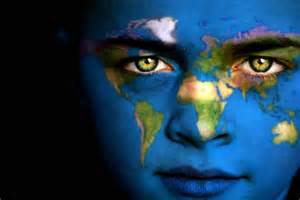
the world

What is the real world, but the result of our actions? How we act defines not only who we are, but the purpose that we define for ourselves. In order to live in the world as it is, we must act according to the reality of the world not what we would like the world to be. While this may sound complicated, it isn’t. What is complicated is why we nevertheless continue to act as if we define the world and not the other way around. Examples abound:

“House Speaker John Boehner (R-OH) says he’s “not qualified” to debate the science of climate change, but insists that President Obama should “absolutely consider” a ban on U.S. travel to West African countries experiencing Ebola outbreaks. Senate Minority Leader Mitch McConnell (R-KY) says he’s “not a scientist” when it comes to climate change, but also says it would be “a good idea to discontinue flights” from Ebola-affected countries. Louisiana Governor Bobby Jindal — who studied science in college — says he’ll “leave it to the scientists” to talk about climate change, but says it’s “common sense” to institute a flight ban.”

                -Kate Sheppard, Huffington Post


The fact that there are individuals and corporations that would like to insist on the “illusion” of climate change does not change the consequences of climate change. The fact that individuals react in fear does not change the nature of what is feared. Again, Ms. Sheppard:


“Meanwhile, actual doctors and medical professionals have made it clear that Ebola does not spread through the air, it is not “incredibly contagious” and there is little likelihood of a large-scale outbreak in the United States.”

-Kate Sheppard, Huffington Post


Irrationality is part and parcel of the world in which we live. However, we can change not only who we are, but the purpose that we define for ourselves. To say that we must live “in the real world” is not to say that the world is defined by those who live in it. Rather, it is to say that we must adhere to the real consequences of our actions and our beliefs.  Reason can happen.

Make no mistake: the real world in which we live is defined in a relatively exact, measurable and wholly reasonable way. However, the world by which I mean the one in which we make decisions and create beliefs is dependent upon us as individuals and as societies. We can only hope that there is some way that the quality of the relationship between the idea of the world and the real world itself can rise to the occasion. Otherwise, the often very unreasonable world in our minds will eventually determine the very real world in which we live.