death

A Day in the Life: Age

It is not death that brings on judgement day, it is age. Age, the years lived or not, the lies told to ourselves and others. Age sat him down in a room of excuses made while they whispered in his ears. They were ghosts from his past, most forgotten. But age had not forgotten.

Age was judge and jury and every day in that house was another day in prison, another whisper in the room, another problem to be solved. His age sat silently making notes. It didn’t matter that he screamed “I DIDN’T KNOW!” Age would look up and past him and then down at his life’s ledger.

There was nothing to do with age or with anything. Age was reality. There was only reality and there was no escape but one. He looked around at others that had outlived their age: afraid of dying, not aware that it was age that was their enemy, not death.

He was not going to let age win. He was not going to accept its forgone conclusions. Age was an option, he remembered, and it was himself that gave it the power it had.

Choose Life Carefully

Choose your life carefully. It takes time. You will make mistakes and you will have regrets. You will laugh and you will cry. And sickness will come, and sometimes it will pass. These are all steps on a staircase. These are all moments which become memories.

There are always compromises that whittle away at the best of intentions.

They too will come and go. And what we are left with is the moment. And in that moment we will relive those memories and look for new memories to make. Do this consciously. Do not count your days or waste your time. Do not give your self up easily to ease and comfort.

Resist much. Obey little.

Do the best you can. Always look to learn. Be curious. Smile when you can. Know who to take seriously and what to dismiss. Do not sell yourself or the world short. Make instead of buy. Keep instead of sell. Experience instead of watch. Let the batteries run down.

“It is not as much what you are doing but how you are doing it.” (Epictetus)

And one day we will die. Mortality is the future for all. Do not forget this, but live in peace knowing this. Do not wish for fantasies. Do not believe otherwise. And one day, hopefully in the mountains, you can watch the sun set and the cold mountain air surround you.

Til’ Death Do Us Part

To look for meaning in life is a natural thing to do.  Most, it might be said, look to find meaning in their work or their family; perhaps, both.  It doesn’t really seem to matter, only that there is meaning in life.  We fight against a shallow existence, but often we find ourselves being the consumer of things rather than thought.

And this is where life takes us,especially when we are young.  But we get old, if we are fortunate, and it is in age that we find that the world cannot be fixed or saved; that we cannot fight the march of what we as a generation choose to call progress.  The wars continue to be fought, children born, people die.

There is injustice in the world now, as there always has been.

It is not that we get wiser as we get older (wisdom is a rarity).  It is just, maybe, that we get tired; that we realize that the world will not be fixed or saved; that our continuous fight is doing nothing but making us miserable; and in the end we die anyway.

This is not as gloomy as it may first seem.

There are choices that confront us, and if we take the time, we will be faced with choices that actually matter.  If fighting for justice, for wisdom, for progress makes us miserable, perhaps it is us that needs to be saved or fixed for the fight will always and forever be there; until death do us part.

Thank God It’s Friday

It is difficult to portray true sympathy.  The words fail somehow; they become crass or ridiculous.  Language fails often where thought is concerned.  However, it is important, somehow, to express what we feel; especially to those we care about and perhaps more importantly: to ourselves.

Life, it would seem, is very short and it is difficult to be sympathetic to this when the workday seems so long or the weekend so far off.  This, on the other hand, seems to be a failure of thought but the results are the same:

“hump-day…yay!”

“Thank god it’s Friday!”

It is as if we are wishing parts of our lives away.  But we are unable to be sympathetic to the true consequences of doing so.  Those boring days that we wished away are automatically the subject of longing and desire when we realize, in short and few moments, how short life really is.  Sympathy seems important to remember if we are to understand that a beautiful day or a starry night is…well, miraculous.

But our thoughts cannot contain such grandiose ideas and as a result our language fails.  No matter how much we may love, the word “love” will always fall short.  No matter how much we may seem to care, the word “care” never cuts it.

Philosophers have pondered the concept of time and the only objectively real component of temporal ideas: it is the present.  And so, be sympathetic to the present and what it contains, which is the whole universe; something that we may never come to understand.

Life, Death, Life, Death…Life.

bees

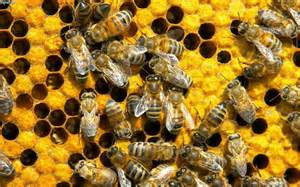
As I stated in the last blog about bees, my bees had been plentiful throughout the summer, filling three boxes. However, I noticed a problem (varroa mites) and treated them dutifully. I saw the results and the results looked good. I was hopeful but eventually was horrified to find that most of the hive was empty. Rather than 30-40,000 bees I was met with 2-3000 bees!

The decision to leave the small remainder of bees to their fate was hard. However, nature rarely gives us a choice and remembering that gave me some solace, if not peace. The bees died shortly afterwards and it took me a few months before I could muster the heart take the hive apart. I eventually did, and cleaned it up even going so far as cleaning the foundation of most of the remnants of my little hive. I was left with some beautiful comb and even some honey stores. Not much, but then I was ahead of the game because my beehive had given its life to do what it had no choice in doing.

I think this is important to remember about death; that there is no choice. Life and death is not a choice and bees are no different. During the last few days the hive was robbed, the queen and her small entourage died and the hive was left empty. It sat as a reminder that it is often a mistake to expect nature to act differently simply because we have a vested interest in it doing so. Nature offers us no choices and that thought reminded me that my dead colony left me with yet another gift: philosophy.

And so I ordered more bees from my local supplier (the bees are local bees with semi-local queens). It was actually a hard decision because as a beekeeper I must accept at least partial responsibility for the death of the hive that I chose to take responsibility for. Mismanagement was almost certainly a culprit in the loss of my hive, but in more ways than one. Varroa mites were also to blame. However, even the mites that were eventually the cause of death were simply following the hallowed and harsh laws of nature. They were doing what they do best: survive. With this in mind I look forward to my new bees arriving in April.

With the arrival of the new bees I will become explicitly involved in the most natural of cycles: life and death, and I hope that my explicit involvement will somehow sway the likelihood of survival for my bees instead of the other way around. I have read that because of the varroa destructor problem that human involvement is now necessary for the survival of honey bees. I’m not sure that I agree with the argument entirely as it was human involvement that created the problem in the first place. I will certainly try to do my best and the bees will do what the bees will do. Life and death to them is simply the law of nature, but I will continue to try to be the best beekeeper that I am capable of being by continually trying to understand the nature of that law.

Killing Chickens

Description White chicken.JPG

I killed a chicken today. I say “killed” because I did not “take its life”; it did not “pass on”. I took a knife and I slit its throat. To kill and animal ought to be an act of respect, and I hope that I do the bird justice when I eventually put her in a pot and make chicken and dumplings with her. She was a nice looking bird if not a bit old. She’d had a good life, which is important.


I also think that it is important for everyone that eats meat to kill their own food at least once. It is never a pleasant experience until after the act of killing when it is easy to differentiate the food aspect from the living creature aspect. Somehow in that split second it is easy to understand how fragile all life really is and the cost that is paid for living. This is perhaps one of the greatest personal motivations that I have for trying to become self-sufficient.


I’ve killed a number of animals over the years, all of which I’ve put in my freezer and eaten, except for a few sheep that I helped someone kill in order to put in their own freezer. Death is certainly part of life, and is no doubt a part of becoming self-sufficient: we have to eat. Self-sufficiency is in some ways self-realization and in the bigger scheme of things, the realization that we are part of a greater cycle which will continue with or without us.


I thought about that I was a part of; the cycle that would begin with the death of the old bird. The owner of the chicken had bought four new pullets to replace the doomed chicken. I would eat the chicken and eventually the cycle would come full circle with my own death. This is not morbid or odd; it is beautiful actually.


More and more, as the realization of what it is to become self-sufficent grows along with my skill-set, I realize the beauty in the idea of self-sufficiency whether it is through my new found love for “Bee TV” (pulling up a chair with a cup of coffee and watching the bees fly to and from their hive), growing a garden, carpentry, mechanics, putting up drywall (I did that last week, one of my lesser favorite skills) or killing a chicken for a friend.


I thought about it and concluded that it would not show the respect due the old chicken had I simply referred to her death as a “passing”, or that I “ sent her to a better place”. I killed a chicken, simply put. But her death symbolizes something greater than can be described, pronounced or understood.