economics

Something for Nothing

There is no such thing as something for nothing.  Our need for cheap goods and services is real, but the ability for companies to offer them is an illusion.  Think about this the next time you walk into a Walmart or refuse to buy quality, ethical food because it is too expensive.  Think about this the next time you hire someone.

Companies do not need to eat; they do not have needs.  People have needs, and when we demand more for less we are demanding that others give up what they need; we are demanding that others give up what they need for what we desire.

The arguments are similar and ubiquitous against this way of thinking.

“I cannot afford…”

This is true, but it is not the cost of quality goods and services that is the problem; companies do not pay living wages, we need to reevaluate our priorities, our economy is based upon a lie.  We have overextended our finances.

“That is too expensive.”

Perhaps.  Maybe you do not understand what it takes to bring “that” to you.  It might be that “that” is not subsidized by your taxes.  Chances are you do not value “that” enough to buy it or don’t realize the true cost of doing so.

“I can get it cheaper….”

Yes, it is probably true that you can get it seemingly cheaper, but at what cost?  The true costs of cheap goods and services are rarely seen or thought about.

There is no such thing as something for nothing because for most of us nothing is simply not enough.
Sometimes…

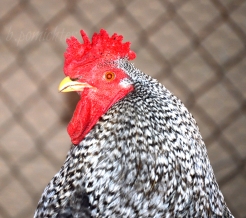
bob the rooster

In Memory of “Bob” the rooster and one of his girls.

This last week we have lost a beautiful rooster and hen; one to a hawk, and the rooster to  (what I believe) to be a fox.  These losses were unfortunate, but the fact remains: this is what those animals do.  They are predators and they were acting naturally.  As a farmer, my natural reaction is and was anger: something must pay, and the hawk and fox were prime possible recipients.  As an intelligent person, however, I am capable of understanding justice.

Sometimes we are faced with difficult decisions and in these situations we must make a choice: to react or act.  I could shoot hawks and hunt fox but for what reason?  There is only one answer to this: revenge.  Perhaps killing the fox is necessary for it will return, but the hawk…and at best such a decision is only partially reasonable.

This led me to consider reason.  As humans we are emotional creatures with the capacity, with the freedom, to act intelligently.  Unfortunately often enough we do not act accordingly.  The loss of my rooster and hen presented a situation in which I was presented a choice: to act reasonably or emotionally.  But I had left out another choice: the middle ground: to act both reasonably and emotionally.

I was saddened to lose my rooster and hen, but I could not get myself to simply kill animals for what they do naturally: they cannot be held accountable and so it would be immoral of me to kill them for acting the way they act.  However, I did not want them to return and kill more livestock.  The logical conclusion, was to accept the losses and try to lessen the chances of the predator’s capability of doing what comes naturally: to give them a chance to learn.

Many farmers would tell me that it is not worth the trouble: to kill the animals, and sometimes they would be correct.  However, I value my farm animals and other animals and their lives in a different way: as living things.  So, according to my values it is “worth” my trouble to find a compromise.  Sometimes a little emotion goes a long way, and sometimes (in order to remain moral creatures) we must learn to value all life rather than simply the life we deem worthwhile.

Two Sides of a Coin

two sides of a coin

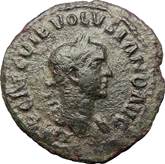
Money is typically defined as anything of value. Money is often used as a means of barter, trade, and for transactions. And so money is not often valued for itself, but for what it can get us. Money, then is useful, but not necessarily valuable. In thinking of this, I realize that there are two sides to every coin.

It seems that much time and effort is spent in trying to become rich in order to buy things that are not necessarily valuable or useful using something that is not necessarily valuable. This seems strangely  a waste (rather than a valuable)  of our time. However, most of us live our lives by this axiom; most of us.

The recent upswing in locavore, organic, self-sustainability and other descriptive ways of living seem to be motivated not by money, but by something far more valuable: happiness. The motivation to turn away from money to “do what’s right”, or to “be more healthy” seems to have its basis in virtue.

Virtue is a philosophical ethical theory founded upon a moral education, which is considered by Aristotle as a good in itself because such a life leads to a higher quality of happiness. Without getting into the philosophy too much, the value of living such a life is found in actually living that life. Money is not valuable in itself. However, living a life of virtue is.

So, one side of the coin seems to be the motivation to be happy, and the other side of the coin seems to be the kind of happiness that matters: the quality of our happiness. Money seems to abide by one side of the coin, but not to the other. Don’t get me wrong; I think that money is a viable tool, a useful means to live comfortably and securely. But I’m not sure that it is the best means.

The current movement towards more viable and sustainable agricultural methods and cultural beliefs is certain to lead to jobs and opportunities that are yet to be seen. But these movements do seem to be good in themselves as well.  We have to be careful. On the one hand, money is a motivator for our dreams, but on the other hand money often undermines the dream itself. Perhaps what we must always remember is that what is useful is often not what is valuable, and what is valuable is not always useful: there are always two sides to a coin.

The Lowest Common Denominator

 lowest common

Often and unfortunately our conversations concerning what we do land upon the lowest perch of human achievement: that of measuring all accomplishments by their economic consequences. This is what I refer to as the lowest common denominator. I cannot accept that the ultimate consideration of our acts is monetarily important at all. When discussing new movements in farming for example, as we are seeing in this country (the US) today, I cannot imagine that the people involved in the agricultural movement are involved only for economic gains and monetary profits.

I do not consider the profit received from my garden, and from buying locally produced meats to be measured monetarily. Rather, the rewards that I get from knowing where my food comes from and how it was treated overrides any economic cost. I would argue that those of us who take pride in learning new skillsets and in understanding concepts that society tends to take for granted are not motivated by possible profits, but by personal gains in knowledge, in peace of mind, in the understanding that what we do can have a virtuous aspect that cannot be bought and sold.

I would suggest that the food-movement not consider itself by the judgment of others that can only understand or are only interested in monetary motivations. It is difficult not to do so, especially when being considered from a public point of view. The phrases “there is no money in it” with regard to small-farming enterprises is easily dismissed with closer inspections of the facts. The argument that small-farms are in fact more profitable than large, agri-businesses if the subsidies to such businesses are taken out of the equation are beside the point. More important to the point is that most small-farm enterprises are not motivated by money alone. The point is that in not relying upon agricultural subsidies, small farms are more autonomous, offer a more honest product, and are not held accountable by faceless stockholders but by local consumers that many know by name.

While it is true that to live in this society, money is a necessary component; it is not true that money is the most important component. This viewpoint has led us to the deplorable situations that we find ourselves in today both in and outside of agriculture. The small-farming movement that seems ubiquitous in the country today reminds both those who are brave enough to venture out and those who are thoughtful enough to support such operations that money is the least important of all aspects of our lives. It is by the standards of bravery, of thoughtful action, of honesty and honest work that we ought to judge ourselves and expect others to judge us by.

While we cannot often fight the filth of large agribusiness we can battle the ignorance that allows such business to flourish. However, I would argue that we cannot do so by judging ourselves and what we do by the lowest common denominator. There is so much more that we are motivated by other than money. It is important for us involved in this movement to remember this fact and remind others that money is not always worth the trouble.