education

Truth is Like Poetry 3

Problem: Critical Thinking

It is not a secret that common sense is not that common, but it is necessary.  Common sense is nothing more than the ability to think logically and critically.  And although it is not common and at the same time necessary, logical, critical thought is the only process by which we can problem-solve and come to conclusions that are both not contradictory, and can be applied with no doubt and trustworthy consequences to objective issues and subjective arguments.  From philosophy, to engineering, to the scientific method and the arts, critical thinking is core.

But critical thinking takes practice. Common sense is learned and not simply a “natural state”.  Critical thinking entails educating one’s self to be a critical thinker and then putting in practice those basic logical methods.  This takes work, and this is the first problem.  Secondly, most people in power do not want a thinking populace.  Such populaces do not follow orders, question authorities, and generally do not fall into place and so it is not pushed in education.  As a result public and private education systems (for the most part) are based upon ideologies (religious and political) that do not coincide with critical thinking.  John Stuart Mill summed this problem up very succinctly.  Paraphrased, he wrote that if a leaders do not educate the public, they get what they deserve.

Solution:

Like all solutions, education is key.  But here the solution itself needs work.  Most countries (some doing better than others) use public education as a method of nationalizing its citizens, brainwashing for meritocratic and economic reasons.  However, education must be based, solely, on critical thinking methods in all subjects.  Secondly, but perhaps more importantly, non-critical ideologies must be phased out, taught out, and starved. Education, in short, must be overhauled. We have examples to follow, especially in Scandinavia.

Secondly, a quality, critical-thinking based education must be made available and accessible to all within the society, no matter their economic, social, or cultural standing.  This “extreme” idea is not new as it is one which several founding fathers, including Thomas Jefferson, proposed it. This will take a social and a political push.

Finally, from the Judaic traditions to the eastern traditions, from nationalistic to patriotic, from social to cultural norms, ideological beliefs must not be immune to critical analysis or consideration for they are the core of the problem. ideological beliefs have no place in educational systems outside of historical interest.  No leaf shall remain in the shadows, hiding from critical consideration.
Pick Your Paths Carefully

How to Choose Between Two Paths in Life | JP Morgan Creating

Some may remember a series of books by Carlos Castenada written in the seventies about a “real, spiritual”** adventure taken by Mr. Castenada, soon afterwards debunked.  In these books the concept of human battles was presented; battles against fear, power, clarity and finally old age.

Fear is the first of the four battles that we must, as individuals and societies, overcome.  While fear is evolutionarily founded on the overwhelming desire to survive, in the context of our modern lives it often misinforms us given our homogeneous societies, given the social pressures that we all endure: mind your parents, go to school, get married, have kids, and retire.  Fear, I have found, often leads many people down paths that they never wanted, that they never desired and stunts intellectual growth.  In short, most of our fear is disconnected from its evolutionary roots of survival and has become a road block to personal growth.

Once we realize that fear is sometimes founded, but more often not founded in reality, we recognize the power that the realization offers us.  Power comes in many forms, one of the more common forms is money.  With money comes security and with security comes the illusion of power.  Our happiness, our contentedness, our self becomes defined by the power that we hold as all important and they (in turn) become dependent on the power that we believe we have.  Soon enough the slave becomes the master.

Our happiness, our contentedness and our security safely put in their virtuous places we are enlightened to the fact that our lives are short and perhaps insignificant in the grande scheme of things.  Perhaps we recognize that independence is based upon understanding and curiosity and that it is these concepts that lead us to the ever illusive peace and contentedness that seems to elude so many.  The universe opens up, we achieve Nirvana, we find god(s); we are clear about our place and purpose in the universe.  And then we are old.

Our bodies let is down when our minds should be at their best.  Aches and pains sneak up on us as we watch the universe expand beyond our comprehension.  We have lived enough years to realize the regrets that we fought so hard not to have, and now some changes, some things, are outside of our grasp.  Our clarity drives these truths home, and we watch as our happiness is now in danger.

It is at this point that we must make our choice, according to Castenada: to jump into the abyss leaving all we know behind, or to fade toward the light and into the oblivion of the masses.  The one leads to loneliness, and the other leads to loss of self; and it is at this point that we face our old enemy fear again and the journey begins again.  Pick your paths carefully and fight like a Viking.

**I believe this phrase to be oxymoronic.


Listen!

bee

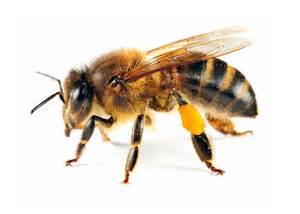
I lost a beehive last year. It was a devastating experience. Everything seemed right; it was a strong hive, but alas the hive failed. I take responsibility. However, this is not about the past except that we must learn from it. The past is, in fact, useless unless we do just that.  But what do I need to learn?

And so this coming Saturday I will start the process over with the experience and education that I wracked up last year. This Saturday I am starting over with two hives. To say that I am nervous is actually not accurate; I am not nervous, but hesitant. I don’t want to fail because failure in beekeeping means that lots of life is wasted.

I am starting with two hives because I am told that it is insurance, that two hives gives the keeper a way to compare; two hives will help educate me. I only hope that my education does not cost the bees their lives. I will do my best, but I know that the bees will do their best. They don’t have a choice, but I do.

The choices we make define who we are, failures and successes. The choices we make define who we will be, and who we have become. I believe that the death of last year’s hive defined who I am today, and inevitably the hives that come on Saturday will define who I will become.

Last week progress was on my mind, and progress can be defined in many ways; some bad, some actually, well…progressive. To fail and to step back up to the plate says a lot about a person. I must remember that bees do not fail in the sense that I do. They simply act; it is us that determine pathways and judge failure against success.

The simplicity of the beehive is amazing; the complications that we create are just as remarkable. In studying all winter long, with the readings and online research I need to remember that complication is not necessarily progress. Progress is simple: the recognition of the shortest, most realistic path to the goal.

Bees do not need much, and they ask nothing of the individuals who decide to “keep” bees. It is in fact not necessary to “keep” bees at all. This year I will endeavor to stay out of my own way and more importantly, to stay out the bees’ way. This year I will progress by not necessarily acting upon the bees, but learning how to act with the bees.

This sounds so simple, but simplicity, I have found, is not so simple.   I can only hope that the “girls” are able to teach me to step back, give them room and not worry so much. It’s quite the advice from such a simple creature. If only more of us could listen.

Garden Tips You Don’t Want to Hear

Damaged plant on right Damaged plant on right

#1 Raise Your Expectation to Fail

This is a tough lesson to learn and does not get easier with time. However, as Joel Salatin of Polyface Farms is quoted as saying: “If something is worth doing, it is worth failing.” Failing is a key element in learning, and learn we will if we only remember those things we failed at.

#2 But…Lower All Other Expectations

I expected my garden to double the output this year. It is the second year, and I have bees. I expected my bees to give honey this year; although it is the first season they’ve had in their new home, they are doing so well. I expected my soil to come into its own; it is the second year that I’ve added compost, grass clippings and manure. I expected so much.


#3 Don’t Give In

I watched late in the summer as my tomato plants started developing yellowing leaves on the bottom, and continued to watch as the yellowing leaves made their way towards my beautifully big green tomatoes. I watched as my onions fell over but retained their green stalks and the bulbs quit growing. I watched as my leek went to stalk, and the yellow cherry tomatoes I planted reached and reached for the light that was not available. I watched as my peppers seemed to not grow and was reminded how fragile life is, but how persistent the human spirit can be.


#4 And Remember that Nature Rules.

No matter what we do; no matter how much we care, nurture, pick, pluck, plant and ply: nature rules. It is not we that are the masters of our lives, nor is it a god. Nature it has been said is the most effective serial killer there is. If that is not enough, nature has only rules that it itself creates. As we go about our “important” business of living we forget that we ourselves are part of nature and not the other way around. Our gardens remind us of that when hale pounds our plants pitifully in the middle of summer, and we watch in horror as unknown diseases and plights overtake once healthy dreams. But remember that nature does not dream and you do!


#5 Do Your Best

Do your best, but remember that doing your best guarantees nothing (see #1-4 above). Do your best because doing your best is the meaning that we create in our lives. While it is true that we are what we eat, it is also true that we are what we think. If you do not do your best you have already wasted your time and nature will not lie to you about it.


#6 But Remember Your Best Is Never Good Enough.

I know that this seems harsh but there are plenty of people that will attest to this for you. I know that in school those nice “teachers” tended to remind you that everything will be OK, but they were lying. You received grades that you did not earn. I know that your friends will compliment you on such a fine job you’re doing, but they are just being nice and you know when that’s the case. Your best is never good enough because when it is you cease to learn and you will be reminded harshly of #4. On the other hand if you ever find that you believe these people it is probably because of #3.


#7 Remember: What Else Do You Have to Do?

The human lifespan is short. There is not enough time to waste on excuses although we all waste ample hours in doing so anyway. Your job is only an excuse. It may be that it pays for your garden. Or perhaps gardening is your job in which case #1-6. Either way you must eat and why not know what you are eating? Your children are only an excuse. They need you to live your life and not theirs. Give them something to look up to: teach them the importance of self-sustainability and food. Life is what we make of it. Ask yourself what you want to make of yours and perhaps more importantly why. Go out and tend your garden there really isn’t anything more important to do.


Being Human

human

The school semester is about to start again and it reminds me of something that is very important: learning.  Actual learning seems to be a rarity in our society, filled with instant gratification through things such as computers and food.  And what do computers and food have to do with learning? They are perfect examples of how much we do not know.

First, while it may seem obvious how computers relate to learning, as with many things we do not often discuss the topic in full.  The internet is a seemingly infinite source of facts, figures, and what is commonly called knowledge.  And while the internet is an amazing invention that has no doubt furthered many aspects of learning, it is not a place of learning.  The internet has made available information which was before either not available or extremely difficult to find.  Access to information is not learning about the information.  It is simply access.

Computers are not only a vehicle for the internet, however.  Computers allow us to live the way we do in ways most of us do not think about.  Without computers most of our infrastructures in our societies would fail; people would not get paid; lights would go out.  Computers help in countless ways, but the cost of that help is high.  Reliance upon computers has created dependence rather than independence.  Knowing that infrastructures exist, and that we rely upon them is not knowledge: the facade of knowledge is not knowledge.  It is simply rhetoric.

We do not know how the infrastructure that we rely upon works, and in fact, we often do not know when it does not work. Our food supply is a perfect example. The grocery store provides food in the same way that computers provide access. We can simply walk into the great building and there are rows and rows of “food”. Most of the edible products in a grocery store are not food in the real sense of the word. They are a combination of HFCS, salt and fat. These ingredients are often processed through means of chemical and mechanical manipulation. Furthermore, these products are not created to feed, but rather to make a profit. The cost of profit over food is unhealthy eating habits, addiction, and a lowering of all of our qualities of life. Having access to products to eat is not necessarily having access to food.

Many of the products available to “consumers” (the word to describe those who buy and use) are ready-made, pre-packaged, and designed to be quick and easy. Michael Pollan wrote that it is not thought that differentiates human beings from other animals, but cooking. These ready-made, pre-packaged units (the word used to describe what a vender is selling) take the necessity (and knowledge) of cooking away, and hence a bit of our humanity away. Adding water or turning on a stove is not necessarily cooking; it is preparing.

And so what do computers and food have to do with learning? Learning is a process that takes time; there are no shortcuts. There are no shortcuts because the process has to do with understanding, and to understand one must study the long and short-term implications. Computers create easy processes that do not rely upon long and short-term implications. This is not to say that computers are not useful tools for learning. But it is to say that the process of learning does not change even though a computer is being used.

The same goes for food. A credit card can buy a shopping cart full of products, but these products are not necessarily food in the real sense of the word. Furthermore, grocery stores and corporations that sell and provide products for consumption are not always interested in the consumer knowing the difference. Learning the difference, however, is a key component of knowledge: the byproduct of learning. Finally, and perhaps the most insidious implication of our ignorance, or perhaps indifference, towards learning is that we lose our independence without ever realizing it. Cooking is the key foundation to independence, for without it we are truly no different than our not-so-distant cousins in the forests and jungles. Simply being a human being is not being human. It is what we learn that makes us people.