environment

Paying Attention

On a whim, we bought four chicks from a well-known agriculture store to supplement our existing flock.  After a few weeks, we find that we have three roosters and a hen.  Right now they’re cute; they run around playing and chirping, but I know the future for the three little roosters.

That future is a reality for people who have decided to be self-sufficient.  The first lesson to learn is that self-sufficiency is not always bucolic, it is not always so peaceful.  Every day I take the little chicks out of their box in the coop and transfer them to the chicken tractor to enjoy the grass and sunshine.  And all the time, I know that the rooster’s days are numbered.

Last year, I “processed” about sixty five chickens and two pigs.  The killing is not easy, but the passing of the days with the animals was enjoyable.  Don’t let anyone lie to you: animals have a personality and I firmly believe that they smile in their own way.  This does not make my job easier and nor should it.  When it becomes easy to kill or worse, enjoyable, then we as a society have a problem.

This problem shows itself in many ways, often subtle but equally disturbing.  Taking a life, human or otherwise, should never be an act taken lightly, but because we often want easy, it has become just that.  Every morning I take the chicks out, and I let the hens out.  All of them have a limited time on earth and so do we.  Death is inevitable, but it is the time before death that counts.

Maybe we should pay attention to life a bit more and we will finally realize just how precarious it is.

A Particular Failure

To do what is right is extremely difficult.  The agrarian experiment entails giving up niceties without giving up civilization; the grocery store is still a reality.  However, while visiting the “walk of shame” we are faced with choices: should I buy that bag of bread or bake my own?  Perhaps I should not buy those paper towels and just use my cloths I have at home?

Sometimes we fail to make the right choices because it is too easy to make the wrong choices.

The list goes on: pork, beef, flour, milk…

The opportunities are always available: farmer’s markets, neighbors, localvore, and just doing without.

Sometimes when we fail, we know that we have failed, or perhaps more honest: that we are failing in the moment; that we fail ourselves is the worst.  On the farm, failure is, as has so many times been said, not an option: the work must get done, and there will always be more work.

I cannot feel but there is a correlation in politics today.  This country has made the wrong choice because it was an easy choice to make for some.  To make the right choice from this point on will be difficult.   And while I do not wish this simple blog to become simply a political  podium, and cannot but hope that after this failure is finally finished that we can turn and perhaps after acknowledging that we have failed our selves, can pick up and do the work that is inevitably waiting as it is until our dying days.

Worth Its Weight in Gold

good as gold


Self-sustainability, individualism, independence; these concepts have analogies in the empirical world: eating, working, and learning respectively.  Homesteading takes the concepts and their analogies and reminds us that they are inexplicably woven together.  There is a logical, a philosophical beauty to these three concepts that is brought together by realizing that relationship that we all have to the world around us.

This is not “our” world, but it is the world in which we live in.  When we lose sight of this simple fact we lose the ability to be self-sustaining.  It is at that very moment that we are no longer independent individuals; it is at that moment that we cease to work and learn. What we eat is of no consequence, or so we think.  But, without realizing it (perhaps) we eat what we are given.  Think about this the next trip to the grocery store.

The adventure of homesteading is like all adventures, however: it is wrought with confusion, conflict, contrivances, and frustration.  Homesteading is a true adventure because it is defined by the world in which we live, and not by us or our desires.  The goal of homesteading is to learn to work, and to work to eat.  Nature (as usual) had it right all along.

Homesteading is a political statement as well.  To truly be an individual we must be independent and to to be independent we must be self-sustaining.  If in the act of learning to work in order to eat we can remember that in doing so we are also creating our individualism by independently being self-sustaining, we will have come a long way in becoming a person rather than simply a human being.  And that, my friend, is worth its weight in gold.

Mothers

mothers

I am reminded, on Mother’s Day, of those mothers that do not have a voice, but love nevertheless.  I am reminded that all of life has a mother; one who loves in their own way, even if it is not ours.  I am, of course, referring to the mothers that we all often forget.  I am reminded of them when I walk out my door.

I hear them in my yard and see them scamper up trees and into the wood pile out back.  In the mornings I see them walking slowly through the forest on our property.  And sometimes I hear them in the back and have seen their black flash run through the woods.  I read about them and see pictures of them lovingly licking their young children or sleeping.

I must admit that I have disturbed a few when I lifted some wood or mixed the compost pile.  They look up at me and I feel a shutter run through me.  I quickly replace the wood, or cover them back up; them and their young.  I hear them chatter angrily when I let the cat out, and I hurriedly pack poor old Fimp back inside.  I know there are mothers that are afraid, that are hunted by the heartless among us and they too have mothers.  I cannot seem to get myself to read or watch about these things.

I would ask all of you to give a thought to all the mothers of the world and consider that they all, in their own way, love their children.  I think, especially in this age of inconsideration, that it is time that we consider those that deserve much more than just a passing thought.  I love my mother, and she loves me.  I also know that there are others do the same.

Spring

spring

The snow gave way quickly and just as quickly came the green.  The greenhouse went up just in time; the plants, some of which I thought must have died, buried under several feet of snow for months, poking their green sprouts out of the yet still cold earth.  This is no miracle; it is Spring.

The frogs in the back pond reappeared after a long hiatus, and frog eggs line the shallow pools in the back “roads” on the property.  I’ve seen moose tracks and more deer and turkey tracks than I care to count.  The fox is about and I hear the hawk’s screech almost everyday.  The garden is waking up and the plants stir in their pots anxious to get in the dirt.

As always Spring brings anxiety: some plants got burnt up in the newly built greenhouse (my bad).  But, most are fine and I kick myself for not putting spinach in a month ago.  Every Spring I forget what I remember the previous year.  Perhaps this is part of Spring too.

Small buds appear over night on the Birch, the Maple, the Oak and the Cedar and Spruce trees seem even greener than normal.  The fireplaces are cold and everyone is outside.  The wind blows the glorious warmth around and the leaves, freed from the snowy prison, take flight.

We all feel a bit more free in the Spring.  Perhaps Spring is when happiness gets a chance to shine, just for a little, to fly around with the leaves and rid itself of the heavy weight of winter worries.  A new start for an old, old cycle.

Spring into the Past

dirt

Sometimes we long after times that are gone, things that will not come to pass, and futures that are certain.  But we all know that these things are illusions.  Time passes and we all have different ways of noticing this.  Some of us stare at clocks on the wall or time displays in the corners of our screens.  Some of us count the nights and days, the weeks and perhaps the months.  I used to count time by the summer breaks I had.  It all works.

But time passes no matter what we do and we can only do with time what we decide to do with time; time will pass.  In the past I’ve watched time start with new seedlings and time continue with new plants in the garden.  I’ve watched time pass with the coming cold in the air and with the smell of beer brewing; kale boiling and the smell of canning the summer’s crop.

Those times are past and are yet to come.  Those times cycle through even if we do not notice them.  Sometimes our time is spent in the past, looking out over the horizon that darkens with every waking day.  That does not help.  It does help to think of the possibilities that the future holds.  Perhaps that we people garden.

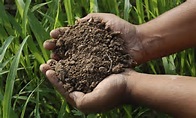
With a small container and some soil we seed the future; the past seems not to matter.  With water we nourish our hopes; regrets seem forgone.  With soil we reminded that the past is nothing more that possible futures.  It is, after all, where we come from and where we eventually will come to.

The Custodian

the-custodian

When we have land we do not own it.  Rather, we are custodians.  What we do with our newfound role is, of course, up to us.  But ought we do good?  A custodian is a caretaker and the land, if we listen, will speak, will tell us its wants and needs.  It takes time and a few long walks through the forests and the fields.  In time, though, we can come to understand the language of the land.

I am afraid that the custodial role is a disappearing one.  It seems that landownership is taking over the caretaker’s careful and thought out intentions.  When we own land it seems that we assume that we have rights to do what we want…no matter what the land needs.  Ownership is economic; taking care is ethical.

Out in the forest, chainsaw in hand, I cut dead fall (those dead trees that have fallen and have hung up on other, often young, live trees.  Caretakers change the land for a reason, like landowners, but caretakers change the land for reasons that have to do with the land and not ourselves.  Caretakers must make choices.  Do we manage (if that is possible) our land for beauty, for use, for both?

To be a caretaker is difficult work, but to recognize the importance of being a custodian of the land is perhaps harder yet.  This concept is not an idea that we wake up with.  We must realize our roles as custodians and also realize that such work, such roles (as so many are) are thankless.  In a world measured by profit the custodian lives in poverty.

If land needs a custodian at all, shouldn’t the custodian recognize that their very existence is dependent upon the land and not the other way around.  Perhaps, in the end, this is the difference between owning land and caring for land:  the custodian recognizes his dependence and the landowner does not.  I would hope that most people get a chance to care for land if and only if they can also recognize that their very existence is dependent upon what they do with it.

Learning How to Read

snow-forst

Many of us love to read books, great articles in good magazines, and perhaps less and less the news.  But after years of reading I am learning how to read…yet again.  There are certain topics that are difficult such as philosophy (a love of mine), and scientific books, even layman science is difficult to me.  However, having recently purchased a property that I intended to make a farm, I am learning how to read again.

In the crisp, New England mornings I walk my dog through the months old snow and the half-century old forest that I own.  I’ve done the walk twice a day for some time now and every day the land teaches something new.  A crevice here, a creek that is burrowing a new furrow; hills and dales, and the trees: oak, birch, red and white pine, hickory, poplar.

Farmers, I think, know what they want, but few know what the land needs; only the good ones, and to know this they need to know how to read.  Walking the land envisioning a field but the land won’t have it.  Perhaps a fruit tree grove there, but the land has started one here.  We own land, but we don’t control land.

Land seems pliable and passive, but don’t let it fool you.  It is the master of its own fate.  We are ego-filled and short-sighted.  The land is wise and counts eons, not seconds.  It is in no hurry as its age is endless.  It knows that we are of it, and by it.  we see land as potential, but it is full of the past.

I am learning how to read the land, and it is a difficult lesson.  I am impatient and the alphabet is foreign.  But the land is patience, and its alphabet it created.  The words ooze out of the fog of my ignorance…slowly.  But as I learn to read I realize that even the choice to learn is an illusion.

Material Goods and Good Material

materials

It’s been snowy and awfully cold here these past few days (-7 f) and the wood burning stove has been busy in the shop, as have I.  But one thing on my mind has been in these holiday  times: materialism.  Of course, it is with us in the west most everyday, but during Christmas it seems, well…so over bearing.

However, recently I was reminded that there is a difference between material goods and good material.  We do live in a material world, but we need to remember that we live in a material world; a world of things and stuff.  These things need to be treasured and looked upon as the good that they are.  I was reminded of this yesterday while trying to decide what to do with the two massive cherry slabs I recently acquired.

These slabs remind me of the importance of putting importance on material things.  There is a cost to all the things that we buy, from iPhones to cherry slabs but it is not only the monetary costs, it is the real, the material costs that we need to always remember.

Looking out over my acreage, it is covered in forest, I am reminded of how much lesser the land would be without its beauty; I am reminded that this beauty is not wasted, but is wonderful; it is not resources, but reality.  The difference between material goods and good material is the real cost of taking these things from the world that we live in and the world we want to live in.


Sustain Sufficiency

sustainability

The fall has come here at our new forest/farm.  The renovation on the bathrooms is almost finished and the months past have flown by.  The question still remains: is self sufficiency a pipe dream, is it possible?  This discussion, I’m sure, is common in households that have decided to turn their backs on the supermarkets, the food-consumer concentration of non-sustainability, and suburbs that offer comfort and the all-consuming security.

First, self-sufficiency.  The problem, it seems, is energy.  How to sufficiently produce and continue to produce the energy that it takes.  There are two possibilities: add to the energy production or take away from the energy consumption.  Alone, there is no option: we must take away our need for energy to be self sufficient.  So, self-sufficiency becomes a community approach to living at some point, which (in order to be moral, to be healthy and to be virtuous) must be sustainable.

Second, sustainability.  The problem is energy.  How to continue to sufficiently produce the energy that it takes to be self sufficient.  There are two possibilities…

So while self-sufficiency and sustainability are not the same they are reliant upon one another: to sustain self-sufficiency we must have sustainable energy sources.  This is the catch and the secret.  This is the unending education that I am reminded of as a look out over my new acreage  and feel the damp coolness seep in, watching the golden leaves fall.

I throw another log on the fire and sip my hot coffee.