environment

A Time of Peace


Image


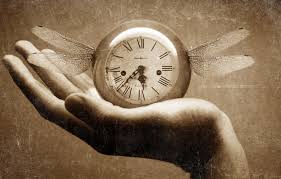
There is something calming about noticing a flower that you have never noticed before; there is something that is exciting about waking up in the morning and seeing that the plants have been busy the night before. There is something that is humbling when we realize that life goes on without our taking the time to notice, that we are a mere blip in the endless sea of time that laps over the beachhead.


That life goes on without us forces us to realize that we live on borrowed time; no one owns their time, and peace of mind comes from realizing that we are on borrowed time. I notice this when I stop to realize that my new bees only live for six or so weeks. I realize this every time I think of the twenty-five years of marriage that I have enjoyed. These relationships and the things that we deem as so important come as waves on a beach, dissipating into the sand. Time is limitless but our time is limited.


Our time is limited, but what we do with our time is not. How we spend our time is up to us, but that we spend our time is not. Perhaps this is why peace of mind is so often found in nature, on a piece of land: time is free there because nature is time incarnate: timeless.


This is perhaps the reason that real peace of mind can only be found in noticing a flower that you have never noticed before, or hearing the buzzing of a few bees in the honeysuckle. This time is never wasted because it is time not being spent. I am learning not to waste my time because I am learning that my time is borrowed. I am learning to spend my time wisely because again, my time is only borrowed. That flower that I notice today will be gone tomorrow, another taking its place. That piece of land that is so beautiful costs nothing to notice, but not noticing it costs so much.


The wrinkles that show up on my face remind me of the things that are so important, and that they are important only because my lack of time makes them so. I have found that it takes time to enjoy peace of mind, and that such time is well spent. I have found that like everything else, truth is embedded in time itself: it is a process, and such is life as well as death.


There is no cheating time, we only get so much. We will only have time to barter with in our dying breath as Mr. Death comes to take the last coins of seconds that we have left. This is why it is so important to spend your time wisely. Notice the flower in the garden, the bees in the hive, the garden and everything else which is timeless. It is only these things that are free, and perhaps because of that bring peace of mind. Peace of mind comes with no buyer’s remorse. Perhaps this is because in the end it is the only thing that gives us a time of peace.
 

Grow Like a Tree, Not a Fire

Image

There seems to be much anger in our society today.  It is prevalent on the streets and highways and in the stores where we shop.  Sometimes it is outright and sometimes a bit more subtle, but ubiquitous in the end.  This anger, I believe, is a result of the slow realization that we are not who we want to be, but who we have been told to be.  We have found that there are no shortcuts to being who we want to be, but in realizing this we also realize that we have taken one.

Barreling towards more ease, more consumption, more and more, and more… and calling it progress is the justification that our societies continue to use to steal, destroy and decimate other countries, other people, but most of all the land itself, the places that we live.  We call economic progress freedom, and we call luxuries the necessity of that progress.  Many of us pride ourselves on being independent, but in the back of our minds we know there really is no such thing.  Religions preach to us that we are special, but we are not.  Our governments tell us that there are political answers, but these are lies.  We tell ourselves that “it’s not as bad as all that…” but it is.  We have been sold down the river, and continue to sell ourselves as so much product. As the present, living societies we have a choice: to buy back that which our forefathers and ourselves have sold for cold hard cash, or perish.

Wendell Berry writes: It is foolish to assume that we will save ourselves from any fate that we have made possible simply because we have the conceit to call ourselves homo sapiens.” (Common Places)  It is that conceit that has taken what actually does make us special: the ability to think.  We have become proud of our ignorance.  Rather than think we react, we demand, we press and desire.  We cannot continue in this fashion!  Our conceit leads us to believe that we can continue to take without giving back.  Our conceit leads us to believe that we have a right, a duty, to reap benefits economically at the cost of environmental degradation.

What did our forefathers sell in order to reap economic benefits?  What was the priceless thing they sold for the pittance they received?  It was an idea.  They sold the idea that abundance was not endless; and that we belonged to a place, rather than being the owner of a place.  The ideas that they sold, however, are facts and they sold them for wishful thinking and on faith.  For a handful of dollar bills we continue to sell our future to a few that still remain in the trance of greed and the belief in endless abundance and rights as defined by economy rather than responsibility.  With the lie that abundance is endless, we have been taught that to work with nature is to be a slave and to use nature is to master it.  They were wrong, and we are wrong for continually accepting their errors.

The callouses on your hands and the sweat under your hat that are gifts from working with nature are signs that you are free, not the ability to buy and sell nature as nothing more than a commodity.  The knowledge that you are responsibly effective even at the cost of industrial efficiency is a sign that you are free: the craftsman rather than the conveyor belt.  The realization that the “smell of money” is the same as rotting flesh, but the smell of fresh grass and pasture is the smell of life.  These things and that desire is not need are the starts of actualizing freedom.  The freedom to fail, and doing so honestly is the freedom to learn and that is the start of progress, and eventual freedom.

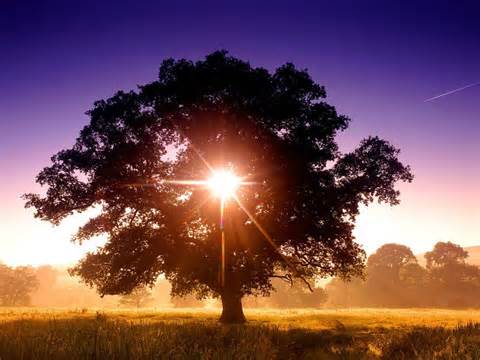
I believe that we are angry because we have been sold a bill of goods that are worthless, that make life worthless, that make us worthless.  We have been sold the rotten idea that the land and the animals around us are there to be used and diminished at our will.  We are angry because as we do, we have realized that we continue to wilfully diminish ourselves.  We have been sold the shiny penny of an idea that ease is freedom, but it is not: it is entrapment.  We have been sold that our sole motive in life is to make our lives easier, but ease is usury that must be paid back with the difficulty that is reality.  We must realize that in laying down the cash for things that we have no right to buy or to sell is to redefine who we are, who we become, but not who we want to be.  We will die by credit, but live by work.  We will die in ignorance or learn to respect the very thing that gives us life  In order to quell the anger that will eventually subsume us, “We must learn to grow like a tree, not like a fire.” (Common Places)