farming

Unexpected Places

Happiness from the most unexpected places, even for moments in a day.  There is a certain look in the eyes of creatures that if we learn to read them let us know that we are not the only ones that experience the world in ways that make us wonder.

When I go out to the workshop I must often wander my way through hens running for a snack.  I pet a few as the clucks of anticipation follow me to the barn.  The younger pullets are sometimes like the dog that follows me around the house when I’m in.  Her comfortably perched on my bed after the morning walk.

The cat, not to be left out, nibbles a bit of food and then runs to the door to roll in the dust of the farm; old tree scratching posts and sun spots offering the warmth of the world.

At the corner store.

“I love that smell.”  she says as she hands me my sugar for the bees.

“What smell is that?”  I ask.

“The smell of wood; you’ve been working with wood.”

I nod and tell her that I have and I notice that happiness comes from the most unexpected places.

Nature vs. Nurture

Companies have begun to “grow” meat products.  These are started with DNA from the various animals that we eat and then are grown, like a plant.  There is something humane about this, at least at first glance. These meat products lack any vestige of conciousness; they are merely food without the death.   I kill most of the meat that I eat, and I don’t like to kill things at all.  But it’s honest and the animals always have a good life.

More and more plants are genetically modified to resist diseases or grow quicker; they are modified to last longer.  And there is something useful about this, at least at first glance.  These plants are often grown with a built-in pesticide or a gene that helps them resist cold temperatures.   I grow most of the food I eat and I don’t like to deal with the pests that enjoy my gardens. But I’ve found that natural remedies tend to take care of the problems.

Less and less people know anything about the food that they eat, where it comes from, what has been done to it, or who controls the food supply.  Grocery stores are easy, plentiful and sometimes a bit expensive.  I don’t like grocery stores because food is viewed simply as a product rather than a staple, and is often not respected.  There’s one right around the corner, near the farmers market.

Farms are no longer bucolic and healthy places to work.  They deal more with drugs and chemicals than with animals and plants.  Farmers are slaves to the companies and companies will soon phase them out for autonomous machinery.  The grocery stores won’t notice.  I hope someone does though.

A Particular Failure

To do what is right is extremely difficult.  The agrarian experiment entails giving up niceties without giving up civilization; the grocery store is still a reality.  However, while visiting the “walk of shame” we are faced with choices: should I buy that bag of bread or bake my own?  Perhaps I should not buy those paper towels and just use my cloths I have at home?

Sometimes we fail to make the right choices because it is too easy to make the wrong choices.

The list goes on: pork, beef, flour, milk…

The opportunities are always available: farmer’s markets, neighbors, localvore, and just doing without.

Sometimes when we fail, we know that we have failed, or perhaps more honest: that we are failing in the moment; that we fail ourselves is the worst.  On the farm, failure is, as has so many times been said, not an option: the work must get done, and there will always be more work.

I cannot feel but there is a correlation in politics today.  This country has made the wrong choice because it was an easy choice to make for some.  To make the right choice from this point on will be difficult.   And while I do not wish this simple blog to become simply a political  podium, and cannot but hope that after this failure is finally finished that we can turn and perhaps after acknowledging that we have failed our selves, can pick up and do the work that is inevitably waiting as it is until our dying days.

Stupid Questions

We have a broody hen.  For those who may not know, a broody hen is one desires “motherhood”.  Our hen has been broody for about 1 1/2 weeks so far, but keeps changing boxes.  The cure is one of three things: 1) wait it out, 2) let her lay on eggs, or 3) buy some chicks and give them to her.

The natural thing is to let her lay on eggs, and we are trying to be as natural as possible: nature does know best.  However, she keeps moving boxes after a few days and by then the eggs are bad.  Is this natural?  Perhaps it is.

One thing I’ve learned from working on a farm is that the best method is the natural method; there are really no exceptions for this: nature really does know best.  But what’s in it for nature when a hen keeps moving?

The question, I think, is wrong headed: nature has not motivated goal, no purpose.  When I go into the hen house and my broody hen has moved it is me that wonders, not her.  Nature, like farming, is messy and running blind.  As farmers we really just hang on for the ride and try to find sunny spots to plant things in; we try to give our animals the best lives we can.

We fail much of the time, but much off the time we try to be farmers rather than caretakers.

My broody hen lays in her box because that’s what her body is telling her to do.  Maybe if we listened to nature a bit more we would stop asking such stupid questions too?

Producing Good Work

One of the more difficult things to do is to explain to others what it is, exactly, that we do.  As a newcomer to homesteading, this is especially difficult.  Most people are not comfortable with the vaguely nuanced answers that sometimes come with homesteading.

“I’m a farmer…”, you might begin.

But, there’s more.  What about the carpentry?  the mechanics, the weather, the forest, the land?  What about the canning and the cooking?  What about the slaughter and the butchery?  It takes a lot of work to eat; more than most realize.

“I’m a homesteader…” you usually end up saying.

But that is ambiguous and what about the money?  Perhaps the issue and the real question is money: people want to know what you do to earn your living.

Nowadays the new homestead is demanding some demolition: tearing out drywall and knocking down walls.  Unscrewing screws and pulling up nails; there’s the cleaning up and the three dumpsters (so far).

The answer was given while watching video: “I earn my living by doing good work.”

Work, Rest, Repeat

stress

There’s only so many hours in a day.  That is the lesson to learn if one is to try to take a self-sufficient idea to a self-sufficient reality.  Some of those hours are better spent resting and some are better spent working.  There is a balance and I notice it when I swing by (thanks to J. Mellencamp for that bit of word play).  This week was to be the week where both the greenhouse and the woodshed were to be started (not started) as well as my wife’s desk (started), and the cabinet doors and closet door for a new built in finished (done).  I did mention to catch a bad head cold.

I don’t believe I’m lazy, but looking back over the week the projects fell short.  But is that really the case?  There must be time for rest and relaxation; we all know that.  Taking time, however, is a different story.  Work defines us to a great extent and there is nothing wrong with that, but the guilt of not getting all the projects going is ridiculous.  There are those out there that feel this way and know what the importance of rest and relaxation are.  They also know how difficult it is to do when there is a list of things to be done.

Self-employment carries the weight of work rather than the joy of work, but this is unfortunate.  Often those self-employed become that for the simple reason of making decisions for themselves.  However, the reality is often the opposite: the projects needing to be finished make the decisions for them.  There is nothing wrong with having to work until late in the evening or even “crazy” hours, but there is something skewed to the thought that one must do this.

I, like many, enjoy working and the feeling that comes with finishing a job, doing it correctly and being able to look upon something built with my own hands.  This is a craft-less world that needs more time, not more things.  This is, perhaps, a good thing to remember when we wake up in the morning with a list of unfinished projects or unfinished business. The business of rest is equally important and (as I am finding) equally difficult as business as usual.

After Death

life-afte-deathAfter years of living in cities, longing for the country; perhaps some peace and quiet, I look out over twenty two acres of forest and a half acre of tilled earth to become garden next year.
A dream come real is no longer a dream; a reality in the form of work, wood and wonder.  Reality offers it all and reminds us with the birth of reality comes the death of a dream.
Simple needs become clear and concise.  They are many reminding me that a simple life does indeed necessitate complication.  Work is the key word, the kind of work that goes beyond a scotch in the evening listening to music and imagining and composing wishes.
Happiness, the quality of contentedness that so few find is possible, but the road is long, and comparisons begin to take the joy away from the reality.
For those who wish to live their dream do not compare, do not wish for more.  The dream as reality will not be what you think, but it will be life as it is, not as we wish it to be.
The future is still clear, the present is all encompassing and the past is full of memories, if not regrets and happy times.  Perhaps it is age, but most likely it is the realization that a dream come true is the death of the dream.
Self sufficiency has been and will continue to be the goal, it is now only a daily endeavor, a clarity of mind and a soreness of the body.  The dream perhaps lives more clearly now…after death is the life that I have dreamed of.

An Update on the Experiment

experiment

This particular post is two things: an apology and and explanation.

First, an apology.  I realize that blogs are particularly important to those who write them, and less so to those who read them.  That being the case, I must still apologize for not being consistent, if only to myself.

Secondly, an explanation.  I have embarked upon an experiment in self-sustainability that involves moving from one side of this country to the other.  Such a move takes time and effort which explains my apology above.  This experiment involves buying a small (22 acre) plot of land with a house, a barn foundation, and a full woodworking shop.  This is the result of several years of contemplation and contrary thinking that has cost comfort and security, I hope, to a good end: to see just how self-sustaining an individual can be.

To this end I would like to invite anyone interested to visit two new sites that will be up and running this fall.  First, I will have a podcast called “The Philosophy of Gardening” and at some point and time a youtube channel called Trollcastle Works.  These endeavors will simply be a video/audio blog of ongoings around the property that will include forestry work, woodworking and of course gardening.

I hope to have several projects going that include: a small fruit orchard, vegetable garden, furniture making and carpentry, hops and grain fields, and brewing beer.  The podcast and videos, I hope, will be of interest to anyone that might consider self-sustainability as a way of life.

I call this an experiment, because I see 100% self-sustainability as being the speed of light, and the experiment’s goal itself being to see how close to this ideal that I can get.  There will be failures and there will be accomplishments, and I hope to share both.

The reason for this experiment is, of course, personal, but it stems from a belief that self-sustainability for individuals and families is the only moral option.  What better way to test this belief than putting it in practice!

I hope that some of you consider following me on this adventure!

Revolution!

food revolution

The “new” food revolution seems to be upon us, and I hope that it turns out to be a revolution that lasts. As revolutions go, this is a more positive one as it is seems to be a return to basic facts rather than pie-in-the-sky, wishful thinking on the wings of dreams. The new food revolution is, rather, pie-in-the-pan, hard-work on the backs of those who see the potential in acting upon truth.

As most revolutions, this one has its (let’s say) issues. First, while the wagon has pulled out, there are still those jumping that don’t belong. Simple words like “organic” are now being touted by very non-organic growers and worse, being taken over by bureaucratic system that has spent so much time and effort working so hard against the faithful cultivators of quality; just ask Joel Salatin! Other corporate confusions now include honest and innocent terms like “free range”, “cage-free”, and of course we have the GMO-battle: a dishonest battle about honest labeling.

As opting out becomes more and more tempting, we must remember that perhaps these dishonest, deceitful, and mendacious moves by agribusiness all over the world may just be desperate endeavors by the few and the powerful. We must plant on! Discard the lawns and the mowers, pick up the hoes and the rakes. Buy a chipper for god’s sake! Let ‘s ignore the ignorant and take on the towers of trade that would keep us under their thumb!

Feed the worms, and feed yourself! The time is now!

Aunt Ruth

abandoned farm

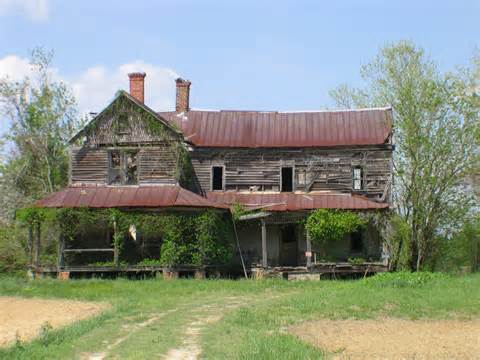
 I was remembering my Aunt Ruth the other day. Aunt Ruth lived outside of Delhi Louisiana on a farm and her son and my cousin, Bill, farmed the thousand or so acres that surrounded the old house. I remember that he was always busy repairing the irrigation systems that stood like giant centipedes along the dirt roads that crisscrossed the fields. I helped every now and then, and remember it was quiet except for the clanking of wrenches and the odd tractor in the distance. I remember the smell of diesel, of horses and hay, and of water and dirt. I also remember the chicken.

Aunt Ruth was a seminal cook; a chef, a magician of food that is rarely made anymore.   When I would help Bill on my visits to the farm Aunt Ruth would always have a table full of magic when we arrived home for lunch. There would be fried chicken (from the yard outside the house), green beans (from the garden), macaroni and cheese (homemade of course), okra (fried and sautéed), homemade tomato jelly, buttered rolls, ice tea, several pies, and sometimes homemade bread. On top of all of that Aunt Ruth would serve us all with a smile and throw in a few laughs for good measure.

These memories cropped up in me some years later after I had “grown up” and I made a trip back to Delhi to reminisce. I stayed at a hotel off the highway and drove to the cemetery to visit some family. I drove to the old house where my family had taken me to visit their families, my grandparents and to the old farm where I used to play with the kids who looked after the place. I drove past the house where my uncle who used to hide whiskey in the toilet tank and yell at the help through the screen door on the back porch. I drove through the memories that have since haunted me and still haunt me today and I drove by Aunt Ruth’s house. I loved those people and what they stood for; something that I did not realize at the time because I was young, because I was from the city, and because I did not put a price on the priceless.

Those days are gone, but I believe it is up to me to remember them, to keep them alive; something I am working towards as best I can because like so many others today I have tended to hide behind the walls of houses too often, buy ease at the store and comfort with a credit card. Those people in our pasts, that we remember, were not perfect and they were certainly not saints, but I believe that my Aunt Ruth was a rare commodity, a rare species of person that has made the idea of what I think of when I think of the freedom that America offers.

Freedom and self-sufficiency are words now that are becoming more and more popular, perhaps a bit overused. But I believe in them and am striving to live up to their ideals. However, these ideals require work, character, time and talent as well as a smile and a laugh. My Aunt Ruth gave me the memory of an old house, creaking floors and a musty smell, smiles and care, but most of all she gave me a piece of herself in the form of food not bought from a store, or made from a box. In a few hours Aunt Ruth gave me memories that would last for a lifetime. I believe I need a lifetime to keep those memories alive for a few more hours.