food

Revolution!

food revolution

The “new” food revolution seems to be upon us, and I hope that it turns out to be a revolution that lasts. As revolutions go, this is a more positive one as it is seems to be a return to basic facts rather than pie-in-the-sky, wishful thinking on the wings of dreams. The new food revolution is, rather, pie-in-the-pan, hard-work on the backs of those who see the potential in acting upon truth.

As most revolutions, this one has its (let’s say) issues. First, while the wagon has pulled out, there are still those jumping that don’t belong. Simple words like “organic” are now being touted by very non-organic growers and worse, being taken over by bureaucratic system that has spent so much time and effort working so hard against the faithful cultivators of quality; just ask Joel Salatin! Other corporate confusions now include honest and innocent terms like “free range”, “cage-free”, and of course we have the GMO-battle: a dishonest battle about honest labeling.

As opting out becomes more and more tempting, we must remember that perhaps these dishonest, deceitful, and mendacious moves by agribusiness all over the world may just be desperate endeavors by the few and the powerful. We must plant on! Discard the lawns and the mowers, pick up the hoes and the rakes. Buy a chipper for god’s sake! Let ‘s ignore the ignorant and take on the towers of trade that would keep us under their thumb!

Feed the worms, and feed yourself! The time is now!

Patience my…

patience

I put the hops in this last weekend. We also planted six berry bushes, some asparagus and threw in some lettuce and Arugula for good measure. It feels good to get in the dirt again. I can almost smell the pungent, green buds and the rich red and purple clumps of berries. The asparagus is a different story: it takes years, not months. I threw the dill out in the herb bed and watered the turnips. The seedlings are coming up…all in due time.

If you begin to grow your own food you soon find that doing so is an exercise in patience. While patience is not necessarily a virtue, it is a necessity. This is true with many things and in many situations. Patience is not easy. Everyday I wake up and check the plants, opening the hot house according to the weather (this morning at 6am before work). Coming home, I expect change, but often there is none.

Patience, I am told, becomes a habit with practice. I’ve not found this to be true. Patience, I feel, is often a detriment to good ideas, holding back intuitive blasts of genius. Patience is often accepted as reasonable when it is often cowardly. It is reasonable to wait, when what we mean is that we cannot make a move towards what we know is the right thing. These kinds of decisions and challenges are part of life, but with gardening patience is neither good nor bad, detrimental or progressive, it simply is.

I’ll wait to plant the rest of the garden: the beans, the squash, the onions and leek, the beets, and the tomatoes plus a few other nicknacks.   I will wait, but I won’t be happy about it. I’ll wait to work the soil some (I’m going “till-less” this year), and set the irrigation system up, but the waiting will be long and arduous. Patience is that long journey that we sometimes take, telling ourselves that it is the trip that matters while knowing all the time that it is the destination that really matters.

Every Spring

seedling2

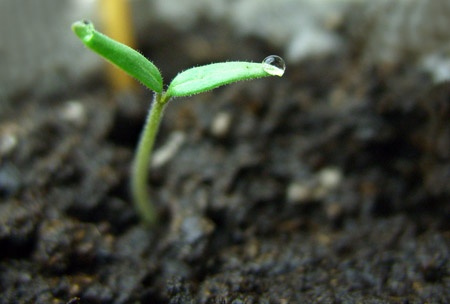
Every spring I put small seeds into small containers filled with dirt. Every spring some of those small seeds “miraculously” sprout into small plants; all reaching for something bigger. This year I am trying an array of plants; some of which are new, and some of which I have been saving from previous plants in previous years. It is this saving of seeds that is truly the cornerstone of growing food.

The Dester tomato seeds from one of last year’s tomatoes were the first to sprout, is the biggest and all of the six seeds from the fruit has now come up, and continues to grow at a truly admirable rate. The newest of the seeds seem shy, poking their small leaves from the soil slowly. The garden awaits and the seeds are willing.

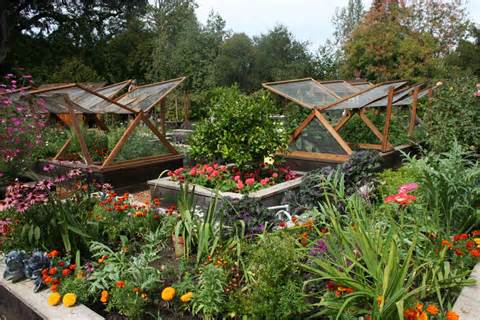
I have started all the seeds in my hothouse. This year I built some homemade warming tables from a few pallets I got from a local hardware store. Covered in black plastic and sat on buckets, the heater placed under the tables provides the needed heat and the green netting draped over the large glass covers provides the needed cool. A balance, which is in the end: life itself.

I water from the fifty-gallon drum that I collect water in. The water is green, dirty and filled with time and patience. It is nature and somehow I must believe that there is balance in the liquid muck. The system has worked so far; the microcosm of life beginning and I look in upon it on a daily basis thinking that I am in control, but realizing that I am only a caretaker.

This year holds surprises that I have yet to discover. A new irrigation system to put in and try; additional beds and paths, new plants mean new beginnings and failures that mean new endings. There is a cycle here that is reminder of the greater cyclical nature that we are all a part of. To lose perspective of this is to lose track of the truth.

I am not the first to say this, but gardening is truth. I am not the first to realize this, but we do not control nor do we own; we are custodians and we loan a bit of time to find out what we can do and what we cannot do. This knowledge comes one plant at a time; one day a year when we notice the slightest bulge in the soil and begin making our plans.

Aunt Ruth

abandoned farm

 I was remembering my Aunt Ruth the other day. Aunt Ruth lived outside of Delhi Louisiana on a farm and her son and my cousin, Bill, farmed the thousand or so acres that surrounded the old house. I remember that he was always busy repairing the irrigation systems that stood like giant centipedes along the dirt roads that crisscrossed the fields. I helped every now and then, and remember it was quiet except for the clanking of wrenches and the odd tractor in the distance. I remember the smell of diesel, of horses and hay, and of water and dirt. I also remember the chicken.

Aunt Ruth was a seminal cook; a chef, a magician of food that is rarely made anymore.   When I would help Bill on my visits to the farm Aunt Ruth would always have a table full of magic when we arrived home for lunch. There would be fried chicken (from the yard outside the house), green beans (from the garden), macaroni and cheese (homemade of course), okra (fried and sautéed), homemade tomato jelly, buttered rolls, ice tea, several pies, and sometimes homemade bread. On top of all of that Aunt Ruth would serve us all with a smile and throw in a few laughs for good measure.

These memories cropped up in me some years later after I had “grown up” and I made a trip back to Delhi to reminisce. I stayed at a hotel off the highway and drove to the cemetery to visit some family. I drove to the old house where my family had taken me to visit their families, my grandparents and to the old farm where I used to play with the kids who looked after the place. I drove past the house where my uncle who used to hide whiskey in the toilet tank and yell at the help through the screen door on the back porch. I drove through the memories that have since haunted me and still haunt me today and I drove by Aunt Ruth’s house. I loved those people and what they stood for; something that I did not realize at the time because I was young, because I was from the city, and because I did not put a price on the priceless.

Those days are gone, but I believe it is up to me to remember them, to keep them alive; something I am working towards as best I can because like so many others today I have tended to hide behind the walls of houses too often, buy ease at the store and comfort with a credit card. Those people in our pasts, that we remember, were not perfect and they were certainly not saints, but I believe that my Aunt Ruth was a rare commodity, a rare species of person that has made the idea of what I think of when I think of the freedom that America offers.

Freedom and self-sufficiency are words now that are becoming more and more popular, perhaps a bit overused. But I believe in them and am striving to live up to their ideals. However, these ideals require work, character, time and talent as well as a smile and a laugh. My Aunt Ruth gave me the memory of an old house, creaking floors and a musty smell, smiles and care, but most of all she gave me a piece of herself in the form of food not bought from a store, or made from a box. In a few hours Aunt Ruth gave me memories that would last for a lifetime. I believe I need a lifetime to keep those memories alive for a few more hours.

Garden Tips You Don’t Want to Hear

Damaged plant on right Damaged plant on right

#1 Raise Your Expectation to Fail

This is a tough lesson to learn and does not get easier with time. However, as Joel Salatin of Polyface Farms is quoted as saying: “If something is worth doing, it is worth failing.” Failing is a key element in learning, and learn we will if we only remember those things we failed at.

#2 But…Lower All Other Expectations

I expected my garden to double the output this year. It is the second year, and I have bees. I expected my bees to give honey this year; although it is the first season they’ve had in their new home, they are doing so well. I expected my soil to come into its own; it is the second year that I’ve added compost, grass clippings and manure. I expected so much.


#3 Don’t Give In

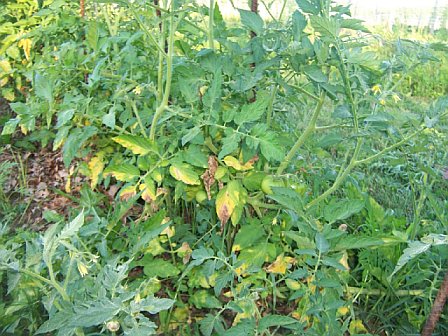
I watched late in the summer as my tomato plants started developing yellowing leaves on the bottom, and continued to watch as the yellowing leaves made their way towards my beautifully big green tomatoes. I watched as my onions fell over but retained their green stalks and the bulbs quit growing. I watched as my leek went to stalk, and the yellow cherry tomatoes I planted reached and reached for the light that was not available. I watched as my peppers seemed to not grow and was reminded how fragile life is, but how persistent the human spirit can be.


#4 And Remember that Nature Rules.

No matter what we do; no matter how much we care, nurture, pick, pluck, plant and ply: nature rules. It is not we that are the masters of our lives, nor is it a god. Nature it has been said is the most effective serial killer there is. If that is not enough, nature has only rules that it itself creates. As we go about our “important” business of living we forget that we ourselves are part of nature and not the other way around. Our gardens remind us of that when hale pounds our plants pitifully in the middle of summer, and we watch in horror as unknown diseases and plights overtake once healthy dreams. But remember that nature does not dream and you do!


#5 Do Your Best

Do your best, but remember that doing your best guarantees nothing (see #1-4 above). Do your best because doing your best is the meaning that we create in our lives. While it is true that we are what we eat, it is also true that we are what we think. If you do not do your best you have already wasted your time and nature will not lie to you about it.


#6 But Remember Your Best Is Never Good Enough.

I know that this seems harsh but there are plenty of people that will attest to this for you. I know that in school those nice “teachers” tended to remind you that everything will be OK, but they were lying. You received grades that you did not earn. I know that your friends will compliment you on such a fine job you’re doing, but they are just being nice and you know when that’s the case. Your best is never good enough because when it is you cease to learn and you will be reminded harshly of #4. On the other hand if you ever find that you believe these people it is probably because of #3.


#7 Remember: What Else Do You Have to Do?

The human lifespan is short. There is not enough time to waste on excuses although we all waste ample hours in doing so anyway. Your job is only an excuse. It may be that it pays for your garden. Or perhaps gardening is your job in which case #1-6. Either way you must eat and why not know what you are eating? Your children are only an excuse. They need you to live your life and not theirs. Give them something to look up to: teach them the importance of self-sustainability and food. Life is what we make of it. Ask yourself what you want to make of yours and perhaps more importantly why. Go out and tend your garden there really isn’t anything more important to do.


Being Human

human

The school semester is about to start again and it reminds me of something that is very important: learning.  Actual learning seems to be a rarity in our society, filled with instant gratification through things such as computers and food.  And what do computers and food have to do with learning? They are perfect examples of how much we do not know.

First, while it may seem obvious how computers relate to learning, as with many things we do not often discuss the topic in full.  The internet is a seemingly infinite source of facts, figures, and what is commonly called knowledge.  And while the internet is an amazing invention that has no doubt furthered many aspects of learning, it is not a place of learning.  The internet has made available information which was before either not available or extremely difficult to find.  Access to information is not learning about the information.  It is simply access.

Computers are not only a vehicle for the internet, however.  Computers allow us to live the way we do in ways most of us do not think about.  Without computers most of our infrastructures in our societies would fail; people would not get paid; lights would go out.  Computers help in countless ways, but the cost of that help is high.  Reliance upon computers has created dependence rather than independence.  Knowing that infrastructures exist, and that we rely upon them is not knowledge: the facade of knowledge is not knowledge.  It is simply rhetoric.

We do not know how the infrastructure that we rely upon works, and in fact, we often do not know when it does not work. Our food supply is a perfect example. The grocery store provides food in the same way that computers provide access. We can simply walk into the great building and there are rows and rows of “food”. Most of the edible products in a grocery store are not food in the real sense of the word. They are a combination of HFCS, salt and fat. These ingredients are often processed through means of chemical and mechanical manipulation. Furthermore, these products are not created to feed, but rather to make a profit. The cost of profit over food is unhealthy eating habits, addiction, and a lowering of all of our qualities of life. Having access to products to eat is not necessarily having access to food.

Many of the products available to “consumers” (the word to describe those who buy and use) are ready-made, pre-packaged, and designed to be quick and easy. Michael Pollan wrote that it is not thought that differentiates human beings from other animals, but cooking. These ready-made, pre-packaged units (the word used to describe what a vender is selling) take the necessity (and knowledge) of cooking away, and hence a bit of our humanity away. Adding water or turning on a stove is not necessarily cooking; it is preparing.

And so what do computers and food have to do with learning? Learning is a process that takes time; there are no shortcuts. There are no shortcuts because the process has to do with understanding, and to understand one must study the long and short-term implications. Computers create easy processes that do not rely upon long and short-term implications. This is not to say that computers are not useful tools for learning. But it is to say that the process of learning does not change even though a computer is being used.

The same goes for food. A credit card can buy a shopping cart full of products, but these products are not necessarily food in the real sense of the word. Furthermore, grocery stores and corporations that sell and provide products for consumption are not always interested in the consumer knowing the difference. Learning the difference, however, is a key component of knowledge: the byproduct of learning. Finally, and perhaps the most insidious implication of our ignorance, or perhaps indifference, towards learning is that we lose our independence without ever realizing it. Cooking is the key foundation to independence, for without it we are truly no different than our not-so-distant cousins in the forests and jungles. Simply being a human being is not being human. It is what we learn that makes us people.


Nature Knows Best

yellow tomato leaves

I woke up this morning and enjoyed my morning coffee as I do every morning. It was early and the dew was still on the plants. The bees were not very busy yet; it was silent which is why I like early mornings. I took my usual garden walk, coffee in hand, and I noticed a few of my tomato plants had yellowing leaves on the bottom. All at once my morning was no longer peaceful. I wondered about that.

My garden is not doing so well this year (I think), and that worries me as well. I’m not sure why? Is it because I want to be perceived as a good gardener or is it because I want to be a good gardener? Maybe it’s the soil, the plants? My father-in-law chuckled at my worries. He’s been a farmer for some sixty years. His only advice: “it happens sometimes.”

That was not good enough for me. I knew better; better than a man who had spent his life growing things! That’s the thing with nature: it does not care what we want or why we want it. It simply is. I understand this even when I take my morning walk with my coffee: it only seems to me as if nature is pleasing. But nature knows best.

I don’t understand how my father-in-law is so nonchalant about something he has spent a lifetime doing. I tell him this and he brings back a conversation about nature that we had many years ago concerning the nature of, well, nature. He reminds me that nature does what nature does best: exist; this coming from a farmer of sixty years. After that, he adds, it’s pretty much guesswork and we don’t have much say so in the matter.

I don’t know why, but I can’t accept that explanation. It is not because it is not an answer, but because there are reasons for everything, even if we do not know what those reasons are. Also, I must admit, I expect a little more from a lifetime of experience in farming, which is what this man has. He seems to recognize my disappointment and chuckles again. I think he realizes that it is because of his experience and not in spite of it that he can laugh.

The Revolution of Food

Image

The word revolution conjures up scenes of violence and mayhem, but as history has shown us violent and political revolution often leads societies backwards towards the historical reasons for the revolution rather than forwards towards a better, more progressive approach to the original problem.  The French revolted, and the original problems of the time still exist today.  In America much is the same after the American Revolution.  While the ruling class is not longer the British, oligarchy still reigns over this country.  This oligarchical control is not governmental, however, but corporate.


Perhaps it is the nature of revolutionary acts to be cyclical?  Perhaps it is the nature of human beings that we must make the necessary mistakes, take the necessary shortcuts in order to learn that mistakes only count if we actually do learn from them, or that shortcuts are illusionary?  But we must learn from them, and understand that shortcuts are only as good as our reasons for taking them.  If revolution in all its forms is cyclical, then the ethical perspective relies upon the intention that instigates the revolution in the first place rather than the consequences of the acts themselves.


It is typically the intention of military revolutions to overthrow a government and the implication of that act is for the revolutionaries to become the governing body.  The intention, it can be said, is to govern and thus the cycle is complete.  The corporate food industry claims that its’ intention is to feed the world, because (it claims) more traditional methods fail to do so.  It has “overthrown” traditional methods and thus the cycle is complete.  However, like the military revolutionaries that become dictators, the industrial food complex has become the very problem that is proposed to solve because it has not acted honestly and with the right intentions.   Revolution fails if the intentions are not honest, and are not honestly come by.


Consider the reasons behind the corporate food revolution of the 40’s and 50’s: surplus chemicals from the Second World War; the surplus of corn because of technological advances, and the need for the government to create jobs, summed up in the Nixon administration by Earl Butz and his constituents.  Food ceased to be a human necessity and became an economic opportunity.


There is Truth in food and it must be the intention of those that revolt to turn from the shortcuts and mistakes made in the name of the almighty dollar and define themselves and their actions by the natural limitations that exist.  The comfort of Supermarket shopping and packaged goods and the ease of “just add water; makes it own sauce” mentalities must change and will change.  The question is how?  Will these changes come at our intentional beckoning or will they come in the form of catastrophic damages as a result of fuzzy thinking, lazy attitudes, greed and avarice?


The present food revolution leads us towards a place that we have visited before: the agrarian lifestyle, but we can only hope that unlike the military and political revolutions, we are the prodigal sons realizing our mistakes and hopefully learning from the corporate shortcuts that we have chosen to follow.  The food revolution is ironically progressive, ironic because it forces us to realize that the sustainable lifestyles lead to greater happiness because they are natural, not in lieu of being natural.  We must revolt, but we must do so quietly, concertedly and with the right intention.  But, most of all we must do so honestly.

Local Globalism

Image

Globalism is a word that I’ve never been comfortable with.  Like the new age term “holism” it seems to be an umbrella term for unproven methods and wishful thinking.  In the end, globalism becomes meaningless as well as dangerous because it can be defined and used as justification for anything and everything.  We cannot be individuals in such a context, but must give ourselves over to the whole, and we do so at our own peril.


For most of us, life comes in bits and pieces, but we are told that we live in global communities and are a part of a global economy.  Paradoxically, we have come to rely upon a global network to define us as individuals through paradigms such as Facebook, Twitter and a host of other virtual, global “communities”.  We act globally while believing that we are part of individual communities. We have come to understand the whole in the contexts in which we live, but the context in which we live is defined by the whole.  We cannot continue thinking locally while acting globally.  We must do the opposite: think globally and act locally.


Communities that are defined by global economies seem separate from one another, but are in fact a part of a holistic phenomenon; they have a global effect. The consequent of realizing that our actions as a community have direct consequences on the communities that surround us and eventually on those that only seem disconnected from our own will eventually force us to act locally.  Oddly enough, I do not believe that there is disconnect between the idea of a global community and individual support of our own communities. We must act on a local level for the sake of global health of the planet.


The irony of this of course is that the continued globalization of our individual communities is the very thing that keeps us from supporting those individual communities. There is an understanding between two people that barter, buy or support each other’s community, that eat food grown or raised locally, that is not only missing but is utterly destroyed when bartering and buying and eating on a global scale. Globalization of these traditionally local and often intimate acts has the detrimental consequence of disassociating us from the tools we use, the homes we live in, the economies we support, the food we eat and the communities that we are all a part of. The relationship between these things, the people who make them, and those who we buy them from is a necessary and important one that define who we are as individuals; it gives us purpose and meaning outside of simply pure consumption.


The cost of globalization has been studied and analyzed from many different angles, but I believe that one angle is oddly missing: does the globalization of our lives and the communities that we live in make us happier?  I would argue that globalization most certainly makes our lives easier, but happier? Perhaps the highest cost of thinking and acting globally has not been the quantity of our happiness (the ease of living life), but the quality of our happiness (living life).  The globalization of our communities continues to take a toll on our planet, our food and our communities but perhaps the greatest toll for humanity is the universal loss of understanding that there is a difference between the quantity of happiness that we have and the quality of happiness that we all desire as individuals.


The Garden

Image

This time of year is difficult for the gardener.  It is that time when the first seeds are put into trays and put under lights to “extend the season” as we say around here.  I am no different.  I have my onion sets, my kale, hyssop and lemon mint (for the bees) already going.  I just put up trays of peppers and tomatoes in my workshop where they are protected from the cold-swings outside.  This time of year reminds me of something that I typically don’t like to be reminded of: that I have no patience.

But patience is what it takes to succeed.  Patience to remember because “All good human work remembers its history” as Wendell Berry writes, and patience to realize that all that we desire will not be fulfilled.  Gardening, and all that it stands for is a pleasant but often stern reminder that we lack the very thing that we need the most; that is, the patience to truly understand that it is not necessary to always get what we want.  Philosophy is an endeavor that is very closely related to gardening.

Philosophy is directly translated as “ philo-sophia: the love of wisdom”, and wisdom takes patience just as growing food takes patience.  There are those that understand this such as John Seymour, Michael Pollan and Wendell Berry and others. But in doing philosophy, one soon comes to understand that the first step in being a philosopher is to recognize one’s own limitations, called ignorance.  The gardener soon comes to realize their ignorance by recognizing microclimates, soil and the plants themselves among many other things.  This process of recognizing and further more accepting one’s own ignorance takes patience whether that is with regard to gardening or to understanding philosophical concepts.  The trick is to recognize our limitations, overcome our ignorance and have the curiosity to realize that doing so is important.  That takes patience.

To become patient takes discipline. Berry writes, “Correct discipline cannot be hurried, for it is both the knowledge of what ought [italics mine] to be done, and the willingness to do it.” (People, Land, and Community)  There is an “ought” to the correct discipline, and it is in this aspect that we have lost our way.  We “ought” not take advantage of each other and we “ought” not treat the environment as a source of raw material and a place to cast our trash.  We can and we do, but we ought not to.

We have lost our way but in doing so, we become aware that we have lost our way.  From this point it will take time, and with that cost comes the necessity of correct discipline and patience to adjust ourselves to the ignorance that has engrossed us.  Our curiosity has led us down paths unimaginable.  We have created environments and introduced changes that were far beyond most people’s wildest dreams a mere fifty years ago.  Our curiosity alone, however, has proven to be problematic because we have not had the patience to learn how to use it.  A garden can put your curiosity back on track; it can teach us what we ought to do with the time that we have.

Rather than a philosopher that happens to garden, my garden has become a simple reminder of what it takes to be a philosopher: correct discipline, correct curiosity and the patience to tell the difference.  It reminds me that I have limitations that I must live within or pay the price for not doing so.  It reminds me that I am dependent upon people that I do not know and processes that I am not aware of nor have control over, and that I have a choice to change these problematic realities.  My garden reminds me that I have yet to gain the patience that I need in order to gain the knowledge that I must have. My garden reminds me that I have time that I must take, that I must be patient to do so, and that I must take the time to realize that.