foraging

The Custodian

the-custodian

When we have land we do not own it.  Rather, we are custodians.  What we do with our newfound role is, of course, up to us.  But ought we do good?  A custodian is a caretaker and the land, if we listen, will speak, will tell us its wants and needs.  It takes time and a few long walks through the forests and the fields.  In time, though, we can come to understand the language of the land.

I am afraid that the custodial role is a disappearing one.  It seems that landownership is taking over the caretaker’s careful and thought out intentions.  When we own land it seems that we assume that we have rights to do what we want…no matter what the land needs.  Ownership is economic; taking care is ethical.

Out in the forest, chainsaw in hand, I cut dead fall (those dead trees that have fallen and have hung up on other, often young, live trees.  Caretakers change the land for a reason, like landowners, but caretakers change the land for reasons that have to do with the land and not ourselves.  Caretakers must make choices.  Do we manage (if that is possible) our land for beauty, for use, for both?

To be a caretaker is difficult work, but to recognize the importance of being a custodian of the land is perhaps harder yet.  This concept is not an idea that we wake up with.  We must realize our roles as custodians and also realize that such work, such roles (as so many are) are thankless.  In a world measured by profit the custodian lives in poverty.

If land needs a custodian at all, shouldn’t the custodian recognize that their very existence is dependent upon the land and not the other way around.  Perhaps, in the end, this is the difference between owning land and caring for land:  the custodian recognizes his dependence and the landowner does not.  I would hope that most people get a chance to care for land if and only if they can also recognize that their very existence is dependent upon what they do with it.
Why?

aristotle quote

Two year old’s ask it all of the time, and we (as adults) often dismiss the question: why? You are asked: “What do you do?” but how many times are you asked: “Why do you do what you do?” To answer that question would take some thought, and would probably open us up to thoughts that we might not want to consider.

For those of us striving to live an environmentally sound life, the question can be uncomfortable. Why do I keep bees, have a large garden, collect water, compost grass and food scraps, save seeds, use no pesticides or herbicides, can and forage food, recycle wood for the projects around the place? Why do I want to do more?

Answers begin to bubble up if we think long enough about what we do. Often when we explain those answers to others, they come across as ideological and sometimes self-righteous, sometimes we just don’t know. We become accustomed to the “glazed” look after a minute, and we realize that the answer has become rambling, incoherent or that the question was only asked out of feigned politeness.

Answers range from philosophical to utilitarian, from selfish and self-righteous to ideological and ambiguous. “It’s just the right thing to do.” Of course, the answers rely upon the question. When people ask: “What do you do?” the simple answer is to tell them you get paid to do it. However, if someone asks: Why do you do it?”

“For the money!” becomes an empty answer; one that reminds us of who we are. Money doesn’t cut it at the end of the day.

And so we are left wondering why. There is only one reason to do anything and it is right under our nose whether that is the compost pile or the wild apple and plum trees that we might pass everyday while walking the dog (rescued from the pound).

Why do I keep bees, have a large garden, collect water, compost, save seeds, and use no poisons? Why do I recycle scrap wood for projects? Because not to do so would take away a quality of happiness that doing such things gives me.

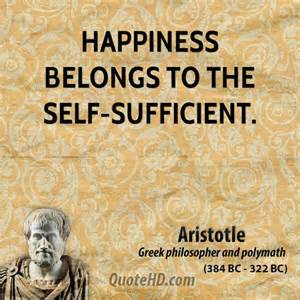
Why do I do what I do? It gives me a higher quality of happiness, and as Aristotle wrote: happiness depends upon ourselves, and the highest quality of happiness depends upon why we do what we do.