gardening

Look Up

tomato sky

Gardeners tend to spend a lot of time with a shovel in the ground digging and covering up. Making sure seeds are laid comfortably to rest bends the neck forward and the care that we give to the earth tends to take its toll on the broad perspectives that often help us understand why we do what we do. Shoulders bent to the ground, we look at the holes we dig, lay the seed gently in the ground, and cover them back up. To grow your own food is a revolutionary act, but to understand why we must revolt, why it is imperative to grow our own food, takes the willingness to look up at the sun that makes what we do possible and why we must do it.

One of the most freeing things I’ve ever read was that gardening is a revolutionary act. But like all meaningful endeavors, it comes at a cost. Sometimes, to remind myself of this, I go out in the garden late at night and look up. I always think about when the stars were considered “holes” in the cloak of the sky-ceiling; the light coming down from heaven. Sometimes I felt like the small seeds that I covered diligently with soil only to get excited when they reappeared as a one small and ever so slight leaf on a shivering stem.

How is it that revolutions start? With one, small act while all the time remembering what that act stands for and why we do it. As David Blume stated in the Los Angeles Times, “By being an organic farmer, you fly in the face of every part of the power structure,” Blume said. “Refusing to use chemicals, refusing to use genetically modified seeds–it’s a real act of defiance.” And what better reason to garden?

Give it to “the Man”; plant a tomato! Screw the corporations that siphon our freedoms, and buy a chipper/shredder! Save and trade seeds, and save human history from the Monsanto’s of the world! Do all of these things and do them proudly, but always remember why you do them: look up and be awed by nature in order to understand why revolting against almost everything we’ve been taught is so important. The corporations are the result of people forgetting to look up every once in a while.

Albert Camus once wrote that nothing will matter in a million years, and that is probably true, but revolutions do not think about futures; they act in the present. What better thing can we do than to do what we know is right, and know why we do what we do. There is nothing more gratifying than doing the right thing except for knowing why it is right.

So, look up every once in a while, while kneeling at the alter of the earth. Plant those seeds that you’ve saved and then lay in the grass dreaming of a day when we are all revolutionaries.


The Logic of Food

the logic of food

To eat is to have a garden.

To have a garden is to cook food.

So, to eat is to cook food.

To eat is to cook food

To cook food, is to have a garden.

So, to eat is to have a garden.

To eat is to have a garden.

To have garden is to understand how food is grown.

So, to eat is to understand how food is grown.

To eat is to understand how food is grown.

To understand how food is grown is to understand nature.

So, to eat is to understand nature.

To eat is to cook food.

To cook food is to have a garden.

To have garden is to understand how food is grown.

To understand how food is grown is to understand nature.

To understand nature is to have the world at your fingertips.

It Sure is Hot Out There

climate change

The summer has finally come, after a wet and strange spring. I’m afraid that my foraging plans will be cut short by the late frost this year. The apple, plum and cherry blossoms got hit hard. For some reason the beets that I planted as well as a great deal of the kale seeds did not even make it out of the ground. Bad seeds? I’m not sure. However, the tomatoes look good, the cucumbers and the hops are doing well. Cauliflower, cabbage and the asparagus are going gangbusters. The peppers are slow, but have fruited.

The herbs are going well, especially the established ones. A lot of rain this spring did a lot of good. There are still varroa problems with the bees, but I have hope that I can get them through September, and then through the winter. I’m hoping that they will do well on their own. It’s been pretty “hands off” this year. I planted new peach and cherry trees as well as a few berry bushes. We started mushrooms this year and they have taken to the logs that we inoculated.

The front door is sticking and I am hoping that the wood settles after I fixed the irrigation head that was allowing it to get soaked at night. I built a food dehydrator and installed new poles and wires for the hops. The weeding continues uninterrupted. Again, the cilantro was weak as was the salad. Who knows why as I planted both earlier this year. Maybe too early?

These are issues that most of us do not have to worry about, at least not directly. For most of us in the west we leave these worries to others; to the “industry” and to science. However, these are honest and necessary worries. That broad descriptive, “weather”, contains much of the above but the devil is in the details; most of the details that go unaware.

It seems that these days the details of the farmer, the gardener, the agrarian are making themselves known more and more by making the details of weather more and more known. The crumbs of climate changes are leaving a trail, but what we do with those crumbs is up to us. I’m not sure what I will do…

I will go out and see if there are apples, plums and cherries to be had off the trails. Perhaps the mushrooms in the mountains will be plentiful because of the rains. I’ll can the tomatoes with the great crop of basil, but will need to buy beets from the Farmer’s Market down the street. I hope to get a crop of fall kale and pickle a few cucumbers. I suppose all that we can do is to follow the trail of crumbs and wish for the best. It is only weather, after all.

Sage Advice

buddha

It hailed today and luckily the tomatoes that I planted out were covered by the hoophouse I built around them. I learned my lesson last year, and in years before: never trust nature to do what you want it to do. I know that I will learn this lesson many times to come, but the lesson never comes easy.

The hops were troopers; I believe that they are the marines of the plant world: nothing phases them. The rhubarb was sheltered by the large bank of bushes, and most of the seeds planted out last week have not come up. I hop the newly peeking asparagus shoots are OK.

The bees finally had a time of it on their cleansing flights after so much grey rainy weather that we’ve been having; that is, before the hail set in. I had put out a swarm capture box as I was having an inkling that there was a swarm around that had been trying to get into one of the hives. They had had no luck, and so I put the box out, wondering if they’d be interested. I think they were, but it’s too early to tell.

Lots of hard work in the garden these days for all of us. It’s not nature that is a taskmaster as she simply doesn’t care. It is the hopes and dreams of canning tomatoes, making salsa and rhubarb jam, freezing kale, brewing beer, making apple sauce, putting up pickles and beets, juicing plums and crabapples, picking fresh carrots and digging up potatoes. It is pesto with your own basil and tea with your own honey. It is all of these things and more.

This time of year is both hopeful and hellish; everything seems so fragile and yet so much is riding on it. This time of year is the start of catching up. Farmers and gardeners alike play “catch-up” from now on out. The weeds will come, wasps will attack the bees and plants will die. It’s all out there in the mysterious future as are the hopes and dreams of those who try to understand the soil and the plants that come out of it.

As I said it hailed tonight and probably took out a lot of folk’s work. I can almost hear the profanity even if we did need the moisture. There is more where that came from. We all know it. Buddha supposedly said, of nirvana: figure it out yourself. I think that such advice is sage (good in sausage and olive oil for dipping bread). And so, I hope that we all figure it out. But for now, I’m off on an adventure of my own, and wish you all the best that your hard work will offer on yours.

Perfect Imperfection

perfection

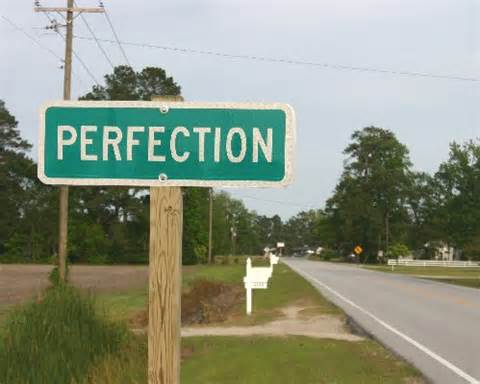
I decided that putting the leek starts in the ground, most of them looked dead or dying, was a chance that I was willing to make. The onion starts look good. Last year, our onion crop wasn’t that good and I remember wondering why home gardeners don’t often get those vegetables that we all see in the supermarket: those red, oval tomatoes, all sized and shapely, taking their place on the well prepared produce stands or that green, full-leafed lettuce plants in February. Gardeners, at least of my ilk, live in a different world; they live in a world where food often looks like well, food and not products.

With the ongoing and growing movement with regard to food culture, many people are more and more aware of the processes that are necessary to get food to the market. The process is in fact amazing! The process, however, gives us a false sense of what food is. It is not a commodity, the consequence of a closed and well-oiled system. Rather, food is a product of the rather imperfect world in which we live. Food is a product of the soil, of water, and of time and effort and more often than not, chance.

I try to remember this as a put down the small starter potatoes, just poking out their first shoots. I remember my last crop of potatoes. They seemed small and pathetic, at least until I took a bit of them. A little salt water, heat and time and such a potato is truly a work of art. Like art, producing food relies upon a bit of imagination and a lot of elbow grease. The result, whether on canvas or in the ground, is often not what we started out thinking it would be. However, the results, somehow, are always satisfying.

My leeks are doing well as are the onion starts. My tomato seedlings have little blossoms on them as they stare up out of the hothouse. I don’t know what will come of these as the season progresses, but I know the results will not be perfect.

Nature’s process is not perfect, but nature is perfect in its imperfection. While nature is not an artist, nor does it “produce” food, it is a process that we must and always will, rely upon. Nature is a verb, perhaps, but a verb that changes meaning over time; it never sits still awaiting definition. Nature offers a bit of insight into something that we must accept: the idea of perfect imperfection. But if my memory serves me right, imperfection can taste perfectly good!

Patience my…

patience

I put the hops in this last weekend. We also planted six berry bushes, some asparagus and threw in some lettuce and Arugula for good measure. It feels good to get in the dirt again. I can almost smell the pungent, green buds and the rich red and purple clumps of berries. The asparagus is a different story: it takes years, not months. I threw the dill out in the herb bed and watered the turnips. The seedlings are coming up…all in due time.

If you begin to grow your own food you soon find that doing so is an exercise in patience. While patience is not necessarily a virtue, it is a necessity. This is true with many things and in many situations. Patience is not easy. Everyday I wake up and check the plants, opening the hot house according to the weather (this morning at 6am before work). Coming home, I expect change, but often there is none.

Patience, I am told, becomes a habit with practice. I’ve not found this to be true. Patience, I feel, is often a detriment to good ideas, holding back intuitive blasts of genius. Patience is often accepted as reasonable when it is often cowardly. It is reasonable to wait, when what we mean is that we cannot make a move towards what we know is the right thing. These kinds of decisions and challenges are part of life, but with gardening patience is neither good nor bad, detrimental or progressive, it simply is.

I’ll wait to plant the rest of the garden: the beans, the squash, the onions and leek, the beets, and the tomatoes plus a few other nicknacks.   I will wait, but I won’t be happy about it. I’ll wait to work the soil some (I’m going “till-less” this year), and set the irrigation system up, but the waiting will be long and arduous. Patience is that long journey that we sometimes take, telling ourselves that it is the trip that matters while knowing all the time that it is the destination that really matters.

Every Spring

seedling2

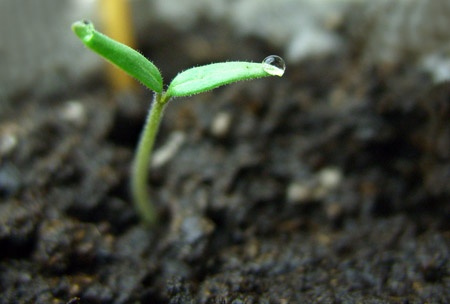
Every spring I put small seeds into small containers filled with dirt. Every spring some of those small seeds “miraculously” sprout into small plants; all reaching for something bigger. This year I am trying an array of plants; some of which are new, and some of which I have been saving from previous plants in previous years. It is this saving of seeds that is truly the cornerstone of growing food.

The Dester tomato seeds from one of last year’s tomatoes were the first to sprout, is the biggest and all of the six seeds from the fruit has now come up, and continues to grow at a truly admirable rate. The newest of the seeds seem shy, poking their small leaves from the soil slowly. The garden awaits and the seeds are willing.

I have started all the seeds in my hothouse. This year I built some homemade warming tables from a few pallets I got from a local hardware store. Covered in black plastic and sat on buckets, the heater placed under the tables provides the needed heat and the green netting draped over the large glass covers provides the needed cool. A balance, which is in the end: life itself.

I water from the fifty-gallon drum that I collect water in. The water is green, dirty and filled with time and patience. It is nature and somehow I must believe that there is balance in the liquid muck. The system has worked so far; the microcosm of life beginning and I look in upon it on a daily basis thinking that I am in control, but realizing that I am only a caretaker.

This year holds surprises that I have yet to discover. A new irrigation system to put in and try; additional beds and paths, new plants mean new beginnings and failures that mean new endings. There is a cycle here that is reminder of the greater cyclical nature that we are all a part of. To lose perspective of this is to lose track of the truth.

I am not the first to say this, but gardening is truth. I am not the first to realize this, but we do not control nor do we own; we are custodians and we loan a bit of time to find out what we can do and what we cannot do. This knowledge comes one plant at a time; one day a year when we notice the slightest bulge in the soil and begin making our plans.

The Patient Gardener

snow garden

Gardeners tend to regard snow with disdain. The coldness keeps us from going out and feeling the dirt between our fingers. The snow blankets all of our past work and the plants are leafless and lifeless. At least that’s what it looks like. However, there’s a dry spot in my garden out back where I will plant hops this coming spring and I found myself shoveling wheelbarrows of snow onto the spot to bring the soil to life. It is arid during the season and I have always had problems getting things to grow there.

At the end of the day, gardeners are in the business of building up soil and while I was trudging around in my garden the other day in 8” of snow, shoveling the stuff onto my “dry spot”, I was reminded that nothing in nature is without ground; both figuratively and literally. The snow acts as insulation against the raw windy cold. Snow melts slowly into the ground breaking up clods and working manure into the soil. Snow provides moisture over time and gives the soil time to recover from the gardener’s incessant need to interfere with what nature does best.

This last point is the cornerstone of a subject that I have become more and more interested in: permaculture. It seems to go against the concept of gardening itself: just leave it alone. I have found that it helps to remember that we are not really managers as much as stewards. That answering the question “How?” does not answer the question “Why?” As a gardener, I want to produce food and resources for food. I want hops not because hops are somehow inherently good, but because I love beer and want to make beer that tastes good. Hops makes beer taste good!

However, permaculture does not dismiss our utilitarian desires. Rather, it reminds us that our utilitarian desires need to be limited by the resources that we actually have and the resources that we actually have can be more than enough…as long as we don’t get greedy. It takes patience not to be greedy.

Snow forces us to be permaculturists rather than gardeners in the true sense of the word: work intentionally and don’t do too much and don’t take too much. It’s funny that we have to be taught these things as they seem to be self-evident. Maybe the lesson to be learned is: gardening is easy if you have patience, but being patient makes gardening difficult. I, for one, find that to be true anyway.

That Which We Cannot Do

hope

Nature teaches us a lot if we choose to listen. However, sometimes the lessons we learn from nature remind us that life is difficult, that nature truly does not, it cannot, care. The difficulty in learning this lesson is that as people we do care: we care about nature, we care about the things and people that we take responsibility for.

Two months ago, my bees were plentiful, filling three boxes. I noticed a problem (varroa mites) and treated them dutifully. I saw the results and the results looked good. I was hopeful and planned on having my bees overwinter to welcome them into the Spring. Nature had other plans, however. A few weeks ago I started noticing wasps coming and going, and noticed a drastic decrease in the number of bees that were swarming around the hive. Upon opening the hive I was horrified to find that most of the hive was empty. Rather than 30-40,000 bees I was met with 2-3000 bees!

I was and still am devastated. Questions run through my mind as I search for answers. The few remaining bees, including the queen, continue to hang on but there is not much hope for the winter. The twist in my gut continues even now, when I’m writing about this. I run through the possibilities and what I could have done differently, but the answers are the same.

I have read the books, the blogs, the forums and watched the videos. I have studied and went to classes; I have taken responsibility for my actions; I have dutifully fulfilled my obligations and still failure. I have been taught the lesson that nature teaches all things: 1) that life is difficult and that nature does not, and cannot care, 2) that there are often not answers to the questions that we ask; that there are not possible solutions to all possible scenarios. Perfection does not exist in nature not matter how much we as people care about nature and the things and people that we take responsibility for. Sometimes, there is no other way.

I am also reminded that no matter the twist that we feel in our gut, we must persevere; there is no quitting. It does not matter whether it was the wasps, varroa mites, colony collapse disorder, or my own doings, there must be a new hive next spring. Although we cannot know for sure why this must be, it must be. This is what makes us human: we must educate ourselves about the world around us, but we must also morally educate ourselves: we must educate ourselves about the world within us.

Life is a battle and even if there is no purpose for the dead and the dying, we must act as if there was. To accept the void as lifeless is to accept that there is no hope, but we are human; to accept that there is no hope is to give up the very thing that makes us human, and that, we cannot do.

Nothing But the Spring

future

The fall is coming and with the coming cold, change. The bees are readying the hive for winter; the garden is beginning to show signs of age. Harvest continues but the nights are getting a bit colder and the mornings are darker. Change is a cold reality as it is a reminder that all that we hold dear is temporary, and the seasons continue to march on, counted only by us.

I am reminded of the cycles of the seasons, of life in general. When I was young these cycles were nothing more than an old wife’s tale. But when I began to notice my own age, these cycles began to become recognizable from years before. The cycle of seasons became the cycles of life: Spring, Summer, Fall, and finally Winter.

It is almost as if all change is the same. It begins as an exciting possibility and grows into a busy reality becoming the aches and pains in the morning, the nematodes in the soil, the repairs on the house, the mileage on the equipment and on myself, the goals achieved and the dreams that never were. These things are not bad, but simply the reality of living. Things wear out, ideas disappear and so do we.

As I get older I begin to notice that my parents are old.   This realization is painful and soon I am reminded of the relentless seasons not only by my own age but also by the needs of my parents. The child becomes the parent. This too is the cycle of the seasons. Winter comes for us all and all the while I think of nothing but the spring.