gardening

Time On Our Hands

working hands

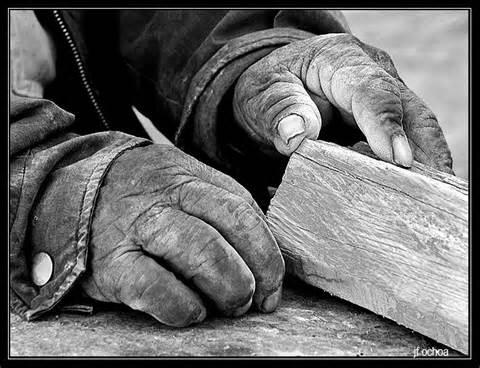
I shook a man’s hand the other day. His hand was hard and rough and his handshake was firm and full of confidence. There was no uncertainty in the shake. He was a working man in the sense of the word that his work was not something that he did to make money or bide time. This man lived his work and was proud of what he did, and this showed in his handshake and the firm, rough feel of the palm of his hands. He had time on his hands, literally.

Most of us complain that we do not have enough time on our hands; that our lives are filled up with necessary places to be and things to do, and that is probably the case. But I noticed that in my discussion with this man complaints had no place. We talked of grass-based farming, permaculture and animal husbandry. He had been up since about 3am making deliveries and there was not a hint of tiredness in his voice. He had a necessary place to be and necessary things to do; he had animals to feed, fences to mend, and grass to mow, but he also had time on his hands to talk.

We ate sausage in the parking lot while we talked. The sausage was exceptional but he was not satisfied with the texture of the meat. It was obvious that he took time with the things that he did, and that time led to a warranted pride in his work. It rained and we talked. Time was not of the essence. There was not a sign of being busy although I knew he was.

I like to meet people with time on their hands. Time has a way of rubbing off, of reminding me what is important and what is not. “You don’t mind a little dirt on the knife?” he asked as a sliced another piece of sausage.

“I don’t mind a bit!” I answered.

I don’t mind dirt on knives and I don’t mind having time on my own hands. In fact, I am working hard to put more on them. It is hard work to have time on your hands, but I do believe that doing so is one of the most virtuous things a person can do. I would suggest that we all need to work in order to have more time on our hands. In fact, a bit more time on everyone’s hands would be a great thing for us all!

I shook the man’s hand when we said goodbye. His hand was hard and rough and his handshake was firm and full of confidence. We did not bide our time but talked about meeting again at his farm. This man reminded me to live my work and do it in such a way that I can be proud of what I do. I think that I can remember to have a firm handshake full of confidence as long as I do these things. Put some time on your hands today; you’ll be glad you did.
Simplify Your Life; Complicate Your Philosophy

simple life 1

Wendell Berry is one of those writers that have a talent for pointing out the obvious when the obvious seems so well-hidden. In his essay “Faustian Economics” he writes, “All are entitle to pursue without limit whatever they conceive as desirable-a license that classifies the most exalted Christian capitalist with the lowliest pornographer.” (pg. 43, What Matters?) This “doctrine” as he calls it is a necessary implication of the idea of a limitless economy.

The “family farm”, the concept that Berry is defending and the goal that I am trying to achieve seems like a simple and straightforward goal…but it is not. The implications of living in such a way as to be independent are many. First, I had to understand what it is that I am trying to be independent from. Secondly, I had to address and accept the limitations of the family farm (cottage farm, hobby farm…pick your term). And lastly, I had to address the cost of giving up on the Faustian idea of economics.

There are quite a few people with similar ideas of living and many of those people have to come to terms with these ideas, including: what is wrong with accepting modern society. Berry puts it forthright! “…Shifting the cost of depletion and pollution from the producer to the general public, the future, and other species…” (Forward, What Matters?) I’m not sure that there are those that can live honestly with these consequences, but I am finding out that I am not one of them.

Like any idea, the idea of a family farm ironically begins larger than life. The would-be farmer envisions endless, healthy fields and forests with a clean running, self-fed stream with no dependence upon modern conveniences. This thought is cut short when one remembers a necessity for most of us: toilet paper. This simple idea reminds us of the difficulties that are involved in going “off grid”, or even trying to live responsibly. Money is a necessary evil on this planet, given that we desire a quality of life that can be measured by any modern means. However, it is important to remember that money is not really the root of all evil, but simply the vehicle in which we travel to find it.

So what are our options with such dreams as independent living and eating responsibly? Berry again drives home what ought to be obvious to any thinking man. The agrarian economic policies would be in order of priority: 1) Nature, 2) Economies of land use, 3) Manufacturing, and 4) Consumer economies (pg. 3, What Matters?). I’ve never thought of my dream with regard to such priorities, but seeing them in writing drives home the ultimate goal: I want to reorganize my priorities.

I would recommend to anyone considering revitalizing their commitment to true, independent living to also re-visit the priorities by which they live by. I think that they will find that to simplify their life, they must first complicate their philosophy.

Garden Tips You Don’t Want to Hear

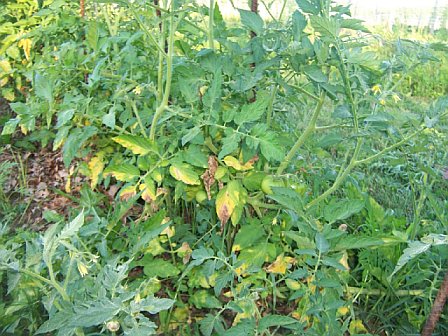
Damaged plant on right Damaged plant on right

#1 Raise Your Expectation to Fail

This is a tough lesson to learn and does not get easier with time. However, as Joel Salatin of Polyface Farms is quoted as saying: “If something is worth doing, it is worth failing.” Failing is a key element in learning, and learn we will if we only remember those things we failed at.

#2 But…Lower All Other Expectations

I expected my garden to double the output this year. It is the second year, and I have bees. I expected my bees to give honey this year; although it is the first season they’ve had in their new home, they are doing so well. I expected my soil to come into its own; it is the second year that I’ve added compost, grass clippings and manure. I expected so much.


#3 Don’t Give In

I watched late in the summer as my tomato plants started developing yellowing leaves on the bottom, and continued to watch as the yellowing leaves made their way towards my beautifully big green tomatoes. I watched as my onions fell over but retained their green stalks and the bulbs quit growing. I watched as my leek went to stalk, and the yellow cherry tomatoes I planted reached and reached for the light that was not available. I watched as my peppers seemed to not grow and was reminded how fragile life is, but how persistent the human spirit can be.


#4 And Remember that Nature Rules.

No matter what we do; no matter how much we care, nurture, pick, pluck, plant and ply: nature rules. It is not we that are the masters of our lives, nor is it a god. Nature it has been said is the most effective serial killer there is. If that is not enough, nature has only rules that it itself creates. As we go about our “important” business of living we forget that we ourselves are part of nature and not the other way around. Our gardens remind us of that when hale pounds our plants pitifully in the middle of summer, and we watch in horror as unknown diseases and plights overtake once healthy dreams. But remember that nature does not dream and you do!


#5 Do Your Best

Do your best, but remember that doing your best guarantees nothing (see #1-4 above). Do your best because doing your best is the meaning that we create in our lives. While it is true that we are what we eat, it is also true that we are what we think. If you do not do your best you have already wasted your time and nature will not lie to you about it.


#6 But Remember Your Best Is Never Good Enough.

I know that this seems harsh but there are plenty of people that will attest to this for you. I know that in school those nice “teachers” tended to remind you that everything will be OK, but they were lying. You received grades that you did not earn. I know that your friends will compliment you on such a fine job you’re doing, but they are just being nice and you know when that’s the case. Your best is never good enough because when it is you cease to learn and you will be reminded harshly of #4. On the other hand if you ever find that you believe these people it is probably because of #3.


#7 Remember: What Else Do You Have to Do?

The human lifespan is short. There is not enough time to waste on excuses although we all waste ample hours in doing so anyway. Your job is only an excuse. It may be that it pays for your garden. Or perhaps gardening is your job in which case #1-6. Either way you must eat and why not know what you are eating? Your children are only an excuse. They need you to live your life and not theirs. Give them something to look up to: teach them the importance of self-sustainability and food. Life is what we make of it. Ask yourself what you want to make of yours and perhaps more importantly why. Go out and tend your garden there really isn’t anything more important to do.


Patience

patience

I am told quite often to have patience, but I watch my tomato plants and they seem to grow inches everyday, but the fruit remains green. Large, green globs of fruit hang heavy on the vines. I can taste the fruit of my labors; I envision the salsa if only my peppers would hurry.


My peppers are bearing fruit as well, but the plants themselves haven’t grown much. They look healthy now, but only after some attention. I watch as peppers sprout from white flowers, healthy green, red and purplish. I watch the peppers and envision baskets of Anaheim, Joe’s Cayenne, Poblano, Jalepeno…, if only my tomatillos would get bigger.


The tomatillo plant was given to me by a friend of mine; the plant is beautiful. Small, yellow flowers wielding to pockets of green, sticky fruit. Spreading its spindly branches, I tie the plant religiously to the homemade stands I’ve built. Dozens of green bags hang precariously from the plant, and I check often for the fruit hidden inside. The green chili that I make from the peppers and tomatillos always taste good with a homemade beer, if only my hops would hurry.


The cascade hop plant is probably my favorite plant in the garden. It hangs heavy with sticky leaves and gorgeous, small green cones of goodness. The lupulin inside the cones await golden nectar. The plant is a fast grower, and the hops that spring forth (with a little help from the bees this year) are lovely light green and smell of the goodness that beer is. I plan to brew a honey porter, if only the bees would hurry with their making of honey.


I added a honey super to the hive two weeks ago. The last check on the super, the little girls had begun to make comb for the honey that I hope will soon be. The bees have been a favorite addition to my garden. They have done so well this year. I really didn’t get the bees for honey production, but out of curiosity. But I remember the addition of the second hive box. They filled it hurriedly and I worry about the bit slower production on the honey super. I have mason jars that I can almost taste the honey dripping from the spoonful’s that I ladle from them. Honey harvest is often in September, and only if the girls have enough for themselves. August is almost here.


August is almost here and with the end of summer begins the fall. I remember the times past in the fall as the leaves change and cool evenings bring the leaves to the ground. I’ll gather them and send them through the shredder for mulch over the winter. I always like that job because it is somehow calming, but it does make me wonder where the time has gone.


Nature Knows Best

yellow tomato leaves

I woke up this morning and enjoyed my morning coffee as I do every morning. It was early and the dew was still on the plants. The bees were not very busy yet; it was silent which is why I like early mornings. I took my usual garden walk, coffee in hand, and I noticed a few of my tomato plants had yellowing leaves on the bottom. All at once my morning was no longer peaceful. I wondered about that.

My garden is not doing so well this year (I think), and that worries me as well. I’m not sure why? Is it because I want to be perceived as a good gardener or is it because I want to be a good gardener? Maybe it’s the soil, the plants? My father-in-law chuckled at my worries. He’s been a farmer for some sixty years. His only advice: “it happens sometimes.”

That was not good enough for me. I knew better; better than a man who had spent his life growing things! That’s the thing with nature: it does not care what we want or why we want it. It simply is. I understand this even when I take my morning walk with my coffee: it only seems to me as if nature is pleasing. But nature knows best.

I don’t understand how my father-in-law is so nonchalant about something he has spent a lifetime doing. I tell him this and he brings back a conversation about nature that we had many years ago concerning the nature of, well, nature. He reminds me that nature does what nature does best: exist; this coming from a farmer of sixty years. After that, he adds, it’s pretty much guesswork and we don’t have much say so in the matter.

I don’t know why, but I can’t accept that explanation. It is not because it is not an answer, but because there are reasons for everything, even if we do not know what those reasons are. Also, I must admit, I expect a little more from a lifetime of experience in farming, which is what this man has. He seems to recognize my disappointment and chuckles again. I think he realizes that it is because of his experience and not in spite of it that he can laugh.

Ever Changing        

Image


As the seasons change they remind me that time does undeniably pass us by.  In the past few weeks I’ve seen the tiny seedlings that I started indoors grow leaps and bounds.  I’ve seen the parsnip poke its miniature shoots out of the soil covered in dead leaves and compost that itself has stood the test of time.  I see the kale and the carrots beginning to show out of the earth itself.  The weather is getting warmer and as it does our new bees begin to become more and more active.  We did our first hive check this weekend, and “my girls” are doing fine.


“My girls” indeed!  As I watch them busily about their business it dawns on me that these “girls” will not be the girls that my family meets when they come to visit later this summer; these “girls” will not be the ones that I take honey from (if at all) later this summer.  This hive will not be the same hive at all.  They will all have passed their jobs on to their sisters that they so diligently raise as I watch them fly in and out of their new home.  It saddens me…at first.  I realize, once again, that this is the nature of the seasons, is the nature of the years that have passed me by and continue to do so.  Change is the nature of life itself.


I watch as my parents get older and my nephews and nieces begin anew, with wonder in their eye: young and not thinking about time at all.  Like the hive I call my own we are not the same people we were a mere seven or eight years ago, literally or figuratively.  The cities we live in change; the landscape, the people, our friends, our jobs, our plans, our goals, our desires.


In fact, change is the only consistent.  As I complicate my life (to eventually simplify it) I realize more and more that this aphorism rings true.  As I see the very ground in my garden go from unfertilized lawn, to newly dug soil, to composted mulch full of worms and life I realize that I did not start this cycle of evolution in my garden; that this cycle never had a beginning nor will it have an end.  I watch the plants come up excited in anticipation just as I was last spring and will be in the springs to come.


Perhaps adding to my newfound goal of complicating my life, I must realize that I have a choice: to act with or react to the nature of life and the living.  As a gardener and now a keeper of bees, I try to be a steward but I am really an audience member to the grand change this is life.  But life, our lives, is short with no intermission, no stage, no actors, and no scenery.  I started out a suburban gardener, but I slowly realize that the garden has always been there and that I am only reacting to it.

Garden Variety Philosophy       

Image


I’m relatively new to gardening, and like most people the idea of gardening conjures up numerous images. First of course is the image of an overflowing abundance of plants popping with vegetables, fruits and flowers. Secondly, tools come to mind: the shovel, the rake, the hoe, the tiller. And perhaps the shape and color of the garden: should it be square, circular, and what about the soil? What is humus? Gardeners such as myself probably spend hours contemplating odd things such as these and the seeds…the seeds. The spacing of the seeds seems to be all-important according to some books, and in others it is the soil that the seeds are planted in; raised beds, rows, grouping: the list goes on. Both the questions and the answers seem endless, but all I want to do is to plant a garden.

One of the activities of gardening that I simply do not like is the pulling up of seedlings that are un-needed, or deemed lesser. Somehow it seems that I am killing an innocent, but gardening is like that. Gardening seems like an innocent endeavor, but the details prove it to be otherwise. To be a gardener, one must be ruthless in a sense. But this ruthlessness seems out of place in an activity that seems so peaceful. To be a gardener one must be both a mother and a warlord.

I look at the garden in the winter, covered in leaves, mulch and manure with its light brown, dusky color and imagine its future. Then I remember the aphids and the beetles that I fought valiantly with the year before, losing battles while hoping to win the war. I like to think of the garden as a way of giving, of helping the world, and the earth itself; planting and eating my own food. But, I also demand of the soil to produce and tear at the earth with the tools of the trade leaving it brown and uncovered, only to cover it again with remnants of what I previously took from it.

Then Spring comes and a renewed belief that what I do is good. Watching the seeds germinate under the plant light, the warming mat keeping the tomatoes and peppers warm on cool nights. The plans are laid and the seeds bought, I feel the heavy load of work to come which is the love and loathing of gardening. Such a simple task gardening and one that is directly related to being human. The garden represents change and consistency, husbandry and freedom.

And so the garden is a dichotomy of terms and ideas. But there is an underlying foundation to all gardens and this has much to do with why we garden. People garden for different reasons, but somehow those different reasons are more similar than not: curiosity, the desire for independence, love of nature. One is not a gardener for long if one is not curious about the plants, the earth that they are planted in, and the correlations between all life including the garden itself. Most of us speak of our independence, but until you can feed yourself, your independence is an illusion. Also, while gardening seems to be a process that brings order to an otherwise un-orderly natural environment, gardening puts us in touch with that very nature: we get our hands dirty and learn what our precious plants need in order to give us what we desire.

There is so much in a garden, philosophically, physically, and psychologically. A garden can be conceptual, representing a form of beauty or utility; maybe both. Gardening is most definitely a physical thing that demands physical work. And a garden demands of the garden a certain presence of mind and a drive to perhaps complicate your life. A garden can also be poetic with running rhymes strewn throughout with symbols of pleasure.

I think that in the end what truly defines a gardener is the reason that we each do it. A garden symbolizes what we want from life and our willingness to work to get it. But in the end, to garden is to realize that we are part of the nature that unfortunately we have spent much time and energy alienated ourselves from. The reason, I believe, that we garden is that it gives us a sense of belonging to a world that is far greater than ourselves. Just like our civilizations and societies, a garden gives us the illusion of control. But, just like the plants in the garden, we grow, live and we die. The garden reminds us that that is life, and that we are simply part of that thing that we so often take for granted, all started from a seed and some soil.

The Garden

Image

This time of year is difficult for the gardener.  It is that time when the first seeds are put into trays and put under lights to “extend the season” as we say around here.  I am no different.  I have my onion sets, my kale, hyssop and lemon mint (for the bees) already going.  I just put up trays of peppers and tomatoes in my workshop where they are protected from the cold-swings outside.  This time of year reminds me of something that I typically don’t like to be reminded of: that I have no patience.

But patience is what it takes to succeed.  Patience to remember because “All good human work remembers its history” as Wendell Berry writes, and patience to realize that all that we desire will not be fulfilled.  Gardening, and all that it stands for is a pleasant but often stern reminder that we lack the very thing that we need the most; that is, the patience to truly understand that it is not necessary to always get what we want.  Philosophy is an endeavor that is very closely related to gardening.

Philosophy is directly translated as “ philo-sophia: the love of wisdom”, and wisdom takes patience just as growing food takes patience.  There are those that understand this such as John Seymour, Michael Pollan and Wendell Berry and others. But in doing philosophy, one soon comes to understand that the first step in being a philosopher is to recognize one’s own limitations, called ignorance.  The gardener soon comes to realize their ignorance by recognizing microclimates, soil and the plants themselves among many other things.  This process of recognizing and further more accepting one’s own ignorance takes patience whether that is with regard to gardening or to understanding philosophical concepts.  The trick is to recognize our limitations, overcome our ignorance and have the curiosity to realize that doing so is important.  That takes patience.

To become patient takes discipline. Berry writes, “Correct discipline cannot be hurried, for it is both the knowledge of what ought [italics mine] to be done, and the willingness to do it.” (People, Land, and Community)  There is an “ought” to the correct discipline, and it is in this aspect that we have lost our way.  We “ought” not take advantage of each other and we “ought” not treat the environment as a source of raw material and a place to cast our trash.  We can and we do, but we ought not to.

We have lost our way but in doing so, we become aware that we have lost our way.  From this point it will take time, and with that cost comes the necessity of correct discipline and patience to adjust ourselves to the ignorance that has engrossed us.  Our curiosity has led us down paths unimaginable.  We have created environments and introduced changes that were far beyond most people’s wildest dreams a mere fifty years ago.  Our curiosity alone, however, has proven to be problematic because we have not had the patience to learn how to use it.  A garden can put your curiosity back on track; it can teach us what we ought to do with the time that we have.

Rather than a philosopher that happens to garden, my garden has become a simple reminder of what it takes to be a philosopher: correct discipline, correct curiosity and the patience to tell the difference.  It reminds me that I have limitations that I must live within or pay the price for not doing so.  It reminds me that I am dependent upon people that I do not know and processes that I am not aware of nor have control over, and that I have a choice to change these problematic realities.  My garden reminds me that I have yet to gain the patience that I need in order to gain the knowledge that I must have. My garden reminds me that I have time that I must take, that I must be patient to do so, and that I must take the time to realize that.