growing food

The Agrarian

 Agrarian

  • It takes 1-3 Years to plant with the long term consequences in mind. Plant with space and needs in mind. The plants will start slow and eventually take hold. All the while we must nurture them to give them the best of all possible beginnings.
  • After 1-3 years and the continual planting and possible replanting, the introduction of poultry and other animals for pest control. This introduction has its issues and will never go as smoothly as we think. The animals introduced must be, as the plants must be, if not indigenous, then only what the plants and the land itself will allow.
  • From 5-7 years we must “chop and drop” roughage from the pruning that we will do. The introduction of trees for timber must be introduced but these must not affect the fruit trees bushes, and other perennials that we have worked so hard to keep alive.
  • This is what it takes to eat honestly.

These steps and these processes are necessary because we have not taken the time to follow in the footsteps of mother nature; we have taken shortcuts and continue to do so. But, we must remember that mother nature neither nurtures nor does she care; she simply does. She expects nothing but gives so much to those that will understand her.

We do not seem to understand mother nature any longer. We cannot “google” it, or find it on the ubiquitous internet. We must get our hands dirty, and fail. We must see the dirt under our fingernails and feel the cuts on our hands, the sweat on our brow. We must feel the bites of insects and the heat of the sun. Our cellphones must be put aside and the supermarkets must be forgotten. Technology is not a boon but a bane.

The comfort of our homes and the illusion of civilization must always be put into perspective of the natural reality in which we live. If we do not come to understand this, then we fail as individuals and as a race. Our mother will remind us of this either with our blessings or our pleas.

A good home brew helps!

Every Spring

seedling2

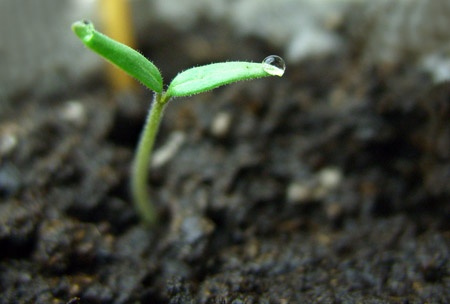
Every spring I put small seeds into small containers filled with dirt. Every spring some of those small seeds “miraculously” sprout into small plants; all reaching for something bigger. This year I am trying an array of plants; some of which are new, and some of which I have been saving from previous plants in previous years. It is this saving of seeds that is truly the cornerstone of growing food.

The Dester tomato seeds from one of last year’s tomatoes were the first to sprout, is the biggest and all of the six seeds from the fruit has now come up, and continues to grow at a truly admirable rate. The newest of the seeds seem shy, poking their small leaves from the soil slowly. The garden awaits and the seeds are willing.

I have started all the seeds in my hothouse. This year I built some homemade warming tables from a few pallets I got from a local hardware store. Covered in black plastic and sat on buckets, the heater placed under the tables provides the needed heat and the green netting draped over the large glass covers provides the needed cool. A balance, which is in the end: life itself.

I water from the fifty-gallon drum that I collect water in. The water is green, dirty and filled with time and patience. It is nature and somehow I must believe that there is balance in the liquid muck. The system has worked so far; the microcosm of life beginning and I look in upon it on a daily basis thinking that I am in control, but realizing that I am only a caretaker.

This year holds surprises that I have yet to discover. A new irrigation system to put in and try; additional beds and paths, new plants mean new beginnings and failures that mean new endings. There is a cycle here that is reminder of the greater cyclical nature that we are all a part of. To lose perspective of this is to lose track of the truth.

I am not the first to say this, but gardening is truth. I am not the first to realize this, but we do not control nor do we own; we are custodians and we loan a bit of time to find out what we can do and what we cannot do. This knowledge comes one plant at a time; one day a year when we notice the slightest bulge in the soil and begin making our plans.

Nature Knows Best

yellow tomato leaves

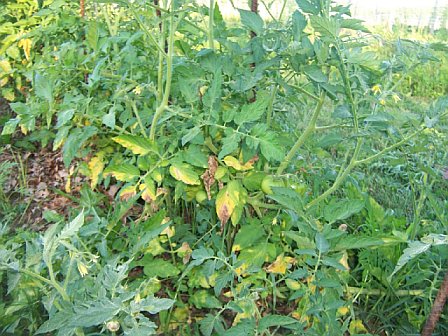
I woke up this morning and enjoyed my morning coffee as I do every morning. It was early and the dew was still on the plants. The bees were not very busy yet; it was silent which is why I like early mornings. I took my usual garden walk, coffee in hand, and I noticed a few of my tomato plants had yellowing leaves on the bottom. All at once my morning was no longer peaceful. I wondered about that.

My garden is not doing so well this year (I think), and that worries me as well. I’m not sure why? Is it because I want to be perceived as a good gardener or is it because I want to be a good gardener? Maybe it’s the soil, the plants? My father-in-law chuckled at my worries. He’s been a farmer for some sixty years. His only advice: “it happens sometimes.”

That was not good enough for me. I knew better; better than a man who had spent his life growing things! That’s the thing with nature: it does not care what we want or why we want it. It simply is. I understand this even when I take my morning walk with my coffee: it only seems to me as if nature is pleasing. But nature knows best.

I don’t understand how my father-in-law is so nonchalant about something he has spent a lifetime doing. I tell him this and he brings back a conversation about nature that we had many years ago concerning the nature of, well, nature. He reminds me that nature does what nature does best: exist; this coming from a farmer of sixty years. After that, he adds, it’s pretty much guesswork and we don’t have much say so in the matter.

I don’t know why, but I can’t accept that explanation. It is not because it is not an answer, but because there are reasons for everything, even if we do not know what those reasons are. Also, I must admit, I expect a little more from a lifetime of experience in farming, which is what this man has. He seems to recognize my disappointment and chuckles again. I think he realizes that it is because of his experience and not in spite of it that he can laugh.

Garden Variety Philosophy       

Image


I’m relatively new to gardening, and like most people the idea of gardening conjures up numerous images. First of course is the image of an overflowing abundance of plants popping with vegetables, fruits and flowers. Secondly, tools come to mind: the shovel, the rake, the hoe, the tiller. And perhaps the shape and color of the garden: should it be square, circular, and what about the soil? What is humus? Gardeners such as myself probably spend hours contemplating odd things such as these and the seeds…the seeds. The spacing of the seeds seems to be all-important according to some books, and in others it is the soil that the seeds are planted in; raised beds, rows, grouping: the list goes on. Both the questions and the answers seem endless, but all I want to do is to plant a garden.

One of the activities of gardening that I simply do not like is the pulling up of seedlings that are un-needed, or deemed lesser. Somehow it seems that I am killing an innocent, but gardening is like that. Gardening seems like an innocent endeavor, but the details prove it to be otherwise. To be a gardener, one must be ruthless in a sense. But this ruthlessness seems out of place in an activity that seems so peaceful. To be a gardener one must be both a mother and a warlord.

I look at the garden in the winter, covered in leaves, mulch and manure with its light brown, dusky color and imagine its future. Then I remember the aphids and the beetles that I fought valiantly with the year before, losing battles while hoping to win the war. I like to think of the garden as a way of giving, of helping the world, and the earth itself; planting and eating my own food. But, I also demand of the soil to produce and tear at the earth with the tools of the trade leaving it brown and uncovered, only to cover it again with remnants of what I previously took from it.

Then Spring comes and a renewed belief that what I do is good. Watching the seeds germinate under the plant light, the warming mat keeping the tomatoes and peppers warm on cool nights. The plans are laid and the seeds bought, I feel the heavy load of work to come which is the love and loathing of gardening. Such a simple task gardening and one that is directly related to being human. The garden represents change and consistency, husbandry and freedom.

And so the garden is a dichotomy of terms and ideas. But there is an underlying foundation to all gardens and this has much to do with why we garden. People garden for different reasons, but somehow those different reasons are more similar than not: curiosity, the desire for independence, love of nature. One is not a gardener for long if one is not curious about the plants, the earth that they are planted in, and the correlations between all life including the garden itself. Most of us speak of our independence, but until you can feed yourself, your independence is an illusion. Also, while gardening seems to be a process that brings order to an otherwise un-orderly natural environment, gardening puts us in touch with that very nature: we get our hands dirty and learn what our precious plants need in order to give us what we desire.

There is so much in a garden, philosophically, physically, and psychologically. A garden can be conceptual, representing a form of beauty or utility; maybe both. Gardening is most definitely a physical thing that demands physical work. And a garden demands of the garden a certain presence of mind and a drive to perhaps complicate your life. A garden can also be poetic with running rhymes strewn throughout with symbols of pleasure.

I think that in the end what truly defines a gardener is the reason that we each do it. A garden symbolizes what we want from life and our willingness to work to get it. But in the end, to garden is to realize that we are part of the nature that unfortunately we have spent much time and energy alienated ourselves from. The reason, I believe, that we garden is that it gives us a sense of belonging to a world that is far greater than ourselves. Just like our civilizations and societies, a garden gives us the illusion of control. But, just like the plants in the garden, we grow, live and we die. The garden reminds us that that is life, and that we are simply part of that thing that we so often take for granted, all started from a seed and some soil.