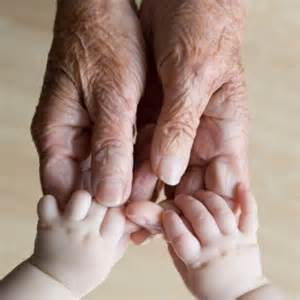
happiness

The Custodian

the-custodian

When we have land we do not own it.  Rather, we are custodians.  What we do with our newfound role is, of course, up to us.  But ought we do good?  A custodian is a caretaker and the land, if we listen, will speak, will tell us its wants and needs.  It takes time and a few long walks through the forests and the fields.  In time, though, we can come to understand the language of the land.

I am afraid that the custodial role is a disappearing one.  It seems that landownership is taking over the caretaker’s careful and thought out intentions.  When we own land it seems that we assume that we have rights to do what we want…no matter what the land needs.  Ownership is economic; taking care is ethical.

Out in the forest, chainsaw in hand, I cut dead fall (those dead trees that have fallen and have hung up on other, often young, live trees.  Caretakers change the land for a reason, like landowners, but caretakers change the land for reasons that have to do with the land and not ourselves.  Caretakers must make choices.  Do we manage (if that is possible) our land for beauty, for use, for both?

To be a caretaker is difficult work, but to recognize the importance of being a custodian of the land is perhaps harder yet.  This concept is not an idea that we wake up with.  We must realize our roles as custodians and also realize that such work, such roles (as so many are) are thankless.  In a world measured by profit the custodian lives in poverty.

If land needs a custodian at all, shouldn’t the custodian recognize that their very existence is dependent upon the land and not the other way around.  Perhaps, in the end, this is the difference between owning land and caring for land:  the custodian recognizes his dependence and the landowner does not.  I would hope that most people get a chance to care for land if and only if they can also recognize that their very existence is dependent upon what they do with it.
Simple Pleasures

pleasure

There’s something beautiful about seeing bees come out on a winter’s day. Walking out to the bee yard I noticed a few girls flying around. Although the sky was grey, it was just warm enough for a few brave hearts to venture outside. It is a simple pleasure, I know, but a pleasure nevertheless.

It is pleasures like this that make life worth living. It does not take money; in fact money alone is void of the kind of pleasure that is available if we just take time to notice. The garden, newly manured, sitting in the snow reminds me that there are worms deep under the soil. My ear up against the beehive and the scratching and buzzing that I hear, reminds me that we all want the same thing: a safe, warm place.

Perhaps it is this realization that warms my heart on cold winter days. When I realize the beauty that is nature I just have to stop and stare in wonderment. I think that it would be a much better world if we all took time to stand and stare in wonderment at the simple and often forgotten corners of our world.

In the back I hear chickens clucking away. I know that they are fussing about the snow, and perhaps feel a bit of cabin fever already. But they too venture out picking around in the snow, hoping to find a morsel, or maybe just doing it out of curiosity.

I like the smell of a kitchen that people cook in. I like the warmth of a home, and the cold against my face on an early morning walk. I like knowing that we all have a place, all animals; all living creatures. I like to think that there are places that are safe, that people want the best and are willing to work for it. I like to think that there is love in the world, and that there are those that are loved.

I know that these are simple pleasures, but as simple as they are, they are also simply priceless. And so I walk out back and stick my hand down in the dirt, I work on winter carpentry projects with the hope of the coming Spring and Summer. I put my ear up against the hive. I do these things and a smile comes to my face; just another simple pleasure to be thankful for.


Two Sides of a Coin

two sides of a coin

Money is typically defined as anything of value. Money is often used as a means of barter, trade, and for transactions. And so money is not often valued for itself, but for what it can get us. Money, then is useful, but not necessarily valuable. In thinking of this, I realize that there are two sides to every coin.

It seems that much time and effort is spent in trying to become rich in order to buy things that are not necessarily valuable or useful using something that is not necessarily valuable. This seems strangely  a waste (rather than a valuable)  of our time. However, most of us live our lives by this axiom; most of us.

The recent upswing in locavore, organic, self-sustainability and other descriptive ways of living seem to be motivated not by money, but by something far more valuable: happiness. The motivation to turn away from money to “do what’s right”, or to “be more healthy” seems to have its basis in virtue.

Virtue is a philosophical ethical theory founded upon a moral education, which is considered by Aristotle as a good in itself because such a life leads to a higher quality of happiness. Without getting into the philosophy too much, the value of living such a life is found in actually living that life. Money is not valuable in itself. However, living a life of virtue is.

So, one side of the coin seems to be the motivation to be happy, and the other side of the coin seems to be the kind of happiness that matters: the quality of our happiness. Money seems to abide by one side of the coin, but not to the other. Don’t get me wrong; I think that money is a viable tool, a useful means to live comfortably and securely. But I’m not sure that it is the best means.

The current movement towards more viable and sustainable agricultural methods and cultural beliefs is certain to lead to jobs and opportunities that are yet to be seen. But these movements do seem to be good in themselves as well.  We have to be careful. On the one hand, money is a motivator for our dreams, but on the other hand money often undermines the dream itself. Perhaps what we must always remember is that what is useful is often not what is valuable, and what is valuable is not always useful: there are always two sides to a coin.

Age

age

  • Reminds us that we are mortal: we will die.
  • Reminds us what reality is: we live now; we die now.
  • Reminds us to prioritize our lives: don’t worry, be happy.
  • Reminds us to think: we don’t know the answer if we don’t know the question.
  • Reminds us to live: most of the time the alternative is not better.
  • Reminds us to make a choice: if we do not, others will.
  • Reminds us to take time: time is the eternal thing that we have least of.
  • Reminds us to that nothing really matters: “Nothing we do now will matter in a million years”, and “nothing that will be the case in a million years matters now.” –T. Nagel
  • Reminds us that honesty is the best policy: we cannot lie to ourselves forever.
  • Is that inevitable reminder that change is the only consistent, that we have only one life to live, and that we often forget that fact.