homesteading

Producing Good Work

One of the more difficult things to do is to explain to others what it is, exactly, that we do.  As a newcomer to homesteading, this is especially difficult.  Most people are not comfortable with the vaguely nuanced answers that sometimes come with homesteading.

“I’m a farmer…”, you might begin.

But, there’s more.  What about the carpentry?  the mechanics, the weather, the forest, the land?  What about the canning and the cooking?  What about the slaughter and the butchery?  It takes a lot of work to eat; more than most realize.

“I’m a homesteader…” you usually end up saying.

But that is ambiguous and what about the money?  Perhaps the issue and the real question is money: people want to know what you do to earn your living.

Nowadays the new homestead is demanding some demolition: tearing out drywall and knocking down walls.  Unscrewing screws and pulling up nails; there’s the cleaning up and the three dumpsters (so far).

The answer was given while watching video: “I earn my living by doing good work.”

The Birth of Dreams


beer

Since the dream has died, it is time to make new ones and so it is time to brew beer.  Beer is one of the few possible proofs that there is a god in the universe, but brewing your own beer reminds you that really god is not needed; just clean water.  And so new dreams start again, this time with the help of some well water, yeast, malt and hops.

Brewing beer gives us a break from building other things and gives us a chance to remember what counts: time.  This because brewing beer takes time.  If you are not cleaning, then you are waiting.  The smells waft from the kettles and there is time to dream new dreams.

Why?

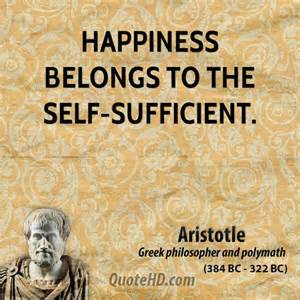
aristotle quote

Two year old’s ask it all of the time, and we (as adults) often dismiss the question: why? You are asked: “What do you do?” but how many times are you asked: “Why do you do what you do?” To answer that question would take some thought, and would probably open us up to thoughts that we might not want to consider.

For those of us striving to live an environmentally sound life, the question can be uncomfortable. Why do I keep bees, have a large garden, collect water, compost grass and food scraps, save seeds, use no pesticides or herbicides, can and forage food, recycle wood for the projects around the place? Why do I want to do more?

Answers begin to bubble up if we think long enough about what we do. Often when we explain those answers to others, they come across as ideological and sometimes self-righteous, sometimes we just don’t know. We become accustomed to the “glazed” look after a minute, and we realize that the answer has become rambling, incoherent or that the question was only asked out of feigned politeness.

Answers range from philosophical to utilitarian, from selfish and self-righteous to ideological and ambiguous. “It’s just the right thing to do.” Of course, the answers rely upon the question. When people ask: “What do you do?” the simple answer is to tell them you get paid to do it. However, if someone asks: Why do you do it?”

“For the money!” becomes an empty answer; one that reminds us of who we are. Money doesn’t cut it at the end of the day.

And so we are left wondering why. There is only one reason to do anything and it is right under our nose whether that is the compost pile or the wild apple and plum trees that we might pass everyday while walking the dog (rescued from the pound).

Why do I keep bees, have a large garden, collect water, compost, save seeds, and use no poisons? Why do I recycle scrap wood for projects? Because not to do so would take away a quality of happiness that doing such things gives me.

Why do I do what I do? It gives me a higher quality of happiness, and as Aristotle wrote: happiness depends upon ourselves, and the highest quality of happiness depends upon why we do what we do.

The Limitation of Money

money

When faced with decisions that have ultimate implications for your happiness, it is necessary to consider that happiness from as many different perspectives as possible, not just the economic perspective. Otherwise we become defined by the narrow and limiting perspective of money, not the actual limitations that we have. Perhaps, we must consider, it is more useful to make less money. As un-American as this may seem, our happiness as individuals and as a nation seems to be at stake, but not for the reasons that we might believe.

The more dependent upon money we become, the more impoverished we become. I am realizing that the ability to fend for myself, to provide for myself, and to be motivated not by the usefulness of my ability to make money but by the usefulness of my abilities is providing the richness of life that I need, the perspective that I need to be happy. It is indeed true that money cannot buy happiness. In fact, often times it purchases discontent.

For example, my wife said something to me that has stuck. She grew up on an eight-generation farm in Europe. She remembers having no money, but always having enough to do and enough to eat. The fear of poverty is still with her, but through our discussions she has come to realize that the poverty that her family endured was not because of the farm, but because of the motivation to make money. To farm, to homestead is to give up on our dependency upon money. However, in giving up on our dependency upon money, we do not become impoverished, but enriched.

As backward as this may seem to many, it is true. I am learning to live without money is unrealistic but only because I am realizing the limitations of my abilities. Money does not provide independence, but only dependence upon those with the abilities that I lack. It is not living without money that is unrealistic; it is living without knowing your own limitations.

A homestead provides ample opportunity for experiencing limitations, limitations that money cannot conquer. In cities across this nation I do not believe that it is the lack of money that is problematic, but only the lacking realization that we are limited. We cannot “do” what we want to “do” if we do not know how to “do” it. We can “think” what we want to “think” if we do not know how to “think”. In fact, I believe that money as a sole motivator lessens the ability to realize our own limitations and in doing so gives us a false sense of security; I have certainly experienced that in my own life.

I have also experienced the frustration of my own ignorance and short-comings with regard to my own limitations. In rebuilding a 1939 Farmall F-20 I learned that it will not start simply because it is supposed to start. It is the same with money actually. Simply because money is supposed to be able to buy you happiness does not mean that it actually will.