life

New-Old Lifestyles

Image result for old farm tools

When talking to people, especially older people who sometimes don’t understand why anyone would want to “go back” to raising and slaughtering your own meat, growing your own food and working your own land, they often point out that they are “fine” eating the modern products and processed foods of our current world.  They are right, of course; at least sometimes, or partially.

But the real point is lost on them; the point is not just the healthy aspect, but also the moral aspect.  We humans have somehow lost the necessary respect that life deserves and demands.  It is not just for health reasons that we till our own gardens and raise and slaughter our own meat.  It is healthier and better (lacking the additives and antibiotics) but is most certainly a more moral choice (respect for life and the living): a better choice.

A respect for life is the cornerstone of the agrarian lifestyle.  This does not preclude, but does not necessarily include, a religious adoration of life, but it is a necessary moral choice that does much to define who we are at the end of the day.  People that were raised on farms eighty years ago seem to remember the drudgery and forget the community.  They seem to remember the hardships and forget the rewards.  I’m not sure why and perhaps I will too at some point, but I hope not.

The irony of talking to older people who have had such “lifestyles” is that they seem to look upon the new crop of self-sufficient people as being a bit spoiled, but I would argue that the new farmers of old ideas are not spoiled, but curious and willing to do the work.  Although many people will fail at these new old endeavors (because the physicality and harshness of the work have not changed) there are many who have found solace and education in pursuing  “non-progressive” ways of life.

I think that when an honest lifestyle is dismissed so easily by others that it is because those that dismiss it have never really thought about their own life.  To do so, like the new agrarians will find, is physically and morally demanding; no less than the new- life that they have chosen to lead.

Pride, Ignorance & Reality

Donald Trump's Mortgage Payoff Tip Is Genius(Trump Voters Will Not Like What Happens Next)-Washington Post  Garrison Keillor is an author and radio personality.


So he won. The nation takes a deep breath. Raw ego and proud illiteracy have won out, and a severely learning-disabled man with a real character problem will be president. We are so exhausted from thinking about this election, millions of people will take up leaf-raking and garage cleaning with intense pleasure. We liberal elitists are wrecks. The Trumpers had a whale of a good time, waving their signs, jeering at the media, beating up protesters, chanting “Lock her up” — we elitists just stood and clapped. Nobody chanted “Stronger Together.” It just doesn’t chant.

The Trumpers never expected their guy to actually win the thing, and that’s their problem now. They wanted only to whoop and yell, boo at the H-word, wear profane T-shirts, maybe grab a crotch or two, jump in the RV with a couple of six-packs and go out and shoot some spotted owls. It was pleasure enough for them just to know that they were driving us wild with dismay — by “us,” I mean librarians, children’s authors, yoga practitioners, Unitarians, bird-watchers, people who make their own pasta, opera-goers, the grammar police, people who keep books on their shelves, that bunch. The Trumpers exulted in knowing we were tearing our hair out. They had our number, like a bratty kid who knows exactly how to make you grit your teeth and froth at the mouth.

Alas for the Trump voters, the disasters he will bring on this country will fall more heavily on them than anyone else. The uneducated white males who elected him are the vulnerable ones, and they will not like what happens next.

To all the patronizing B.S. we’ve read about Trump expressing the white working-class’s displacement and loss of the American Dream, I say, “Feh!” — go put your head under cold water. Resentment is no excuse for bald-faced stupidity. America is still the land where the waitress’s kids can grow up to become physicists and novelists and pediatricians, but it helps a lot if the waitress and her husband encourage good habits and the ambition to use your God-given talents and the kids aren’t plugged into electronics day and night. Whooping it up for the candidate of cruelty and ignorance does less than nothing for your kids.

We liberal elitists are now completely in the clear. The government is in Republican hands. Let them deal with him. Democrats can spend four years raising heirloom tomatoes, meditating, reading Jane Austen, traveling around the country, tasting artisan beers, and let the Republicans build the wall and carry on the trade war with China and deport the undocumented and deal with opioids, and we Democrats can go for a long , brisk walk and smell the roses.

The effect of working women on society goes well beyond added income.


I like Republicans. I used to spend Sunday afternoons with a bunch of them, drinking Scotch and soda and trying to care about NFL football. It was fun. I tried to think like them. (Life is what you make it. People are people. When the going gets tough, tough noogies.) But I came back to liberal elitism.

Don’t be cruel. Elvis said it, and it’s true. We all experienced cruelty back in our playground days — boys who beat up on the timid, girls who made fun of the homely and naive — and most of us, to our shame, went along with it, afraid to defend the victims lest we become one of them. But by your 20s, you should be done with cruelty. Mr. Trump was the cruelest candidate since George Wallace. How he won on fear and bile is for political pathologists to study. The country is already tired of his noise, even his own voters. He is likely to become the most intensely disliked president since Herbert Hoover. His children will carry the burden of his name. He will never be happy in his own skin. But the damage he will do to our country — who knows? His supporters voted for change, and boy, are they going to get it.

Back to real life. I went up to my home town the other day and ran into my gym teacher, Stan Nelson, looking good at 96. He commanded a landing craft at Normandy on June 6, 1944, and never said a word about it back then, just made us do chin-ups whether we wanted to or not. I saw my biology teacher Lyle Bradley, a Marine pilot in the Korean War, still going bird-watching in his 90s. I was not a good student then, but I am studying both of them now. They have seen it all and are still optimistic. The past year of politics has taught us absolutely nothing. Zilch. Zero. Nada. The future is scary. Let the uneducated have their day. I am now going to pay more attention to teachers.

Sustain Sufficiency

sustainability

The fall has come here at our new forest/farm.  The renovation on the bathrooms is almost finished and the months past have flown by.  The question still remains: is self sufficiency a pipe dream, is it possible?  This discussion, I’m sure, is common in households that have decided to turn their backs on the supermarkets, the food-consumer concentration of non-sustainability, and suburbs that offer comfort and the all-consuming security.

First, self-sufficiency.  The problem, it seems, is energy.  How to sufficiently produce and continue to produce the energy that it takes.  There are two possibilities: add to the energy production or take away from the energy consumption.  Alone, there is no option: we must take away our need for energy to be self sufficient.  So, self-sufficiency becomes a community approach to living at some point, which (in order to be moral, to be healthy and to be virtuous) must be sustainable.

Second, sustainability.  The problem is energy.  How to continue to sufficiently produce the energy that it takes to be self sufficient.  There are two possibilities…

So while self-sufficiency and sustainability are not the same they are reliant upon one another: to sustain self-sufficiency we must have sustainable energy sources.  This is the catch and the secret.  This is the unending education that I am reminded of as a look out over my new acreage  and feel the damp coolness seep in, watching the golden leaves fall.

I throw another log on the fire and sip my hot coffee.

An Update on the Experiment

experiment

This particular post is two things: an apology and and explanation.

First, an apology.  I realize that blogs are particularly important to those who write them, and less so to those who read them.  That being the case, I must still apologize for not being consistent, if only to myself.

Secondly, an explanation.  I have embarked upon an experiment in self-sustainability that involves moving from one side of this country to the other.  Such a move takes time and effort which explains my apology above.  This experiment involves buying a small (22 acre) plot of land with a house, a barn foundation, and a full woodworking shop.  This is the result of several years of contemplation and contrary thinking that has cost comfort and security, I hope, to a good end: to see just how self-sustaining an individual can be.

To this end I would like to invite anyone interested to visit two new sites that will be up and running this fall.  First, I will have a podcast called “The Philosophy of Gardening” and at some point and time a youtube channel called Trollcastle Works.  These endeavors will simply be a video/audio blog of ongoings around the property that will include forestry work, woodworking and of course gardening.

I hope to have several projects going that include: a small fruit orchard, vegetable garden, furniture making and carpentry, hops and grain fields, and brewing beer.  The podcast and videos, I hope, will be of interest to anyone that might consider self-sustainability as a way of life.

I call this an experiment, because I see 100% self-sustainability as being the speed of light, and the experiment’s goal itself being to see how close to this ideal that I can get.  There will be failures and there will be accomplishments, and I hope to share both.

The reason for this experiment is, of course, personal, but it stems from a belief that self-sustainability for individuals and families is the only moral option.  What better way to test this belief than putting it in practice!

I hope that some of you consider following me on this adventure!

Two-Way Sword

sword

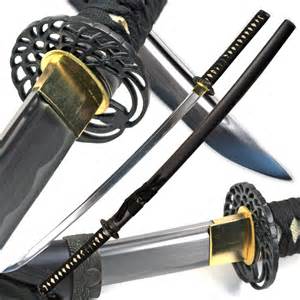
Fear is a two-edged sword. On the one hand, it is protective; a gut instinct is helpful in situations where the facts are not clear. We have an evolutionary trait (called an intentional stance) that we carry in our genes that makes assumptions that have proven to save our hides. Fear is a product of that, a consequence of both our genetic makeup and our desire to survive.

However, in the western world this intentional stance does not always serve us well. Often our fear does not help, but hinders us. The issue is for us to determine why we are afraid. At the end of the day, our actions need to be based upon well-informed decisions, but skepticism concerning our actions is a well-tested intentional stance.

Fear serves us well until we becomes slaves to it.

Perhaps our fear comes down to what it is we actually want: to be correct or to be courageous. Alas, the sword cuts two ways again.

Industry

industry

When did the word “industrial” become synonymous with heinous attributes of our society?  To be industrial has not always meant “continued or increased military spending by the national government.” a term first used by U.S. President Dwight D. Eisenhower in his Farewell Address on January 17, 1961.  Nor has it always been “characterized by a low fallow ratio and higher use of inputs such as capital and labor per unit land area”, in contrast to traditional agriculture in which the inputs per unit land are lower.  Nor has industry been a “transition to new manufacturing processes…”  To be industrial traditionally refers to the efficient effort put forth by individuals, and not to the methodological destruction of other countries through warfare, or the planned and procedural devastation of the environment.  Nor has industry always denigrated human beings to just another “cog in the machine”.

Industrial military complexes, industrial agriculture systems, or industrial revolutions really do not refer to industry at all, but to consumption, profit motivation, and product movement.  I would like to take back the word “industrial” to mean something effective but positive; a compliment if possible.  I would like to see the industrialization of our communities by seeing lawns disappear, being replaced by gardens, and useless fences replaced by useful fencing in of a few small livestock.  I would like us to be an industrial culture once again, but in the true sense of the word.

If we are to become industrial, we must come to understand the system in which we work.  We must understand that industrialization does not mean continued or increased inputs measured in units and efficient processes that lead to positive profits.  I would like to be industrial because that is what human beings’ purpose is: to work.  But we are also moral beings, and so I would like us to be morally industrial.  If we are to work, then we ought to work towards something good, something positive, something sustainable, something worth being.

The good, the positive, is seldom complex and even more seldom reliant upon units, inputs, measured efficiencies or manipulated markets, goods and services.  It is almost as if we have let our language fall prey to the lowest common denominators of those in our society that would have us believe that progress is measured in goods and services created by our industries rather than our industry.  I would like us to be industrious without relying upon industry.  We can, if we only realize that we must.  We must, and so I can only hope we will.

A Split-Second Decision


John Cage was a composer who “wrote” and performed a piece of silence called 4” 33’ (four minutes and thirty-three seconds). It was simply himself, on stage, and sitting at a piano for four minutes and thirty-three seconds. However simplistic and absurd it might have seemed and still perhaps is, I believe that the art, while not found in the actual performance is in fact found in the thought. This is culture.


I believe that many of us are realizing that what we consider culture is really nothing at all but consumerism. Culture is virtuous; consumerism is not. A man sitting at a piano and not playing the instrument, I thought, can be analogous to individuals who find themselves in a consumerist society without being consumers. I know this is a stretch, perhaps, but I believe there is something true in it.


To play a piano is a choice and one must learn, and learning takes time and effort; much time and much effort. That is why so many begin by taking lessons but few come to play the piano. Not being a consumer takes time and much effort.


The burgeoning agrarian movement that seems to be blossoming in this country can be seen as a reaction to a society that has lost its priorities to profit and consumerism, but I like to think of it as a choice, an idea that often times is ridiculed (as John Cage was when he performed his piece).


Perhaps John Cage was reacting to the ever-more complexities of modern classical music at the time? And if so, the analogy becomes even more similar. Rather than complaining as a composer, Cage did something to point this out. In the same way, we can make choices that go against the relentless pressure to consume.


Some may argue that actions such as Cage’s piece or the agrarian movement are simply fads, but I’m not sure that the argument stands. Cage’s piece is famous (or infamous) even today and he as a composer changed the landscape of modern classical music. In the same way I think that as more and more people realize the cost of a consumer lifestyle is not sustainable, they too will choose to take a stand. In Cage’s situation it was not too play for 4 minutes and thirty three seconds.


Our stand against consumerism can start with a split second decision.


Obsolete Aptitudes

wooden plane


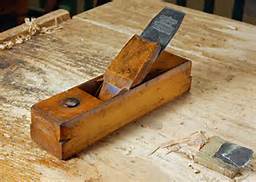
Just recently I was given three wooden hand planes ranging in size from a 9”-app. 16”. Since then I have been learning to use these “obsolete” tools in the shop. I have rubbed and polished the irons and waxed the soles. I’ve spent time practicing setting up the irons for just the right whoosh sound when I run the planes over the edges of the wood. In the process, I’ve learned to “read” the direction of wood grain and to feel if the irons are sharp and in place. I have learned to recognize characteristics of both the tools I am using and the wood that I am working. My education continues.


I’ve gotten better in the past weeks and it has cost me a lot of wood shavings and rough edges. But, progress is being made. I am told and hear that such things are obsolete, but I disagree. In fact, I would argue that such aptitudes are necessary to understanding not only woodworking, but also what it is that makes us human. The answers that I find in these old “outdated” wooden wood planes do not come easily, but every one of them are applicable. The questions answered by such tools are far beyond a push of a button or trigger on one of my electric tools and at the same time apply equally to both the old wooden planes and the electric planers and table saws that I use daily.


I watch my hands as I place them gingerly on the well-worn wood of the planes and feel the weight and the balance of the tool. I listen to the sounds the irons make as I hope for a smooth glide but often get the chatter of a miss-set or unsharpened blade. Where I learn to listen to one tool, I learn to coax the other. Sometimes I remind myself that I can easily joint an edge with a machine, but then I make obsolete something too important to forget.


Such experiences make for a lonely life sometimes, surrounded by modern humans and our mechanical aptitudes, but I’m not sure that convenience and modern “necessities” are worth the cost of losing ancient knowledge and know-how. Anyway, as I begin to look around, I’m not so sure how alone I am in my obsolescence.


It is hard to describe and perhaps even harder to understand, but watching the shavings pour out of the top of the planer when I do get it right is a memory that is seldom made when working with modern tools. I am asked, “Why bother!?” and to that question I must answer, “To ask that is to not understand the answer.” The experience is not mystical, but is necessary. It is not obsolete, but essential.


Dreams

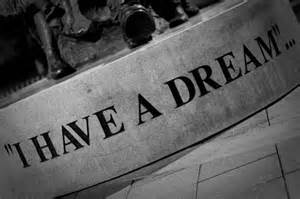
I have a dream

Dreams

To dream of making a dream a reality takes foresight, hope, imagination and a vision. To make a dream a reality takes those things, but it also takes a hefty dose of courage, hard work, money, and willingness to give up comfort in most of its forms. This is why it is easy to dream, but difficult to live your dream.

Be ready to smile when your friends, your family, and most others remind you of how many ways there are to fail, how good you have it and how you should “give it a second thought…” or how it is simply impossible. These will be bumps in the road in comparison to the endless work and hours, to the face of poverty staring in your window, the relentless pummeling that you will take physically and mentally. Make no mistake, to make a dream a reality you must give up the dream…but only almost.

I say “almost” because dreams are not made to be broken. Live your dream!

If you have a dream first make your mind up to do it. Secondly…do it. It really is that simple. Afterwards, don’t look back.

Regrets

To have regrets is easy: take the path most travelled, bury your hope and your imagination; your vision. To make your regret a reality takes those things, but it also takes a hefty dose of fear, making decisions based upon what others advise, and willingness to give up your dreams. This is why it is easy to forget your dreams, but difficult to live with that decision.

Be ready to smile when your friends, your family, and most others remind you that you could of, or should have if only had. These will be bumps in the road in comparison to the endless days, months and years of remembering the dream, the face of comfort staring in your window, and the relentless pummeling that you will take as you wake up at night and realize that they were right. Make no mistake, to make your regrets a reality you must give up the dream…completely.

I say “completely” because regret lasts a lifetime.

If you have regrets, first recognize them as regrets. Secondly…change them. It really is that simple. Afterwards, don’t look back.