life

Patience

patience

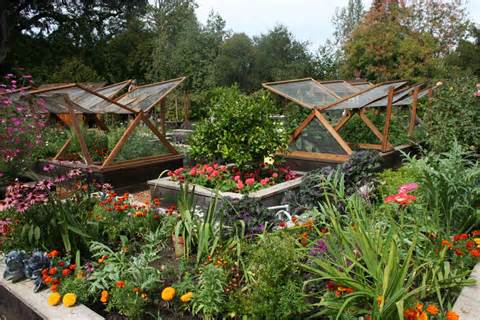
I am told quite often to have patience, but I watch my tomato plants and they seem to grow inches everyday, but the fruit remains green. Large, green globs of fruit hang heavy on the vines. I can taste the fruit of my labors; I envision the salsa if only my peppers would hurry.


My peppers are bearing fruit as well, but the plants themselves haven’t grown much. They look healthy now, but only after some attention. I watch as peppers sprout from white flowers, healthy green, red and purplish. I watch the peppers and envision baskets of Anaheim, Joe’s Cayenne, Poblano, Jalepeno…, if only my tomatillos would get bigger.


The tomatillo plant was given to me by a friend of mine; the plant is beautiful. Small, yellow flowers wielding to pockets of green, sticky fruit. Spreading its spindly branches, I tie the plant religiously to the homemade stands I’ve built. Dozens of green bags hang precariously from the plant, and I check often for the fruit hidden inside. The green chili that I make from the peppers and tomatillos always taste good with a homemade beer, if only my hops would hurry.


The cascade hop plant is probably my favorite plant in the garden. It hangs heavy with sticky leaves and gorgeous, small green cones of goodness. The lupulin inside the cones await golden nectar. The plant is a fast grower, and the hops that spring forth (with a little help from the bees this year) are lovely light green and smell of the goodness that beer is. I plan to brew a honey porter, if only the bees would hurry with their making of honey.


I added a honey super to the hive two weeks ago. The last check on the super, the little girls had begun to make comb for the honey that I hope will soon be. The bees have been a favorite addition to my garden. They have done so well this year. I really didn’t get the bees for honey production, but out of curiosity. But I remember the addition of the second hive box. They filled it hurriedly and I worry about the bit slower production on the honey super. I have mason jars that I can almost taste the honey dripping from the spoonful’s that I ladle from them. Honey harvest is often in September, and only if the girls have enough for themselves. August is almost here.


August is almost here and with the end of summer begins the fall. I remember the times past in the fall as the leaves change and cool evenings bring the leaves to the ground. I’ll gather them and send them through the shredder for mulch over the winter. I always like that job because it is somehow calming, but it does make me wonder where the time has gone.



Killing Chickens

Description White chicken.JPG

I killed a chicken today. I say “killed” because I did not “take its life”; it did not “pass on”. I took a knife and I slit its throat. To kill and animal ought to be an act of respect, and I hope that I do the bird justice when I eventually put her in a pot and make chicken and dumplings with her. She was a nice looking bird if not a bit old. She’d had a good life, which is important.


I also think that it is important for everyone that eats meat to kill their own food at least once. It is never a pleasant experience until after the act of killing when it is easy to differentiate the food aspect from the living creature aspect. Somehow in that split second it is easy to understand how fragile all life really is and the cost that is paid for living. This is perhaps one of the greatest personal motivations that I have for trying to become self-sufficient.


I’ve killed a number of animals over the years, all of which I’ve put in my freezer and eaten, except for a few sheep that I helped someone kill in order to put in their own freezer. Death is certainly part of life, and is no doubt a part of becoming self-sufficient: we have to eat. Self-sufficiency is in some ways self-realization and in the bigger scheme of things, the realization that we are part of a greater cycle which will continue with or without us.


I thought about that I was a part of; the cycle that would begin with the death of the old bird. The owner of the chicken had bought four new pullets to replace the doomed chicken. I would eat the chicken and eventually the cycle would come full circle with my own death. This is not morbid or odd; it is beautiful actually.


More and more, as the realization of what it is to become self-sufficent grows along with my skill-set, I realize the beauty in the idea of self-sufficiency whether it is through my new found love for “Bee TV” (pulling up a chair with a cup of coffee and watching the bees fly to and from their hive), growing a garden, carpentry, mechanics, putting up drywall (I did that last week, one of my lesser favorite skills) or killing a chicken for a friend.


I thought about it and concluded that it would not show the respect due the old chicken had I simply referred to her death as a “passing”, or that I “ sent her to a better place”. I killed a chicken, simply put. But her death symbolizes something greater than can be described, pronounced or understood.

Box of Bugs: Chapter 2

Description Beehive.JPG

It’s been two months since I became a beekeeper, and yesterday I ended my stint as a beekeeper. I still have the bees, make no mistake, but yesterday I decided to quit feeding them. You see, in the beginning when you buy a package of bees they have nothing but the box you give them. To give them a head start, you feed them sugar water. Yesterday I took the feeder off the hive since they have grown significantly. Now they forage for their own food as bees should. It was difficult: becoming a bee-watcher rather than a beekeeper. I worry about them. I know that I shouldn’t because they are bugs that forage for food; that’s what bees do.

But nevertheless, my mind won’t let go. They are “my” bees after all. It seems that I have a relationship with each of the 30,000 or so bees that must live in the two-deep hive that they have made home. Although I know that it is impossible, I still can’t get around the hope that they know me. The have no such thoughts, I know. All of this anthropomorphism is tiring, and yet I know that when I am done writing this I will go out back to visit them.

Yesterday they bearded the front of the box as it was hot, and as bees are apt to do; and yesterday I worried and fretted. This morning I sat in my chair outside the hive with coffee and watched as the hive came to life. Perhaps this is the life of that which I have become. It is true that it is simply a box of bugs as I have written previously, but it is a box of bugs that is full of mystery and muster a fascination that I have not had in a while. I want us to understand each other, but realistically they are barely aware of me. They do what bees do and I, well I watch what bees do.

When I open the hive see the amazing amount of work that they do, both as individuals and as a hive I am dumfounded and they continue to work. Work defines the bee. I cannot help but be a little envious of such a life: doing what needs to be done, when it needs to be done, for no other reason than it needs to be done. What simplicity. What directed significance; and all in six weeks or so during the summer. And now I step back and let them be what they are naturally. It is nothing to them and a major step for me.

In my determined trek to be self-sufficient I am finding that I am the most dependent of all creatures when a simple bug can teach me freedom by doing nothing more than that which it does so flawlessly. Maybe I am worried not about the bees and my feeding them, but about myself as I slowly strip away the false sense of independence replacing it with the very real sense of awareness that it is me that needs to learn to do what needs to be done, when it needs to done, for no other reason than it needs to be done. I continue to learn from a box of bugs, and am humbled to do so.

Ever Changing        

Image


As the seasons change they remind me that time does undeniably pass us by.  In the past few weeks I’ve seen the tiny seedlings that I started indoors grow leaps and bounds.  I’ve seen the parsnip poke its miniature shoots out of the soil covered in dead leaves and compost that itself has stood the test of time.  I see the kale and the carrots beginning to show out of the earth itself.  The weather is getting warmer and as it does our new bees begin to become more and more active.  We did our first hive check this weekend, and “my girls” are doing fine.


“My girls” indeed!  As I watch them busily about their business it dawns on me that these “girls” will not be the girls that my family meets when they come to visit later this summer; these “girls” will not be the ones that I take honey from (if at all) later this summer.  This hive will not be the same hive at all.  They will all have passed their jobs on to their sisters that they so diligently raise as I watch them fly in and out of their new home.  It saddens me…at first.  I realize, once again, that this is the nature of the seasons, is the nature of the years that have passed me by and continue to do so.  Change is the nature of life itself.


I watch as my parents get older and my nephews and nieces begin anew, with wonder in their eye: young and not thinking about time at all.  Like the hive I call my own we are not the same people we were a mere seven or eight years ago, literally or figuratively.  The cities we live in change; the landscape, the people, our friends, our jobs, our plans, our goals, our desires.


In fact, change is the only consistent.  As I complicate my life (to eventually simplify it) I realize more and more that this aphorism rings true.  As I see the very ground in my garden go from unfertilized lawn, to newly dug soil, to composted mulch full of worms and life I realize that I did not start this cycle of evolution in my garden; that this cycle never had a beginning nor will it have an end.  I watch the plants come up excited in anticipation just as I was last spring and will be in the springs to come.


Perhaps adding to my newfound goal of complicating my life, I must realize that I have a choice: to act with or react to the nature of life and the living.  As a gardener and now a keeper of bees, I try to be a steward but I am really an audience member to the grand change this is life.  But life, our lives, is short with no intermission, no stage, no actors, and no scenery.  I started out a suburban gardener, but I slowly realize that the garden has always been there and that I am only reacting to it.

The Garden

Image

This time of year is difficult for the gardener.  It is that time when the first seeds are put into trays and put under lights to “extend the season” as we say around here.  I am no different.  I have my onion sets, my kale, hyssop and lemon mint (for the bees) already going.  I just put up trays of peppers and tomatoes in my workshop where they are protected from the cold-swings outside.  This time of year reminds me of something that I typically don’t like to be reminded of: that I have no patience.

But patience is what it takes to succeed.  Patience to remember because “All good human work remembers its history” as Wendell Berry writes, and patience to realize that all that we desire will not be fulfilled.  Gardening, and all that it stands for is a pleasant but often stern reminder that we lack the very thing that we need the most; that is, the patience to truly understand that it is not necessary to always get what we want.  Philosophy is an endeavor that is very closely related to gardening.

Philosophy is directly translated as “ philo-sophia: the love of wisdom”, and wisdom takes patience just as growing food takes patience.  There are those that understand this such as John Seymour, Michael Pollan and Wendell Berry and others. But in doing philosophy, one soon comes to understand that the first step in being a philosopher is to recognize one’s own limitations, called ignorance.  The gardener soon comes to realize their ignorance by recognizing microclimates, soil and the plants themselves among many other things.  This process of recognizing and further more accepting one’s own ignorance takes patience whether that is with regard to gardening or to understanding philosophical concepts.  The trick is to recognize our limitations, overcome our ignorance and have the curiosity to realize that doing so is important.  That takes patience.

To become patient takes discipline. Berry writes, “Correct discipline cannot be hurried, for it is both the knowledge of what ought [italics mine] to be done, and the willingness to do it.” (People, Land, and Community)  There is an “ought” to the correct discipline, and it is in this aspect that we have lost our way.  We “ought” not take advantage of each other and we “ought” not treat the environment as a source of raw material and a place to cast our trash.  We can and we do, but we ought not to.

We have lost our way but in doing so, we become aware that we have lost our way.  From this point it will take time, and with that cost comes the necessity of correct discipline and patience to adjust ourselves to the ignorance that has engrossed us.  Our curiosity has led us down paths unimaginable.  We have created environments and introduced changes that were far beyond most people’s wildest dreams a mere fifty years ago.  Our curiosity alone, however, has proven to be problematic because we have not had the patience to learn how to use it.  A garden can put your curiosity back on track; it can teach us what we ought to do with the time that we have.

Rather than a philosopher that happens to garden, my garden has become a simple reminder of what it takes to be a philosopher: correct discipline, correct curiosity and the patience to tell the difference.  It reminds me that I have limitations that I must live within or pay the price for not doing so.  It reminds me that I am dependent upon people that I do not know and processes that I am not aware of nor have control over, and that I have a choice to change these problematic realities.  My garden reminds me that I have yet to gain the patience that I need in order to gain the knowledge that I must have. My garden reminds me that I have time that I must take, that I must be patient to do so, and that I must take the time to realize that.