organic

After Death

life-afte-deathAfter years of living in cities, longing for the country; perhaps some peace and quiet, I look out over twenty two acres of forest and a half acre of tilled earth to become garden next year.

A dream come real is no longer a dream; a reality in the form of work, wood and wonder.  Reality offers it all and reminds us with the birth of reality comes the death of a dream.
Simple needs become clear and concise.  They are many reminding me that a simple life does indeed necessitate complication.  Work is the key word, the kind of work that goes beyond a scotch in the evening listening to music and imagining and composing wishes.
Happiness, the quality of contentedness that so few find is possible, but the road is long, and comparisons begin to take the joy away from the reality.
For those who wish to live their dream do not compare, do not wish for more.  The dream as reality will not be what you think, but it will be life as it is, not as we wish it to be.
The future is still clear, the present is all encompassing and the past is full of memories, if not regrets and happy times.  Perhaps it is age, but most likely it is the realization that a dream come true is the death of the dream.
Self sufficiency has been and will continue to be the goal, it is now only a daily endeavor, a clarity of mind and a soreness of the body.  The dream perhaps lives more clearly now…after death is the life that I have dreamed of.
An Update on the Experiment

experiment

This particular post is two things: an apology and and explanation.

First, an apology.  I realize that blogs are particularly important to those who write them, and less so to those who read them.  That being the case, I must still apologize for not being consistent, if only to myself.

Secondly, an explanation.  I have embarked upon an experiment in self-sustainability that involves moving from one side of this country to the other.  Such a move takes time and effort which explains my apology above.  This experiment involves buying a small (22 acre) plot of land with a house, a barn foundation, and a full woodworking shop.  This is the result of several years of contemplation and contrary thinking that has cost comfort and security, I hope, to a good end: to see just how self-sustaining an individual can be.

To this end I would like to invite anyone interested to visit two new sites that will be up and running this fall.  First, I will have a podcast called “The Philosophy of Gardening” and at some point and time a youtube channel called Trollcastle Works.  These endeavors will simply be a video/audio blog of ongoings around the property that will include forestry work, woodworking and of course gardening.

I hope to have several projects going that include: a small fruit orchard, vegetable garden, furniture making and carpentry, hops and grain fields, and brewing beer.  The podcast and videos, I hope, will be of interest to anyone that might consider self-sustainability as a way of life.

I call this an experiment, because I see 100% self-sustainability as being the speed of light, and the experiment’s goal itself being to see how close to this ideal that I can get.  There will be failures and there will be accomplishments, and I hope to share both.

The reason for this experiment is, of course, personal, but it stems from a belief that self-sustainability for individuals and families is the only moral option.  What better way to test this belief than putting it in practice!

I hope that some of you consider following me on this adventure!

Industry

industry

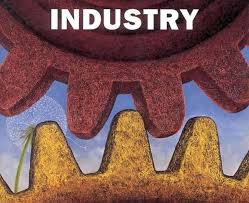
When did the word “industrial” become synonymous with heinous attributes of our society?  To be industrial has not always meant “continued or increased military spending by the national government.” a term first used by U.S. President Dwight D. Eisenhower in his Farewell Address on January 17, 1961.  Nor has it always been “characterized by a low fallow ratio and higher use of inputs such as capital and labor per unit land area”, in contrast to traditional agriculture in which the inputs per unit land are lower.  Nor has industry been a “transition to new manufacturing processes…”  To be industrial traditionally refers to the efficient effort put forth by individuals, and not to the methodological destruction of other countries through warfare, or the planned and procedural devastation of the environment.  Nor has industry always denigrated human beings to just another “cog in the machine”.

Industrial military complexes, industrial agriculture systems, or industrial revolutions really do not refer to industry at all, but to consumption, profit motivation, and product movement.  I would like to take back the word “industrial” to mean something effective but positive; a compliment if possible.  I would like to see the industrialization of our communities by seeing lawns disappear, being replaced by gardens, and useless fences replaced by useful fencing in of a few small livestock.  I would like us to be an industrial culture once again, but in the true sense of the word.

If we are to become industrial, we must come to understand the system in which we work.  We must understand that industrialization does not mean continued or increased inputs measured in units and efficient processes that lead to positive profits.  I would like to be industrial because that is what human beings’ purpose is: to work.  But we are also moral beings, and so I would like us to be morally industrial.  If we are to work, then we ought to work towards something good, something positive, something sustainable, something worth being.

The good, the positive, is seldom complex and even more seldom reliant upon units, inputs, measured efficiencies or manipulated markets, goods and services.  It is almost as if we have let our language fall prey to the lowest common denominators of those in our society that would have us believe that progress is measured in goods and services created by our industries rather than our industry.  I would like us to be industrious without relying upon industry.  We can, if we only realize that we must.  We must, and so I can only hope we will.

The Foundation of Life

soil

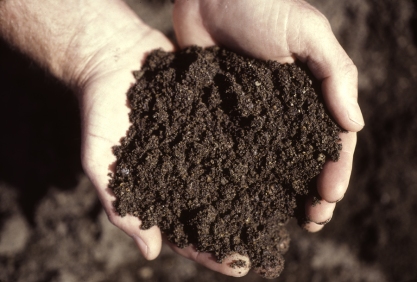
Soil is the foundation of life, and so in my quest for self-sustainability I have chosen to start at that foundational point this year. On my quest to be self-sustaining, this year started with building my own seed starting soil. With $8 worth of vermiculite I have about three wheelbarrows full of starter soil, and the vermiculite was optional. I think a little sand would have done the trick. Nevertheless, the path is clear.

Self-sustainability is becoming more and more important as the industrial agriculture machine slowly chews up its gears and we are left with fewer and fewer moral options. But why stop at not buying industrial food products? This is just a beginning, and a beginning that ironically ends at the very soil that all of our food eventually comes from.

I started with well composted manure, grass and food scraps collected all last year and turned regularly until winter set in. Before putting the soil in my homemade boxes, I ran it through the chipper/shredder. This fluffed up the soil and chewed up some of the bigger chunks. I then filtered it through my homemade soil colander (four 4×4’s with ¼ wire stapled to the bottom) into a wheelbarrow and added vermiculite.

I have started my leek, onion, cabbage, and peppers in this mix and have watered (so far) about four times with no sign of compaction. I have yet to see if my little seedlings, after sprouting, like their new home. Tomatoes go in this weekend.

It is difficult to explain the satisfaction of not buying products in order to be self-sustaining. Although I have a long way to go, this new starter soil is a further new beginning on the road to independence.

Plantitics

plantitics

Its coming up, and it’s coming up soon! Plans are being made as we speak in back rooms and workshops; in dusty places and in living rooms and across America. Are we all ready? Are we all willing? What will happen in the future!?

Tomatoes must be started just at the right time, but can they share the manure with the peppers, and where will the leek and onion be placed (those feisty fellows)? I have to sell the cabbage on sharing the space with the eggplant and at the same time make sure the squash have enough room to spread their greedy tendrils.

The funding must be in place and I have to find it somewhere. I know a rich banker down the street with horses. Perhaps there? I’ve found the gold there before; maybe again.

Of course, I’ve readied the playing field last fall but there are always changes and surprises. The beans let me down every year, but the hops always have my back.   This year the fruit trees will bear fruit and the raspberries look strong. It’ll be rough and some will go down in their prime, but that’s the rough and tumble game of plantitics.

I have to appease the worms, but they are blind and powerless; I, of course, am the master and they the slave. I have the power as the president of my garden!!!   I am the slave to no one!!! The plants will do as I say!!! They will bend before my mobility. But the worms…

I have to appease the women’s vote of course and so I’ve planted some early food in the hives to get them on my side. They’re coming out in droves on the warm days. I can count on them. I am for women’s rights and have promised a new super when the summer comes. They know I’m good for it.

I have to answer to the herb garden’s requests as they can be finicky at first.   But the tomatoes fund my work. You can never trust the ketchup lobby, but I’m strong in the salsa community. I will over the garden this year by promising to keep the “invaders” out. The Japanese beetle will be banded from our garden!

I have a plan for the plantitics of this year by pleading my case to the courts of nature. My garden will succeed and I will live as a king yet again…at least for another year.

A Split-Second Decision


John Cage was a composer who “wrote” and performed a piece of silence called 4” 33’ (four minutes and thirty-three seconds). It was simply himself, on stage, and sitting at a piano for four minutes and thirty-three seconds. However simplistic and absurd it might have seemed and still perhaps is, I believe that the art, while not found in the actual performance is in fact found in the thought. This is culture.


I believe that many of us are realizing that what we consider culture is really nothing at all but consumerism. Culture is virtuous; consumerism is not. A man sitting at a piano and not playing the instrument, I thought, can be analogous to individuals who find themselves in a consumerist society without being consumers. I know this is a stretch, perhaps, but I believe there is something true in it.


To play a piano is a choice and one must learn, and learning takes time and effort; much time and much effort. That is why so many begin by taking lessons but few come to play the piano. Not being a consumer takes time and much effort.


The burgeoning agrarian movement that seems to be blossoming in this country can be seen as a reaction to a society that has lost its priorities to profit and consumerism, but I like to think of it as a choice, an idea that often times is ridiculed (as John Cage was when he performed his piece).


Perhaps John Cage was reacting to the ever-more complexities of modern classical music at the time? And if so, the analogy becomes even more similar. Rather than complaining as a composer, Cage did something to point this out. In the same way, we can make choices that go against the relentless pressure to consume.


Some may argue that actions such as Cage’s piece or the agrarian movement are simply fads, but I’m not sure that the argument stands. Cage’s piece is famous (or infamous) even today and he as a composer changed the landscape of modern classical music. In the same way I think that as more and more people realize the cost of a consumer lifestyle is not sustainable, they too will choose to take a stand. In Cage’s situation it was not too play for 4 minutes and thirty three seconds.


Our stand against consumerism can start with a split second decision.


The Choices We Make


choices

When I chose to get a dog from the pound about five years ago, little did I know of the ritual that would soon become my life. Every morning up at 5:30 and after the coffee cup hits the coffee table for the final time, a nudge (toy in mouth) and off we go for our morning walk. In the afternoon after work another walk, work in the woodshop or in the garden, and some playing in the yard until it is time to eat. Then, off to the favorite bed she goes watching the house from her favorite perch.

The choice to get a dog from the pound has obvious implications. My life has changed, but so has hers. I made a choice, and that choice has brought me as well as my dog a great deal of happiness. These are the choices we make, and we continually make. Other choices that we make do not always have obvious implications.

When I choose to go to the grocery store (the walk of shame as I call it), or to buy something at the local hardware store the choices we make there also have implications. However, those implications are not always as clear as bringing a dog into your life. There are animals that pay a high price for the choices we make. We make choices for many reasons, but those reasons should always be clear to us as well as the consequences of the choices we make.

An easy choice is not always the right choice, and those choices that we deem as difficult should not always be difficult. We can choose to do the right thing, but to simply do the right thing takes time, it is a habit that we must acquire. I believe that most of us know what the right choice is but are often tempted by the easy and swayed by the convenient. Our choices become others and not our own.

Perhaps it’s time to take our choices back, but this too is a choice; at least for now.

Look Up

tomato sky

Gardeners tend to spend a lot of time with a shovel in the ground digging and covering up. Making sure seeds are laid comfortably to rest bends the neck forward and the care that we give to the earth tends to take its toll on the broad perspectives that often help us understand why we do what we do. Shoulders bent to the ground, we look at the holes we dig, lay the seed gently in the ground, and cover them back up. To grow your own food is a revolutionary act, but to understand why we must revolt, why it is imperative to grow our own food, takes the willingness to look up at the sun that makes what we do possible and why we must do it.

One of the most freeing things I’ve ever read was that gardening is a revolutionary act. But like all meaningful endeavors, it comes at a cost. Sometimes, to remind myself of this, I go out in the garden late at night and look up. I always think about when the stars were considered “holes” in the cloak of the sky-ceiling; the light coming down from heaven. Sometimes I felt like the small seeds that I covered diligently with soil only to get excited when they reappeared as a one small and ever so slight leaf on a shivering stem.

How is it that revolutions start? With one, small act while all the time remembering what that act stands for and why we do it. As David Blume stated in the Los Angeles Times, “By being an organic farmer, you fly in the face of every part of the power structure,” Blume said. “Refusing to use chemicals, refusing to use genetically modified seeds–it’s a real act of defiance.” And what better reason to garden?

Give it to “the Man”; plant a tomato! Screw the corporations that siphon our freedoms, and buy a chipper/shredder! Save and trade seeds, and save human history from the Monsanto’s of the world! Do all of these things and do them proudly, but always remember why you do them: look up and be awed by nature in order to understand why revolting against almost everything we’ve been taught is so important. The corporations are the result of people forgetting to look up every once in a while.

Albert Camus once wrote that nothing will matter in a million years, and that is probably true, but revolutions do not think about futures; they act in the present. What better thing can we do than to do what we know is right, and know why we do what we do. There is nothing more gratifying than doing the right thing except for knowing why it is right.

So, look up every once in a while, while kneeling at the alter of the earth. Plant those seeds that you’ve saved and then lay in the grass dreaming of a day when we are all revolutionaries.

Revolution!

food revolution

The “new” food revolution seems to be upon us, and I hope that it turns out to be a revolution that lasts. As revolutions go, this is a more positive one as it is seems to be a return to basic facts rather than pie-in-the-sky, wishful thinking on the wings of dreams. The new food revolution is, rather, pie-in-the-pan, hard-work on the backs of those who see the potential in acting upon truth.

As most revolutions, this one has its (let’s say) issues. First, while the wagon has pulled out, there are still those jumping that don’t belong. Simple words like “organic” are now being touted by very non-organic growers and worse, being taken over by bureaucratic system that has spent so much time and effort working so hard against the faithful cultivators of quality; just ask Joel Salatin! Other corporate confusions now include honest and innocent terms like “free range”, “cage-free”, and of course we have the GMO-battle: a dishonest battle about honest labeling.

As opting out becomes more and more tempting, we must remember that perhaps these dishonest, deceitful, and mendacious moves by agribusiness all over the world may just be desperate endeavors by the few and the powerful. We must plant on! Discard the lawns and the mowers, pick up the hoes and the rakes. Buy a chipper for god’s sake! Let ‘s ignore the ignorant and take on the towers of trade that would keep us under their thumb!

Feed the worms, and feed yourself! The time is now!

The Lowest Common Denominator

 lowest common

Often and unfortunately our conversations concerning what we do land upon the lowest perch of human achievement: that of measuring all accomplishments by their economic consequences. This is what I refer to as the lowest common denominator. I cannot accept that the ultimate consideration of our acts is monetarily important at all. When discussing new movements in farming for example, as we are seeing in this country (the US) today, I cannot imagine that the people involved in the agricultural movement are involved only for economic gains and monetary profits.

I do not consider the profit received from my garden, and from buying locally produced meats to be measured monetarily. Rather, the rewards that I get from knowing where my food comes from and how it was treated overrides any economic cost. I would argue that those of us who take pride in learning new skillsets and in understanding concepts that society tends to take for granted are not motivated by possible profits, but by personal gains in knowledge, in peace of mind, in the understanding that what we do can have a virtuous aspect that cannot be bought and sold.

I would suggest that the food-movement not consider itself by the judgment of others that can only understand or are only interested in monetary motivations. It is difficult not to do so, especially when being considered from a public point of view. The phrases “there is no money in it” with regard to small-farming enterprises is easily dismissed with closer inspections of the facts. The argument that small-farms are in fact more profitable than large, agri-businesses if the subsidies to such businesses are taken out of the equation are beside the point. More important to the point is that most small-farm enterprises are not motivated by money alone. The point is that in not relying upon agricultural subsidies, small farms are more autonomous, offer a more honest product, and are not held accountable by faceless stockholders but by local consumers that many know by name.

While it is true that to live in this society, money is a necessary component; it is not true that money is the most important component. This viewpoint has led us to the deplorable situations that we find ourselves in today both in and outside of agriculture. The small-farming movement that seems ubiquitous in the country today reminds both those who are brave enough to venture out and those who are thoughtful enough to support such operations that money is the least important of all aspects of our lives. It is by the standards of bravery, of thoughtful action, of honesty and honest work that we ought to judge ourselves and expect others to judge us by.

While we cannot often fight the filth of large agribusiness we can battle the ignorance that allows such business to flourish. However, I would argue that we cannot do so by judging ourselves and what we do by the lowest common denominator. There is so much more that we are motivated by other than money. It is important for us involved in this movement to remember this fact and remind others that money is not always worth the trouble.