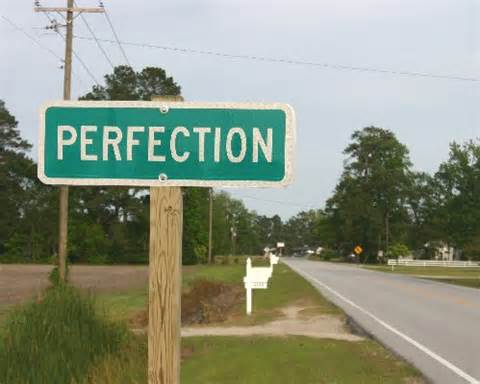
philosophy

Dreams

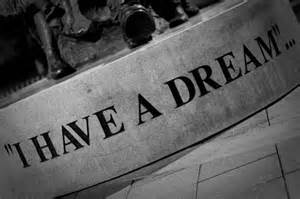
I have a dream

Dreams

To dream of making a dream a reality takes foresight, hope, imagination and a vision. To make a dream a reality takes those things, but it also takes a hefty dose of courage, hard work, money, and willingness to give up comfort in most of its forms. This is why it is easy to dream, but difficult to live your dream.

Be ready to smile when your friends, your family, and most others remind you of how many ways there are to fail, how good you have it and how you should “give it a second thought…” or how it is simply impossible. These will be bumps in the road in comparison to the endless work and hours, to the face of poverty staring in your window, the relentless pummeling that you will take physically and mentally. Make no mistake, to make a dream a reality you must give up the dream…but only almost.

I say “almost” because dreams are not made to be broken. Live your dream!

If you have a dream first make your mind up to do it. Secondly…do it. It really is that simple. Afterwards, don’t look back.

Regrets

To have regrets is easy: take the path most travelled, bury your hope and your imagination; your vision. To make your regret a reality takes those things, but it also takes a hefty dose of fear, making decisions based upon what others advise, and willingness to give up your dreams. This is why it is easy to forget your dreams, but difficult to live with that decision.

Be ready to smile when your friends, your family, and most others remind you that you could of, or should have if only had. These will be bumps in the road in comparison to the endless days, months and years of remembering the dream, the face of comfort staring in your window, and the relentless pummeling that you will take as you wake up at night and realize that they were right. Make no mistake, to make your regrets a reality you must give up the dream…completely.

I say “completely” because regret lasts a lifetime.

If you have regrets, first recognize them as regrets. Secondly…change them. It really is that simple. Afterwards, don’t look back.
Vacation


vacation pic

I’ve never really enjoyed taking a vacation. The time, to me, seems ill-spent and empty. I wonder about this: is there something wrong with me, or do I simply need to “relax”? I don’t think so. I think that there is something more going on. Vacation implies the lack of work, but the lack of work is not necessarily a good thing unless, of course, you don’t like your work.


Now I’m not a great fan of polls and statistics, but to make a point here, more than 70% of Americans do not like their jobs! If that is the case, then I can certainly see why so many people put a price upon free time. But I don’t think that makes vacation a positive thing. Vacation is only seen in a positive light if you don’t like your job. Perhaps a better approach than dreaming of beach vacations and beer drinking debauchery is to simply do something that you like to do.


I love my job, and I am in the process of transitioning into another job that I believe I will love even more. This is what some in my family would call a “luxury dilemma”. I would have to concur. The dilemma, however, cannot be solved by taking a vacation but must be solved by doing some work. Research and development attitudes must be taken; assessing risk and defining responsibility must be clarified. Economic outcomes and expenses must be taken into consideration. This all sounds like work, and that is because it is.


I often hear people dreamily wave around the idea of “never working again”, but I firmly believe that they would be miserable after about two weeks. Work defines us, and not having work is in a sense losing one’s self. I am aware that in our modern and progressive societies we have been conditioned to define as work tedious tasks and mundane bureaucratic business. Often we have become nothing more than monkeys in a box looking longingly out sealed windows. We have defined work by profit rather than work by principle, and I think this is where the problem is. We must work for reasons other than making a profit.


I am not saying that we need to give the responsibility of our lives over to someone or something else. However, I am saying that our relentless hunt for more money is making us (and many others) miserable. Vacation entails time to be free from work, but this is only a problem if we do not have a job that we would do for free. Being honest with yourself is often difficult, but is always free. Maybe we need to remember that time is easy but is never free. In fact, it may be the most expensive thing we have.

Simple Pleasures

pleasure

There’s something beautiful about seeing bees come out on a winter’s day. Walking out to the bee yard I noticed a few girls flying around. Although the sky was grey, it was just warm enough for a few brave hearts to venture outside. It is a simple pleasure, I know, but a pleasure nevertheless.

It is pleasures like this that make life worth living. It does not take money; in fact money alone is void of the kind of pleasure that is available if we just take time to notice. The garden, newly manured, sitting in the snow reminds me that there are worms deep under the soil. My ear up against the beehive and the scratching and buzzing that I hear, reminds me that we all want the same thing: a safe, warm place.

Perhaps it is this realization that warms my heart on cold winter days. When I realize the beauty that is nature I just have to stop and stare in wonderment. I think that it would be a much better world if we all took time to stand and stare in wonderment at the simple and often forgotten corners of our world.

In the back I hear chickens clucking away. I know that they are fussing about the snow, and perhaps feel a bit of cabin fever already. But they too venture out picking around in the snow, hoping to find a morsel, or maybe just doing it out of curiosity.

I like the smell of a kitchen that people cook in. I like the warmth of a home, and the cold against my face on an early morning walk. I like knowing that we all have a place, all animals; all living creatures. I like to think that there are places that are safe, that people want the best and are willing to work for it. I like to think that there is love in the world, and that there are those that are loved.

I know that these are simple pleasures, but as simple as they are, they are also simply priceless. And so I walk out back and stick my hand down in the dirt, I work on winter carpentry projects with the hope of the coming Spring and Summer. I put my ear up against the hive. I do these things and a smile comes to my face; just another simple pleasure to be thankful for.


Two Sides of a Coin

two sides of a coin

Money is typically defined as anything of value. Money is often used as a means of barter, trade, and for transactions. And so money is not often valued for itself, but for what it can get us. Money, then is useful, but not necessarily valuable. In thinking of this, I realize that there are two sides to every coin.

It seems that much time and effort is spent in trying to become rich in order to buy things that are not necessarily valuable or useful using something that is not necessarily valuable. This seems strangely  a waste (rather than a valuable)  of our time. However, most of us live our lives by this axiom; most of us.

The recent upswing in locavore, organic, self-sustainability and other descriptive ways of living seem to be motivated not by money, but by something far more valuable: happiness. The motivation to turn away from money to “do what’s right”, or to “be more healthy” seems to have its basis in virtue.

Virtue is a philosophical ethical theory founded upon a moral education, which is considered by Aristotle as a good in itself because such a life leads to a higher quality of happiness. Without getting into the philosophy too much, the value of living such a life is found in actually living that life. Money is not valuable in itself. However, living a life of virtue is.

So, one side of the coin seems to be the motivation to be happy, and the other side of the coin seems to be the kind of happiness that matters: the quality of our happiness. Money seems to abide by one side of the coin, but not to the other. Don’t get me wrong; I think that money is a viable tool, a useful means to live comfortably and securely. But I’m not sure that it is the best means.

The current movement towards more viable and sustainable agricultural methods and cultural beliefs is certain to lead to jobs and opportunities that are yet to be seen. But these movements do seem to be good in themselves as well.  We have to be careful. On the one hand, money is a motivator for our dreams, but on the other hand money often undermines the dream itself. Perhaps what we must always remember is that what is useful is often not what is valuable, and what is valuable is not always useful: there are always two sides to a coin.

This Old Hat

old hats

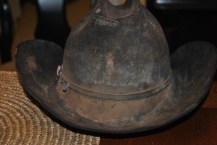
I have an old hat that a friend of mine used to wear.  Now it’s faded and the threads are starting to wear thin.  I’ve washed it a few times, always by hand, but every time I wash it, it seems to get weaker.  My friend, Turid, was from Norway.  She died a few years back of a brain tumor.  When her hair fell out she wore this hat to keep her head warm.  Now I wear it to keep my head warm.

I can’t say that it’s the best looking of hats.  It was bought in the airport in Oslo; kind of a last minute thought.  It’s come a long way from the rack in an airport kiosk.  It is probably my favorite hat, but when I wear it there are many that make fun of me.

“You look like a fisherman in that hat!” they’ll say.

Or, “That’s kinda funky…”

Or, “Have you thought about buying another hat?!”

I smile; they mean no harm.  But, I think of what they’d say if I told them the story of Turid and the hat.  I never do, because I learned from Turi to never say anything that might make people feel bad, if you don’t have to.

I suppose that I could quit wearing the hat and put it up in a special place, a box or frame, to remember her by.  But I’m fairly certain that she would frown upon such a scheme.  “A hat is to be worn…” she might say, “So, wear the hat!”  And I do.

Of course, I’m attached to the hat; it means a lot for obvious reasons, but it has come to stand for more than it means.  I am committed to the hat, one may say.  There are new, and better hats, but none quite so good as this one.  There are warmer hats, and hats that cover my ears on cold days, but none quite so comforting as this hat.

Turid died some years ago, but I had the pleasure of meeting her parents in Bergen Norway, as well as her children.  Her parents made a mark on me; a mark that people rarely make.  They were honest and sincere, and we hit it off right off the bat.  They had dignity and integrity; they had character and were committed.  They were set in ways, not because of tradition, but because the ways were trustworthy, practical, and utilitarian: they are simply right.

Although I only met them for a few hours one night, Turid’s mother hugged me (very un-Norwegian), and told me to take care of Gunnar (Turid’s husband, also a good friend of mine).  Her father showed me his old woodworking bench, worn by years of use.  He, like I have become, was committed.

So, the hat and I have a history and it has become a part of my history.  I love this old, ugly hat but in a way that only those who understand the importance of committing one’s self to something inherently good can do.  I think it’s funny how some cheap, stitched up airport hat can become a treasure and I wonder about those who make a treasure out of things they are not committed to.  This old hat has at least taught me that, and it keeps my head warm enough for all that.

Head or Heart

head or heart

This is part of an old saying: follow your heart. But when I think to follow my heart, my assumption is that in doing so things will somehow “magically” work out. I do realize, perhaps because I listen to my head, that following my heart means a lot of work, a lot of compromise, and as I am beginning to understand: a lot of courage.

Let’s be realistic! Dreams are often best left as such. But following your heart often demands that we forget that fact. In fact, it is often best to do so. I’m sure that many people have realized that much too late. When the dream becomes a nightmare of endless nights, lack of money, and no way out it becomes difficult to remember that it was the heart that got us into the pickle in the first place.

But like love, the heart is a fickle thing, and to truly follow the heart, to make that dream a reality (nightmares and all), often means to follow many paths least followed; often for good reason. When I think of following my heart I always remember that we wake from our dreams and that nightmares end. I remember that money is often found at the end of rainbows.

Perhaps the head or heart question, when I ask it, is already answered and I simply don’t realize it? It’s good to remember that unlike the head, the heart does not ask for permission, directions, or if a dream makes sense or not. The heart is the two year old that we all have inside of us that follows the floating paper in a brisk wind, stumbling down the road with only one goal in mind.

So, the question: do I follow my heart or do I follow my head is in fact a meaningless question because as soon as it has been asked, it has been answered. To not realize this little fact is to live with regret, but only the heart realizes this.

The Cynic Speaks

cynicism

Cynicism is an easy response to so many issues and situations that we face, and we face too many issues and situations to not be cynical. However appropriate a response to sometimes farcical claims and comments cynicism may be, we cannot rely solely upon cynicism. It is, after all, and easy way out.

Climate change is a dangerous situation that we have caused by our actions but yet cynicism seems to be the popular response to the problem of climate change whether that response is ridiculing the obviously clear science that supports climate change or towards those who make unwarranted assumptions with regard to climate change. Ridicule and unwarranted assumptions are part and parcel of cynicism; they are the tools of the trade.

Woody Allen was quoted as saying “Cynicism is reality with an alternate spelling.” That may be the case but what does it get us? To ridicule a position is sometimes warranted, but rarely helpful. Unwarranted cynicism is what we often are referring to when characters like Jerry McGuire state, “We live in a cynical world.”*

I find myself being cynical when I am afraid, frustrated, and realize that I cannot change the reality of a situation that I do not like. It seems an appropriate response, but if I take a minute to think about it, it is not. It makes for good comedy, and sometimes makes us feel better (at least for a short while), but in the end we are left feeling empty and helpless.

Cynicism is also good at helping us cope, but only if we act upon our cynical viewpoints. I have a beehive that is not as strong as I’d like it to be at this time of year. I am fairly certain it will not make it through the winter. My response: “$&#*% varroa mites and idiot anti-environmentalists…Don’t they understand…” I am, however, not going to give up on the hive.

I think that Woody Allen is incorrect about his view concerning cynicism: reality does not care a whit about the cynic or cynicism. The cynic, in fact, does not face reality, but chooses to dismiss it. Now while I am a cynic, I am also a realist. There’s another quote by Oscar Wilde that I think sums cynicism up: ““A cynic is a man who knows the price of everything, and the value of nothing.”

I value the wit of cynicism, but not enough to give up.

*To which Patton Oswalt’s brother replied, “Fuck You!”

The Silence of Stones

IMG_3379

Stones do not wrinkle up and wither away, blossoming into a new flower on the stalk;

Never ending- end.

We stand empty-eyed and stunned.

We cannot see the stones in our life; they seem to disappear over a flat horizon, but reappear.

There are no trees or bushes that have taken root beside the long length of life.

The land is flat, and only old wise rocks lay where life has left them.

They lay there without question, silent.

Silent and wise they rest while we stand open-mouthed and frightened.

They do not move

As we pass them and wonder at their quiet wisdom.

Looking at the many stones

Sitting and sinking into the ground;

We don’t understand a goddamned thing.

Perfect Imperfection

perfection

I decided that putting the leek starts in the ground, most of them looked dead or dying, was a chance that I was willing to make. The onion starts look good. Last year, our onion crop wasn’t that good and I remember wondering why home gardeners don’t often get those vegetables that we all see in the supermarket: those red, oval tomatoes, all sized and shapely, taking their place on the well prepared produce stands or that green, full-leafed lettuce plants in February. Gardeners, at least of my ilk, live in a different world; they live in a world where food often looks like well, food and not products.

With the ongoing and growing movement with regard to food culture, many people are more and more aware of the processes that are necessary to get food to the market. The process is in fact amazing! The process, however, gives us a false sense of what food is. It is not a commodity, the consequence of a closed and well-oiled system. Rather, food is a product of the rather imperfect world in which we live. Food is a product of the soil, of water, and of time and effort and more often than not, chance.

I try to remember this as a put down the small starter potatoes, just poking out their first shoots. I remember my last crop of potatoes. They seemed small and pathetic, at least until I took a bit of them. A little salt water, heat and time and such a potato is truly a work of art. Like art, producing food relies upon a bit of imagination and a lot of elbow grease. The result, whether on canvas or in the ground, is often not what we started out thinking it would be. However, the results, somehow, are always satisfying.

My leeks are doing well as are the onion starts. My tomato seedlings have little blossoms on them as they stare up out of the hothouse. I don’t know what will come of these as the season progresses, but I know the results will not be perfect.

Nature’s process is not perfect, but nature is perfect in its imperfection. While nature is not an artist, nor does it “produce” food, it is a process that we must and always will, rely upon. Nature is a verb, perhaps, but a verb that changes meaning over time; it never sits still awaiting definition. Nature offers a bit of insight into something that we must accept: the idea of perfect imperfection. But if my memory serves me right, imperfection can taste perfectly good!

For the Love of Fear

fear

We talk of loving nature, its harshness and its beauty. But, at the same time we find ourselves fearful of nature. We fear its harshness and it unforgiving ways. But it is important to remember that fear is not in the heart of love. We cannot love something that we fear, and we often fear what we do not understand. And so, we are left with the conclusion that we do not understand nature because we do not understand ourselves. The issue is not nature.

Fear seems to be the great motivator of many people in our societies. I want to farm, to move to a farm, to begin a journey of learning about the thing that I love; of having it teach me, but I am afraid: not of nature, but of failing nature; of failing. Perhaps I talk of farming, its unforgiving nature and simplicity. But at the same time I understand that like nature, farming is as harsh as it is beautiful: it will not help me not to fail. Perhaps it is only a fool that goes to war without fear (as the ancient saying goes in Art of War). That is probably correct, but more often than not the fearful never go to war at all.

Fear is like money, and like money it has a tendency to override all else. This is a shame because we miss so much because we fear failure, or others, or nature. Fear is not all bad though. Fear protects us, and if we are smart it leads us to “think things through” before acting. However, if fear is keeping us safely comfortable, warmly numb, we should be afraid

Perhaps we ought to befriend fear, to make it our partner in crime, our travel companion. After all, it is not going anywhere soon. But like any partner or companion we soon tire of each other and look for blame, we shuck responsibility or even our dreams. Because at the core of us all is the capacity to understand it is not fair to fear; for although it is not in the heart of love fear is a part of being human.