philosophy

Finding Your Way

path

“Finding myself” is one of those phrases that deserves the despite that it often gets. Like many other words and phrases it has become a watered-down excuse in many cases. However, I think that there is something to it. We do find ourselves wondering about who we are, and especially why we are. These are those thoughts that come to us when we wake up suddenly in the middle of the night, the world outside of us silent, creating room in our heads to think. Perhaps it is this silence and space that reminds us that we have lost our way, have never found it, or simply changed without realizing it.

Of course, to lose your way, you must first know which way you are going. This, I think, is where the despite for this otherwise beautiful thought comes from. Many of us who are out to “find ourselves” have never found anything much less our “self”. We have no way to get back to if we have no way to find. This is not as obtuse as it may first seem. Consider where our societies have come to today. We are far-removed from the agrarian lifestyles that we depend upon, the nature that we are a part of, and the relationships we depend upon for our well-being. It is an unfortunate truth that many of us have never experienced any of these lost albeit necessary components to life.

If we have lost our way, then we do not need to necessarily find it again if it was not the path that we wanted in the first place. Good trips are like this: being lost is part of the fun; not having a plan makes the trip interesting and often leads us to the very thing we were not looking for, but needed, in the first place. When I became more interested and involved in agrarianism, it was surprising to me just how revolutionary (in the political sense) that food is. To “opt out” of the system in any way seems to create ripples that are not welcome. I think this is because many people are on a path that they have not chosen. Perhaps losing their way is precisely what they need?

If there is anything that we all need it is to realize that change is the only consistent in life. We all change; whether or not we realize this is up to us. I had a friend that told me that after twenty-six years of marriage he realized that he did not know who his wife was: he had changed without realizing it. They were soon divorced. If there is a purpose to getting older, perhaps that purpose ought to be that we make sure we realize how we change; that we change is not in question.

So, in the end finding your way through life is like so many of the important things in life that get lost in the shuffle: love, family, time, philosophy, fun, and happiness. It is these things that we will have left in our lives if we grow old. It is my hope that we can all find our way long before we realize we can do nothing about the path we are on. Realize change while we can still do something about it, and we will find that life is truly worth living. Finding your way, we must remember, does not necessarily imply that there is path that we ought to be on. It simply means that there is a possible path for us all.

The Real World

the world

What is the real world, but the result of our actions? How we act defines not only who we are, but the purpose that we define for ourselves. In order to live in the world as it is, we must act according to the reality of the world not what we would like the world to be. While this may sound complicated, it isn’t. What is complicated is why we nevertheless continue to act as if we define the world and not the other way around. Examples abound:

“House Speaker John Boehner (R-OH) says he’s “not qualified” to debate the science of climate change, but insists that President Obama should “absolutely consider” a ban on U.S. travel to West African countries experiencing Ebola outbreaks. Senate Minority Leader Mitch McConnell (R-KY) says he’s “not a scientist” when it comes to climate change, but also says it would be “a good idea to discontinue flights” from Ebola-affected countries. Louisiana Governor Bobby Jindal — who studied science in college — says he’ll “leave it to the scientists” to talk about climate change, but says it’s “common sense” to institute a flight ban.”

                -Kate Sheppard, Huffington Post


The fact that there are individuals and corporations that would like to insist on the “illusion” of climate change does not change the consequences of climate change. The fact that individuals react in fear does not change the nature of what is feared. Again, Ms. Sheppard:


“Meanwhile, actual doctors and medical professionals have made it clear that Ebola does not spread through the air, it is not “incredibly contagious” and there is little likelihood of a large-scale outbreak in the United States.”

-Kate Sheppard, Huffington Post


Irrationality is part and parcel of the world in which we live. However, we can change not only who we are, but the purpose that we define for ourselves. To say that we must live “in the real world” is not to say that the world is defined by those who live in it. Rather, it is to say that we must adhere to the real consequences of our actions and our beliefs.  Reason can happen.

Make no mistake: the real world in which we live is defined in a relatively exact, measurable and wholly reasonable way. However, the world by which I mean the one in which we make decisions and create beliefs is dependent upon us as individuals and as societies. We can only hope that there is some way that the quality of the relationship between the idea of the world and the real world itself can rise to the occasion. Otherwise, the often very unreasonable world in our minds will eventually determine the very real world in which we live.


The List

list

Perhaps one of the most significant aspects of getting older is realizing that you are, actually, getting older and realizing the implications of age. This, I understand, is difficult to understand the younger one is. However, I think the lesson learned from this realization is important no matter what age we are. Consider…

One day you receive a letter in the mailbox addressed to you personally. The letter has no return address and is handwritten. You open the letter up anticipating the contents while at the same time nervous, excited, somehow knowing what the letter is. The envelope drops to the ground and you unfold the contents. It is a list. The list, you realize, is a list of your hopes and dreams, your goals and the expectations that you have developed over the course of your life. In short, it is your bucket list. You read the list a bit nervous, a bit excited, as you come across long forgotten dreams and current expectations that you realize you’ve never shared with anyone. You put the list in a drawer, bringing it out to entertain your friends on occasion: telling the story and reliving the moment at the mailbox. Years go by and the paper yellows but does not become brittle. One day you take the list out and realize to your horror that somehow the list is shorter. The thought, “I must be mistaken!” shoots through your mind. This cannot be; lists such as this do not become shorter. But, they do, and your realize this at the same time that you realize your hand is shaking. Instead of pulling out the list to entertain friends, you now hide the list in a box on a shelf in the closet. You cannot face looking at it anymore because you realize that throughout time you have not accomplished the goals, the dreams on the list. You realize that you are getting older, and the list is getting shorter. “How can this be?!” you think. “As I get older, I need to cross out the items on my list!” But you’ve crossed out only a few. The riddle weighs heavy and you reluctantly pull the box out with the list in it. You hesitantly open the box and carefully lay the list out on the table; you unfold the list slowly. You realize when you finally look down that items on the list are slowly fading, right before your eyes. You realize what the list is: it is a list of possible dreams, of possible goals, of possible expectations. It is a list of possibilities and as you grow older that list of possibilities fades.

Although it is difficult to understand and perhaps even more difficult to accept, the list of possibilities in life grows shorter as we grow older. I can only hope that we can realize what is possible and act upon those realizations. I have been told, and have come to believe, that the most difficult step is the first step. Take the first step towards your goals before the list is nothing but a blank and brittle memory.

Focus

focus

I’ve read a rather telling aphorism once: the greatness of a nation and its moral progress can be judged on how it treats its animals. I think Gandhi was quoted as saying it. Nevertheless, the aphorism both horrified me and struck me as very true. I wonder, as Wendell Berry and others like him have often done in the pages of their essays, if the greatness of a nation and its moral progress can be judged on how it treats its land? At the very least, I believe that how we treat animals and the land around us is a consequence of what we think of each other and ourselves.

Up to this point, this blog has considered perspectives that do not put human beings as a centered focal point but rather as a part of a greater reality, one which is grounded in objectivism. That being said, I would like to explore the homesteading theme, the environmental and creative themes that have been addressed from a perspective that does consider human beings as a center focal point. First, look outside of your window and consider what is important to human beings. Secondly, consider the cost of putting a value on that human importance.

Homesteading, small-scale farming (whatever it may be called) seems to be one of those human endeavors that shifts importance from the farmer to the farm: its environment and its animals. Of course, there are exceptions. However, those exceptions aside, I believe that this desire of some to be a part of an environment that is greater than themselves rather than to think themselves as greater than their environment comes from a deep-seated understanding that whatever our convictions the reality remains: we are not important.

Some view this as humanistic blasphemy. However, viewed from the point of view that we are part of a greater whole, the admission that we are not important leads us to ask: what is? I believe that those that have discovered the possibility of homesteading on a small-scale sustainable farm have realized what is important. Truth is important and sustainable practices in all their forms are a part of this truth. This is often presented within the framework of environmental arguments, but those arguments assume that the environment is somehow innately important. I would have to disagree: the environment is important because it reminds us that we are completely and absolutely dependent upon it for happiness not to mention our survival. The truth is, we are not important to the environment, but our environment is of utmost importance to us.

However, we do not seem to be interested in the truth of our situation: our total and utter dependence upon the environment for our happiness and survival. It seems that we put importance upon the façade of independence and the fascia of truth. The façade and fascia of independence and truth are much easier for us to achieve than is the achievement of true independence and the realization of Truth (capital T intended).

If we value comfort, then comfort will be prioritized over all else as will ease and wealth and whatever else we deem as valuable. I think that how we treat animals and the environment as a whole does mirror our false assumption that we are the focal point of the world we live in. Although the world cannot and does not care, we can and perhaps we need to start valuing our capacity to do just that.

Twist

twist 

The twist in my gut; that deep-seated pain; that long needle in my eye.

And as I lie about not knowing, feeling the hurt wind through the veins of my life,

There is no worry as to what the end will be.

There is no need to know that; it will come soon enough.

Doubt

That demon seed of our desires, with wryly fingers and wilting laughter,

It curls the vines of time around our gasping lungs, our mouths gaping open,

Our face contorted by the screw.

One day after another, this seems to never end, and in the end, we call it

Life.

The time of consciousness, the time of being aware of what is possible, and

What we are capable of.

Living consciousness and losing our grip as the coil tightens.

Going on, worsens, or is better; hard to see the difference in the end.

Twist

And writhe in the loop of life

No cycle of right, dead-end of wrong, just the twist of life

And that old forgotten lyric that we use to sing.


Simplify Your Life; Complicate Your Philosophy

simple life 1

Wendell Berry is one of those writers that have a talent for pointing out the obvious when the obvious seems so well-hidden. In his essay “Faustian Economics” he writes, “All are entitle to pursue without limit whatever they conceive as desirable-a license that classifies the most exalted Christian capitalist with the lowliest pornographer.” (pg. 43, What Matters?) This “doctrine” as he calls it is a necessary implication of the idea of a limitless economy.

The “family farm”, the concept that Berry is defending and the goal that I am trying to achieve seems like a simple and straightforward goal…but it is not. The implications of living in such a way as to be independent are many. First, I had to understand what it is that I am trying to be independent from. Secondly, I had to address and accept the limitations of the family farm (cottage farm, hobby farm…pick your term). And lastly, I had to address the cost of giving up on the Faustian idea of economics.

There are quite a few people with similar ideas of living and many of those people have to come to terms with these ideas, including: what is wrong with accepting modern society. Berry puts it forthright! “…Shifting the cost of depletion and pollution from the producer to the general public, the future, and other species…” (Forward, What Matters?) I’m not sure that there are those that can live honestly with these consequences, but I am finding out that I am not one of them.

Like any idea, the idea of a family farm ironically begins larger than life. The would-be farmer envisions endless, healthy fields and forests with a clean running, self-fed stream with no dependence upon modern conveniences. This thought is cut short when one remembers a necessity for most of us: toilet paper. This simple idea reminds us of the difficulties that are involved in going “off grid”, or even trying to live responsibly. Money is a necessary evil on this planet, given that we desire a quality of life that can be measured by any modern means. However, it is important to remember that money is not really the root of all evil, but simply the vehicle in which we travel to find it.

So what are our options with such dreams as independent living and eating responsibly? Berry again drives home what ought to be obvious to any thinking man. The agrarian economic policies would be in order of priority: 1) Nature, 2) Economies of land use, 3) Manufacturing, and 4) Consumer economies (pg. 3, What Matters?). I’ve never thought of my dream with regard to such priorities, but seeing them in writing drives home the ultimate goal: I want to reorganize my priorities.

I would recommend to anyone considering revitalizing their commitment to true, independent living to also re-visit the priorities by which they live by. I think that they will find that to simplify their life, they must first complicate their philosophy.

The Workshop Universe Part I (edited)

Lagoon Nebula (Messier 8)

Respectfully dedicated to my father-in-law, Jorgen Troldborg.  A man who has taught me much.

In the Universe the 2nd rule of Thermodynamics applies: that entropy will ensue. We live with that knowledge comfortably because it is such a slow-going process. But in some cases, entropy is evident and even happens right before our very eyes. Such is the case with the workshop universe at the Troldborg farm. The universe is not as old as we thought. It is, in fact, forty years old because Jørgen (the owner of the universe) was thirty years old when he created it. The Universe is a part of a totality of Universes known as the Troldborg Gård (Troldborg Farm) and Jørgen acts as the manager and general CEO of the place: his creation by design. The workshop universe holds a special place in the history of time here because within its dark bowels lays the history of Troldborg Farm. This is a short story about that history and the entropy that is inherent in all creations including his.

As was stated, the Workshop Universe is about forty years old but the oldest tool somehow outdates the universe by some one-hundred and twenty years. Such illogical facts are not important to the creator. Now if the word of the creator is not to be questioned that tool is an ax of sorts used to split tree trunks and is still usable and is enjoying life as the metaphysical grandfather of all tools in the universe today. What sort of place does such a special parcel of amazing history take up in the universe? I asked the creator himself.

”Some place or another… I think it may be in the attic over the workshop…”

While he pondered the existential space-time continuum of the question, I pondered the importance and place of lesser tools in the workshop. For example, the Drill press, a no-named drill that was once used in a fishing village called Skagen Denmark. ”Of course,” the creator followed up when I asked him about it, “it was originally powered by a windmill in a workshop on the harbor up there. They had a ´pull-station´ and would throw a belt over one of the pulleys there and the drill would be run that way. When I got it I fixed it so it could be run with a little electric motor.” The drill press sits pretty much in the middle of the black-hole of the workshop; there is a black hole in the center of this universe as well. That is to say, right in the middle, surrounded by the insurmountable stash of tools, toys, scrap iron, wood, empty cans, half-full cans, fuel barrels, plastic buckets, chains, rope, plastic ties, nylon webbing, electric motors, gas motors, reserve parts, axles from cars, tractors, mopeds, bicycles, shovels (with and without handles), the handles of the said shovels without such handles, broken bottles, paint brushes, ratchet sets, open-ended wrenches, collections of assorted rubber parts, pieces of panhandled plows, compressor pistons, hay-press pulls, bolts, nuts, washers, screws and nails that have been pulled, pried, pricked, pummeled, pled, pounded and peened out, in and around most known materials of mankind, chainsaws, pulleys, lifts, hooks, cords, cables, used saws, assortments of hammers, several welders masks, an electric welder, boxes of welding sticks, gloves with and without holes, burnt out plugs, jars of liquids that defy definition and either snuff out life itself or are the cradles of civilizations yet unknown to even the creator himself. To actually come to stand next to the drill press would take a miraculous act or would cost one their sanity and probable their life to boot. It is said it can be done but the author has his doubts. I believe that it is the event horizon.

Another standing question that I had of the Workshop Universe is the large compressor that sits in its corner silently until its long, shaggy tail is followed through the trail of indefinable debris and connected with the hidden contact mounted proudly but covered with the dust, grease and grime of the infinite muck of universe itself. It is then that the monstrosity hums and pops into life spreading an earthquake of bangs that rumble the theoretical floor of the shop itself. Now I say ´theoretical´ only because the floor as really never been seen as far as I know. The fact that one does not float in the shop is no proof because of the thick, dense fog that hangs over and in the workshop at all times; perhaps the ether that Einstein mistakenly referred to? It would be easy enough to enjoy the sights and sounds of the shop simply by walking on the fog itself. Of course, there are theories about this but to go into the physical guesswork of if, when and how is well beyond the scope of this trivial discourse. Suffice it to say that the actual floor is somewhat of a myth. The compressor has no color but is not black nor is it white. It is rather a thick, oily grayish “blue”. Its color changes with the fog and with the sorrowful rays of sun that happen upon it from one of the three openings into the workshop world.

Buddhist Bees

Image

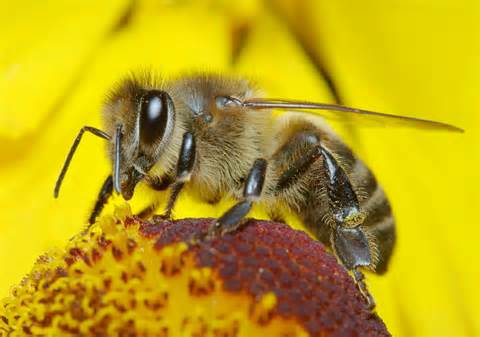
I worry about bees these days. I know that I don’t need to, but I do. I enjoy watching them move about the Nanking Cherry bush; I enjoy listening to them and trying to pick the Italians from the Carniolans. The day that I am doing this is sunny and the clouds are lingering. The bees are busy doing bee things and I am busy brewing beer and…worrying about tomorrow. That’s how we humans are: we worry about things that we have no control over. The bees cannot worry about tomorrow and I wonder if they would even if they could.


You see I am told that the next day will bring snow, a cold snap that is normal for this time of year in Colorado. I also know that temperatures below app. Fifty degrees become problematic for bees. They cannot move, forage, and must huddle together in their hive keeping their brood and each other warm. The difference, I realize, is that I am busy worrying about the future and the bees are busy doing what needs to be done at this very moment. There is a religious irony here somewhere. The Buddhist religion’s basic claim is that there is no other reality than the present. The bees act like Buddhists while we think about Buddhism.


While I’m watching the bees I hear my wort (unfermented beer) begin to boil over: a watched pot will never boil, but one that is forgotten, well that’s another story. I am not minding my own business while the bees mind theirs. I am worried about the bee’s future while the bees are busy with their present business. Somehow none of it makes sense, but that is Buddhism, and the bees being the Buddhists that they are, are not aware. I am aware and run back to the pot.


There are other ironies involves but the whole business gets complicated. I complicate my life by worrying about the future; the bees simplify theirs by doing what needs to be done in the present. I’ve seen a whole hive dead from starvation which is not a pretty sight, “butts in the air” as beekeepers say, the abdomens of the bees sticking out from the honeycombs as the bees searched for food in the bottoms of the combs. My heart drops and I get a twist in my gut. However, I’m pretty sure that even at death’s door, the dead bees lived in the present.


That’s how all of nature is and I begin to wonder if it is the idea, the concept of the future that separates we humans from nature more than anything else? Nature has no future, in fact the future doesn’t exist, but we create the future and then (what else?) worry about it. There is a philosophical argument here: we are free but the bees are not: driven by genetics the bees act accordingly. But I’m not sure that the payoff is worth it. We are not as free as we believe ourselves to be. Do we choose to worry about the future, or are we preprogrammed to do so? What would you do if you could?


The bees have no such thoughts and they are beautiful because of it. I get my wort under control and wander back to the cherry bush. I look at my empty garden, and the fruit bushes getting ready to bloom, the birdhouse I built still empty, and notice the robins in the juniper bush in the back corner; I see the bucket of water left out for the fox and my eyes glance at the new garlic plants, and I remember that I need to water the seedlings in the workshop. All the while, the bees move methodically from flower to flower, gathering pollen, being a bee.

Garden Variety Philosophy       

Image


I’m relatively new to gardening, and like most people the idea of gardening conjures up numerous images. First of course is the image of an overflowing abundance of plants popping with vegetables, fruits and flowers. Secondly, tools come to mind: the shovel, the rake, the hoe, the tiller. And perhaps the shape and color of the garden: should it be square, circular, and what about the soil? What is humus? Gardeners such as myself probably spend hours contemplating odd things such as these and the seeds…the seeds. The spacing of the seeds seems to be all-important according to some books, and in others it is the soil that the seeds are planted in; raised beds, rows, grouping: the list goes on. Both the questions and the answers seem endless, but all I want to do is to plant a garden.

One of the activities of gardening that I simply do not like is the pulling up of seedlings that are un-needed, or deemed lesser. Somehow it seems that I am killing an innocent, but gardening is like that. Gardening seems like an innocent endeavor, but the details prove it to be otherwise. To be a gardener, one must be ruthless in a sense. But this ruthlessness seems out of place in an activity that seems so peaceful. To be a gardener one must be both a mother and a warlord.

I look at the garden in the winter, covered in leaves, mulch and manure with its light brown, dusky color and imagine its future. Then I remember the aphids and the beetles that I fought valiantly with the year before, losing battles while hoping to win the war. I like to think of the garden as a way of giving, of helping the world, and the earth itself; planting and eating my own food. But, I also demand of the soil to produce and tear at the earth with the tools of the trade leaving it brown and uncovered, only to cover it again with remnants of what I previously took from it.

Then Spring comes and a renewed belief that what I do is good. Watching the seeds germinate under the plant light, the warming mat keeping the tomatoes and peppers warm on cool nights. The plans are laid and the seeds bought, I feel the heavy load of work to come which is the love and loathing of gardening. Such a simple task gardening and one that is directly related to being human. The garden represents change and consistency, husbandry and freedom.

And so the garden is a dichotomy of terms and ideas. But there is an underlying foundation to all gardens and this has much to do with why we garden. People garden for different reasons, but somehow those different reasons are more similar than not: curiosity, the desire for independence, love of nature. One is not a gardener for long if one is not curious about the plants, the earth that they are planted in, and the correlations between all life including the garden itself. Most of us speak of our independence, but until you can feed yourself, your independence is an illusion. Also, while gardening seems to be a process that brings order to an otherwise un-orderly natural environment, gardening puts us in touch with that very nature: we get our hands dirty and learn what our precious plants need in order to give us what we desire.

There is so much in a garden, philosophically, physically, and psychologically. A garden can be conceptual, representing a form of beauty or utility; maybe both. Gardening is most definitely a physical thing that demands physical work. And a garden demands of the garden a certain presence of mind and a drive to perhaps complicate your life. A garden can also be poetic with running rhymes strewn throughout with symbols of pleasure.

I think that in the end what truly defines a gardener is the reason that we each do it. A garden symbolizes what we want from life and our willingness to work to get it. But in the end, to garden is to realize that we are part of the nature that unfortunately we have spent much time and energy alienated ourselves from. The reason, I believe, that we garden is that it gives us a sense of belonging to a world that is far greater than ourselves. Just like our civilizations and societies, a garden gives us the illusion of control. But, just like the plants in the garden, we grow, live and we die. The garden reminds us that that is life, and that we are simply part of that thing that we so often take for granted, all started from a seed and some soil.