philosophy

The Garden

Image

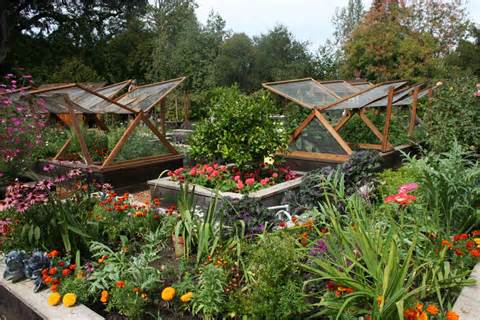
This time of year is difficult for the gardener.  It is that time when the first seeds are put into trays and put under lights to “extend the season” as we say around here.  I am no different.  I have my onion sets, my kale, hyssop and lemon mint (for the bees) already going.  I just put up trays of peppers and tomatoes in my workshop where they are protected from the cold-swings outside.  This time of year reminds me of something that I typically don’t like to be reminded of: that I have no patience.

But patience is what it takes to succeed.  Patience to remember because “All good human work remembers its history” as Wendell Berry writes, and patience to realize that all that we desire will not be fulfilled.  Gardening, and all that it stands for is a pleasant but often stern reminder that we lack the very thing that we need the most; that is, the patience to truly understand that it is not necessary to always get what we want.  Philosophy is an endeavor that is very closely related to gardening.

Philosophy is directly translated as “ philo-sophia: the love of wisdom”, and wisdom takes patience just as growing food takes patience.  There are those that understand this such as John Seymour, Michael Pollan and Wendell Berry and others. But in doing philosophy, one soon comes to understand that the first step in being a philosopher is to recognize one’s own limitations, called ignorance.  The gardener soon comes to realize their ignorance by recognizing microclimates, soil and the plants themselves among many other things.  This process of recognizing and further more accepting one’s own ignorance takes patience whether that is with regard to gardening or to understanding philosophical concepts.  The trick is to recognize our limitations, overcome our ignorance and have the curiosity to realize that doing so is important.  That takes patience.

To become patient takes discipline. Berry writes, “Correct discipline cannot be hurried, for it is both the knowledge of what ought [italics mine] to be done, and the willingness to do it.” (People, Land, and Community)  There is an “ought” to the correct discipline, and it is in this aspect that we have lost our way.  We “ought” not take advantage of each other and we “ought” not treat the environment as a source of raw material and a place to cast our trash.  We can and we do, but we ought not to.

We have lost our way but in doing so, we become aware that we have lost our way.  From this point it will take time, and with that cost comes the necessity of correct discipline and patience to adjust ourselves to the ignorance that has engrossed us.  Our curiosity has led us down paths unimaginable.  We have created environments and introduced changes that were far beyond most people’s wildest dreams a mere fifty years ago.  Our curiosity alone, however, has proven to be problematic because we have not had the patience to learn how to use it.  A garden can put your curiosity back on track; it can teach us what we ought to do with the time that we have.

Rather than a philosopher that happens to garden, my garden has become a simple reminder of what it takes to be a philosopher: correct discipline, correct curiosity and the patience to tell the difference.  It reminds me that I have limitations that I must live within or pay the price for not doing so.  It reminds me that I am dependent upon people that I do not know and processes that I am not aware of nor have control over, and that I have a choice to change these problematic realities.  My garden reminds me that I have yet to gain the patience that I need in order to gain the knowledge that I must have. My garden reminds me that I have time that I must take, that I must be patient to do so, and that I must take the time to realize that.


The Freedom of Bread

Image

I bake bread most every weekend.  The smell of fresh baked bread in the house is one of those pleasures that can only truly be experienced  if you’ve had your own hands in the dough, rolling it out, kneading it, feeling its warmth.  I don’t use a bread machine, but a big mixer and my own hands.  I use my own vegetables (squash mostly) in the dough as well as the spent grain from the beer I brew.  I do this for many reasons, but mostly the bread feeds me, but also and perhaps most importantly, my curiosity.

Baking bread is one of the human endeavors that separate us from other animals and bread is one of those few cooking endeavors that brings to life rather than takes life from the things that we cook (to paraphrase Michael Pollan [Cooked]). I’m not quite sure why, but bread-making is not only useful, educational and fun, but it is also as addicting as it is necessary.  That first mouthful of warm, wheaty bread is a luxury; the taste is exquisite.  But, it is not in the eating of the bread that the imagination takes flight, but rather in the making of the bread that mind finds solace.

There are hundreds if not thousands of recipes for bread that can be easily found, and I’ve tried a few, but the bread I bake is best when I simply poke my fingers in the dough before letting it rise the first time, adding flour or water as I see fit.  The best bread I bake is that bread that I scoop out of the bowl and watch the filaments of gluten and protein strands stretch and break.  Life from water, yeast and flour somehow gives life to mind, body and imagination.  This is, realize, all symbolic for something greater than bread.  I do bake bread, but I also garden, and am about to embark on beekeeping.  These all symbolize the same concept: freedom.

I am often reminded by many that I tell these things to that “it doesn’t pay”, and that “why do it when it is so easy to ‘just go buy it’.”  But to me, their words ring empty.  I answer, “Why just go buy it when you can just do it yourself?”  Their only answer seems to be that “It is easier.”  But, I ask, why is “easier” better?  Is it better bread?  Do you learn from it?  Are you freer?  For a while I couldn’t understand why it seemed that so many people became defensive when I talked about doing things rather than buying things, but then it dawned on me: baking bread, keeping bees, gardening, brewing beer; doing things symbolizes what we all believe that we have, but also reminds us that we often don’t actually have it and how difficult it is to achieve.

Baking bread comes at a cost.  Now that I bake bread, I want to make my own yeast strains, grow and thrash my own wheat; in short, become self-sufficient.  I have learned that while “easy” comes at a cost, so does freedom.  There are limits to what we can do, and there are limits to how free we can become.    Aristotle defines a virtuous life as one lived intellectually with intention.  This, he claimed, will lead the virtuous man to Happiness (Eudamonia), but in order to achieve this Happiness one must realize one’s limitations.  In other words, the road to freedom is paved with many un-risen loaves, but of course you can always compost them!

The Power of Empowerment

power and empowerment

Two discussions that I had this last week sparked me to consider the difference between the concept of power and the concept of empowerment; the first being dependent upon someone or something, the latter being independent of anything other than self.  In one discussion I came to realize or perhaps believe that the person that I was talking to was fearful of losing power and seemed to perceive me as desiring to, and capable of, taking it.  I realized that the problem with her premise was that I did not desire what she and I both perceived as power, and so this left her powerless.  The second discussion, happening afterwards, concerned my desire for self-reliance and realizing that such a life is not possible through being powerful, but of being empowered.  That is, willing to be and realizing the capacity in yourself of being self-sufficient.

This differentiation of empowerment from power led me to several conclusions.  First, the two terms are not interchangeable, but are related.  Secondly, that the two terms are often misused.  Also that empowerment, rather than power, is what most of us want perhaps without knowing it.  This is all well and good, but what does it matter?  The explanation as to why these questions are important (as the importance most often does lay in the question rather than the answer) is happiness in the Greek “eudemonia” sense of the word.  I’ll take each point in its turn, with an example to boot.

First, power and empowerment are not interchangeable but are related.  To empower yourself can be as simple as learning how to cook or fix something, or being capable of biking 50 or 100 miles, or running 25 miles: self-respect and responsibility for self no matter what.  Empowerment is a realization of both your limits and capacity. Power, on the other hand, is the realization of capacity alone; to realize that you can decide for others, over others, and sometimes without having to consider others and do so without limits simply because you can.  Power is the acquisition of capacity without realizing your limits; the typical Hegelian master-slave dichotomy.

So empowerment is self-contained and self-willed power while power is relative to and other-willed perception.  Empowerment and power are not interchangeable, but are often misused, and so an example.  I have often discussed my disdain for the feminist movement, and have been met with female irritation and ire.  I explain, however, that my disdain is not for the movement of equal rights for everyone including women (rights being a form of power), but with the belief that with being given rights anyone is empowered or for that matter equal: they are not.  Feminism is not about empowerment (the realization of limitations and capacities), as those in the movement often claim, but about power (capacities alone).  If the movement was about empowering people (not just women), then there would not be a movement at all, but rather a wholesale move towards educating, learning and becoming independent of any movements at all no matter gender (using this example) by all in society.  Of course, there are numerous examples and objections: maybe such movements are simply a process to help empower those involved?  Some people are not interested in equal rights for all; but my point is made here.

While people of all colors, genders, stations and cultures seem to demand the power to change society’s claims on them, I believe that they are barking up the wrong tree so to speak.  Their demand from others is a form of power rather than empowerment.  However, I do not believe that the demand is for power; unfortunately many of us look to others for acknowledgement, respect and embrace.  The demand from those that seek social and cultural changes are demands of empowerment, but asking society to “give” empowerment to you is akin to the belief that simply signing up for a class in college makes you smarter: it does not, and empowerment cannot be given by anyone other than yourself.

While power-struggles continue around the world, I would argue that the struggle for empowerment is to continuously transpire in each of us rather than the whole.  While lobbyist and special-interest groups vie for political and social positions, we each of us ought to learn self-respect and self-reliance as much as those things are possible at all.  We live in a world where power is esteemed and empowerment is often disparaged by whomever the “others” are.  But for those who strive for empowerment to revere and strive for power is to enslave yourself to the very thing that you are rallying against: a master.

The Freedom of Food

Recently I have embarked upon path towards freedom.  This word, freedom, so often misused and thrown around as to have lost its meaning, is such an important concept to so many people but to be free means to limit one’s freedoms.  In my case, I have begun to limit myself to that which I can do myself: self-sufficiency.  One of the areas, and the most important in many ways, is the ability to feed your self.  To eat is to cook; cooking is a simple and yet necessary activity that has, in the past one hundred years or so, become defined not by us as individuals, but by faceless corporations and conglomerates that do two things: tell us what to eat and provide us what they think we ought to eat.  In one sense, these corporations and conglomerates have given us freedoms: we no longer have to cook; but, in another sense, these corporations and conglomerates have taken away our freedoms: we no longer can cook.

It is not only cooking that counts, it is the ingredients as well.  These companies have not only begun to cook for us, but they have also provided and created the ingredients that they cook with.  This may sound as simple and innocent but alas, it is not.  I was in Denmark over Christmas with my Danish family and had the pleasure of “cooking” with my nephew.  We made lasagna (a classic dish).  My nephew took out a jar of pre-made sauce (with meat), a box of pre-made béchamel sauce, and boxed platter pasta.  He poured each of the packaged ingredients over the pasta platters and set it in the oven.  Oua’ la!  I do not mean to downplay my nephew’s willingness to make a family meal, but what he did was not cooking.  However….

According to Michael Pollan in his book, Cooked: A Natural History of Transformation, the definition of cooking has been dumbed down.  My nephew’s activity is considered “cooking” by many.  Of course language is a social phenomena and we as a society are free to define terms as we see fit.  Historically, words of all kinds come and go, get redefined and defined again.  But to redefine a word that encompasses a quality of freedom that is only found in the transformation of ingredients to food is to devolve linguistically.  To dumb down concepts is to lose freedoms.  The consumerism society created by corporations is not concerned with our freedoms, but with profit and profit alone.  And so, to redefine words (such as cooking) to fit their ultimate goal of profit at the cost of a higher form of freedom is in fact taking away the freedoms of us as individuals.

Today, most are aware that agriculture, the production of food products, is by in large defined by the production of corn, typically GMO (Genetically modified Organism).  The three ingredients that my nephew used were all corn-based (probably not GMO; we were in Europe) in the form of high fructose corn syrup and corn starch.  And so once again, what we perceive as freedom is not freedom at all, just like what many perceive is cooking is not cooking at all.  Cooking food from scratch, with basic, non-processed ingredients is not the illusion of freedom, but a higher form of freedom.  Choosing to buy basic non-processed ingredients also allows others (farmers in particular) to have true freedom and not the illusion of freedom that corporate farming offers.

It is just recently that I have learned the correlation between what I cook, what I eat and my freedom, but as I continue to learn I find that my expectations of what freedom is continues to rise as does what I am willing to eat.  For starters, I am not willing to support farm and corporate practices that include CAFO’s (Concentrated Animal Feeding Operations), GMO’s, non-organic pesticides.  The list of what I will not support continues to grow as does the necessity of my taking responsibility for where I spend my money, what I do with my time, and what I put in my mouth.  In other words, as I limit myself, my freedom grows.

Often these issues are perceived as political, and in a way they are, but so is the concept of freedom.  By limiting what I will accept I have found that the freedom that I have (through the continued path towards self-sufficiency) grows ever deeper and wider. Michael Pollan puts it appropriately.

“Of all the roles the economist ascribes to us, “consumer” is surely the least ennobling.  It suggests a taking rather than a giving.  It assumes dependence and, in a global economy, a measure of ignorance about the origins of everything that we consume…” (Cooked, 407)

If we truly are what we eat, then food is freedom in the end.