self sufficiency

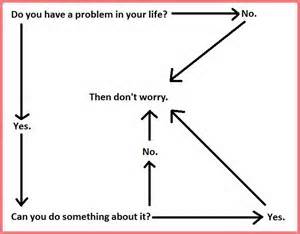
Worry

worry

This time of year is worrisome for beekeepers. The cold is coming on, and we worry about food stores, hive health, and of course the cold. I have had a wasp problem these past few weeks that came after I got the mite problem under control. I was told when I began to consider beekeeping that mites and honey is the top two reasons people quit keeping bees. I can see why those issues are at the forefront.

The cold is hard on many of us, not just the bees. And it is not that cold where I live; at least not yet. I look out the window and the sun is shining. I step outside and it is below freezing. I think the bees simply react, but people, people think too much. I know that I do. I lost a lot of sleep worrying about the wasps, and then I think about the cold, the food. The worry continues. However, worry does not work; worry does not help. Worry hinders, is a vicious cycle, and is unfortunately inevitable.

On Wed the weather will warm up and I will check the hive for the last time before I close it up for winter (so I can worry about the food stores). I’ll make sure the wasps don’t have a nest in the hive (so I can wonder if I got all the wasps out if there is a nest). I put a mouse-proofer on the opening of the hive and add some insulation to the top (so I can worry about moisture this winter). I’ll wrap the hive in some black roofing paper (so I can worry less about heat).

I’ll do what I can for the bees that I’ve taken responsibility for, and this is where the worry comes from: I have taken responsibility for something. Any person who has taken, truly accepted, responsibility for something understands the worry that goes along with the responsibility. In the past few years, self-sufficiency has played an integral role in life and along with self-sufficiency comes self-responsibility.

I wonder about those people who did not have the choice of self-responsibility; they had responsibility thrust upon them by the nature of their lives. Such responsibility is a heavy burden, but perhaps (like the bees) such responsibility is not noticed because it is simply the reality of life: it is living.

In today’s society our worries have changed perhaps because our responsibilities have changed. We worry about our job, if the grocery store has what we need, if we have paid our bills and if we can continue to pay our bills, our children, our marriage. These worries are no less important, but they are different. Such responsibility is a heavy burden but after a while we do not seem to notice because it is simply the reality of our life: it is living.

I have learned, even in such a short time, from my bees that I must understand what I need to worry about. But in order to do so, I must understand what I am responsible for. Maybe that lone bee coming back to the hive on a cold day with a load of pollen is not worried because it is doing what it does, doing what it needs to do, doing what a bee does naturally. I think that perhaps what we worry about is not as important as why we worry about the things we do. Perhaps worry is not a waste of time, but a reminder that time is short, the cold is coming and we have (in fact) no time to worry.
Being Human

human

The school semester is about to start again and it reminds me of something that is very important: learning.  Actual learning seems to be a rarity in our society, filled with instant gratification through things such as computers and food.  And what do computers and food have to do with learning? They are perfect examples of how much we do not know.

First, while it may seem obvious how computers relate to learning, as with many things we do not often discuss the topic in full.  The internet is a seemingly infinite source of facts, figures, and what is commonly called knowledge.  And while the internet is an amazing invention that has no doubt furthered many aspects of learning, it is not a place of learning.  The internet has made available information which was before either not available or extremely difficult to find.  Access to information is not learning about the information.  It is simply access.

Computers are not only a vehicle for the internet, however.  Computers allow us to live the way we do in ways most of us do not think about.  Without computers most of our infrastructures in our societies would fail; people would not get paid; lights would go out.  Computers help in countless ways, but the cost of that help is high.  Reliance upon computers has created dependence rather than independence.  Knowing that infrastructures exist, and that we rely upon them is not knowledge: the facade of knowledge is not knowledge.  It is simply rhetoric.

We do not know how the infrastructure that we rely upon works, and in fact, we often do not know when it does not work. Our food supply is a perfect example. The grocery store provides food in the same way that computers provide access. We can simply walk into the great building and there are rows and rows of “food”. Most of the edible products in a grocery store are not food in the real sense of the word. They are a combination of HFCS, salt and fat. These ingredients are often processed through means of chemical and mechanical manipulation. Furthermore, these products are not created to feed, but rather to make a profit. The cost of profit over food is unhealthy eating habits, addiction, and a lowering of all of our qualities of life. Having access to products to eat is not necessarily having access to food.

Many of the products available to “consumers” (the word to describe those who buy and use) are ready-made, pre-packaged, and designed to be quick and easy. Michael Pollan wrote that it is not thought that differentiates human beings from other animals, but cooking. These ready-made, pre-packaged units (the word used to describe what a vender is selling) take the necessity (and knowledge) of cooking away, and hence a bit of our humanity away. Adding water or turning on a stove is not necessarily cooking; it is preparing.

And so what do computers and food have to do with learning? Learning is a process that takes time; there are no shortcuts. There are no shortcuts because the process has to do with understanding, and to understand one must study the long and short-term implications. Computers create easy processes that do not rely upon long and short-term implications. This is not to say that computers are not useful tools for learning. But it is to say that the process of learning does not change even though a computer is being used.

The same goes for food. A credit card can buy a shopping cart full of products, but these products are not necessarily food in the real sense of the word. Furthermore, grocery stores and corporations that sell and provide products for consumption are not always interested in the consumer knowing the difference. Learning the difference, however, is a key component of knowledge: the byproduct of learning. Finally, and perhaps the most insidious implication of our ignorance, or perhaps indifference, towards learning is that we lose our independence without ever realizing it. Cooking is the key foundation to independence, for without it we are truly no different than our not-so-distant cousins in the forests and jungles. Simply being a human being is not being human. It is what we learn that makes us people.


Killing Chickens

Description White chicken.JPG

I killed a chicken today. I say “killed” because I did not “take its life”; it did not “pass on”. I took a knife and I slit its throat. To kill and animal ought to be an act of respect, and I hope that I do the bird justice when I eventually put her in a pot and make chicken and dumplings with her. She was a nice looking bird if not a bit old. She’d had a good life, which is important.


I also think that it is important for everyone that eats meat to kill their own food at least once. It is never a pleasant experience until after the act of killing when it is easy to differentiate the food aspect from the living creature aspect. Somehow in that split second it is easy to understand how fragile all life really is and the cost that is paid for living. This is perhaps one of the greatest personal motivations that I have for trying to become self-sufficient.


I’ve killed a number of animals over the years, all of which I’ve put in my freezer and eaten, except for a few sheep that I helped someone kill in order to put in their own freezer. Death is certainly part of life, and is no doubt a part of becoming self-sufficient: we have to eat. Self-sufficiency is in some ways self-realization and in the bigger scheme of things, the realization that we are part of a greater cycle which will continue with or without us.


I thought about that I was a part of; the cycle that would begin with the death of the old bird. The owner of the chicken had bought four new pullets to replace the doomed chicken. I would eat the chicken and eventually the cycle would come full circle with my own death. This is not morbid or odd; it is beautiful actually.


More and more, as the realization of what it is to become self-sufficent grows along with my skill-set, I realize the beauty in the idea of self-sufficiency whether it is through my new found love for “Bee TV” (pulling up a chair with a cup of coffee and watching the bees fly to and from their hive), growing a garden, carpentry, mechanics, putting up drywall (I did that last week, one of my lesser favorite skills) or killing a chicken for a friend.


I thought about it and concluded that it would not show the respect due the old chicken had I simply referred to her death as a “passing”, or that I “ sent her to a better place”. I killed a chicken, simply put. But her death symbolizes something greater than can be described, pronounced or understood.

Box of Bugs: Chapter 2

Description Beehive.JPG

It’s been two months since I became a beekeeper, and yesterday I ended my stint as a beekeeper. I still have the bees, make no mistake, but yesterday I decided to quit feeding them. You see, in the beginning when you buy a package of bees they have nothing but the box you give them. To give them a head start, you feed them sugar water. Yesterday I took the feeder off the hive since they have grown significantly. Now they forage for their own food as bees should. It was difficult: becoming a bee-watcher rather than a beekeeper. I worry about them. I know that I shouldn’t because they are bugs that forage for food; that’s what bees do.

But nevertheless, my mind won’t let go. They are “my” bees after all. It seems that I have a relationship with each of the 30,000 or so bees that must live in the two-deep hive that they have made home. Although I know that it is impossible, I still can’t get around the hope that they know me. The have no such thoughts, I know. All of this anthropomorphism is tiring, and yet I know that when I am done writing this I will go out back to visit them.

Yesterday they bearded the front of the box as it was hot, and as bees are apt to do; and yesterday I worried and fretted. This morning I sat in my chair outside the hive with coffee and watched as the hive came to life. Perhaps this is the life of that which I have become. It is true that it is simply a box of bugs as I have written previously, but it is a box of bugs that is full of mystery and muster a fascination that I have not had in a while. I want us to understand each other, but realistically they are barely aware of me. They do what bees do and I, well I watch what bees do.

When I open the hive see the amazing amount of work that they do, both as individuals and as a hive I am dumfounded and they continue to work. Work defines the bee. I cannot help but be a little envious of such a life: doing what needs to be done, when it needs to be done, for no other reason than it needs to be done. What simplicity. What directed significance; and all in six weeks or so during the summer. And now I step back and let them be what they are naturally. It is nothing to them and a major step for me.

In my determined trek to be self-sufficient I am finding that I am the most dependent of all creatures when a simple bug can teach me freedom by doing nothing more than that which it does so flawlessly. Maybe I am worried not about the bees and my feeding them, but about myself as I slowly strip away the false sense of independence replacing it with the very real sense of awareness that it is me that needs to learn to do what needs to be done, when it needs to done, for no other reason than it needs to be done. I continue to learn from a box of bugs, and am humbled to do so.

The Workshop Universe Pt. III (Edited)

Lagoon Nebula (Messier 8)


The Big Bench Bang, then the year after the bench was built it is claimed in the tradition of mythology that most of the tools present were in place, had a place and were all accounted for. Of course, this is just a myth because looking at the place now it really does seem impossible. Five years later, the spread of the universe accumulates in the form of an electric welder and the first and only cleaning on record is applied. Organization and then entropy ensues afterwards. Ten years later an assortment of what is now the stuff of the universe is acquired: wrenches, ratchet sets appear and the space between appears as blackness, cleaning is but a faded memory. Fifteen years after the Big Bang, the gas welder appears from the nothingness and afterwards the black hole appears spitting forth hand tools from one end and sucking up all that comes within its reach, cleaning becomes a myth for some and a wish for others. Shelving falls and it and all its contents lay untouched for two years until by sheer force and will organization fights the chaos of the Universe; the act of cleaning is outlawed by the creator himself. There was a few wars fought in defense of organization and a simple wash but all were quashed in the name of chaotic order. There are some that ask about the time before the Big Bench Bang and the answer is simple: it was a workshop for the wagons and horses. Another little side-use was the slaughtering of pigs. It is in fact where I learned to do such things.

Pigs have lost their lives in the Universe long before its inception. Actually, since about 1934 pigs have been slaughtered here. The war-grounds for pork is marked territory with the blood and grease of man and pig. The times that the author was involved in the wholesale fight for meat a large, round metal bowl was used; a left-over from the second world war, a “horn-mine” that was found by the father of the creator of the universe (yes, the creator has a father) on the nearby beach but before that a wooden cask was used to hold the hot water that cleaned the carcass before the hair was burnt off the skin. It is neither a pretty sight or a quaint smell that ensues when pigs are slaughtered and both are permanent parts of the workshop. The pig is killed, hung and bled. Then parted while cats and dogs claw over the innards and the grandfather tool (the axe) is put to use to half the carcass. The head is fought over while entrails are dragged out into the darkness of space by cats and dogs alike. All of this happens within the workshop leaving the place with a different kind of smell. I wonder if because water is used if this is counted as a cleaning.

Today the shop is off-limits to any hired help because of unknown realities and time-warp related worries. It continues to grow both in sight and smell. The black hole grows, sucking in the shelving at times, and at other times parts and tools but it nevertheless continues to exist; a parody to existence itself, a stubborn trophy waved in the face of the belief in design and order. Both and anachronism and a study in the future of mankind itself, the Universe of the shop defies definition and yet defines itself as the matrix of change and the canvas of the future. Entropy ensues and it is good.

Workshop Universe Pt. II (Edited)

Lagoon Nebula (Messier 8)

On the far wall along the total length of the workshop universe is the divine workbench itself. It is the mighty holder of all that there is. Only the bravest of people dare run their hand across its fanciful but invisible top. It is no longer flat although it is not round; it exists without shape. It bears witness to countless oil-spills, tool-cleaning chemicals, gasoline, diesel, spit, blood, dirt, grease, beer, melted rubber, metal, iron, cloth and other unmentionables; emanating from it is a smell unknown to mankind. From the bowels of its load the smell entices and edifies, it sickens and cleanses the body; it is both a religious experience and a nightmarish vision from the asshole of hell itself; Medusa with the voice of the Sirens; Satan with the voice of angels. It is a small mountain range of blackened history where tools die and are reborn in a cyclical act of evolution by the natural selection of the creator himself. Its herculean strength is the only thing that be accounted for its still standing under the weight of so much for so long. It is made of wood but from some magical forest of strength endowed trees.


”I built it new, when I turned the place into my workshop.” Says the creator. He continues with a gleam in his eye as he tells me about the table drill in the middle of the bench. ”I bought that drill with a case of beer and then helped drink the beer…” The drill is a single piece anchored in place upon the bench by magical forces or sheer stubbornness, bounding out of the wilderness of sprawling parts, tools, pieces with its pulleys and belts opened for air. A chunk of blackened Swiss cheese like wood ornaments its drill plank. Everything hangs in anticipation of joining the cohorts of junk that lies on the imaginary floor. Gravity never gives up; everything eventually falls. The corners of the bench are long since rounded by use and the shelves seem to float above the bench itself, covered in grease and stacked, rounded with no-named pieces and parts. Above the middle of the workbench is a small window, most of the panes miraculously intact although light is frightened away from the prospect of shining though the smutty glass into the black hole of the workshop. It runs, screaming insanely, while all that is rests peacefully.


From the bowels of this place have come amazing feats of mechanical mystery. It is well known that from the chaotic chords of the blackened workbench are home to the answers to inexplicable and innumerous breakdowns, cracks in well-worn machinery, broken parts and a multitude of other problems that the farmer-creator faces. Inventions are not an unknown oddity to such a place as this. ”We bought the Buch 302 (A tractor) in about 1960 and right after I finished building the bench, I needed a backloader for the Buch, so I built one. It had a hydraulic lift and everything. That was the first project that I had after building the bench.” Nothing is off-limits and everything can be fixed if not permanently then at least temporarily; temporary being the permanent state of the workshop universe. Wheel-alignment, parts replacement, parts made, reparation of tools, invention of tools.

The Workshop Universe Part I (edited)

Lagoon Nebula (Messier 8)

Respectfully dedicated to my father-in-law, Jorgen Troldborg.  A man who has taught me much.

In the Universe the 2nd rule of Thermodynamics applies: that entropy will ensue. We live with that knowledge comfortably because it is such a slow-going process. But in some cases, entropy is evident and even happens right before our very eyes. Such is the case with the workshop universe at the Troldborg farm. The universe is not as old as we thought. It is, in fact, forty years old because Jørgen (the owner of the universe) was thirty years old when he created it. The Universe is a part of a totality of Universes known as the Troldborg Gård (Troldborg Farm) and Jørgen acts as the manager and general CEO of the place: his creation by design. The workshop universe holds a special place in the history of time here because within its dark bowels lays the history of Troldborg Farm. This is a short story about that history and the entropy that is inherent in all creations including his.

As was stated, the Workshop Universe is about forty years old but the oldest tool somehow outdates the universe by some one-hundred and twenty years. Such illogical facts are not important to the creator. Now if the word of the creator is not to be questioned that tool is an ax of sorts used to split tree trunks and is still usable and is enjoying life as the metaphysical grandfather of all tools in the universe today. What sort of place does such a special parcel of amazing history take up in the universe? I asked the creator himself.

”Some place or another… I think it may be in the attic over the workshop…”

While he pondered the existential space-time continuum of the question, I pondered the importance and place of lesser tools in the workshop. For example, the Drill press, a no-named drill that was once used in a fishing village called Skagen Denmark. ”Of course,” the creator followed up when I asked him about it, “it was originally powered by a windmill in a workshop on the harbor up there. They had a ´pull-station´ and would throw a belt over one of the pulleys there and the drill would be run that way. When I got it I fixed it so it could be run with a little electric motor.” The drill press sits pretty much in the middle of the black-hole of the workshop; there is a black hole in the center of this universe as well. That is to say, right in the middle, surrounded by the insurmountable stash of tools, toys, scrap iron, wood, empty cans, half-full cans, fuel barrels, plastic buckets, chains, rope, plastic ties, nylon webbing, electric motors, gas motors, reserve parts, axles from cars, tractors, mopeds, bicycles, shovels (with and without handles), the handles of the said shovels without such handles, broken bottles, paint brushes, ratchet sets, open-ended wrenches, collections of assorted rubber parts, pieces of panhandled plows, compressor pistons, hay-press pulls, bolts, nuts, washers, screws and nails that have been pulled, pried, pricked, pummeled, pled, pounded and peened out, in and around most known materials of mankind, chainsaws, pulleys, lifts, hooks, cords, cables, used saws, assortments of hammers, several welders masks, an electric welder, boxes of welding sticks, gloves with and without holes, burnt out plugs, jars of liquids that defy definition and either snuff out life itself or are the cradles of civilizations yet unknown to even the creator himself. To actually come to stand next to the drill press would take a miraculous act or would cost one their sanity and probable their life to boot. It is said it can be done but the author has his doubts. I believe that it is the event horizon.

Another standing question that I had of the Workshop Universe is the large compressor that sits in its corner silently until its long, shaggy tail is followed through the trail of indefinable debris and connected with the hidden contact mounted proudly but covered with the dust, grease and grime of the infinite muck of universe itself. It is then that the monstrosity hums and pops into life spreading an earthquake of bangs that rumble the theoretical floor of the shop itself. Now I say ´theoretical´ only because the floor as really never been seen as far as I know. The fact that one does not float in the shop is no proof because of the thick, dense fog that hangs over and in the workshop at all times; perhaps the ether that Einstein mistakenly referred to? It would be easy enough to enjoy the sights and sounds of the shop simply by walking on the fog itself. Of course, there are theories about this but to go into the physical guesswork of if, when and how is well beyond the scope of this trivial discourse. Suffice it to say that the actual floor is somewhat of a myth. The compressor has no color but is not black nor is it white. It is rather a thick, oily grayish “blue”. Its color changes with the fog and with the sorrowful rays of sun that happen upon it from one of the three openings into the workshop world.

The Right Thing

thinking


It is amazing that growing your own food, buying local and seasonal, and trying to consume less is such a revolutionary act; but it is. Being self-sufficient helps us realize the difference between right and wrong. Self-sufficiency is, in fact, the realization of what is right. Being self-sufficient is the right thing to do because it is a good in itself. I am new to this realization of the need to be self-sufficient, and the most disconcerting thing about realizing this need is two-fold: first, how could I not have realized it before, and secondly being self-sufficient is very difficult in today’s society.


It is an interesting experience to realize that you have been living your life with your proverbial eyes closed for most of your life. The experience is un-nerving yet it is motivating; it motivates you to either make excuses or do what is right. I’ve found that there are a number of ways that we can do what is right, but it takes work.

These days I am reminded of doing what is right in some peculiar ways. I am reminded when I look out my window at the green lawn that surrounds my house: I need to replace it with a more suitable and sustainable landscape. I am reminded when I am weeding the garden or planting food. I am reminded when I am at the grocery store (the failure dome as I now call it) making choices about the food I will buy. Of course, I am reminded of it every time I read the news and often when I talk to friends.


Doing the right thing is not really a choice that we have. We can no longer choose to support the corporate food industry and call it an ethical decision: it is not. That being said, doing the right thing is not easy. We can no longer call ourselves independent simply because we make a good living: we are not. Being independent is not as easy as making a lot of money. We know a right thing when we come across it, and in fact, there is only one thing easy about the right thing: we know what it is. Being self-sufficient is the right thing because being self-sufficient forces us to realize that we are not separate from the world we live in, but a part of that world.


It truly is an amazing experience when we realize our moral beliefs in an objective way. And, as strange as it may seem, being self-sufficient is the way to realize the difference between right and wrong. Being self-sufficient is not right because it allows us to live in a sustainable way, or protects us from Armageddon, or prepares us for the end of society. Being self-sufficient is right because it is good. It is good to live honestly, independently, considerately, and responsibly. Doing the right thing because we can choose to do so is the greatest human capacity. Doing what is right may be difficult, but it is always the most moral choice.