social

With a Gun in Its Hand

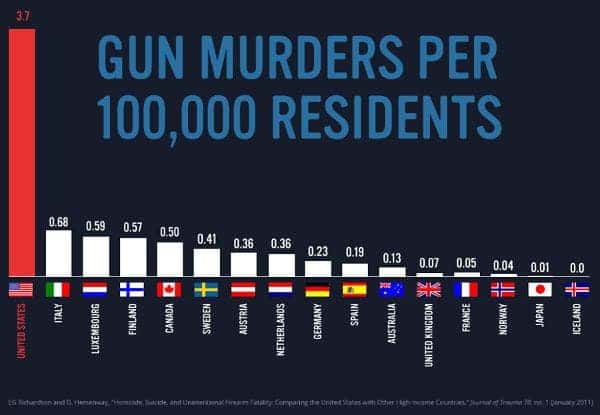
Image result for gun violence pics

That we all must live in a society is no longer a question; the question is what kind of society do we want to live in?  Most of us talk of a just society, a society in which we have liberties, we have rights.  But those words are more often than not code for “my” liberties, “my” rights.  In such a society discussions become battles we cannot fight; arguments become wars that we must not lose.

In order for a society to work there must be a basis, a foundation upon which we all can build.  We must fight fear and cannot ignore ignorance, but must meet it head on.  My liberties are our liberties; my rights are our rights.  Any group, any government administration, any corporation or individual which dismisses this foundation is no longer working towards a better society.

But what are rights and what are liberties, those words so many seem to throw around?  Rights are limitations, liberties are freedoms.  To have the one we must accept the other.  To have a civil and a peaceful society we must all come to understand this.  And, we must understand that fear, ignorance, ideals and ideologies will fail us all.

So as the roar of voices rage on and the vulgar have their pitiful time in the spotlight, those that believe that a peaceful rather than fearful, that a civil rather than ignorant society is possible must continue to carry the heavy load of human potential and not give in to the penchant to define freedom as violence and normal as the lowest denominator.  We do not do this for our children or our children’s children, we do this because it is the right thing to do; we do this because the ugly alternative is staring us in the face at this very moment… with a gun in its hand.

Renovation

renovate

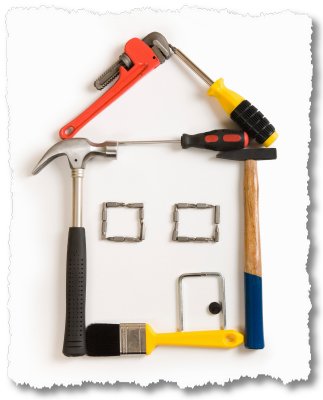
Starting anew with self-sufficiency means renovation.  First, the old habits need renovating.  We don’t notice the habits that we have; the expectations are built in.  Easy is easy for a reason and it is an unnoticeable slide into the acceptance of habits.  Being self-sufficient starts with renovating the habits we have.

Secondly, your body needs renovating.  Our modern society has softened us and no gym or workout schedule will change that.  My father-in-law put in seven day workweeks up until a few years ago (he’s 75).  Now he puts in the normal forty to fifty hours a week.  I’ve always respected his ability to work.  Being self-sufficient leads to the acceptance of soreness, aches and pains and the occasional smashed finger or two.

Third, your mind needs renovation.  Starting any adventure is an education and like all other educations your mind needs to be made up.  Plans and dreams are one thing, planning a 1/2 acre garden, a day of forestry work, running electric for the back up generator or cabinets for a mudroom is another.  Daily schedules change and decision need to be made, sometimes quickly.

Fourth, renovating your skill set is almost inevitable.  If self-sufficiency is your goal then learning how to be self-sufficient becomes your daily task.  Self-sufficiency is the other end of the stick from dependency.  But remember, dependency includes dependency on skill sets that people have, not people.

Whatever renovation you are doing in your life it is important to be ready to change habits, to be ready to work hard, to learn, and not be afraid of trying new things.  We are, after all, human beings with a mind that has evolved to be, well, renovated.


A Split-Second Decision


John Cage was a composer who “wrote” and performed a piece of silence called 4” 33’ (four minutes and thirty-three seconds). It was simply himself, on stage, and sitting at a piano for four minutes and thirty-three seconds. However simplistic and absurd it might have seemed and still perhaps is, I believe that the art, while not found in the actual performance is in fact found in the thought. This is culture.


I believe that many of us are realizing that what we consider culture is really nothing at all but consumerism. Culture is virtuous; consumerism is not. A man sitting at a piano and not playing the instrument, I thought, can be analogous to individuals who find themselves in a consumerist society without being consumers. I know this is a stretch, perhaps, but I believe there is something true in it.


To play a piano is a choice and one must learn, and learning takes time and effort; much time and much effort. That is why so many begin by taking lessons but few come to play the piano. Not being a consumer takes time and much effort.


The burgeoning agrarian movement that seems to be blossoming in this country can be seen as a reaction to a society that has lost its priorities to profit and consumerism, but I like to think of it as a choice, an idea that often times is ridiculed (as John Cage was when he performed his piece).


Perhaps John Cage was reacting to the ever-more complexities of modern classical music at the time? And if so, the analogy becomes even more similar. Rather than complaining as a composer, Cage did something to point this out. In the same way, we can make choices that go against the relentless pressure to consume.


Some may argue that actions such as Cage’s piece or the agrarian movement are simply fads, but I’m not sure that the argument stands. Cage’s piece is famous (or infamous) even today and he as a composer changed the landscape of modern classical music. In the same way I think that as more and more people realize the cost of a consumer lifestyle is not sustainable, they too will choose to take a stand. In Cage’s situation it was not too play for 4 minutes and thirty three seconds.


Our stand against consumerism can start with a split second decision.


Dreams

I have a dream

Dreams

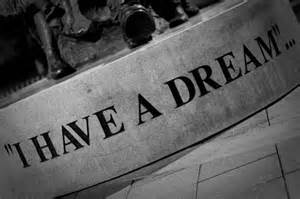
To dream of making a dream a reality takes foresight, hope, imagination and a vision. To make a dream a reality takes those things, but it also takes a hefty dose of courage, hard work, money, and willingness to give up comfort in most of its forms. This is why it is easy to dream, but difficult to live your dream.

Be ready to smile when your friends, your family, and most others remind you of how many ways there are to fail, how good you have it and how you should “give it a second thought…” or how it is simply impossible. These will be bumps in the road in comparison to the endless work and hours, to the face of poverty staring in your window, the relentless pummeling that you will take physically and mentally. Make no mistake, to make a dream a reality you must give up the dream…but only almost.

I say “almost” because dreams are not made to be broken. Live your dream!

If you have a dream first make your mind up to do it. Secondly…do it. It really is that simple. Afterwards, don’t look back.

Regrets

To have regrets is easy: take the path most travelled, bury your hope and your imagination; your vision. To make your regret a reality takes those things, but it also takes a hefty dose of fear, making decisions based upon what others advise, and willingness to give up your dreams. This is why it is easy to forget your dreams, but difficult to live with that decision.

Be ready to smile when your friends, your family, and most others remind you that you could of, or should have if only had. These will be bumps in the road in comparison to the endless days, months and years of remembering the dream, the face of comfort staring in your window, and the relentless pummeling that you will take as you wake up at night and realize that they were right. Make no mistake, to make your regrets a reality you must give up the dream…completely.

I say “completely” because regret lasts a lifetime.

If you have regrets, first recognize them as regrets. Secondly…change them. It really is that simple. Afterwards, don’t look back.

Vacation


vacation pic

I’ve never really enjoyed taking a vacation. The time, to me, seems ill-spent and empty. I wonder about this: is there something wrong with me, or do I simply need to “relax”? I don’t think so. I think that there is something more going on. Vacation implies the lack of work, but the lack of work is not necessarily a good thing unless, of course, you don’t like your work.


Now I’m not a great fan of polls and statistics, but to make a point here, more than 70% of Americans do not like their jobs! If that is the case, then I can certainly see why so many people put a price upon free time. But I don’t think that makes vacation a positive thing. Vacation is only seen in a positive light if you don’t like your job. Perhaps a better approach than dreaming of beach vacations and beer drinking debauchery is to simply do something that you like to do.


I love my job, and I am in the process of transitioning into another job that I believe I will love even more. This is what some in my family would call a “luxury dilemma”. I would have to concur. The dilemma, however, cannot be solved by taking a vacation but must be solved by doing some work. Research and development attitudes must be taken; assessing risk and defining responsibility must be clarified. Economic outcomes and expenses must be taken into consideration. This all sounds like work, and that is because it is.


I often hear people dreamily wave around the idea of “never working again”, but I firmly believe that they would be miserable after about two weeks. Work defines us, and not having work is in a sense losing one’s self. I am aware that in our modern and progressive societies we have been conditioned to define as work tedious tasks and mundane bureaucratic business. Often we have become nothing more than monkeys in a box looking longingly out sealed windows. We have defined work by profit rather than work by principle, and I think this is where the problem is. We must work for reasons other than making a profit.


I am not saying that we need to give the responsibility of our lives over to someone or something else. However, I am saying that our relentless hunt for more money is making us (and many others) miserable. Vacation entails time to be free from work, but this is only a problem if we do not have a job that we would do for free. Being honest with yourself is often difficult, but is always free. Maybe we need to remember that time is easy but is never free. In fact, it may be the most expensive thing we have.

The Choices We Make


choices

When I chose to get a dog from the pound about five years ago, little did I know of the ritual that would soon become my life. Every morning up at 5:30 and after the coffee cup hits the coffee table for the final time, a nudge (toy in mouth) and off we go for our morning walk. In the afternoon after work another walk, work in the woodshop or in the garden, and some playing in the yard until it is time to eat. Then, off to the favorite bed she goes watching the house from her favorite perch.

The choice to get a dog from the pound has obvious implications. My life has changed, but so has hers. I made a choice, and that choice has brought me as well as my dog a great deal of happiness. These are the choices we make, and we continually make. Other choices that we make do not always have obvious implications.

When I choose to go to the grocery store (the walk of shame as I call it), or to buy something at the local hardware store the choices we make there also have implications. However, those implications are not always as clear as bringing a dog into your life. There are animals that pay a high price for the choices we make. We make choices for many reasons, but those reasons should always be clear to us as well as the consequences of the choices we make.

An easy choice is not always the right choice, and those choices that we deem as difficult should not always be difficult. We can choose to do the right thing, but to simply do the right thing takes time, it is a habit that we must acquire. I believe that most of us know what the right choice is but are often tempted by the easy and swayed by the convenient. Our choices become others and not our own.

Perhaps it’s time to take our choices back, but this too is a choice; at least for now.

Revolution

revolution i

Reading Paul Roberts’ book, The Impulsive Society, I am reminded how all things are interconnected. It is impossible for us to rectify social problems without first rectifying the economic problems. However, economic problems will be beyond us as long as the political problems ensue. These connections are simple enough to recognize. However, the connectivity does not stop there. In fact, it only begins.

Roberts’ book has to do with social, economic and political interconnectivity, but working in the garden and hiking in the mountains reminds one that the important connections are not social, economic or political at all: they are environmental; environmental on a global scale.

In reading classic philosophical texts (Adam Smith, John Locke, Thomas Jefferson f.ex) it seems that the writers and thinkers of the time realized this, but we have, in our modern and technologically advanced societies, seemed to have lost the capacity for recognizing the “bigger” picture. Roberts’ book compares the individual to the society, but perhaps a more apt comparison is that between human beings and the environments we live in, the greatest environment being the planet as a whole.

I cannot help but think that the social, economic and political problems will continue to be inevitable as long as we view the planet upon which we live as our own personal trashcan. Such thoughts are not consoling, but they seem to be true nevertheless. Such thoughts, however, are often the seed of actions. As we all know, or ought to know, we are on an environmental precipice; we all have heard the global issues that we face not only as nations, but as a species.

Problems faced as a species cannot be rectified by an individual, which goes against the grain of modern consumeristic thought that has pervaded most western societies. But, the fact remains that without society there are no freedoms. Just as in more natural environments: there is no free lunch. So, our social, our economic, and our political problems must (oddly enough) be addressed not from a social, an economic, or a political point of view, but from an environmental, a bio-diverse and even bio-centric point of view.

Think about that the next time you plant a non-GMO tomato or pepper, or the next time you take out some of your lawn to plant perennial, bee-friendly blooms. Consider being part of the solution when you ride a bike to work, or buy only local beef, pork, and chicken. Consider that planting a garden, being a locavore, or riding a bike is a socio-economic-political movement, a revolution, towards a better life for all individuals, human or not.

Limits

limits

I recently completed a one thousand mile motorcycle ride (in one sitting) to visit my family. Nineteen hours later (fuel stops included) I was standing (not sitting) at their kitchen counter drinking a beer. I was thinking about limits. The ride had reminded me how important it is to know your own limits, and while riding through the Missouri hills I thought about how important limits are to all of us.

Right now most of us are not aware of limits, but a motorcycle (in my case) is a very bad place to first learn of them. I think I was at mine when I was singing loudly into my helmet a version of “Spiderman” that I called “Bobblehead”. Any athlete will know their limits, how to stretch them and when it is a good idea not to. Not to know your limits will sometimes cost you your life and other times just make things a bit uncomfortable; in the former you met your limits and in the latter you stretched your limits.

There are limits that we must all abide by, both our own and the ultimate limit that we all share: reality. Right now we do not seem to understand that the ultimate limit applies to all of us; no matter what, and no matter who we are. I once read that if a jet engine had a purpose, that purpose was to blow up. That struck me in an odd way. Evolution is a blind machine that, perhaps, has the same purpose. Watching a beehive, for example, is a brutal reminder of that “purpose”.

So, what do airplanes and Evolution have in common with this kinda-sorta preachy little bit about limits? Well, for one thing neither evolution nor airplanes have limits: extinction and explosion are not limits. Such things simply act as their nature (and nature itself) dictate. We humans are a bit different: we have the capacity for thought and the belief that we can act upon those thoughts. We have limits that we can stretch for these reasons. Or do we?

Is it the nature of human beings to destroy themselves, to not stretch but break the natural confines in which we live? Such a thought is disturbing to many and for many reasons. First, we are doomed if this is so. Secondly, we are not free if this is so. Third, the capacity for thought is an illusion. Perhaps we are just another blind alley that Evolution follows. I don’t like to think so, but I am wary of not doing so.

Destruction is part of nature, it is inevitable, but our own destruction at our own hands (I would like to think) is not; it cannot be. However, in order for us to learn how to stretch our limits, we must first know that we have limits. Perhaps it is time for us to find a way to define our limits before those inextricable and inescapable limits cost us the very thing that we are so fond of: living at any cost.

Grow Like a Tree, Not a Fire

Image

There seems to be much anger in our society today.  It is prevalent on the streets and highways and in the stores where we shop.  Sometimes it is outright and sometimes a bit more subtle, but ubiquitous in the end.  This anger, I believe, is a result of the slow realization that we are not who we want to be, but who we have been told to be.  We have found that there are no shortcuts to being who we want to be, but in realizing this we also realize that we have taken one.

Barreling towards more ease, more consumption, more and more, and more… and calling it progress is the justification that our societies continue to use to steal, destroy and decimate other countries, other people, but most of all the land itself, the places that we live.  We call economic progress freedom, and we call luxuries the necessity of that progress.  Many of us pride ourselves on being independent, but in the back of our minds we know there really is no such thing.  Religions preach to us that we are special, but we are not.  Our governments tell us that there are political answers, but these are lies.  We tell ourselves that “it’s not as bad as all that…” but it is.  We have been sold down the river, and continue to sell ourselves as so much product. As the present, living societies we have a choice: to buy back that which our forefathers and ourselves have sold for cold hard cash, or perish.

Wendell Berry writes: It is foolish to assume that we will save ourselves from any fate that we have made possible simply because we have the conceit to call ourselves homo sapiens.” (Common Places)  It is that conceit that has taken what actually does make us special: the ability to think.  We have become proud of our ignorance.  Rather than think we react, we demand, we press and desire.  We cannot continue in this fashion!  Our conceit leads us to believe that we can continue to take without giving back.  Our conceit leads us to believe that we have a right, a duty, to reap benefits economically at the cost of environmental degradation.

What did our forefathers sell in order to reap economic benefits?  What was the priceless thing they sold for the pittance they received?  It was an idea.  They sold the idea that abundance was not endless; and that we belonged to a place, rather than being the owner of a place.  The ideas that they sold, however, are facts and they sold them for wishful thinking and on faith.  For a handful of dollar bills we continue to sell our future to a few that still remain in the trance of greed and the belief in endless abundance and rights as defined by economy rather than responsibility.  With the lie that abundance is endless, we have been taught that to work with nature is to be a slave and to use nature is to master it.  They were wrong, and we are wrong for continually accepting their errors.

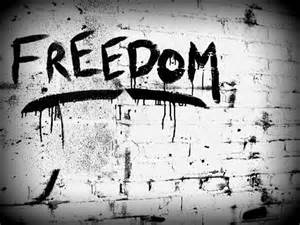
The callouses on your hands and the sweat under your hat that are gifts from working with nature are signs that you are free, not the ability to buy and sell nature as nothing more than a commodity.  The knowledge that you are responsibly effective even at the cost of industrial efficiency is a sign that you are free: the craftsman rather than the conveyor belt.  The realization that the “smell of money” is the same as rotting flesh, but the smell of fresh grass and pasture is the smell of life.  These things and that desire is not need are the starts of actualizing freedom.  The freedom to fail, and doing so honestly is the freedom to learn and that is the start of progress, and eventual freedom.

I believe that we are angry because we have been sold a bill of goods that are worthless, that make life worthless, that make us worthless.  We have been sold the rotten idea that the land and the animals around us are there to be used and diminished at our will.  We are angry because as we do, we have realized that we continue to wilfully diminish ourselves.  We have been sold the shiny penny of an idea that ease is freedom, but it is not: it is entrapment.  We have been sold that our sole motive in life is to make our lives easier, but ease is usury that must be paid back with the difficulty that is reality.  We must realize that in laying down the cash for things that we have no right to buy or to sell is to redefine who we are, who we become, but not who we want to be.  We will die by credit, but live by work.  We will die in ignorance or learn to respect the very thing that gives us life  In order to quell the anger that will eventually subsume us, “We must learn to grow like a tree, not like a fire.” (Common Places)