work

Ten Things to Make you Feel Better

expectations


In this age of Trump, fake news, insanity and stupidity everyone needs something to make them feel better.  Here are ten suggestions guaranteed to help:

  1. Plant something and take care of it; start a garden.
  2. Go for a bicycle ride.
  3. Cook something completely from scratch (and drink wine while you’re doing it).
  4. Do something to help someone, but do it anonymously.
  5. Do #3 and take it to a neighbor.
  6. Take a long weekend and spend it in an expensive hotel.
  7. Go for a hike on a quiet trail, early in the morning (and I mean early!)
  8. Write a letter (on paper with a pen) to a friend.
  9. Close all the windows, all the curtains, and the doors and spend a day doing nothing.  Note: be sure to stock up with your favorite food for this one.
  10. Take a first step towards a long put-off dream.

Do not expect these suggestions to have the expected consequences, but if you delve into them in full guaranteed fulfillment is a certain consequent.
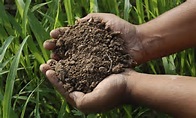

Spring into the Past

dirt

Sometimes we long after times that are gone, things that will not come to pass, and futures that are certain.  But we all know that these things are illusions.  Time passes and we all have different ways of noticing this.  Some of us stare at clocks on the wall or time displays in the corners of our screens.  Some of us count the nights and days, the weeks and perhaps the months.  I used to count time by the summer breaks I had.  It all works.

But time passes no matter what we do and we can only do with time what we decide to do with time; time will pass.  In the past I’ve watched time start with new seedlings and time continue with new plants in the garden.  I’ve watched time pass with the coming cold in the air and with the smell of beer brewing; kale boiling and the smell of canning the summer’s crop.

Those times are past and are yet to come.  Those times cycle through even if we do not notice them.  Sometimes our time is spent in the past, looking out over the horizon that darkens with every waking day.  That does not help.  It does help to think of the possibilities that the future holds.  Perhaps that we people garden.

With a small container and some soil we seed the future; the past seems not to matter.  With water we nourish our hopes; regrets seem forgone.  With soil we reminded that the past is nothing more that possible futures.  It is, after all, where we come from and where we eventually will come to.

Needs

cash

In Denmark there is a term, “sort penge”, which translated directly means “black money”.  Now black money is simply a transaction (in cash) that the two parties implicitly understand will not be taxed in any way.  In Denmark this is a bit of a joke, especially to farmers up north.

Where I live there is a similar phenomenon but it goes by no name.  However, it is still implicitly understood.  What I’ve learned from this is that we are being told lies: it is not all about money.  Money is a means to an end and the oldest form of money is barter.  I’ve found that in the country no one has money, they say, but how much do we really need money and why?

First, money is necessary, but only in a society where there are people that are not self-sufficient.  Perhaps the advent of cities necessitates money.  Secondly, money is addictive; it makes our lives easy and easy is addictive.  Third, as I have found out money is not always needed.

“You can ‘loan’ my sander.  I might come up and use it every once in a while…”

“I’ve got a portable mill and can mill up those nice oak logs for you…”

“Maybe I can introduce you to…”

“Tim knows a guy who needs a door built…”

And so it goes.  I am reminded that while we do need money in today’s modern society, it sometimes takes over the really important things, like the need for each other.

The Middle Bit

themiddle_logo

New adventures are often difficult, especially in the middle.  In the middle of things the motivation is often forgotten and the goal(s) are hard to remember.  The daily grind grows like a weed and every day becomes, well, everyday.  Adventures, we forget, also include the every day living of life: we wake up, we work, we eat, and we sleep.

But when we are planning the adventures of our lives we are often caught up in the possibilities; as was mentioned earlier: dreams that come true are no longer dreams.  In the middle of it all, though, we need to remember that the adventures and dreams in our lives are always worth it, even in the middle bits.

I was once asked why I bother with handmade and with self grown when there were so many more efficient ways to do those very same things.  Other than liking it, I had a hard time answering.  The answer came suddenly a few weeks later: because dreams and adventures are not efficient.  My answer, however, at the time:  “If I have to explain it, you would not understand it.”

And so in the middle bits we often find ourselves wanting a bit more efficiency, a bit more speed and always more time.  But dreams and adventures are actually built (slowly) in the middle, where all the work happens.  We spend much of our time trying to speed up rather than slow down and in doing so we miss the one thing many of us search for but call it by the incorrect name.  We are actually searching for the middle bits.

Learning How to Read

snow-forst

Many of us love to read books, great articles in good magazines, and perhaps less and less the news.  But after years of reading I am learning how to read…yet again.  There are certain topics that are difficult such as philosophy (a love of mine), and scientific books, even layman science is difficult to me.  However, having recently purchased a property that I intended to make a farm, I am learning how to read again.

In the crisp, New England mornings I walk my dog through the months old snow and the half-century old forest that I own.  I’ve done the walk twice a day for some time now and every day the land teaches something new.  A crevice here, a creek that is burrowing a new furrow; hills and dales, and the trees: oak, birch, red and white pine, hickory, poplar.

Farmers, I think, know what they want, but few know what the land needs; only the good ones, and to know this they need to know how to read.  Walking the land envisioning a field but the land won’t have it.  Perhaps a fruit tree grove there, but the land has started one here.  We own land, but we don’t control land.

Land seems pliable and passive, but don’t let it fool you.  It is the master of its own fate.  We are ego-filled and short-sighted.  The land is wise and counts eons, not seconds.  It is in no hurry as its age is endless.  It knows that we are of it, and by it.  we see land as potential, but it is full of the past.

I am learning how to read the land, and it is a difficult lesson.  I am impatient and the alphabet is foreign.  But the land is patience, and its alphabet it created.  The words ooze out of the fog of my ignorance…slowly.  But as I learn to read I realize that even the choice to learn is an illusion.

Work, Rest, Repeat

stress

There’s only so many hours in a day.  That is the lesson to learn if one is to try to take a self-sufficient idea to a self-sufficient reality.  Some of those hours are better spent resting and some are better spent working.  There is a balance and I notice it when I swing by (thanks to J. Mellencamp for that bit of word play).  This week was to be the week where both the greenhouse and the woodshed were to be started (not started) as well as my wife’s desk (started), and the cabinet doors and closet door for a new built in finished (done).  I did mention to catch a bad head cold.

I don’t believe I’m lazy, but looking back over the week the projects fell short.  But is that really the case?  There must be time for rest and relaxation; we all know that.  Taking time, however, is a different story.  Work defines us to a great extent and there is nothing wrong with that, but the guilt of not getting all the projects going is ridiculous.  There are those out there that feel this way and know what the importance of rest and relaxation are.  They also know how difficult it is to do when there is a list of things to be done.

Self-employment carries the weight of work rather than the joy of work, but this is unfortunate.  Often those self-employed become that for the simple reason of making decisions for themselves.  However, the reality is often the opposite: the projects needing to be finished make the decisions for them.  There is nothing wrong with having to work until late in the evening or even “crazy” hours, but there is something skewed to the thought that one must do this.

I, like many, enjoy working and the feeling that comes with finishing a job, doing it correctly and being able to look upon something built with my own hands.  This is a craft-less world that needs more time, not more things.  This is, perhaps, a good thing to remember when we wake up in the morning with a list of unfinished projects or unfinished business. The business of rest is equally important and (as I am finding) equally difficult as business as usual.

New-Old Lifestyles

Image result for old farm tools

When talking to people, especially older people who sometimes don’t understand why anyone would want to “go back” to raising and slaughtering your own meat, growing your own food and working your own land, they often point out that they are “fine” eating the modern products and processed foods of our current world.  They are right, of course; at least sometimes, or partially.

But the real point is lost on them; the point is not just the healthy aspect, but also the moral aspect.  We humans have somehow lost the necessary respect that life deserves and demands.  It is not just for health reasons that we till our own gardens and raise and slaughter our own meat.  It is healthier and better (lacking the additives and antibiotics) but is most certainly a more moral choice (respect for life and the living): a better choice.

A respect for life is the cornerstone of the agrarian lifestyle.  This does not preclude, but does not necessarily include, a religious adoration of life, but it is a necessary moral choice that does much to define who we are at the end of the day.  People that were raised on farms eighty years ago seem to remember the drudgery and forget the community.  They seem to remember the hardships and forget the rewards.  I’m not sure why and perhaps I will too at some point, but I hope not.

The irony of talking to older people who have had such “lifestyles” is that they seem to look upon the new crop of self-sufficient people as being a bit spoiled, but I would argue that the new farmers of old ideas are not spoiled, but curious and willing to do the work.  Although many people will fail at these new old endeavors (because the physicality and harshness of the work have not changed) there are many who have found solace and education in pursuing  “non-progressive” ways of life.

I think that when an honest lifestyle is dismissed so easily by others that it is because those that dismiss it have never really thought about their own life.  To do so, like the new agrarians will find, is physically and morally demanding; no less than the new- life that they have chosen to lead.

Sustain Sufficiency

sustainability

The fall has come here at our new forest/farm.  The renovation on the bathrooms is almost finished and the months past have flown by.  The question still remains: is self sufficiency a pipe dream, is it possible?  This discussion, I’m sure, is common in households that have decided to turn their backs on the supermarkets, the food-consumer concentration of non-sustainability, and suburbs that offer comfort and the all-consuming security.

First, self-sufficiency.  The problem, it seems, is energy.  How to sufficiently produce and continue to produce the energy that it takes.  There are two possibilities: add to the energy production or take away from the energy consumption.  Alone, there is no option: we must take away our need for energy to be self sufficient.  So, self-sufficiency becomes a community approach to living at some point, which (in order to be moral, to be healthy and to be virtuous) must be sustainable.

Second, sustainability.  The problem is energy.  How to continue to sufficiently produce the energy that it takes to be self sufficient.  There are two possibilities…

So while self-sufficiency and sustainability are not the same they are reliant upon one another: to sustain self-sufficiency we must have sustainable energy sources.  This is the catch and the secret.  This is the unending education that I am reminded of as a look out over my new acreage  and feel the damp coolness seep in, watching the golden leaves fall.

I throw another log on the fire and sip my hot coffee.

Renovation

renovate

Starting anew with self-sufficiency means renovation.  First, the old habits need renovating.  We don’t notice the habits that we have; the expectations are built in.  Easy is easy for a reason and it is an unnoticeable slide into the acceptance of habits.  Being self-sufficient starts with renovating the habits we have.

Secondly, your body needs renovating.  Our modern society has softened us and no gym or workout schedule will change that.  My father-in-law put in seven day workweeks up until a few years ago (he’s 75).  Now he puts in the normal forty to fifty hours a week.  I’ve always respected his ability to work.  Being self-sufficient leads to the acceptance of soreness, aches and pains and the occasional smashed finger or two.

Third, your mind needs renovation.  Starting any adventure is an education and like all other educations your mind needs to be made up.  Plans and dreams are one thing, planning a 1/2 acre garden, a day of forestry work, running electric for the back up generator or cabinets for a mudroom is another.  Daily schedules change and decision need to be made, sometimes quickly.

Fourth, renovating your skill set is almost inevitable.  If self-sufficiency is your goal then learning how to be self-sufficient becomes your daily task.  Self-sufficiency is the other end of the stick from dependency.  But remember, dependency includes dependency on skill sets that people have, not people.

Whatever renovation you are doing in your life it is important to be ready to change habits, to be ready to work hard, to learn, and not be afraid of trying new things.  We are, after all, human beings with a mind that has evolved to be, well, renovated.


The Community of the Self Sufficient

self_sufficient

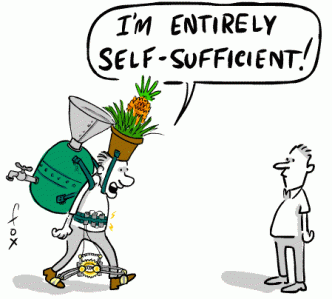
To be self sufficient is a personal thing, not unlike so many who just want to “get away” and have everyone leave them alone.  I am, and was one of those.  However, things often must change, and do.  NOFA puts on event up here in New England, and I went to a hog butchering class today.  There I realized that to be self sufficient, there must be a community.

It does sound strange, but it is, and always has been, true.  In the cities we often forget this fact of independence.  Often we can live around millions of people and be completely alone.  This is sad, true, but it is only because there are communities of self sufficient communities of people that support such lifestyles.

Aloneness is important.  Being alone we can often find our “true self”, and what we find is often a bit disconcerting.  But the self sufficient ought to be able look that self in the eye every morning and meet it head to head on those nights when we wake up feeling so alone and vulnerable.  One way to do this, is to realize our dependence on healthy communities.

Unfortunately, self sufficiency is often correlated with those who have opted out and see survival as a pile of rations and guns.  This is a misconstrued view of self sufficiency.  Self sufficiency is an education and there are many great teachers out there that are willing and often able to teach those willing to learn.  To realize that the community of the self sufficient are not these radical outliers one only has to reach out to learn, well, to be self sufficient.

At the class, there were seven of us, we each took turns learning to cut the 1/2 hog in such a way that would do justice to the animal, and to those who had, and will continue to create a community of the self sufficient.