philosophy

Spring into the Past

dirt

Sometimes we long after times that are gone, things that will not come to pass, and futures that are certain.  But we all know that these things are illusions.  Time passes and we all have different ways of noticing this.  Some of us stare at clocks on the wall or time displays in the corners of our screens.  Some of us count the nights and days, the weeks and perhaps the months.  I used to count time by the summer breaks I had.  It all works.

But time passes no matter what we do and we can only do with time what we decide to do with time; time will pass.  In the past I’ve watched time start with new seedlings and time continue with new plants in the garden.  I’ve watched time pass with the coming cold in the air and with the smell of beer brewing; kale boiling and the smell of canning the summer’s crop.

Those times are past and are yet to come.  Those times cycle through even if we do not notice them.  Sometimes our time is spent in the past, looking out over the horizon that darkens with every waking day.  That does not help.  It does help to think of the possibilities that the future holds.  Perhaps that we people garden.

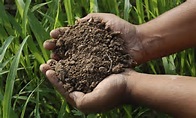
With a small container and some soil we seed the future; the past seems not to matter.  With water we nourish our hopes; regrets seem forgone.  With soil we reminded that the past is nothing more that possible futures.  It is, after all, where we come from and where we eventually will come to.

Mistakes…Dreams will Be Made

dreams

Dreams are interesting endeavors.  They are experiments more than anything.  But, can pursuing a dream be a mistake?  As mentioned in a previous post, it is hard to remember your goal when you are in the middle of it all.  To answer that rhetorical question: I’m not sure that pursuing a dream can be a mistake.

Think about it: a dream is an experiment; the goal is (at best) unknown and even perhaps undefined.  Pursuing a dream, therefore, can never be a mistake.  Pursuing that dream is always worth it, but it must be remembered that dreams may not be what you think they are.

Sometimes dreams will enlighten, and most of the time they will be frustrating.  Sometimes dreams clarify even if they are never achieved in full.  All of these possibilities are in a way necessities because having a dream itself is a necessity.  Imagine what life would be without dreams.

You must give up things to pursue dreams, but those things are often vague and easily given up, at least in the beginning.  In dreams, mistakes will be made, but it is never a mistake to pursue your dreams.

Want What You Need

need

This time of year is sometimes difficult; it is time for warmth but it is still cold.  The sun is shining, but the wind is blustery and bitter.  Sitting inside by the fire the day looks beautiful but out in the forest nature soon reminds us that it is unforgiving.  And so we sit wanting something that we know we cannot have.  We do this and all the time know that it is a waste of that most precious commodity: time itself.

Days spent pining over the past or looking toward the future are days wasted.  The thought is a bit Buddhistic, but goes beyond the confines of any religion because the act is human.  Perhaps we are hardwired to desire what we do not have.  This desire comes, often enough, in the form of “keeping up with the Jones”.  It rears its ubiquitous head in many ways though.  I would argue that the mess that is our government today is a consequence of wanting what you don’t need rather than needing what you want.

Think of it another way.  We need food, we need shelter…that’s it.  But we want so much more.  These desires will always come at a cost, however.  The more we want, the more we need to understand that nothing is free.  If we want to be moral we must need to be moral. If we want truth, we must need truth.  Of course, we need both, but so many times we do not want either.

Looking out the window and wanting the warmth of Spring will not bring Spring any closer.  Knowing the right thing to do and not actually doing the right thing will not make us moral.  These philosophical ponderings will do no good unless we act upon them.  We must want to act and act in order to know what we need.  This is, perhaps, the secret.  By all means think, but if we want to know what we need we must also act.

Needs

cash

In Denmark there is a term, “sort penge”, which translated directly means “black money”.  Now black money is simply a transaction (in cash) that the two parties implicitly understand will not be taxed in any way.  In Denmark this is a bit of a joke, especially to farmers up north.

Where I live there is a similar phenomenon but it goes by no name.  However, it is still implicitly understood.  What I’ve learned from this is that we are being told lies: it is not all about money.  Money is a means to an end and the oldest form of money is barter.  I’ve found that in the country no one has money, they say, but how much do we really need money and why?

First, money is necessary, but only in a society where there are people that are not self-sufficient.  Perhaps the advent of cities necessitates money.  Secondly, money is addictive; it makes our lives easy and easy is addictive.  Third, as I have found out money is not always needed.

“You can ‘loan’ my sander.  I might come up and use it every once in a while…”

“I’ve got a portable mill and can mill up those nice oak logs for you…”

“Maybe I can introduce you to…”

“Tim knows a guy who needs a door built…”

And so it goes.  I am reminded that while we do need money in today’s modern society, it sometimes takes over the really important things, like the need for each other.

The Middle Bit

themiddle_logo

New adventures are often difficult, especially in the middle.  In the middle of things the motivation is often forgotten and the goal(s) are hard to remember.  The daily grind grows like a weed and every day becomes, well, everyday.  Adventures, we forget, also include the every day living of life: we wake up, we work, we eat, and we sleep.

But when we are planning the adventures of our lives we are often caught up in the possibilities; as was mentioned earlier: dreams that come true are no longer dreams.  In the middle of it all, though, we need to remember that the adventures and dreams in our lives are always worth it, even in the middle bits.

I was once asked why I bother with handmade and with self grown when there were so many more efficient ways to do those very same things.  Other than liking it, I had a hard time answering.  The answer came suddenly a few weeks later: because dreams and adventures are not efficient.  My answer, however, at the time:  “If I have to explain it, you would not understand it.”

And so in the middle bits we often find ourselves wanting a bit more efficiency, a bit more speed and always more time.  But dreams and adventures are actually built (slowly) in the middle, where all the work happens.  We spend much of our time trying to speed up rather than slow down and in doing so we miss the one thing many of us search for but call it by the incorrect name.  We are actually searching for the middle bits.

Learning How to Read

snow-forst

Many of us love to read books, great articles in good magazines, and perhaps less and less the news.  But after years of reading I am learning how to read…yet again.  There are certain topics that are difficult such as philosophy (a love of mine), and scientific books, even layman science is difficult to me.  However, having recently purchased a property that I intended to make a farm, I am learning how to read again.

In the crisp, New England mornings I walk my dog through the months old snow and the half-century old forest that I own.  I’ve done the walk twice a day for some time now and every day the land teaches something new.  A crevice here, a creek that is burrowing a new furrow; hills and dales, and the trees: oak, birch, red and white pine, hickory, poplar.

Farmers, I think, know what they want, but few know what the land needs; only the good ones, and to know this they need to know how to read.  Walking the land envisioning a field but the land won’t have it.  Perhaps a fruit tree grove there, but the land has started one here.  We own land, but we don’t control land.

Land seems pliable and passive, but don’t let it fool you.  It is the master of its own fate.  We are ego-filled and short-sighted.  The land is wise and counts eons, not seconds.  It is in no hurry as its age is endless.  It knows that we are of it, and by it.  we see land as potential, but it is full of the past.

I am learning how to read the land, and it is a difficult lesson.  I am impatient and the alphabet is foreign.  But the land is patience, and its alphabet it created.  The words ooze out of the fog of my ignorance…slowly.  But as I learn to read I realize that even the choice to learn is an illusion.

A Few Thoughts on the Muslim Ban

Note: Sam Harris is a brilliant writer.  I’ve subscribed to his blog and found this article interesting.  I add the article here because Trump’s election to the Whitehouse changes even the goals of a simple experiment such as self-sufficiency.  His election, if it does not conjure philosophical questions, conjures psychological  questions at the very least.


President Trump has had a busy first week in office, displaying the anarchic grandiosity, callousness, and ineptitude of which he seems uniquely capable. He is every inch what we knew him to be: a malignant Chauncey Gardiner. And now our…

Source: A Few Thoughts on the

Merry Christmas!

country-christmas

Merry Christmas everyone!  It has been the time for Christmas spirit as well as that time of year when we all try just a little harder to be a little nicer.  Just as so many other things in our lives, it is a good reminder that in order to change the world we must first begin with the belief that we can, and then act upon it.  It is not much different than the Christmas season itself.

You may not believe in Santa Claus, but to act as if you do doesn’t hurt.  Santa Claus embodies the potential that we have as individuals.  The hard part of potential is that it takes time, more than a season of cheer has to spare.  But it is well worth it.  But that is perhaps the worth of believing in Santa: we can better ourselves for reasons other than selfish ones.

Perhaps Christmas reminds us that our dreams do not have to be forgotten; that our goals do not have to go unsung.  Christmas reminds us that failure is an option, but never for long.  The Christmas spirit is that spirit that we all have in those unfortunately few moments when we forget ourselves and the typical cash and consumerism motivations that we often do not realize define us.

While some of us cannot be with family, we can maintain our Christmas spirit by remembering that family is not always blood relatives and that friends are friends even if they are far away.  And so, I raise a glass of my favorite Islay to those I cannot be with tonight, and wish those as well as everyone else little bit of happiness in their lives, as much as there is room for!

The Daily Dream

pastoral

It’s interesting watching dreams move in and on, change and morph into new and strange, sometimes traditional and familiar themes.  At the end of the day, working to make a dream a reality is like most other jobs: it requires long hours, tough work, compromise, eating crow and learning; always learning.

The snow is on the ground now, and days are spent in the wood shop making cabinets and built-ins, making onion and potato boxes, and planning out woodsheds and chicken coops for the coming spring.  With each of these things the drawings and dimensions, the measurements and plans change almost with each passing day.  But the days pass, and pass quickly.

Every morning, however, starts the same: make coffee, fire up the wood stove in the shop, and take the dog for a walk.  I guess some things never change.

Six months into my dream, reality is taking hold and does so every morning when I get out of bed and feel sore, wanting more sleep but not being able to sleep because of the day’s work that rolls around in my head.  I watched, and worked, with my father-in-law dairy farmer for some years and told him this the other day.  He just laughed, but it sounded like “I told you so…”

And so tomorrow morning I’ll get up, make coffee, fire up the wood stove and go for a walk in the snow with the dog, and when we get back, I’ll get on with the work of making my dream a reality.


New-Old Lifestyles

Image result for old farm tools

When talking to people, especially older people who sometimes don’t understand why anyone would want to “go back” to raising and slaughtering your own meat, growing your own food and working your own land, they often point out that they are “fine” eating the modern products and processed foods of our current world.  They are right, of course; at least sometimes, or partially.

But the real point is lost on them; the point is not just the healthy aspect, but also the moral aspect.  We humans have somehow lost the necessary respect that life deserves and demands.  It is not just for health reasons that we till our own gardens and raise and slaughter our own meat.  It is healthier and better (lacking the additives and antibiotics) but is most certainly a more moral choice (respect for life and the living): a better choice.

A respect for life is the cornerstone of the agrarian lifestyle.  This does not preclude, but does not necessarily include, a religious adoration of life, but it is a necessary moral choice that does much to define who we are at the end of the day.  People that were raised on farms eighty years ago seem to remember the drudgery and forget the community.  They seem to remember the hardships and forget the rewards.  I’m not sure why and perhaps I will too at some point, but I hope not.

The irony of talking to older people who have had such “lifestyles” is that they seem to look upon the new crop of self-sufficient people as being a bit spoiled, but I would argue that the new farmers of old ideas are not spoiled, but curious and willing to do the work.  Although many people will fail at these new old endeavors (because the physicality and harshness of the work have not changed) there are many who have found solace and education in pursuing  “non-progressive” ways of life.

I think that when an honest lifestyle is dismissed so easily by others that it is because those that dismiss it have never really thought about their own life.  To do so, like the new agrarians will find, is physically and morally demanding; no less than the new- life that they have chosen to lead.