philosophy

The Silence of Stones

IMG_3379

Stones do not wrinkle up and wither away, blossoming into a new flower on the stalk;

Never ending- end.

We stand empty-eyed and stunned.

We cannot see the stones in our life; they seem to disappear over a flat horizon, but reappear.

There are no trees or bushes that have taken root beside the long length of life.

The land is flat, and only old wise rocks lay where life has left them.

They lay there without question, silent.

Silent and wise they rest while we stand open-mouthed and frightened.

They do not move

As we pass them and wonder at their quiet wisdom.

Looking at the many stones

Sitting and sinking into the ground;

We don’t understand a goddamned thing.

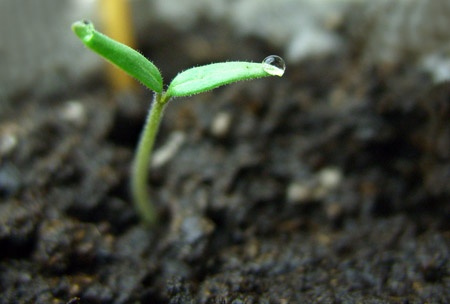
Dirt Seed Water Time Warmth

seedling2

These are things of life. These are the beginnings that we all speak about. They are as simple and as complex as we make them. They do not rely upon our desires and plans. They do not bend to our wishes.

Dirt

In my world the dirt is mixed from my own soil and compost with peat added.

Seed

The seed is the phoenix that rises from the ashes of last year’s garden.

Water

The water is nutrient rich from sitting over time in the warmth and cold of the barrels that I have set up around the place.

Time

Time is marked with the remembrance of keeping the little pots wet everyday; to remember that in my homemade hot house there is the potential for life.

Warmth

Warmth is the sun and the glass, and the homemade grow tables that sit under them.

I forgot one necessary component, a component that is often forgotten: that of hope. Everyday I check on the little pots even though I know that the little seeds have not gotten a chance to do anything. Everyday I open the large, heavy doors, covered with a thin, green screen to protect the potential life from the sun and the heat hoping to discover the smallest sign of life. I water, and check the water, and check the heat. I continue to hope.

And one day, I tell myself: one day, I will eat again.

Bio-Empathy

empathy

Finishing the second beehive this weekend, I had visions of buzzing creatures in my head. Bees are livestock, so I’m told. I have worked with livestock in the past and one of the rules of working with livestock is to never allow your self to think of them as anything but livestock. This is, of course, a diplomatic way of say “product”, and livestock are in the long run a product. But it dawned on me that perhaps this rule of thumb is the foundation of so much problematic action and consequences that we are seeing today.  Must show empathy to the world around us.

The lack of empathy towards creatures, whether they are bees, cattle, pigs, chickens, humans or the life that makes up our soils seems to be the cornerstone of much of agribusiness including CAFO’s and economic justification for the wholesale torture of animals for food. The exciting growth of agrarian movements including permaculture is, on the other hand, based upon empathy towards those same creatures. I was once told that greatest weapon against racism is friendship. I am beginning to think that this simple yet effective weapon is a useful tool in agriculture as well.

Permaculture, from what I understand of it, is a process of getting to know the soil, the creatures, the climate, the weather, and the micro and macro environments of your area. This seems to be breaking the rule of applying human emotion to non-human creatures (anthropomorphism); the single moral rule of thumb that most farmers claim that they must live by. We are, after all, raising animals as food or at least using them to raise the products we eat and we must do so on land that we understand; that we empathize with.

I must respectively disagree with this agricultural moral rule of thumb. I have looked animals that I have slaughtered for meat in the eye and watched death come over them. I have also done so with the knowledge that these animals have lived life as they should. I have felt the sorrow of my actions, but have understood the moral justification for those actions. The reasons that I have had these experiences is that I have felt empathy with the animals that I have raised and helped to slaughter. I am only now learning to empathize with the soil, the plants, and the creatures that live in those things in the same way.

To empathize, we must understand. To argue that we cannot apply human emotion to non-human entities and environments is a failed argument because we do not understand these entities and environments. If we did, I believe we could not help but do so. I would argue that if we do not feel empathy towards those things that we cannot feel empathy towards each other. I would further claim that the exciting agrarian movements that are currently under way are only possible because we have realized that our worst enemy is the lack of empathy that we feel for the world around us including each other.

Stephen Hawing was quoted as saying that the biggest threat to human life is our aggression. I agree with this, but something about the quote bothered me. Why were important threats to life always put into the context of human beings alone? Perhaps I would reword Hawking’s answer: the greatest threat to life is the lack of empathy we seem to have for it. To be good stewards this planet, we must be good friends with it. To be good friends, we must empathize. And to empathize, we must understand. The permaculture movement seems to be more than an environmental movement. It seems that it is a movement from anthropocentric viewpoints to biocentric realities; from fear to friendship.
The Lowest Common Denominator

 lowest common

Often and unfortunately our conversations concerning what we do land upon the lowest perch of human achievement: that of measuring all accomplishments by their economic consequences. This is what I refer to as the lowest common denominator. I cannot accept that the ultimate consideration of our acts is monetarily important at all. When discussing new movements in farming for example, as we are seeing in this country (the US) today, I cannot imagine that the people involved in the agricultural movement are involved only for economic gains and monetary profits.

I do not consider the profit received from my garden, and from buying locally produced meats to be measured monetarily. Rather, the rewards that I get from knowing where my food comes from and how it was treated overrides any economic cost. I would argue that those of us who take pride in learning new skillsets and in understanding concepts that society tends to take for granted are not motivated by possible profits, but by personal gains in knowledge, in peace of mind, in the understanding that what we do can have a virtuous aspect that cannot be bought and sold.

I would suggest that the food-movement not consider itself by the judgment of others that can only understand or are only interested in monetary motivations. It is difficult not to do so, especially when being considered from a public point of view. The phrases “there is no money in it” with regard to small-farming enterprises is easily dismissed with closer inspections of the facts. The argument that small-farms are in fact more profitable than large, agri-businesses if the subsidies to such businesses are taken out of the equation are beside the point. More important to the point is that most small-farm enterprises are not motivated by money alone. The point is that in not relying upon agricultural subsidies, small farms are more autonomous, offer a more honest product, and are not held accountable by faceless stockholders but by local consumers that many know by name.

While it is true that to live in this society, money is a necessary component; it is not true that money is the most important component. This viewpoint has led us to the deplorable situations that we find ourselves in today both in and outside of agriculture. The small-farming movement that seems ubiquitous in the country today reminds both those who are brave enough to venture out and those who are thoughtful enough to support such operations that money is the least important of all aspects of our lives. It is by the standards of bravery, of thoughtful action, of honesty and honest work that we ought to judge ourselves and expect others to judge us by.

While we cannot often fight the filth of large agribusiness we can battle the ignorance that allows such business to flourish. However, I would argue that we cannot do so by judging ourselves and what we do by the lowest common denominator. There is so much more that we are motivated by other than money. It is important for us involved in this movement to remember this fact and remind others that money is not always worth the trouble.

The Limitation of Money

money

When faced with decisions that have ultimate implications for your happiness, it is necessary to consider that happiness from as many different perspectives as possible, not just the economic perspective. Otherwise we become defined by the narrow and limiting perspective of money, not the actual limitations that we have. Perhaps, we must consider, it is more useful to make less money. As un-American as this may seem, our happiness as individuals and as a nation seems to be at stake, but not for the reasons that we might believe.

The more dependent upon money we become, the more impoverished we become. I am realizing that the ability to fend for myself, to provide for myself, and to be motivated not by the usefulness of my ability to make money but by the usefulness of my abilities is providing the richness of life that I need, the perspective that I need to be happy. It is indeed true that money cannot buy happiness. In fact, often times it purchases discontent.

For example, my wife said something to me that has stuck. She grew up on an eight-generation farm in Europe. She remembers having no money, but always having enough to do and enough to eat. The fear of poverty is still with her, but through our discussions she has come to realize that the poverty that her family endured was not because of the farm, but because of the motivation to make money. To farm, to homestead is to give up on our dependency upon money. However, in giving up on our dependency upon money, we do not become impoverished, but enriched.

As backward as this may seem to many, it is true. I am learning to live without money is unrealistic but only because I am realizing the limitations of my abilities. Money does not provide independence, but only dependence upon those with the abilities that I lack. It is not living without money that is unrealistic; it is living without knowing your own limitations.

A homestead provides ample opportunity for experiencing limitations, limitations that money cannot conquer. In cities across this nation I do not believe that it is the lack of money that is problematic, but only the lacking realization that we are limited. We cannot “do” what we want to “do” if we do not know how to “do” it. We can “think” what we want to “think” if we do not know how to “think”. In fact, I believe that money as a sole motivator lessens the ability to realize our own limitations and in doing so gives us a false sense of security; I have certainly experienced that in my own life.

I have also experienced the frustration of my own ignorance and short-comings with regard to my own limitations. In rebuilding a 1939 Farmall F-20 I learned that it will not start simply because it is supposed to start. It is the same with money actually. Simply because money is supposed to be able to buy you happiness does not mean that it actually will.

Box of Bugs: Chapter 2

Description Beehive.JPG

It’s been two months since I became a beekeeper, and yesterday I ended my stint as a beekeeper. I still have the bees, make no mistake, but yesterday I decided to quit feeding them. You see, in the beginning when you buy a package of bees they have nothing but the box you give them. To give them a head start, you feed them sugar water. Yesterday I took the feeder off the hive since they have grown significantly. Now they forage for their own food as bees should. It was difficult: becoming a bee-watcher rather than a beekeeper. I worry about them. I know that I shouldn’t because they are bugs that forage for food; that’s what bees do.

But nevertheless, my mind won’t let go. They are “my” bees after all. It seems that I have a relationship with each of the 30,000 or so bees that must live in the two-deep hive that they have made home. Although I know that it is impossible, I still can’t get around the hope that they know me. The have no such thoughts, I know. All of this anthropomorphism is tiring, and yet I know that when I am done writing this I will go out back to visit them.

Yesterday they bearded the front of the box as it was hot, and as bees are apt to do; and yesterday I worried and fretted. This morning I sat in my chair outside the hive with coffee and watched as the hive came to life. Perhaps this is the life of that which I have become. It is true that it is simply a box of bugs as I have written previously, but it is a box of bugs that is full of mystery and muster a fascination that I have not had in a while. I want us to understand each other, but realistically they are barely aware of me. They do what bees do and I, well I watch what bees do.

When I open the hive see the amazing amount of work that they do, both as individuals and as a hive I am dumfounded and they continue to work. Work defines the bee. I cannot help but be a little envious of such a life: doing what needs to be done, when it needs to be done, for no other reason than it needs to be done. What simplicity. What directed significance; and all in six weeks or so during the summer. And now I step back and let them be what they are naturally. It is nothing to them and a major step for me.

In my determined trek to be self-sufficient I am finding that I am the most dependent of all creatures when a simple bug can teach me freedom by doing nothing more than that which it does so flawlessly. Maybe I am worried not about the bees and my feeding them, but about myself as I slowly strip away the false sense of independence replacing it with the very real sense of awareness that it is me that needs to learn to do what needs to be done, when it needs to done, for no other reason than it needs to be done. I continue to learn from a box of bugs, and am humbled to do so.

The Workshop Universe Pt. III (Edited)

Lagoon Nebula (Messier 8)


The Big Bench Bang, then the year after the bench was built it is claimed in the tradition of mythology that most of the tools present were in place, had a place and were all accounted for. Of course, this is just a myth because looking at the place now it really does seem impossible. Five years later, the spread of the universe accumulates in the form of an electric welder and the first and only cleaning on record is applied. Organization and then entropy ensues afterwards. Ten years later an assortment of what is now the stuff of the universe is acquired: wrenches, ratchet sets appear and the space between appears as blackness, cleaning is but a faded memory. Fifteen years after the Big Bang, the gas welder appears from the nothingness and afterwards the black hole appears spitting forth hand tools from one end and sucking up all that comes within its reach, cleaning becomes a myth for some and a wish for others. Shelving falls and it and all its contents lay untouched for two years until by sheer force and will organization fights the chaos of the Universe; the act of cleaning is outlawed by the creator himself. There was a few wars fought in defense of organization and a simple wash but all were quashed in the name of chaotic order. There are some that ask about the time before the Big Bench Bang and the answer is simple: it was a workshop for the wagons and horses. Another little side-use was the slaughtering of pigs. It is in fact where I learned to do such things.

Pigs have lost their lives in the Universe long before its inception. Actually, since about 1934 pigs have been slaughtered here. The war-grounds for pork is marked territory with the blood and grease of man and pig. The times that the author was involved in the wholesale fight for meat a large, round metal bowl was used; a left-over from the second world war, a “horn-mine” that was found by the father of the creator of the universe (yes, the creator has a father) on the nearby beach but before that a wooden cask was used to hold the hot water that cleaned the carcass before the hair was burnt off the skin. It is neither a pretty sight or a quaint smell that ensues when pigs are slaughtered and both are permanent parts of the workshop. The pig is killed, hung and bled. Then parted while cats and dogs claw over the innards and the grandfather tool (the axe) is put to use to half the carcass. The head is fought over while entrails are dragged out into the darkness of space by cats and dogs alike. All of this happens within the workshop leaving the place with a different kind of smell. I wonder if because water is used if this is counted as a cleaning.

Today the shop is off-limits to any hired help because of unknown realities and time-warp related worries. It continues to grow both in sight and smell. The black hole grows, sucking in the shelving at times, and at other times parts and tools but it nevertheless continues to exist; a parody to existence itself, a stubborn trophy waved in the face of the belief in design and order. Both and anachronism and a study in the future of mankind itself, the Universe of the shop defies definition and yet defines itself as the matrix of change and the canvas of the future. Entropy ensues and it is good.

The Right Thing

thinking


It is amazing that growing your own food, buying local and seasonal, and trying to consume less is such a revolutionary act; but it is. Being self-sufficient helps us realize the difference between right and wrong. Self-sufficiency is, in fact, the realization of what is right. Being self-sufficient is the right thing to do because it is a good in itself. I am new to this realization of the need to be self-sufficient, and the most disconcerting thing about realizing this need is two-fold: first, how could I not have realized it before, and secondly being self-sufficient is very difficult in today’s society.


It is an interesting experience to realize that you have been living your life with your proverbial eyes closed for most of your life. The experience is un-nerving yet it is motivating; it motivates you to either make excuses or do what is right. I’ve found that there are a number of ways that we can do what is right, but it takes work.

These days I am reminded of doing what is right in some peculiar ways. I am reminded when I look out my window at the green lawn that surrounds my house: I need to replace it with a more suitable and sustainable landscape. I am reminded when I am weeding the garden or planting food. I am reminded when I am at the grocery store (the failure dome as I now call it) making choices about the food I will buy. Of course, I am reminded of it every time I read the news and often when I talk to friends.


Doing the right thing is not really a choice that we have. We can no longer choose to support the corporate food industry and call it an ethical decision: it is not. That being said, doing the right thing is not easy. We can no longer call ourselves independent simply because we make a good living: we are not. Being independent is not as easy as making a lot of money. We know a right thing when we come across it, and in fact, there is only one thing easy about the right thing: we know what it is. Being self-sufficient is the right thing because being self-sufficient forces us to realize that we are not separate from the world we live in, but a part of that world.


It truly is an amazing experience when we realize our moral beliefs in an objective way. And, as strange as it may seem, being self-sufficient is the way to realize the difference between right and wrong. Being self-sufficient is not right because it allows us to live in a sustainable way, or protects us from Armageddon, or prepares us for the end of society. Being self-sufficient is right because it is good. It is good to live honestly, independently, considerately, and responsibly. Doing the right thing because we can choose to do so is the greatest human capacity. Doing what is right may be difficult, but it is always the most moral choice.